Bryantsburg, Iowa, is a Buchanan County ghost town that once thrived along the Chicago, Rock Island, and Pacific Railroad before fading into quiet countryside. You’ll find no businesses or post office here—just weathered structures, open fields, and an active Amish community shaping daily life. Plan for a 2-3 hour drive from the Quad Cities, bring a paper map, and respect private property. There’s far more to this forgotten place than you’d expect.
Key Takeaways
- Bryantsburg is located in Buchanan County, Iowa, approximately 126 miles northwest of the Quad Cities, requiring a 2-3 hour drive.
- Take Highway 20 toward Waterloo as your primary route, and carry a paper map due to spotty rural cell service.
- Check seasonal road conditions before traveling, as unpaved gravel roads may become impassable after heavy rainfall.
- An Amish community currently inhabits Bryantsburg, so respect private property, slow for horse-drawn buggies, and avoid uninvited photography.
- No businesses or institutions remain, but scattered aging structures and rural architecture reflect Bryantsburg’s historically significant railroad-era past.
Where Exactly Is Bryantsburg, Iowa?
Tucked into the rural landscape of Buchanan County, Bryantsburg sits approximately 126 miles northwest of the Quad Cities, placing it well off the beaten path in northeastern Iowa near the Waterloo area. You won’t find it on most modern maps, but that’s part of its appeal.
Originally called Bryant, then Bryantsburg, this unincorporated community developed along the Chicago, Rock Island, and Pacific Railroad as a flag station. Its Bryantsburg geography reflects classic Iowa prairie isolation — quiet roads, open fields, and scattered farmsteads.
Once called Bryant, Bryantsburg grew quietly along the railroad — a flag station swallowed by open Iowa prairie.
Today, Amish families have quietly settled into the surrounding land, adding layers of living history alongside the local folklore of a town that once thrived and then simply faded.
Getting here means embracing the freedom of true rural exploration.
What’s Left of Bryantsburg Today
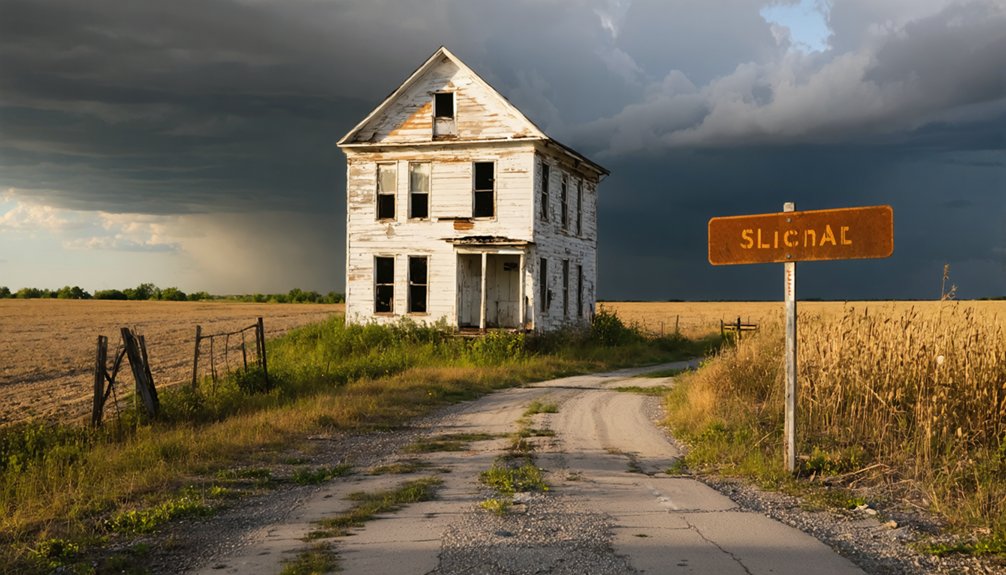
When you arrive in Bryantsburg today, you’ll find little more than a rural landscape dotted with scattered structures that hint at the town’s former life.
The most striking presence you’ll notice is the surrounding Amish community, whose families have quietly settled into the area and now shape its day-to-day character.
You won’t find businesses, a post office, or any of the institutions that once made this a functioning town — just open land and the faint bones of a place that time passed by.
Remaining Rural Structures
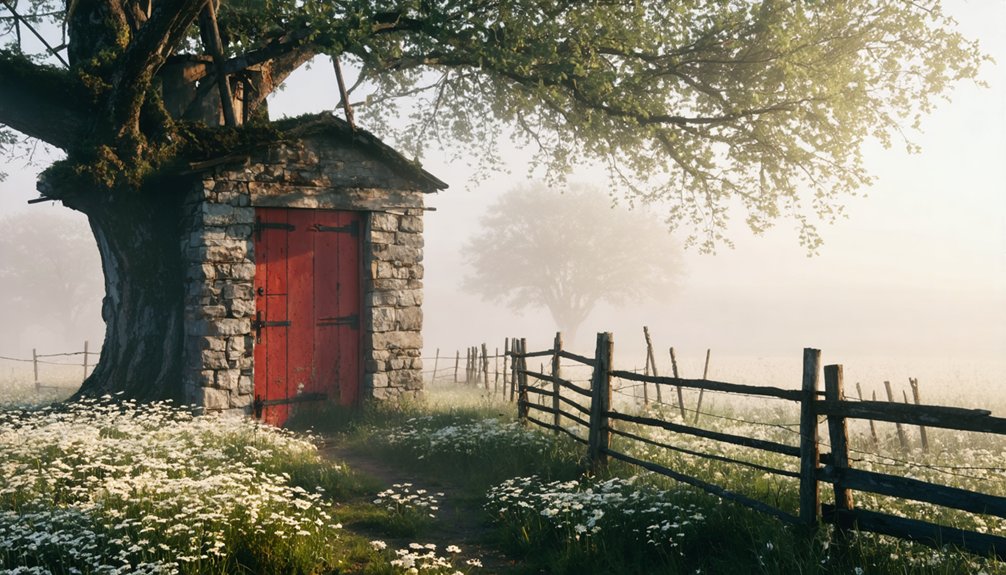
What’s left of Bryantsburg today is modest but quietly evocative. You’ll find scattered rural architecture that hints at the town’s former rhythm — aging outbuildings, weathered fences, and structural foundations slowly reclaiming their place in the earth.
These historical remnants won’t announce themselves dramatically, so keep your eyes open as you drive through.
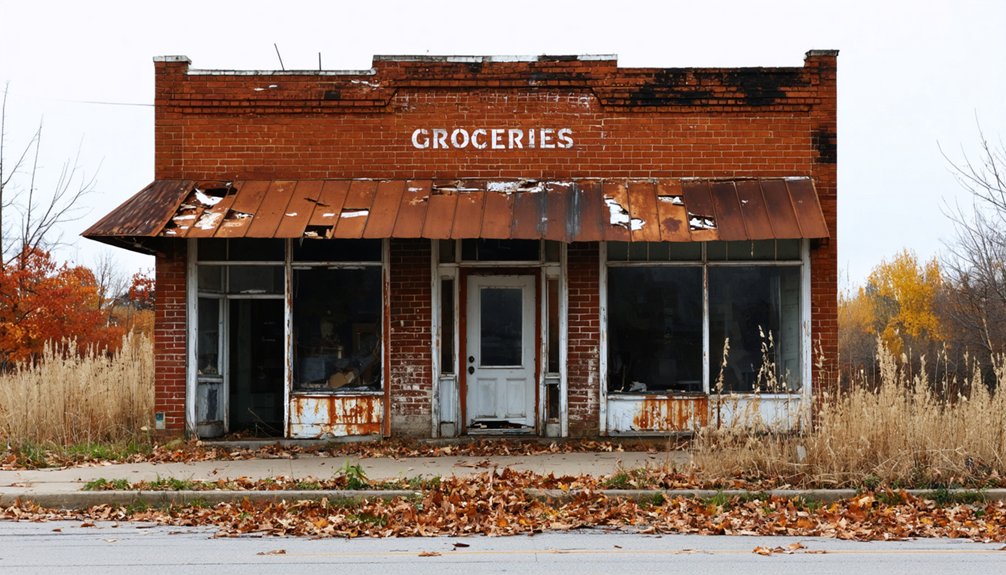
The surrounding farmland has largely absorbed what once made Bryantsburg a functioning community. No depot, no storefront, no post office survives in recognizable form.
What you’re really reading is a landscape that’s had decades to quietly erase its own past.
That erasure is part of the draw. You’re not visiting a preserved site — you’re standing where something used to breathe.
That distinction makes Bryantsburg feel genuinely raw rather than curated.
Amish Community Presence
One of the more unexpected details about Bryantsburg today is that you’re not entirely alone out here — Amish families have settled in the surrounding area, bringing a quiet, living presence to land that might otherwise feel purely abandoned.
Their community dynamics contrast beautifully with the ghost town’s silence. As you explore, keep these reminders in mind:
- Amish traditions mean horse-drawn buggies share rural roads — slow down and be patient.
- Private property boundaries matter deeply here — stay on public roads.
- Photography of Amish individuals is generally unwelcome — respect that boundary.
- Their presence signals active rural life — you’re visiting history alongside living culture.
This unexpected layer makes Bryantsburg more than a relic; it’s a place where past and present genuinely intersect.
Why Bryantsburg Once Mattered: Railroad, Bank, and a Brief Boom
Once you understand what drove Bryantsburg’s brief rise, the ghost town starts to make a lot more sense.
The Chicago, Rock Island, and Pacific Railroad upgraded the town from a simple flag station to a full railroad depot, and that single shift sparked enough economic confidence for residents to open a bank, schools, and a post office.
You’re fundamentally looking at a place that packed real institutional weight into a small community, all because trains once stopped there.
Railroad Station Drives Growth
Although it may seem hard to believe today, Bryantsburg once had real economic momentum behind it. Its railroad significance transformed this small Iowa settlement into something genuinely functional.
When the Chicago, Rock Island, and Pacific Railroad upgraded Bryantsburg from a simple flag station to a full stop, everything changed. You can trace that community impact through four key developments:
- Farmers gained reliable access to regional markets
- Businesses established roots around the depot
- A local bank opened, signaling financial confidence
- Schools and a post office followed steady population growth
That railroad connection made Bryantsburg worth stopping in — literally.
Travelers, merchants, and settlers all moved through here with purpose. Without those tracks cutting through Buchanan County, this town never would’ve existed at all.
Bank And Community Institutions
What really signals a town’s legitimacy isn’t its size — it’s whether anyone trusted it enough to open a bank. Bryantsburg cleared that bar.
At its peak, the town supported a functioning bank, schools, and a post office — genuine community services that transformed a railroad whistle-stop into something people actually built lives around.
That bank history tells you everything about early 20th-century confidence here. Farmers deposited earnings, families sent children to local schools, and the post office connected residents to the wider world.
These institutions didn’t appear by accident — they followed the railroad’s economic gravity.
You’re now visiting the bones of that ambition. Nothing operational remains, but understanding what once stood here makes the silence feel earned rather than simply empty.
How to Reach Bryantsburg From Quad Cities
Getting to Bryantsburg from the Quad Cities means settling in for a solid 2-3 hour drive, covering roughly 126 miles northwest through Iowa’s rural heartland.
Your directions route takes you deep into Bucharest County near Waterloo, where open roads replace congestion.
Venture deep into Bucharest County near Waterloo, where congestion fades and open Iowa roads finally take over.
Follow these travel tips before heading out:
- Map your route toward Waterloo, using Highway 20 as your primary corridor northwest.
- Check seasonal road conditions since rural gravel roads can become impassable after heavy rain or snow.
- Drive during daylight hours to safely navigate unmarked rural intersections.
- Combine stops by adding nearby ghost towns like Conover to maximize your adventure.
You’ll feel genuine freedom stretching across Iowa’s countryside, arriving at a forgotten community that rewards curious, independent explorers willing to venture off familiar paths.
Other Ghost Towns Worth Adding to Your Bryantsburg Route
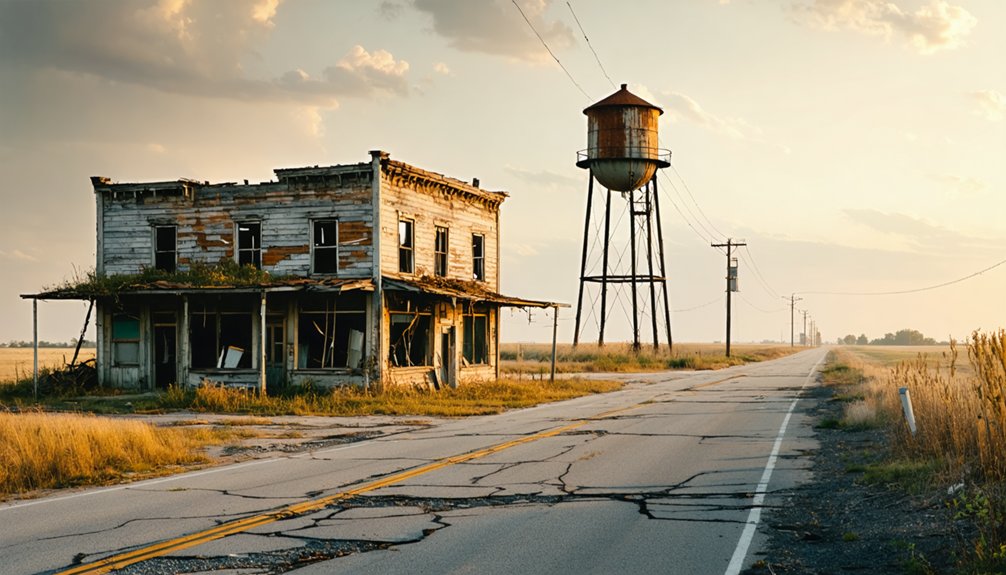
Once you’ve mapped your route to Bryantsburg, you’d be leaving miles of Iowa’s ghost town history unexplored if you stopped there.
Kiene, Albany, and Buck Grove all sit within reasonable driving distance, each carrying its own local folklore and quiet, faded character.
Conover makes a particularly compelling addition to your route, offering another layer of rural abandonment worth experiencing firsthand.
These towns share Bryantsburg’s story — railroad decline, population loss, and eventual silence.
Visiting them together builds a richer picture of how entire communities vanished from Iowa’s landscape within a single generation.
Pack a paper map as a backup since cell service gets spotty across Bucharest County’s rural stretches.
Moving between these sites keeps your trip dynamic and rewards your curiosity at every turn.
Road Rules, Amish Land, and How to Visit Bryantsburg Respectfully
Bryantsburg’s rural setting comes with its own unwritten code of conduct, and understanding it before you arrive makes the difference between a respectful visit and an intrusive one.
Amish families live throughout this area, and honoring their customs isn’t optional — it’s essential.
Amish families call this land home — and their customs deserve more than a passing nod of acknowledgment.
Follow these four rules for respectful visiting:
- Never photograph Amish individuals without explicit permission — their beliefs prohibit it.
- Slow down near horse-drawn buggies and give them wide berth on narrow roads.
- Stay off private property — curiosity doesn’t grant access.
- Check road conditions seasonally — unpaved rural routes become impassable after heavy rain.
You’re exploring someone’s living community, not a theme park.
Carry that awareness with you, and you’ll leave having genuinely respected the land and its people.
Frequently Asked Questions
When Did Bryantsburg Officially Receive Its Current Name Without an Apostrophe?
You’ll find that Bryantsburg’s historical naming dropped the apostrophe by the early 1900s, reshaping its community identity. Originally called Bryant’s, it evolved into Bryantsburg, giving this fading Iowa ghost town a uniquely independent, freedom-evoking character you can still explore today.
What Was Bryantsburg’s Recorded Population During the 1940 Census?
Think Bryantsburg was always deserted? Census data proves otherwise! You’ll discover population trends showing 25 residents called it home during the 1940 census — a small but mighty community that once thrived before fading into history.
Which Newspaper Listed Bryantsburg Among Iowa’s Dying Towns in the 1970S?
You’ll find that the Waterloo Courier, one of Iowa’s newspapers, listed Bryantsburg among the state’s dying towns during the 1970s, painting a vivid picture of this once-thriving community’s quiet, inevitable fade into history.
What Railroad Line Originally Made Bryantsburg a Flag Station Stop?
“All roads lead somewhere!” The Chicago, Rock Island, and Pacific Railroad’s railroad history put Bryantsburg on the map as a flag station stop, letting you trace the tracks that once fueled this forgotten Iowa community’s early growth.
Which Other Ghost Towns Are Typically Grouped Together With Bryantsburg Historically?
You’ll find Bryantsburg’s ghost town history intertwined with Kiene, Albany, and Buck Grove. These nearby attractions share similar tales of abandonment, making them perfect companions for your freedom-fueled exploration of Iowa’s forgotten, fascinating past.
References
- https://b100quadcities.com/six-ghost-towns-in-iowa/
- https://reformedjournal.com/2019/07/05/ghost-town-legacy/
- https://en.wikipedia.org/wiki/Bryantsburg
- https://kids.kiddle.co/List_of_ghost_towns_in_Iowa
- https://iagenweb.org/ringgold/misc/ghostowns.html
- https://www.facebook.com/The29thState/posts/participation-time-whats-an-iowa-ghost-town-that-you-are-familiar-withhoward-cen/693249586709268/
- https://en.wikipedia.org/wiki/List_of_ghost_towns_in_Iowa
- https://www.youtube.com/watch?v=1J0Qx64ZrwI
- https://pubs.lib.uiowa.edu/annals-of-iowa/article/7045/galley/115796/view/
- https://www.crawfordcounty.iowa.gov/about/forgotten_towns/