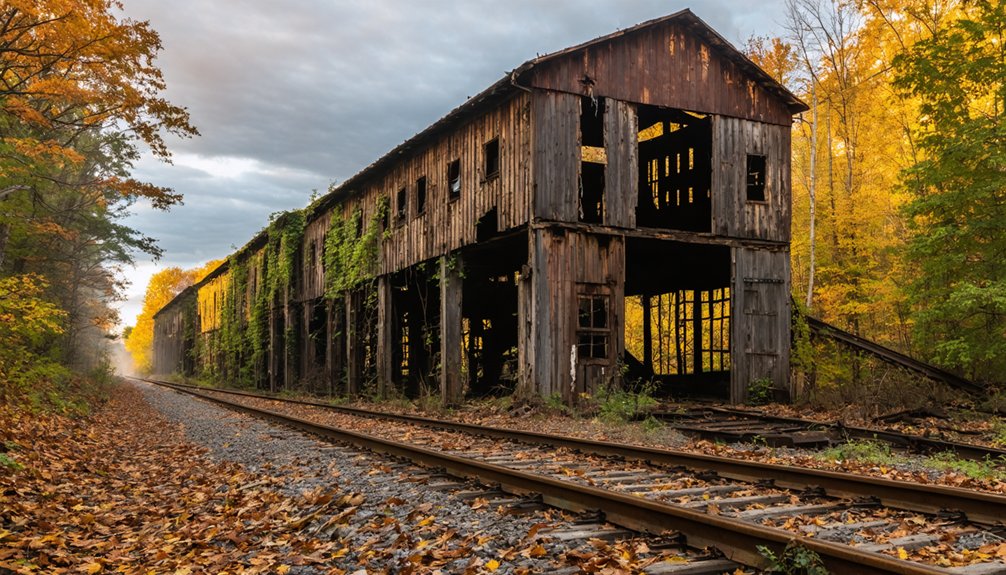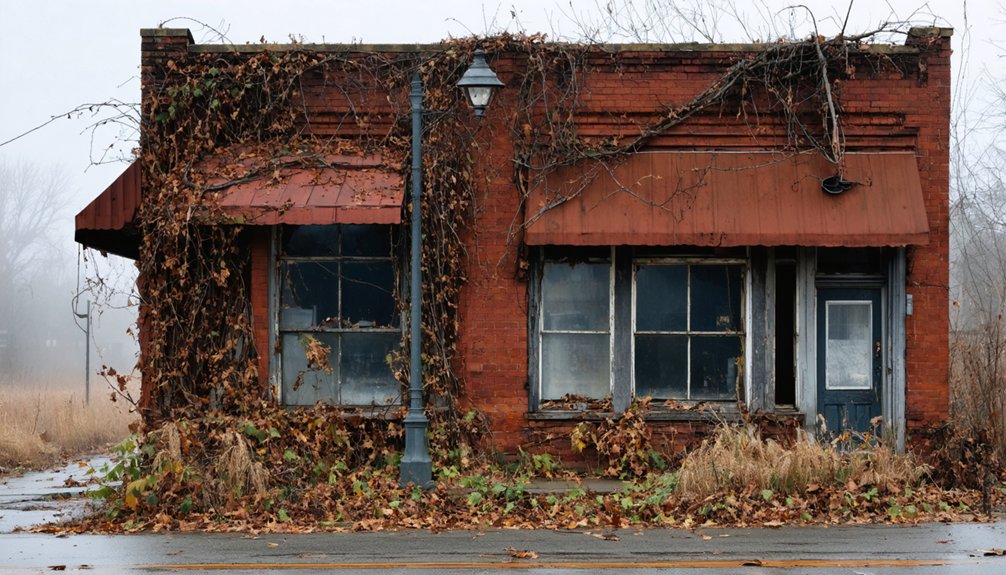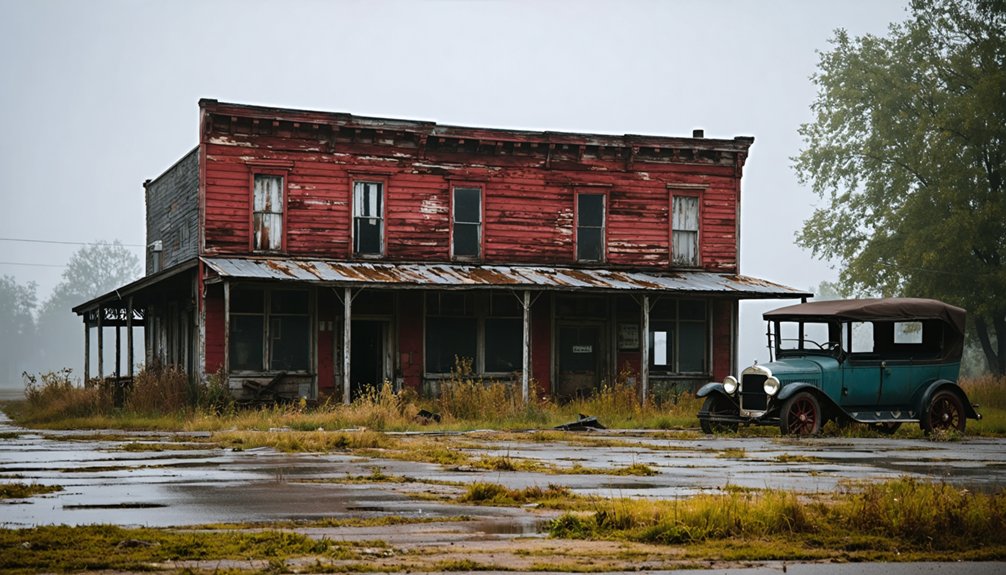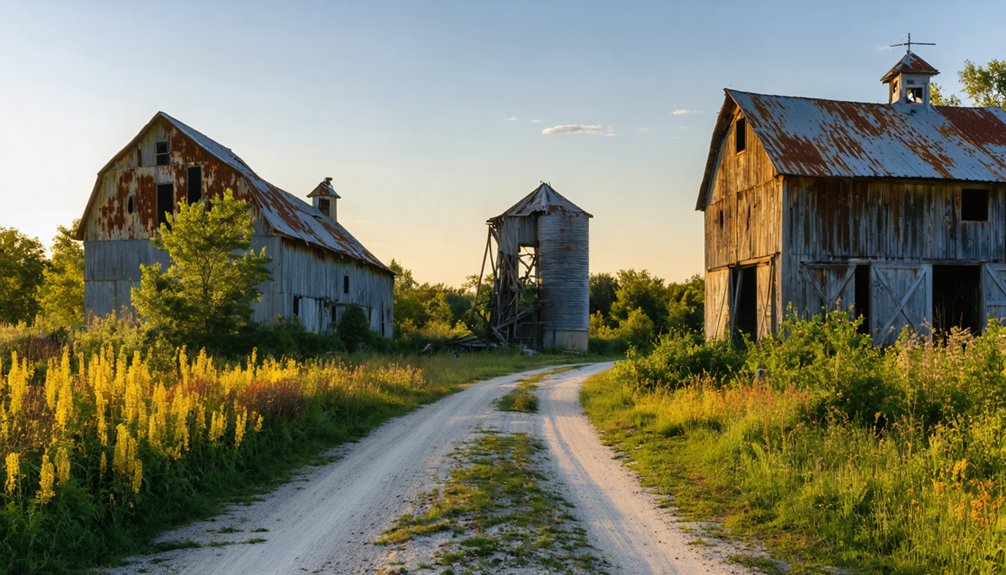
Planning a ghost town road trip to Quaker, Indiana means chasing a vanished Quaker settlement deep in southern Indiana’s rural heartland. You’ll navigate scenic backroads from Indianapolis, Louisville, or Cincinnati, arriving at overgrown foundations, weathered headstones, and aged fence lines that whisper forgotten stories. Pack sturdy boots, a quality camera, and offline maps since cell service is scarce. Nearby Salem and Paoli offer solid dining and lodging options. There’s far more to this haunting journey than meets the eye.
Key Takeaways
- Reach Quaker, Indiana from Indianapolis via US-31 south and SR-135 east, downloading offline maps due to limited cell service.
- Explore overgrown settlement remnants, weathered cemetery markers, and foundation outlines, wearing sturdy boots and bringing a quality camera.
- Visit during April through October, shooting during golden hour using wide-angle and macro lenses for optimal photography results.
- Dine at nearby spots like Farmhouse Table in Salem or Red Barn Diner in Paoli, and lodge at historical bed-and-breakfasts.
- Extend your trip by visiting ghost towns Lick Creek and Hindostan Falls, plus local archives holding original Quaker settlement records.
What Is Quaker, Indiana and Why Did It Disappear?
Tucked into the quiet countryside of Indiana, Quaker was once a tight-knit community built around the values of simplicity, pacifism, and hard work that defined early Friends settlements across the Midwest.
Its Quaker history stretches back to pioneering families who carved homesteads from raw land, established meetinghouses, and cultivated a self-sufficient way of life far removed from government overreach and social conformity.
But like many small settlements, Quaker couldn’t survive the pull of larger towns, shifting migration patterns, and economic change. Families drifted away, structures crumbled, and the community quietly faded from maps and memory.
Today, its ghost town significance lies in what it represents — a vanished experiment in intentional living.
Quaker’s ghost town significance lies not in its ruins, but in what it once dared to become.
For freedom-seekers and history lovers, exploring Quaker means walking ground where independent spirits once built something remarkable from nothing.
The Quaker Settlers Who Founded and Abandoned This Town
The settlers who founded Quaker, Indiana weren’t drifters — they were deliberate. Driven by deep religious conviction and a hunger for autonomy, these Friends migrated from the Carolinas and Virginia seeking land where they could live freely on their own terms.
Quaker history here reflects people who built community intentionally, establishing meeting houses, schools, and farms from raw wilderness.
Yet settlement challenges proved relentless. Harsh winters, isolation, economic hardship, and shifting migration patterns pulled families westward toward better opportunities.
Unlike towns anchored by commerce or rail lines, Quaker depended entirely on its tight-knit religious community. When that community scattered, the town followed.
As you walk this forgotten ground today, you’re tracing the footsteps of people who chose freedom boldly — and ultimately moved on chasing it again.
How To Reach Quaker, Indiana From Indianapolis, Louisville, and Cincinnati
Reaching Quaker, Indiana puts you at the intersection of three distinct road trip corridors, each offering its own slice of Hoosier countryside before depositing you at this forgotten settlement.
From Indianapolis, head south on US-31 through Greenwood, then cut east on SR-135 toward Orange County — roughly 90 minutes.
Louisville travelers cross the Ohio River north on I-65, branching west on SR-56 through scenic river bluffs, arriving in under two hours.
Cincinnati adventurers take I-74 west, then drop south on US-421 through Quaker settlements that once defined this region’s historical significance.
Each route threads through small towns preserving fragments of Indiana’s frontier past.
Download offline maps beforehand — cell service gets spotty once you’re trading pavement for forgotten backroads.
What’s Left To See at the Quaker, Indiana Ghost Town Site Today
Arriving at the Quaker, Indiana ghost town site, you’ll find the land has reclaimed most of what settlers built here, leaving behind a quiet, overgrown tableau that rewards patient exploration.
Ghost town legends speak of a thriving Quaker community that once shaped this landscape, and sharp eyes can still uncover remarkable traces.
Look for these remnants tied to Quaker history:
- Weathered cemetery markers – crumbling headstones half-swallowed by vegetation, bearing family names that echo the original settlement’s roots.
- Foundation outlines – shallow depressions and stone arrangements where meetinghouses or homesteads once stood.
- Aged fence lines – rusted posts and tangled wire marking boundaries settlers carefully established generations ago.
Bring sturdy boots, a camera, and genuine curiosity. This site doesn’t announce itself — you’ll earn every discovery.
What To Bring and How To Photograph the Quaker, Indiana Site
Before you head out to the Quaker site, pack sturdy boots, a flashlight, bug spray, and plenty of water since the terrain can be uneven and overgrown.
Bring a camera with a wide-angle lens to capture the sprawling landscape and a macro lens to document small architectural details like weathered stone and rusted ironwork.
You’ll get the most compelling shots during golden hour, when the low-angle light casts dramatic shadows across the remnants and gives the scene an eerie, timeless quality.
Essential Gear To Pack
Since Quaker, Indiana sits in a remote, overgrown stretch of countryside with little infrastructure, packing smart makes the difference between a frustrating visit and a genuinely rewarding one.
Chasing ghost town legends and uncovering buried Quaker history demands preparation, not improvisation.
Pack these three essentials:
- Navigation tools – Download offline maps before leaving. Cell service disappears fast in rural Indiana.
- Sturdy footwear and layers – Uneven terrain, thorny brush, and unpredictable Midwest weather will punish anyone underprepared.
- A quality camera with extra batteries – Natural light fades quickly among overgrown trees, and you’ll want sharp images of any surviving structures, markers, or landscape features.
Bring water, a basic first-aid kit, and a charged power bank. Freedom-seekers explore longer when they’re self-sufficient.
Capturing Compelling Ghost Town Photos
Once your gear is loaded and you’re ready to hit the road, your camera becomes your most powerful tool for documenting what remains of Quaker, Indiana.
Ghost town photography demands patience and intentionality. Shoot during golden hour when soft light rakes across crumbling foundations, revealing texture and depth invisible at midday. Get low, frame historical landmarks against dramatic skies, and let overgrowth tell its own story.
Bring a wide-angle lens for sweeping contextual shots and a macro lens for weathered details — rusted hinges, faded inscriptions, and fractured timber. Shoot in RAW format to maximize post-processing flexibility. Embrace shadows. Decay creates compelling contrast.
Respect the site by never moving artifacts for composition. Document exactly what you find. Your photos preserve what time continues erasing.
Best Time of Year To Visit Quaker, Indiana
Timing your visit to Quaker, Indiana can make all the difference between a memorable ghost town experience and a frustrating one. The best visiting months fall between April and October, when weather conditions favor exploration.
- Spring (April–May): Wildflowers blanket abandoned fields, creating stunning photography backdrops while mild temperatures keep you comfortable during long walks.
- Summer (June–August): Longer daylight hours maximize your exploration time, though you’ll want to arrive early before midday heat sets in.
- Fall (September–October): Seasonal activities like leaf-peeping transform the overgrown landscape into breathtaking amber and crimson scenery, perfect for atmospheric ghost town photography.
Winter visits aren’t impossible, but frozen ground and limited visibility make traversing historical sites genuinely challenging.
Choose your season wisely and you’ll reveal Quaker’s fullest potential.
Where To Eat and Sleep Near Quaker, Indiana
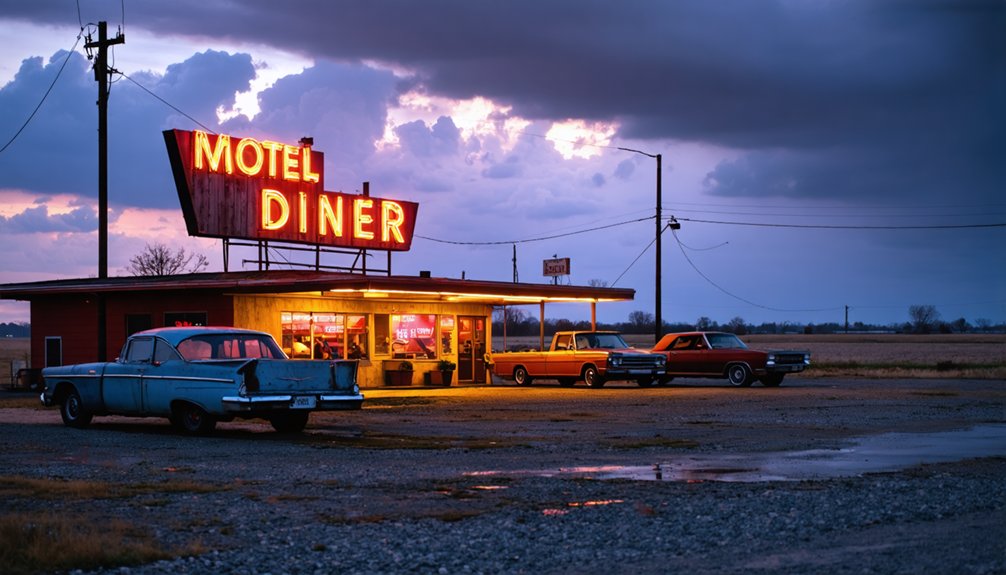
After exploring Quaker’s eerie remnants, you’ll want to refuel and rest. Nearby towns like Salem and Paoli offer your best bets for both.
You’ll find classic Midwestern diners, family-owned restaurants, and casual eateries within a short drive that serve up hearty meals perfect for a road-weary explorer.
For lodging, small-town bed-and-breakfasts, budget motels, and charming inns in the surrounding area keep you close to the action without sacrificing comfort.
Nearby Dining Options
Exploring a ghost town works up an appetite, and you’ll find a handful of solid dining and lodging options within a short drive of the Quaker settlement area.
The surrounding region offers local cuisine rooted in Midwestern tradition, carrying its own historical significance tied to the communities that once thrived here.
- The Farmhouse Table (Salem) – Farm-to-table comfort food reflecting the agricultural heritage of Washington County.
- Red Barn Diner (Paoli) – Classic American breakfasts and hearty lunches perfect for road-trippers refueling between stops.
- Main Street Grille (French Lick) – A relaxed spot offering regional specialties just 30 minutes away.
Pack your curiosity and arrive hungry — these local spots reward adventurous travelers who appreciate honest, unpretentious food.
Local Lodging Choices
Whether you’re planning an overnight stay or a quick pit stop between ghost town explorations, the lodging options near Quaker, Indiana won’t disappoint.
Salem and Paoli offer charming bed-and-breakfasts deeply connected to the region’s historical preservation efforts, letting you sleep surrounded by genuine Quaker heritage. Several innkeepers actively maintain period architecture while providing modern comforts, so you’re never sacrificing convenience for authenticity.
Budget-conscious travelers will find affordable motels along State Road 135, perfectly positioned for early morning ghost town departures.
After settling in, you’ll discover that local dining options are walkable from most accommodations, making evening meal planning effortless.
Some properties even offer curated guides highlighting nearby historical sites, underground railroad landmarks, and preserved Quaker farmsteads — giving your road trip deeper context before you hit the road again.
Other Indiana Ghost Towns To Pair With Your Quaker Road Trip
Indiana’s ghost town landscape stretches far beyond Quaker, and pairing your visit with nearby abandoned settlements can turn a single-stop trip into an unforgettable historical expedition.
Combining Quaker history with broader ghost town exploration reveals Indiana’s layered past.
Consider adding these stops to your route:
- Lick Creek (Orange County) – This racially integrated Quaker settlement from the 1810s offers powerful historical contrast and nearly vanished ruins worth discovering.
- Hindostan Falls (Martin County) – A once-thriving river town wiped out by disease in the 1820s, now reclaimed by wilderness.
- Rome City ruins (Noble County) – Faded Victorian-era remnants surrounded by lake country, perfect for adventurous wanderers craving atmospheric stops.
Each destination deepens your understanding of Indiana’s forgotten communities.
Local Museums and Archives That Document the Quaker, Indiana Story

Scattered across south-central Indiana, small museums and county archives hold the fragile paper trail that keeps Quaker’s story from disappearing entirely.
You’ll find Quaker Heritage documented in faded land deeds, meeting minutes, and handwritten journals that reveal the settlement’s Historical Significance far beyond what roadside markers tell you.
Start at the Orange County Historical Society, where staff can direct you toward Lick Creek records.
Washington County’s public library genealogy room holds settlement maps worth your time.
Don’t overlook the Indiana State Archives in Indianapolis, which stores early land transaction records connecting Quaker families to specific parcels.
Each archive visit rewards you with raw, unfiltered history that no curated exhibit can replicate.
Bring a notebook, budget several hours, and embrace the detective work that serious ghost town exploration demands.
Day-by-Day Itinerary for a Quaker, Indiana Ghost Town Road Trip
Three days gives you enough time to trace Quaker’s ghost town story without rushing the details that make it meaningful.
Pack light, bring curiosity, and let the landscape tell its own version of Quaker History.
- Day 1 – Drive into the region, locate original settlement boundaries, and photograph remaining structural remnants before daylight fades.
- Day 2 – Visit local archives and museums documenting Ghost Towns across Indiana’s rural corridors, focusing specifically on Quaker community records and migration patterns.
- Day 3 – Walk the surrounding countryside, cross-reference historical maps with current terrain, and document your findings before heading home.
You’ll leave understanding exactly why these communities vanished and why their silence still speaks louder than most living towns ever could.
Frequently Asked Questions
Is There an Admission Fee to Access the Quaker, Indiana Ghost Town Site?
You’ll find no admission fee to explore this ghost town history freely! Pack your visitor tips essentials, hit the open road, and discover Quaker, Indiana’s forgotten past on your own adventurous, unrestricted terms.
Are Pets Allowed When Visiting the Quaker, Indiana Ghost Town Property?
Confirmed pet policies for Quaker, Indiana aren’t available, so you’ll want to contact local authorities before bringing furry companions. Practice proper ghost town etiquette by keeping pets leashed and respecting the historic, adventurous surroundings you’re exploring.
Is the Quaker, Indiana Site Accessible for Visitors With Mobility Limitations?
Like uncharted territory, accessibility features and visitor accommodations at Quaker, Indiana remain unclear. You’ll want to contact local authorities before your adventure to confirm whether mobility limitations affect your ability to freely explore this historic ghost town site.
Can Visitors Legally Collect Artifacts or Souvenirs From the Ghost Town Site?
You can’t legally collect artifacts or souvenirs, as artifact preservation laws and legal regulations strictly protect historical sites. Respect these boundaries, document your discoveries through photography instead, and you’ll still experience an incredibly rewarding, adventurous exploration of history!
Are Guided Tours Ever Offered Specifically at the Quaker, Indiana Ghost Town?
Over 90% of ghost towns lack formal tours! You won’t find regularly scheduled guided tours here, but local legends and ghost town history come alive when you explore independently, embracing the freedom of self-guided discovery.
References
- https://www.indianaconnection.org/gone-home-revival-lick-creek/
- https://theclio.com/entry/181895
- https://www.in.gov/dnr/historic-preservation/files/hp-Blue-River-Quaker-Settlement-Rural-HD.pdf
- https://indianahistory.org/wp-content/uploads/a9b3c346e4e669f4c182353d9dd6f35f.pdf
- https://www.indianalandmarks.org/2025/07/recognition-for-washington-county-heritage/
- https://lincolnquakers.com/2019/09/27/indiana-view-of-quakers-during-the-civil-war/
- https://www.blueriverfriends.org/index.php/salem-indiana-quaker-settlement/blue-river-quakers-and-slavery