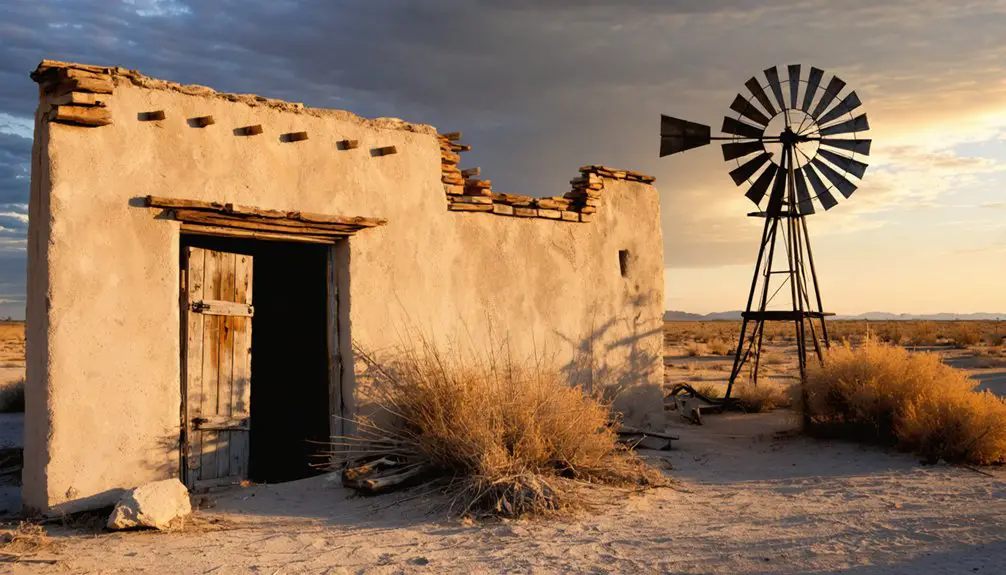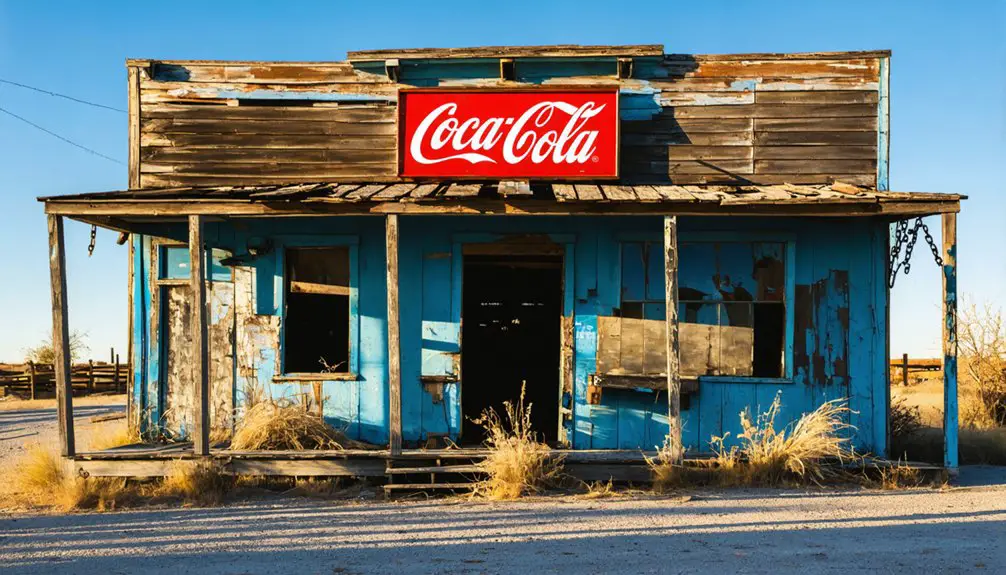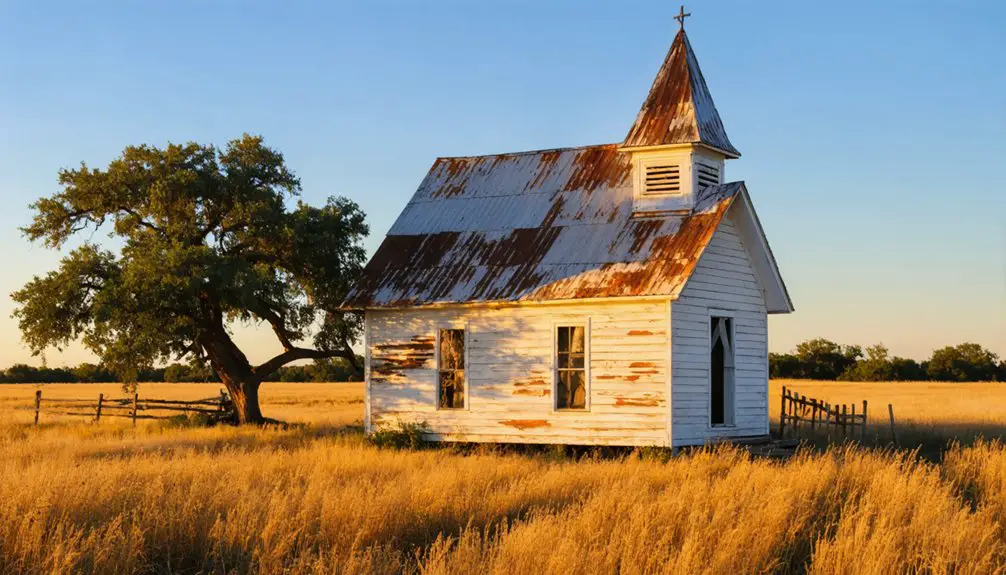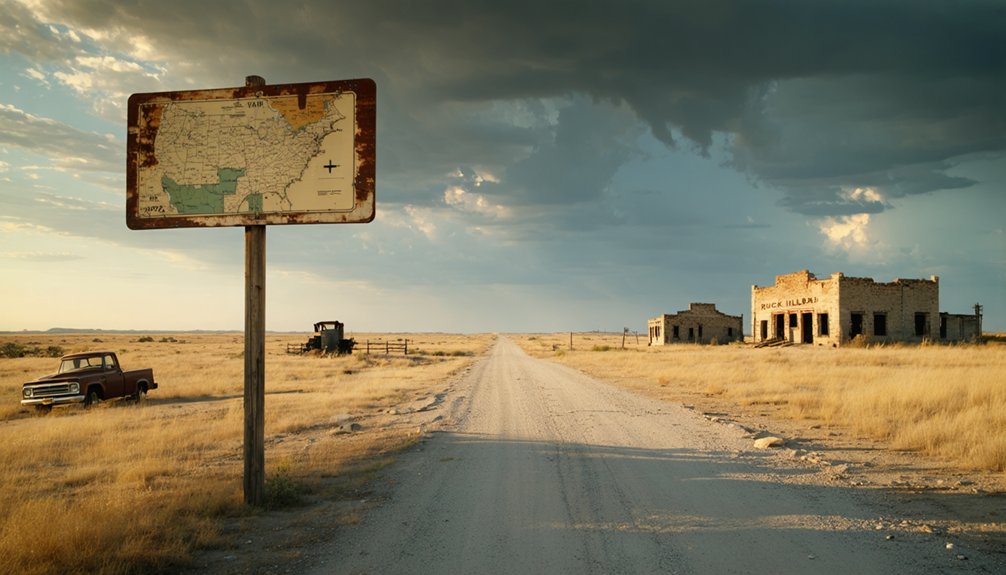
You’ll face an immediate puzzle when planning your Rock Island road trip: three different Texas settlements claimed this name. Washington County’s plantation ghost sits somewhere along the Brazos River’s shifting banks, while Colorado County’s 1897 railroad town near Houston still sparks debate about whether it’s truly abandoned. Then there’s Glenrio on the Panhandle border—originally called Rock Island—where crumbling Route 66 relics await your camera. Each destination demands different preparation, seasonal timing, and historical context to maximize your ghost-hunting adventure.
Key Takeaways
- Texas has three locations called Rock Island: Washington County (antebellum settlement), Colorado County (1897 railroad town), and Glenrio (Route 66 border town).
- Colorado County’s Rock Island sits sixty-five miles west of Houston and peaked at over 500 residents by 1925.
- Glenrio straddles the Texas-New Mexico border with decaying Route 66 architecture after Interstate 40’s 1973 bypass.
- Strategic regional loops are more efficient than random routes across Texas’s 268,000 square miles for visiting multiple ghost towns.
- Essential planning requires old county maps, historical society contacts, GPS coordinates, and seasonal weather considerations.
Understanding the Three Different Rock Island Ghost Towns in Texas
The name “Rock Island” might confuse you when you’re plotting your ghost town adventure across Texas. You’ll find the economic factors behind Rock Island‘s rise and decline centered on railroad commerce – this particular ghost town straddling the Texas-New Mexico border was named after the Rock Island Railroad that established it in 1903.
Originally called Rock Island before becoming Glenrio, it’s distinct from other Texas locations sharing similar names. The cultural significance of Rock Island’s architectural remnants shines through preserved structures like the Streamline Moderne Texaco station and Little Juarez Diner.
When you’re traversing toward Deaf Smith County, remember you’re seeking the Route 66 ghost town that embraced both Scottish and Spanish naming traditions, despite lacking the valley and river its name suggests.
Washington County’s Original Rock Island: The Plantation Settlement Lost to Progress
Long before Route 66 ghost towns captured America’s imagination, Washington County’s Rock Island thrived along the Brazos River as a plantation settlement rooted in Texas’s antebellum past.
You’ll find conflicting histories about whether it stood east or west of the river—river path changes likely shifted boundaries during its existence, explaining the confusion.
Colorado County’s Rock Island: The Agricultural Community That Still Debates Its Status
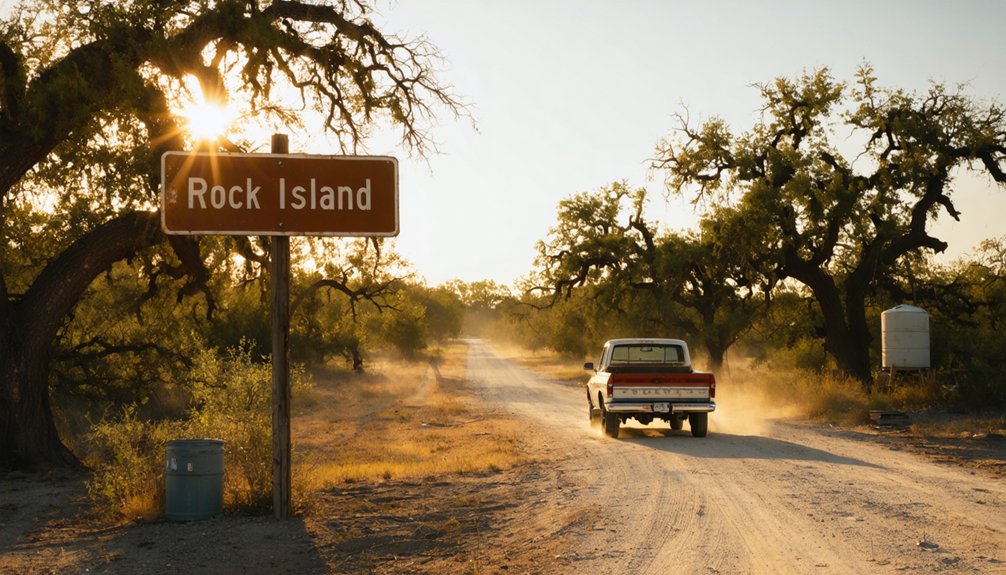
Unlike its Washington County namesake, Colorado County’s Rock Island emerged during a different era entirely—born not from plantation wealth but from railroad ambition and dreams of agricultural prosperity. You’ll find this settlement sixty-five miles west of Houston, where original residents arrived in 1897 chasing visions of a tropical paradise near the Gulf. They established a thriving agricultural hub that peaked at over 500 residents by 1925.
Here’s where the debate gets interesting: locals bristle when outsiders call their home a ghost town. Sure, mechanized agriculture decline shuttered businesses and scattered the population. Yet community maintained sustainability persists through remaining residents who’ve watched their structures bake under the East Texas sun for generations. They’re still here, still defying easy classification.
Glenrio’s Rock Island Connection: Route 66 Ruins on the Texas-New Mexico Border
When the Chicago, Rock Island, and Pacific Railroad punched through the barren Texas Panhandle in 1901, it planted the seeds for one of Route 66’s most haunting border settlements. You’ll find Glenrio straddling the state line—where decaying railroad infrastructure meets remnant motel architecture frozen since Interstate 40 bypassed it in 1973.
The town’s layout tells its survival story: Texas-side bars were forbidden in dry Deaf Smith County, while New Mexico’s higher gas taxes kept fuel stations on the Texas side. Walk among seventeen utilitarian buildings with stucco walls and flat roofs. You’ll spot the bricked-over Little Juarez Cafe, abandoned Texaco station, and that rusting 1968 Pontiac Catalina—silent witnesses to Route 66’s glory days serving westward-bound travelers.
Mapping Your Multi-Stop Ghost Town Adventure Across Texas
Texas sprawls across 268,000 square miles, and plotting an efficient ghost town route requires strategic clustering rather than zigzagging randomly across counties. You’ll discover colonial era abandonments alongside prosperous rail junction decline sites when you map regional loops.
The Panhandle offers concentrated exploration—Tascosa, Middlewell, and Electric City form a tight circuit. West Texas delivers dramatic desert ruins from Lobo through Marfa to Terlingua’s quicksilver mines near Big Bend.
Essential Route Planning Tools:
- Old county maps pinpointing abandoned railroad corridors and forgotten settlements
- Historical society contacts for accessing private property and hidden locations
- GPS coordinates for sites like Aldridge (County Road 1104A off U.S. 69)
- Seasonal considerations—visit Terlingua during November’s chili cookoff or Bluffton when drought exposes submerged structures
Central Texas connects Belle Plain with Independence for compact historical touring.
Frequently Asked Questions
What Safety Precautions Should I Take When Exploring Abandoned Ghost Town Sites?
You’ll need to “read the room” when structures whisper danger—hazardous structures demand sturdy boots and respirators. Wildlife considerations mean carrying deterrents. I’ve learned: test floors, mark exits, travel with buddies, and trust your gut instincts always.
Are There Nearby Accommodations for Overnight Stays During the Road Trip?
You’ll find excellent overnight options nearby, including Casa Lago’s spacious cabin rentals that sleep 15 guests, plus campground options like Thousand Trails Colorado River resort. Brenham and Columbus offer convenient hotels for your ghost-hunting adventure.
Can I Legally Access and Photograph the Rock Island Ghost Town Locations?
You’ll face trespassing risks since Rock Island sits on private property. Before photographing these sun-bleached structures, you must obtain owner permission. Private property concerns make unauthorized access illegal, potentially leaving you uninsured and facing legal consequences.
What Supplies and Equipment Should I Bring for Rural Texas Exploration?
You’ll need survival gear essentials like water, first aid, and navigation tools. Off-road vehicle preparedness means spare tires, extra fuel, and recovery equipment. Pack sun protection and emergency supplies—Texas backroads don’t forgive the unprepared adventurer.
Are Guided Tours Available for Any of the Rock Island Locations?
Like a lone tumbleweed rolling through abandoned streets, you’ll navigate Rock Island solo—no guided tours exist here. You’re free to create self-guided tours through this ghost town, though nearby Fort Worth offers local expert guidance if you crave company.