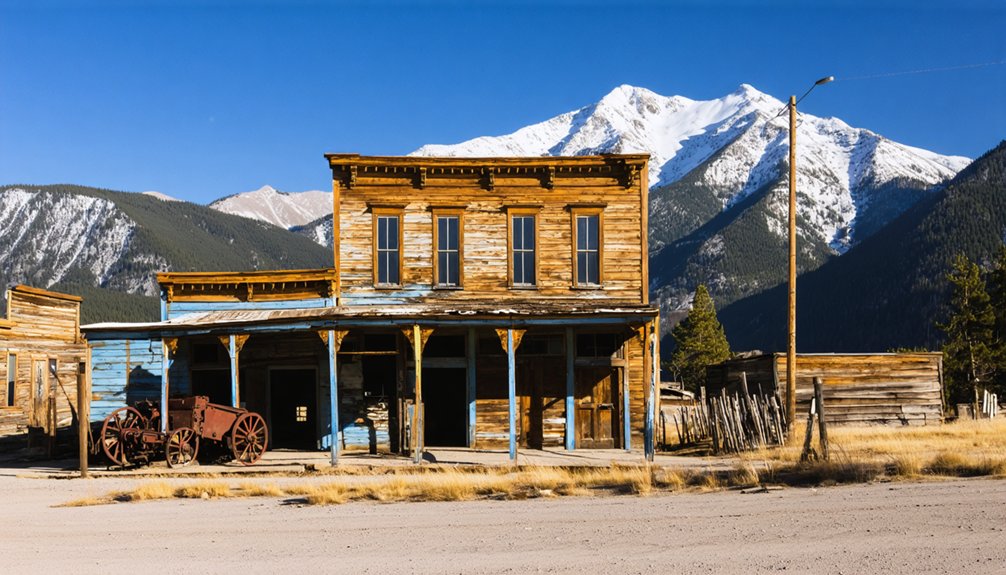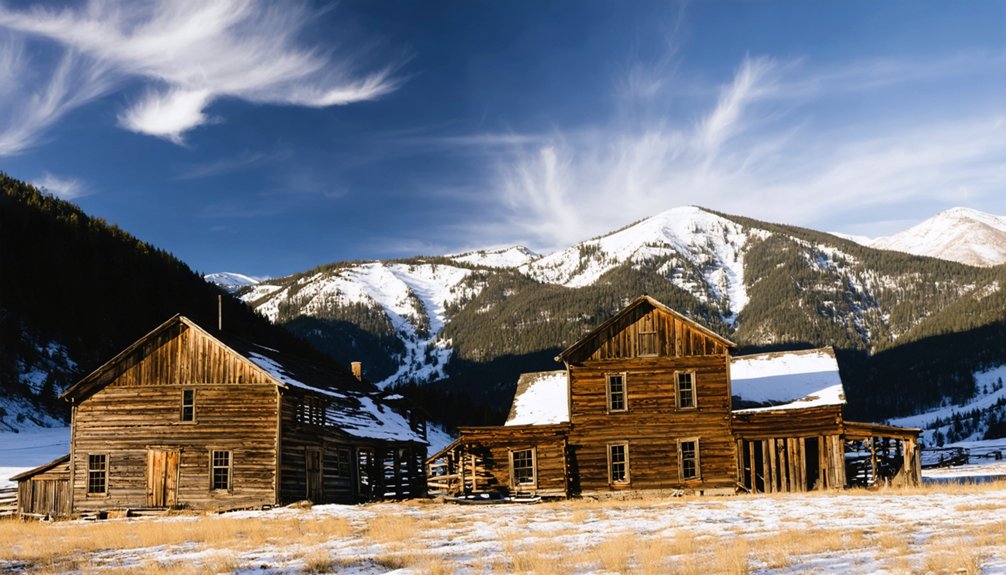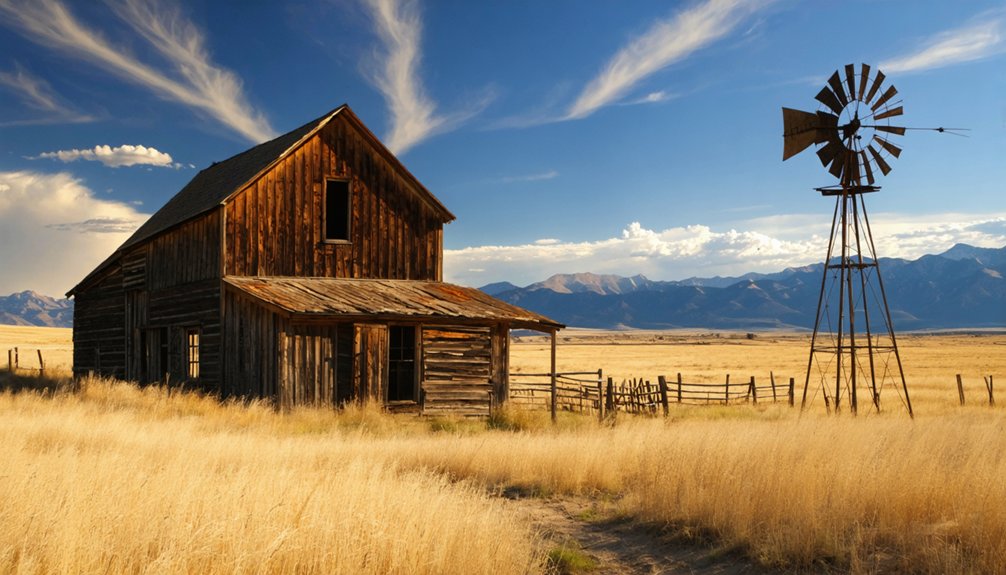
Roggen, Colorado is a genuine ghost town just an hour from Denver, where abandoned homes, a derelict motel, and a crumbling gas station line a dusty main street frozen in post-WWII decline. You’ll want to pack water and fuel before you arrive, since no services exist there. Spring and fall offer the best golden-hour photography conditions. From Roggen, you can build a full Weld County loop through sweeping grasslands and local farms — and there’s plenty more to uncover ahead.
Key Takeaways
- Roggen sits about one hour from Denver via I-76 northeast and Highway 52 East, making it an easy day trip destination.
- No services exist in Roggen, so pack water and fuel before leaving your starting point.
- The town features abandoned homes, a derelict motel, and a gas station reflecting post-WWII agricultural and railroad decline.
- Visit during spring or fall at dawn or dusk for optimal golden-hour photography of Roggen’s weathered structures.
- Maximize the trip by looping through Pawnee National Grassland and returning south through Brighton for local produce.
What Makes Roggen, Colorado a True Ghost Town?
When you roll into Roggen, Colorado, the silence hits you before anything else. Abandoned homes and shacks line the dirt road main street, their weathered frames frozen in time alongside an active railroad track.
A derelict motel and gas station stand as hollow reminders of busier days, while only a handful of residents occupy the remaining structures.
That contrast is exactly what gives Roggen its ghost town allure. Once a thriving railroad and wheat-production hub in the early 1900s, this Weld County community saw its population steadily vanish throughout the latter half of the 20th century.
Post-WWII agricultural shifts and railroad consolidation accelerated its decline.
Yet its historical significance remains intact, offering you an unfiltered glimpse into authentic American frontier life that polished tourist attractions simply can’t replicate.
Why Roggen Went From Railroad Hub to Ghost Town
Once an essential artery in Colorado’s early railroad network, Roggen’s rise and fall traces a familiar Western story of boom-and-bust economics. During its peak, the town thrived on wheat production and freight transportation, fueling growth across Weld County.
Roggen once hummed with railroad ambition — wheat fields and freight cars writing the earliest chapters of Weld County’s growth.
But economic shifts hit hard after World War II. Railroad consolidation reduced freight demand, agricultural markets transformed, and modern farming mechanization eliminated labor needs that once sustained local families.
These compounding pressures accelerated population decline throughout the latter half of the 20th century.
What you’ll find today reflects those dramatic changes — abandoned homes, a shuttered motel, and a desolate main street standing as quiet evidence of a community that couldn’t adapt fast enough.
Roggen didn’t disappear overnight; it simply outlived its original purpose.
What You’ll Find Walking Roggen’s Abandoned Streets
Walking Roggen’s main street, you’ll encounter a haunting tableau of roughly a dozen abandoned homes and shacks crumbling alongside a deserted motel and gas station.
The dirt road running parallel to active railroad tracks gives the town an eerily authentic Old West feel that’s hard to fabricate.
Cross those tracks, though, and you’ll spot the still-operational mill — a quiet reminder that not everything here has surrendered to time.
Crumbling Structures And Ruins
Stepping onto Roggen’s dirt main street, you’ll immediately sense that time stopped here decades ago. Crumbling facades of abandoned homes and shacks line your path, each one whispering forgotten history from Roggen’s agricultural and railroad heyday.
The old motel and gas station stand in poor condition, their weathered shells frozen mid-collapse. Roughly a dozen structures scatter throughout town, ranging from partially standing buildings to skeletal frames reclaimed by Colorado’s harsh plains climate.
The active railroad tracks running alongside the main street create a striking contrast — modern commerce threading through obvious decay. Every peeling board and broken window tells a story of post-WWII economic decline that slowly emptied this once-thriving community.
You’re not just observing ruins; you’re reading a chapter of authentic American West history written in wood and rust.
Railroad Tracks And Mill
Beyond the crumbling facades, the active railroad tracks running parallel to Roggen’s dirt main street pull your attention toward something unexpected — signs of life amid the decay.
These tracks once carried wheat shipments that fed wartime America, and their continued operation connects you directly to Roggen’s railroad history in a tangible, visceral way.
Cross those tracks and you’ll discover the town’s working mill, a striking contrast to everything surrounding it.
While abandoned homes deteriorate just yards away, mill operations continue quietly, keeping one thread of Roggen’s agricultural identity intact.
Watching grain move through an active facility while ghost town ruins frame your peripheral vision creates an atmosphere unlike anything staged tourism can replicate.
It’s raw, authentic, and completely yours to explore at your own pace.
How to Reach Roggen From Denver or Fort Collins
Reaching Roggen from either Denver or Fort Collins takes roughly an hour, making it an easy day-trip destination from both cities.
For Denver routes, head northeast on I-76, then exit toward Highway 52 East, which drops you directly into Weld County’s open plains. You’ll feel the landscape shift almost immediately as Denver’s suburban sprawl gives way to wide-open farmland.
For Fort Collins routes, take Highway 14 East toward Ault, then connect south through Greeley onto Highway 34 East before cutting down to Highway 52. Both approaches deliver you through striking agricultural terrain before the dirt roads and railroad tracks of Roggen appear on the horizon.
Pack water, fuel up beforehand, and bring your camera — there are no services waiting for you once you arrive.
The Best Time to Visit Roggen for Photography
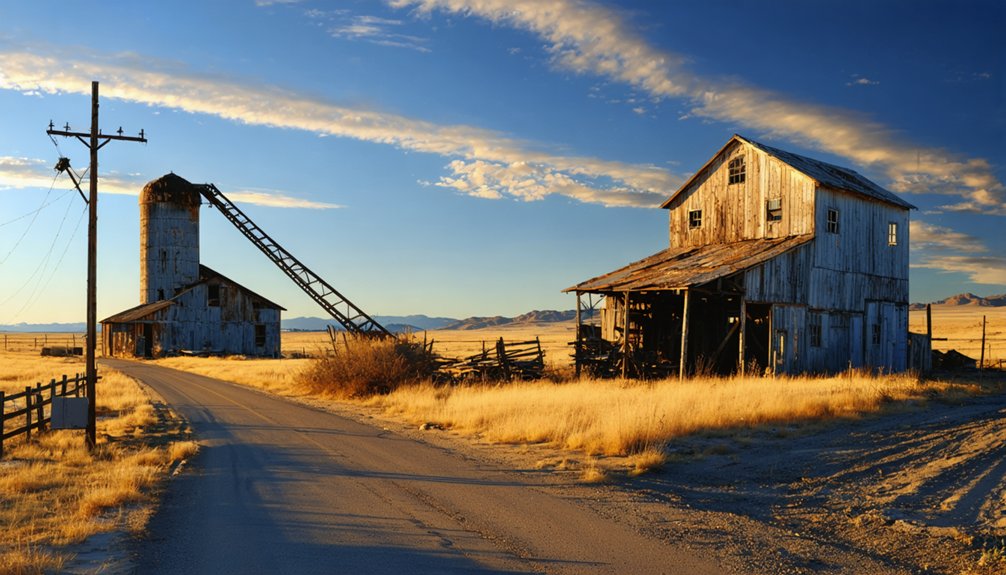
When you visit Roggen matters almost as much as the fact that you visit at all. Spring and fall offer the most rewarding photography tips for capturing this ghost town’s haunting beauty.
During these seasons, softer golden-hour light transforms the abandoned structures into striking visual stories. Summer’s harsh midday sun flattens textures and washes out the weathered wood details you’ll want to capture.
Arrive at dawn or dusk for the best angles along the dirt main street, where the railroad tracks create natural leading lines through your frame. The deserted motel, crumbling shacks, and active mill across the tracks each deserve dedicated attention.
Winter visits are possible but unpredictable weather can limit access on Weld County’s remote roads, so plan accordingly.
Make Roggen the Start of a Weld County Road Trip
Once you’ve soaked in Roggen’s eerie atmosphere, you can easily extend your adventure into a full Weld County road trip by heading northwest to Pawnee National Grassland, where sweeping plains and migratory birdwatching create a striking contrast to the abandoned town.
Map your route efficiently by linking Roggen, the Grassland, and any nearby historic farmsteads into a single loop that minimizes backtracking across the open prairie.
With a personal vehicle and a flexible itinerary, you’ll transform a quick ghost town stop into a rich, multi-destination journey through Colorado’s agricultural heartland.
Nearby Attractions Worth Exploring
Roggen makes an ideal jumping-off point for at least two other compelling Weld County destinations worth adding to your itinerary. Head northeast toward Pawnee National Grassland, where sweeping shortgrass prairie landscapes and exceptional birdwatching create a striking contrast to Roggen‘s abandoned streets.
Roadside historical markers along the route add fascinating context about frontier settlement and agricultural heritage throughout the region.
After exploring the grasslands, drive southwest toward Denver Botanic Gardens at Chatfield for a completely different experience.
Between stops, you’ll find local dining options in nearby towns worth sampling before hitting the road again. This combination transforms a simple ghost town detour into a full-day adventure showcasing Colorado’s remarkable geographic and historical diversity.
Pack your camera, fuel up early, and give yourself plenty of daylight to cover the route comfortably.
Planning Your Route Efficiently
Starting your Weld County road trip in Roggen sets a compelling tone, since the town’s remote, time-worn character primes you for everything else the region offers.
From Roggen, route optimization becomes straightforward — head northwest toward Pawnee National Grassland, where sweeping shortgrass prairie landscapes reward explorers willing to push further off the beaten path.
Scenic detours along County Road 390 reveal working farmland and dramatic open skies that tell Colorado’s agricultural story without a single exhibit or sign.
If you’re heading back toward Denver, swing south through Brighton, picking up fresh local produce and fuel before the city.
This circular loop keeps backtracking minimal, maximizes terrain variety, and guarantees you experience Weld County’s full range — from ghost town silence to living, breathing plains communities.
Frequently Asked Questions
Is It Legal to Enter the Abandoned Buildings in Roggen?
Those weathered, crumbling walls whisper forbidden stories — you shouldn’t enter Roggen’s abandoned buildings, as trespassing laws apply. Urban exploration here demands you respect private property and take safety precautions, since structural collapse poses serious risks.
Are There Any Restroom Facilities Available for Visitors in Roggen?
You won’t find dedicated restroom accessibility or visitor amenities in Roggen’s ghost town setting. Plan ahead by bringing supplies or stopping at nearby Pawnee National Grassland, where basic facilities support your free-spirited adventure.
Does Roggen Have Any Overnight Camping Options Near the Town?
Roggen doesn’t offer direct camping, but you’ll find freedom-filled options nearby. Check camping regulations at Pawnee National Grassland, one of the area’s best nearby attractions, where you can pitch your tent and explore wide-open plains.
Are Pets Allowed When Exploring Roggen’s Abandoned Streets and Structures?
You’ll find no official pet restrictions in Roggen, but practice smart ghost town etiquette by keeping your furry companion leashed. Prioritize pet safety around unstable abandoned structures, rusty debris, and unpredictable terrain throughout the deserted streets.
Is There Any Cell Phone Coverage Available While Visiting Roggen?
Cell service availability in Roggen is spotty at best. You’ll likely notice dramatic signal strength comparison between urban areas and this remote Weld County plains location, so download offline maps before you venture out there!
References
- https://en.wikipedia.org/wiki/Roggen
- https://en.pons.com/translate/german-english/Roggen
- https://dictionary.cambridge.org/us/dictionary/german-english/roggen
- https://www.youtube.com/shorts/sNVhRM7g4ZQ
- https://en.wiktionary.org/wiki/Roggen
- https://www.roggenfarmerselev.com
- https://www.collinsdictionary.com/us/dictionary/german-english/roggen
- https://www.youtube.com/watch?v=tZmGVJtckxk
- https://www.thetasteofgermany.com/aurora-roggen-dinkel-rye-spelt-baking-mix-for-breads-17-5-oz/