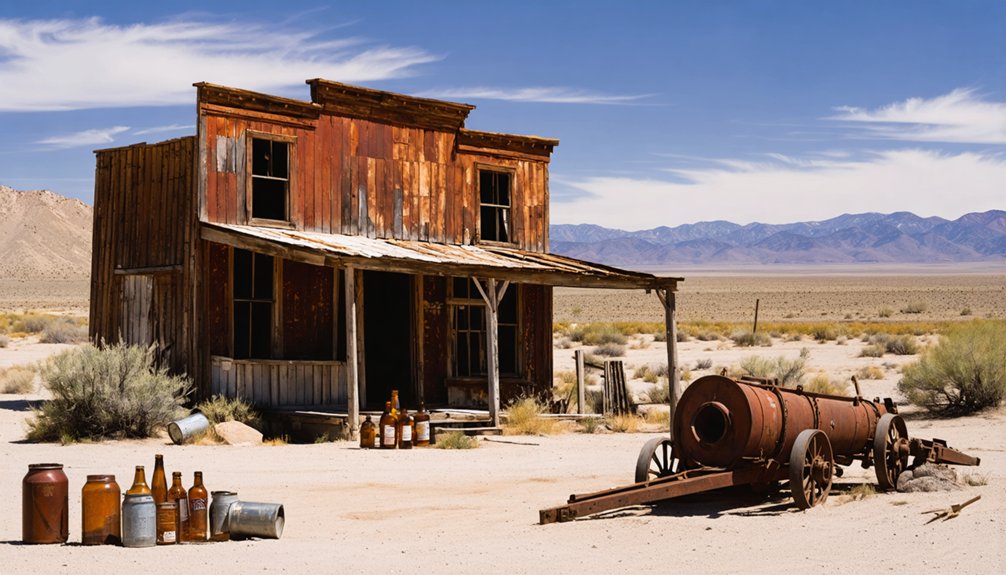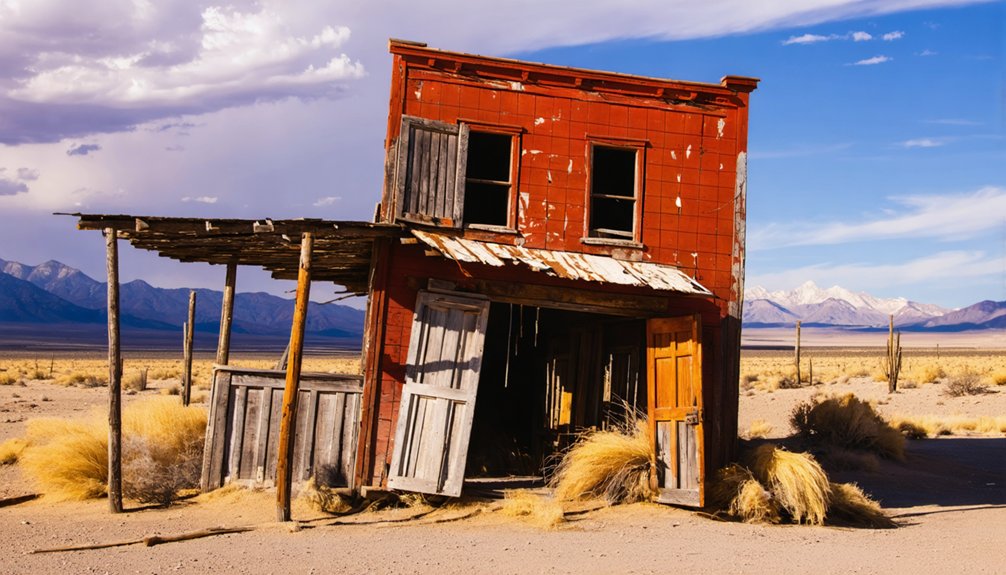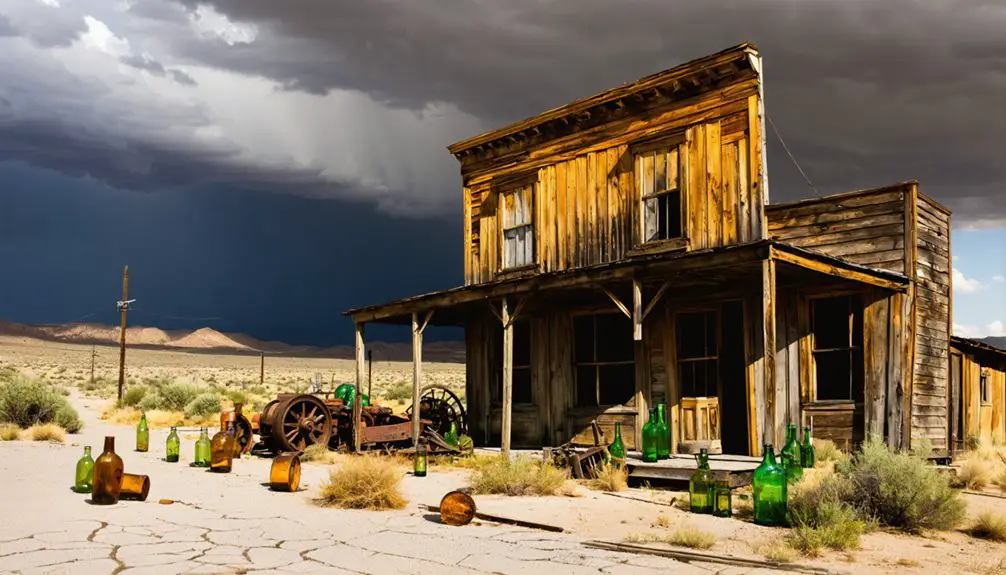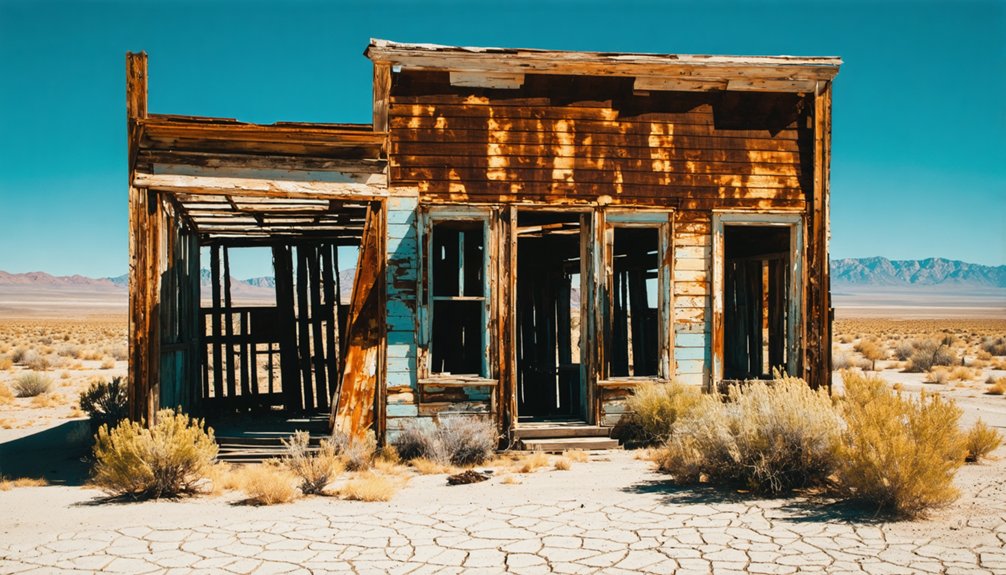
Ruby City, Nevada is a ghost town in Elko County that vanished by 1918, just six years after Utah land promoters promised it’d be home to 75 families. You’ll find no standing walls or roofs—just foundations etched into high desert silence. Start your drive from Elko, head seven miles south of Arthur, and pack water, sturdy boots, and a camera. There’s more to this haunting landscape than first meets the eye.
Key Takeaways
- Ruby City, Nevada, located seven miles south of Arthur, is accessible via 2WD-friendly roads, with Elko serving as an ideal starting base.
- Visit between June and October for favorable weather, optimal road conditions, and the best photography lighting.
- Bring water, sturdy footwear, layered clothing, a map, and a camera to handle remote high desert conditions.
- Explore Ruby City’s foundations alongside nearby ghost towns like Jarbidge and Tuscarora to enrich your road trip experience.
- Ruby City collapsed by 1918 due to water shortages, poor soil, failed irrigation, and an unforgiving high desert climate.
What Is Ruby City, Nevada?
Although it never fully took root, Ruby City, Nevada, is a genuine ghost town in Elko County that tells one of the American West’s most quietly tragic stories — a planned community that rose, faltered, and vanished within six short years.
Ruby City rose, faltered, and vanished — a ghost town that never fully became one.
Sitting at 6,106 feet, about seven miles south of Arthur, Nevada, it’s a place where ambition met harsh reality head-on.
Utah land promoters envisioned 75 families building lives here starting in 1912, but the land wouldn’t cooperate.
Its historical significance lies in that collision between frontier optimism and unforgiving terrain.
Today, preservation challenges are real — foundations are largely what’s left.
But if you’re drawn to abandoned places that still carry emotional weight, Ruby City rewards the detour.
Why Ruby City Failed After Just Six Years
When you stand among Ruby City’s crumbling foundations, you’re looking at the wreckage of two broken promises: water and soil.
The Utah land promoters who sold 75 families on this northeastern Nevada dream never delivered a reliable water supply, and the land itself refused to grow crops.
Water Supply Problems
Despite the optimism that drew 75 families to Ruby City’s high-desert setting, the land itself had other plans. Water scarcity struck at the heart of everything the Utah promoters promised.
They’d built a canal, but northeastern Nevada’s high desert doesn’t negotiate. The environmental challenges proved relentless — thin rainfall, unforgiving soil, and an irrigation system that simply couldn’t sustain 75 homesteads through dry seasons.
You can almost picture the moment settlers realized the land wouldn’t yield. Crops struggled. Wells disappointed. The canal that once symbolized ambition became a monument to miscalculation.
Soil Made Farming Impossible
Bad soil compounded Ruby City’s water troubles, turning an already fragile settlement into an impossible one. Even when settlers coaxed water through their canal, the ground beneath their boots refused to cooperate. Crops withered. Harvests failed. Seventy-five families had staked their futures on land that simply couldn’t sustain them.
By 1918, the dream collapsed entirely. What Utah land promoters once sold as opportunity had become a cautionary tale embedded in local legends about frontier ambition outpacing frontier reality.
Today, historical preservation efforts keep Ruby City’s story alive, even as only foundations remain above the soil that defeated its settlers.
When you visit, you’re walking ground that tested real people and won. That history hits differently when you’re standing right on top of it.
What You’ll Actually Find at the Ruby City Site Today
When you arrive at Ruby City today, you won’t find standing walls or storefronts — just foundations poking through the earth where 75 families once hoped to build something lasting.
The surrounding scenery softens the starkness, offering the kind of quiet, wide-open beauty that northeastern Nevada does so well.
Plan your visit for summer or autumn, since winter snow can cut off access and rob you of the full experience.
Foundations And Scenic Views
What remains of Ruby City won’t overwhelm you, but it’ll reward you if you know what you’re looking for. Foundations break the soil where 75 families once built lives from scratch — quiet evidence of historical architecture that never reached its potential. No walls stand, no rooflines cut the sky, but the geometry of those stone and earth outlines tells the story plainly.
What surrounds them, though, is stunning. Northeastern Nevada’s high desert opens wide here, offering the kind of scenery that makes abandoned places feel less tragic and more timeless. Local legends of failed promises and dry canals seem to echo across the landscape.
Bring a camera. The light, the silence, and the remnants combine into something worth the drive.
Best Visiting Seasons
Timing your visit to Ruby City makes a real difference. Summer and autumn are your best windows — roads stay passable, light stays generous, and you’ll get the clearest conditions for ghost town photography. That golden-hour desert light hits the remaining foundations beautifully, rewarding anyone willing to make the drive.
Spring can work, but unpredictable mud softens your options. Winter shuts things down hard. Heavy snow blankets northeastern Nevada’s high desert, making access genuinely risky and obscuring whatever historic architecture survives at ground level. You don’t want to discover that the hard way.
Plan for July through October if you’re serious about seeing Ruby City at its best. It’s a short stop, but the right season transforms it from a rough detour into something worth remembering.
When to Visit Ruby City for the Best Road Trip Experience
Summer and autumn are your best windows for making the drive out to Ruby City, when the high-desert roads of Elko County are clear and the scenery surrounding those old foundations is at its most striking. Winter snow shuts access down fast, and tourist safety becomes a real concern on remote Nevada roads with no services nearby.
Plan your visit between June and October to move freely, explore the remaining foundations without weather complications, and photograph the site in good light. Ruby City lasted only six years before bad soil and water failure ended the experiment, and what’s left deserves respectful attention.
Historical preservation starts with not visiting unprepared. Come when conditions favor you, and you’ll leave with a genuine feel for this forgotten corner of Nevada’s frontier past.
How to Get to Ruby City From Arthur, Nevada
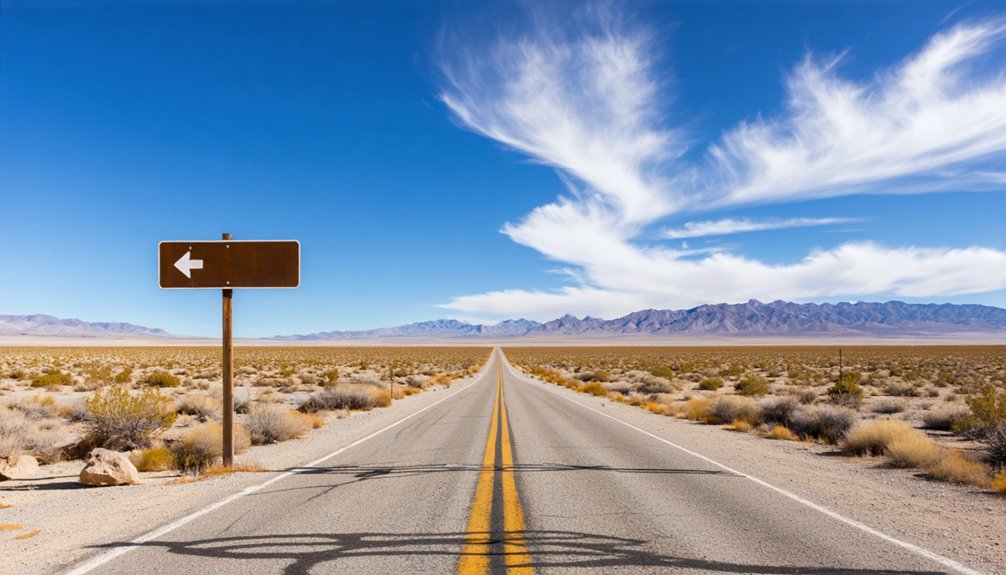
Ruby City sits about seven miles south of Arthur, Nevada, and the road out there’s straightforward enough for a standard 2WD vehicle, which means you don’t need a specialized rig to make this run.
Head south from Arthur and let the high-desert landscape open up around you. Watch for wildlife encounters along the way — pronghorn and jackrabbits move freely through this northeastern Nevada terrain, unbothered by much.
Before you leave the area, sample local cuisine in Elko, your most practical base, where Basque restaurants carry a frontier tradition that mirrors the independent spirit that once pushed settlers toward places like Ruby City.
The drive itself is short, direct, and honest — exactly the kind of road a ghost-town explorer wants beneath their wheels.
What to Pack for the Ruby City Drive
Before you roll south out of Arthur, pack like someone who respects the high desert rather than underestimates it. Ruby City’s elevation hits 6,106 feet, and the terrain shifts fast. Bring more water than feels necessary, a printed map you don’t need a signal to read, and sturdy boots for walking uneven foundations.
Carry a camera — the scenery earns it, and the site’s historical significance deserves documentation beyond memory. Toss in a notebook if local legends of failed promises and vanished families interest you; standing on those foundations tends to spark questions worth writing down.
Pack snacks, a first-aid kit, and layers. Summer heat fades quickly at elevation once the sun drops. Come prepared, and the desert rewards you with access rather than obstacles.
Other Elko County Ghost Towns Worth Adding to Your Route
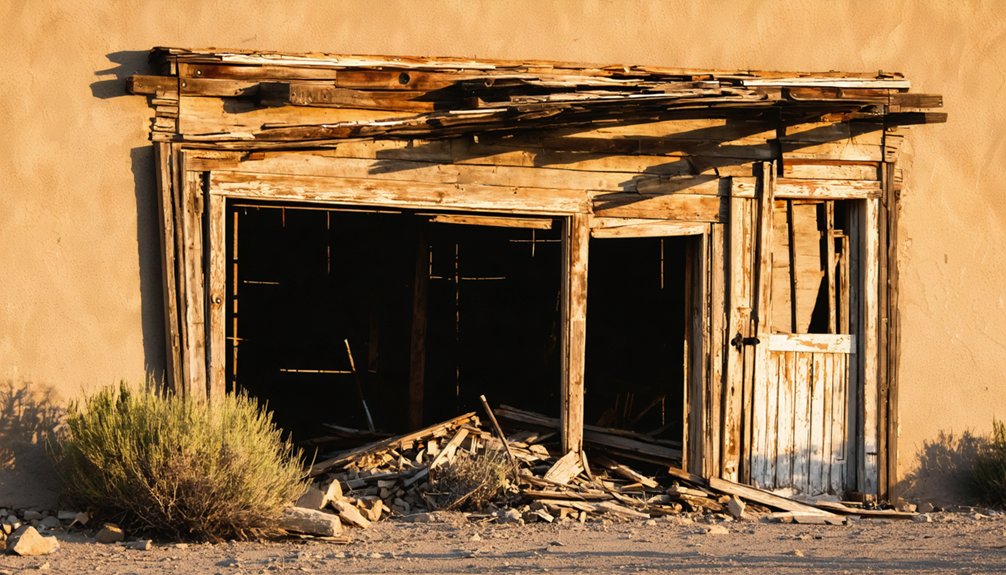
Once you’ve walked Ruby City’s foundations, Elko County keeps pulling you deeper into Nevada’s abandoned past — and the region rewards that curiosity generously.
Once you’ve touched Ruby City’s ruins, Elko County refuses to let you go — the abandoned past runs deep here.
The county holds dozens of sites carrying genuine historical significance — failed mining camps, collapsed rail towns, and homesteads that drought swallowed whole. Each carries its own local legends, whispered through old newspaper archives and weathered markers.
Jarbidge sits to the north, famous for frontier isolation and one of America’s last stagecoach robberies.
Tuscarora once boomed with silver money and Chinese immigrant labor.
You can string these stops together across long, open highways where traffic rarely interrupts your thinking.
Carry your maps, trust your instincts, and let the high desert tell you where to turn next — it rarely disappoints serious explorers.
Frequently Asked Questions
Is Ruby City on Private Land or Open to the Public?
The knowledge doesn’t confirm whether Ruby City’s land ownership is public or private — so you’d better investigate before you roam those foundations! Always research historical preservation laws and land ownership status to protect your adventurous freedom responsibly.
Are There Any Guided Tours Available for Ruby City?
No guided tours exist, so you’ll explore Ruby City’s foundations freely on your own terms. You’ll uncover historical artifacts and seize raw photography opportunities amid hauntingly beautiful scenery, charting your own independent course through Nevada’s forgotten frontier.
Can You Camp Overnight Near the Ruby City Ghost Town Site?
Foundations whisper history, yet silence rules the night. You’ll need to check local camping regulations before staying, but overnight safety in Elko County’s open desert rewards adventurous spirits craving true freedom beneath Nevada’s boundless, star-filled skies.
Is Ruby City Suitable for Children or Family Visits?
Yes, Ruby City’s open foundations and pretty scenery make it one of Nevada’s kid-appropriate attractions. You’ll discover family-friendly activities exploring ghost-town history together, sparking young imaginations about frontier settlers who dared build something from nothing.
Are There Any Entrance Fees to Visit Ruby City?
Like a page from history left open for all, you’ll pay no entrance fees at Ruby City. Explore its foundations freely, embrace historical preservation firsthand, and seize amazing photography opportunities without spending a dime.
References
- https://en.wikipedia.org/wiki/Ruby_City
- https://www.facebook.com/groups/397526214154529/posts/1718920642015073/
- https://www.ghosttowns.com/states/nv/rubycity.htm
- https://nvtami.com/2026/07/17/fort-ruby-the-worst-post-of-the-west/
- https://kids.kiddle.co/Ruby_City
- http://www.ghosttownsusa.com/ruby.htm
- https://en.wikipedia.org/wiki/Ruby_Hill
- https://en.wikipedia.org/wiki/List_of_ghost_towns_in_Nevada