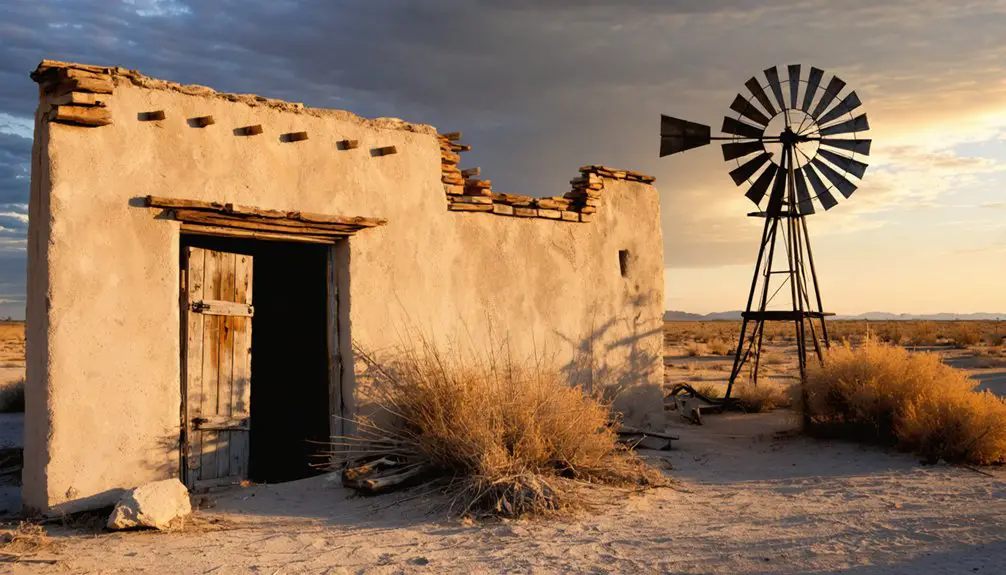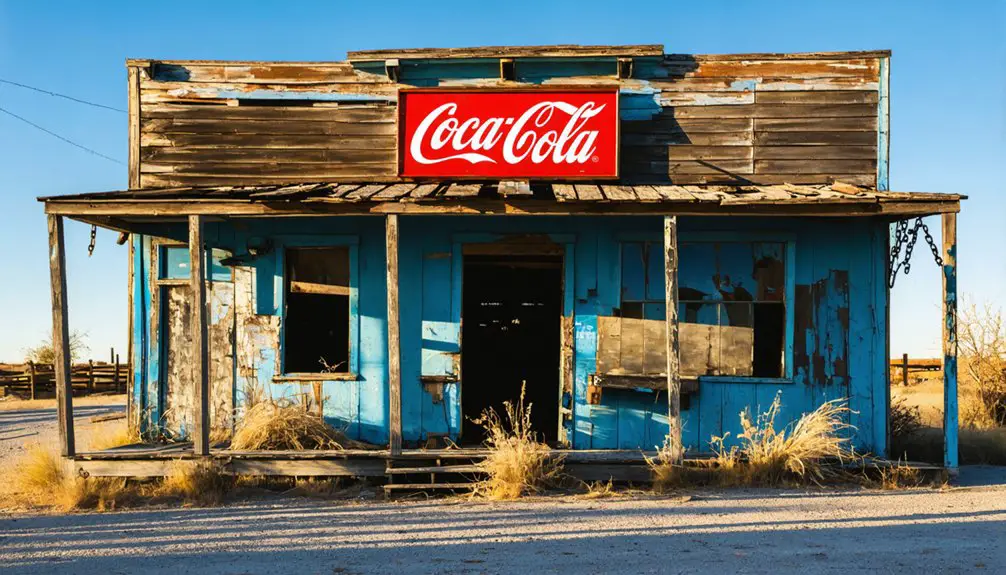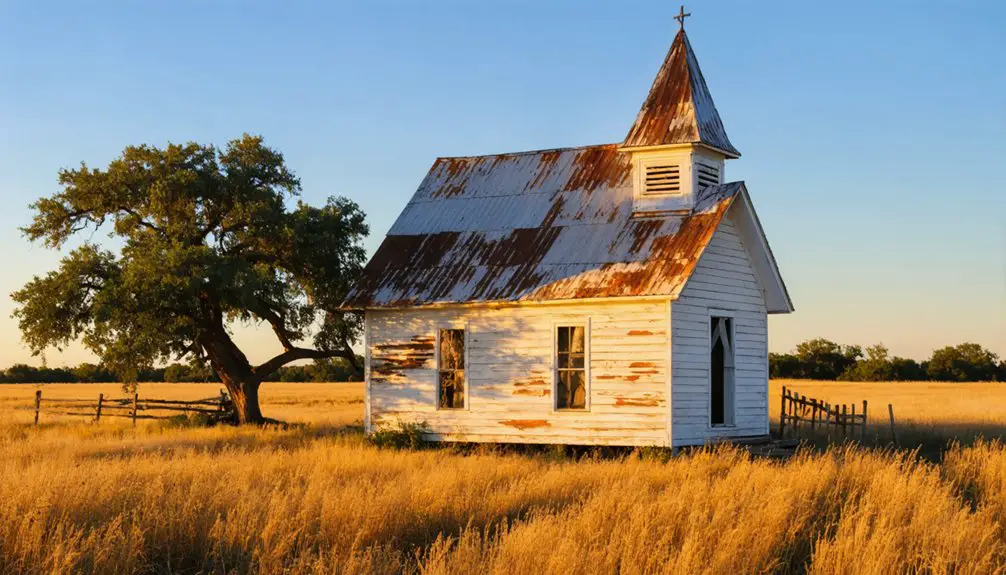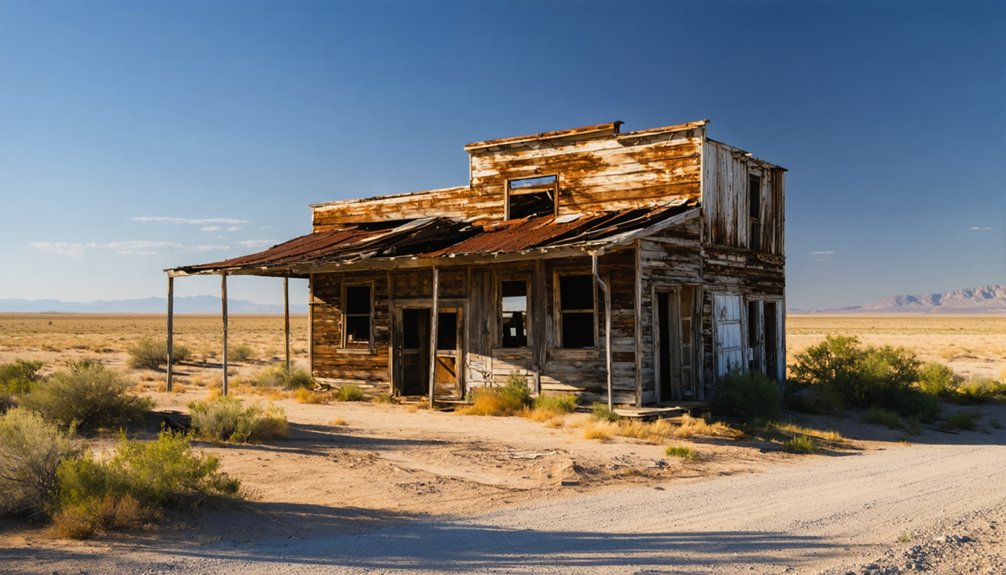
Planning a ghost town road trip to Sanco, Texas means heading to Coke County off State Highway 208, between Silver and Robert Lee. You’ll find weathered remains of a general store, two churches, and a fire-hollowed schoolhouse that nature has slowly reclaimed. Visit in spring or fall for the best experience, and bring water, sturdy shoes, and a camera — there are no services here. There’s far more to this hauntingly beautiful place than first meets the eye.
Key Takeaways
- Sanco, Texas, is a ghost town in Coke County featuring abandoned buildings, including a general store, two churches, and a fire-hollowed schoolhouse.
- Access Sanco via State Highway 208 between Silver and Robert Lee, suitable for standard 2WD vehicles without special off-road equipment.
- Visit during winter, spring, or fall to avoid extreme summer heat and enjoy wildflowers or golden autumn light.
- Pack essential supplies including extra water, a spare tire, sturdy shoes, a camera, and offline maps due to unreliable cell service.
- Approach Sanco respectfully, as crumbling structures and overgrown ruins offer a raw, historically rich experience rooted in local legend and heritage.
What’s Left to See in Sanco, Texas Today
Sanco’s weathered remains tell a quiet story of a town that refused to vanish entirely. You’ll find a scattered collection of abandoned buildings standing stubbornly against the West Texas sky, each one whispering a different chapter of the town’s past.
Walk among the crumbling walls of the general store, the old automobile garage, and two weathered churches — Methodist and Baptist — still recognizable despite decades of neglect.
Two churches still stand — Methodist and Baptist — their crumbling walls refusing to let Sanco be forgotten.
The fire-hollowed schoolhouse is particularly striking, its interior long since claimed by grass and brush. Nature has moved in, but the bones remain.
Designated a Texas historic landmark in 1966, Sanco rewards curious explorers who appreciate raw, unpolished history. No crowds, no fences, no admission fees — just open land and honest ruins.
How Sanco Went From Cotton Town to Ghost Town
Those crumbling walls you’re walking among didn’t fall overnight. Sanco’s ghost town transformation unfolded through decades of hard choices and harder circumstances.
The cotton decline followed a brutal sequence:
- World War I drought devastated small family farms, stripping away livelihoods.
- Larger South Plains and Panhandle operations undercut local farmers, making survival impossible.
- Cotton fields surrendered back to grassland, erasing generations of agricultural identity.
- The last store shuttered in the early 1970s, extinguishing Sanco’s final commercial heartbeat.
What you’re standing in wasn’t abandoned carelessly — it was released gradually, one family at a time.
Farmers who’d relocated an entire town in 1907, believing in something worth building, eventually faced odds too great to overcome. The land simply reclaimed what stubborn determination had temporarily borrowed.
How to Get to Sanco, Texas
You’ll find Sanco tucked away in Coke County, off State Highway 208 roughly halfway between the small towns of Silver and Robert Lee, near Yellow Wolf Creek.
To reach it, follow Highway 208 and watch for the turnoff that leads to this quiet stretch of West Texas rangeland.
The good news is that the roads into Sanco are accessible by standard 2WD vehicles, so you won’t need a truck or SUV to make the trip.
Sanco’s General Location
Tucked away in Coke County, Sanco sits off State Highway 208, roughly halfway between the small towns of Silver and Robert Lee. Its geographic features make it surprisingly accessible for a ghost town, with 2WD roads leading you straight there.
Here’s what anchors Sanco’s historical significance to this landscape:
- Yellow Wolf Creek winds through the area, giving the town its natural foundation.
- Prehistoric Native American camps once occupied this exact ground.
- Fort Chadbourne soldiers skirmished with Indians nearby during the 1850s.
- Comanche chiefs Sanaco and Yellow Wolf once camped here, inspiring the town’s name.
You’re not just visiting an abandoned settlement — you’re standing on layered history stretching back centuries. That alone makes the drive worthwhile.
Once you’ve got Sanco’s historical landscape in mind, getting there’s straightforward. Head to State Highway 208 in Coke County and position yourself halfway between Silver and Robert Lee.
You’ll find Sanco sitting quietly near Robert Wolf Creek, where ghost town legends have taken root in the surrounding ranchland for generations.
The roads accessing the site are 2WD-friendly, so you won’t need a specialized vehicle. That accessibility makes spontaneous exploration easy, giving you the freedom to arrive on your own terms.
Local folklore suggests the land itself carries echoes of Comanche camps and frontier skirmishes, which adds weight to every mile you drive closer.
Use grid 2 on regional maps to pinpoint the exact location and avoid unnecessary backtracking through this remote stretch of West Texas.
Road Conditions and Accessibility
Getting to Sanco doesn’t require a heavy-duty vehicle or a high-clearance truck—the roads leading in are 2WD accessible, making the site reachable for most standard cars and pickups.
Before heading out, keep these travel safety essentials in mind:
- Check road maintenance conditions after recent rainfall, as unpaved rural roads can become slick or rutted.
- Carry extra water and a spare tire—you’re traveling through remote Coke County terrain.
- Download offline maps before leaving cell service behind; signals are unreliable near Robert Lee’s outskirts.
- Tell someone your itinerary—remote destinations reward the prepared.
Off State Highway 208, halfway between Silver and Robert Lee, the route stays manageable year-round.
Winter, spring, and fall offer the most comfortable driving and exploring conditions.
When Is the Best Time to Visit Sanco?
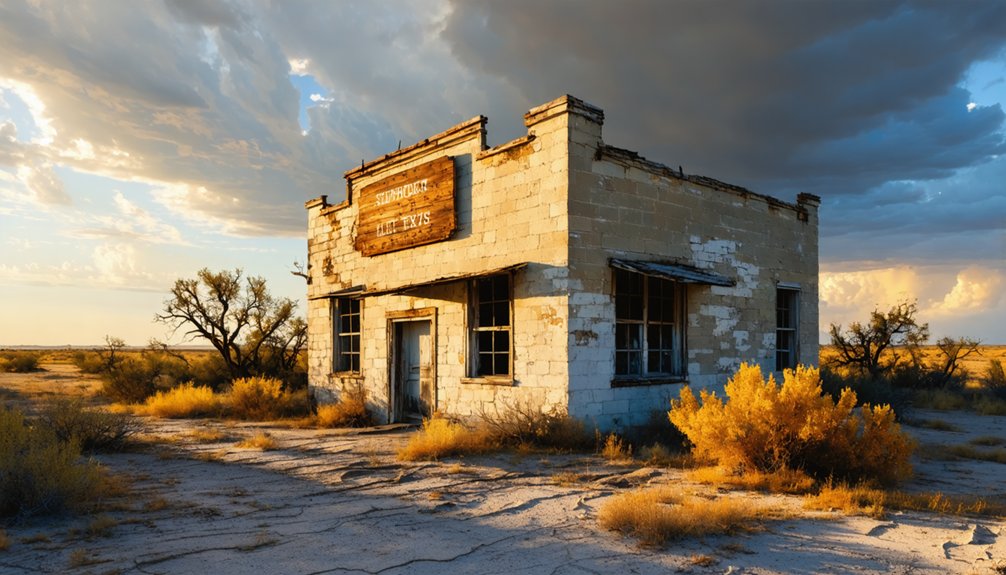
You’ll find Sanco most rewarding during winter, spring, and fall, when cooler temperatures make exploring the abandoned buildings and overgrown grounds far more comfortable.
Summer visits are possible, but the Texas heat turns the ghost town into an endurance test rather than an enjoyable experience.
Pack your camera and sturdy walking shoes for a crisp fall or spring morning, when the light plays beautifully off the weathered wood of the old general store and churches.
Ideal Seasons To Visit
West Texas weather can make or break a ghost town visit, so timing your trip to Sanco matters. Each season offers something distinct for the freedom-seeking explorer:
- Winter – Mild temperatures make wandering abandoned buildings comfortable, with clear skies enhancing seasonal attractions like dramatic West Texas sunsets.
- Spring – Wildflowers reclaim the old cotton fields, rewarding wildlife observations as birds return to the weathered schoolhouse and churches.
- Fall – Cooler air and golden light transform the crumbling structures into something almost cinematic.
- Summer – Scorching heat makes exploration punishing; arrive at dawn or avoid entirely.
Winter, spring, and fall give you the best conditions for exploring Sanco’s ruins without nature fighting against you every step of the way.
Weather Conditions To Expect
Sanco sits in the heart of West Texas, where the weather swings hard between extremes and doesn’t apologize for it. Understanding its weather patterns helps you plan a smarter visit.
Summers are brutal — triple-digit heat bakes the cracked earth and turns exploration into an endurance test. Winter brings sharp cold snaps, but mild stretches offer surprisingly comfortable wandering conditions.
Seasonal variations here follow a classic West Texas rhythm: unpredictable spring winds, scorching summers, pleasant falls, and brief but biting winters. Pack layers regardless of when you go.
The surrounding grasslands shift beautifully with each season, rewarding patient travelers who time their visit right. For the best experience, aim for late fall or early spring, when the land breathes easier and so will you.
Best Times To Explore
Knowing what weather to expect naturally shapes when you should actually go. Sanco rewards visitors who plan around its rhythms rather than fight them.
- Winter — Cool, clear days reveal abandoned structures without summer’s obscuring vegetation.
- Spring — Wildflowers soften Sanco’s melancholy beauty, making historical significance feel alive rather than forgotten.
- Fall — Mild temperatures let you linger over local legends, like Yellow Wolf’s nearby burial site, without rushing.
- Summer — Avoid it. Brutal heat makes exploration miserable and potentially dangerous.
You’re chasing freedom out here, not comfort — but heat exhaustion won’t make the journey meaningful. Choose winter, spring, or fall, and you’ll experience Sanco’s haunting atmosphere exactly as it deserves.
What to See Near Sanco on the Way to Robert Lee
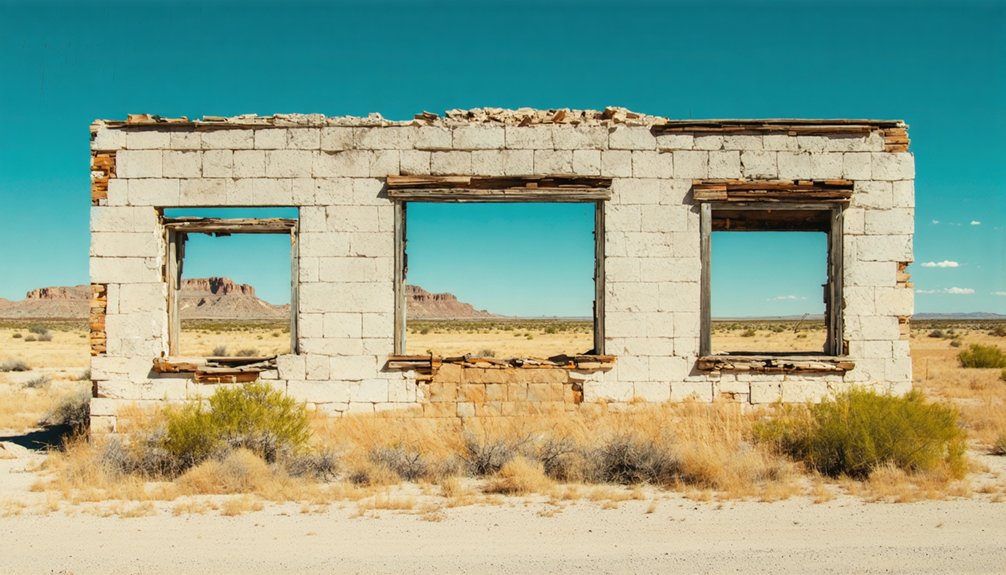
After leaving Sanco, the drive along State Highway 208 toward Robert Lee rewards you with the quiet beauty of Coke County’s rolling ranchland, where cotton fields long ago surrendered back to native grasses and open range.
Watch for local wildlife moving through the brush — white-tailed deer, wild turkey, and pronghorn aren’t uncommon along this stretch.
Pull over when you spot historical markers; they’ll ground you in the layered story of a region shaped by Comanche camps, frontier soldiers, and determined cotton farmers.
Robert Lee itself offers a worthwhile stop, with Coke County’s courthouse anchoring a small town that outlasted dozens of communities like Sanco.
It’s a fitting end to a road trip that connects forgotten places to living ones.
What to Pack for a Remote Ghost Town Visit
Visiting a remote ghost town like Sanco calls for some practical preparation before you leave the pavement behind. The 2WD roads are accessible, but you’re still venturing into isolated Coke County ranchland.
Even paved roads have endpoints — and Sanco sits well past where Coke County’s ranchland takes over.
Use this ghost town essentials packing checklist before you go:
- Water and snacks — No services exist; bring more than you think you’ll need.
- Sturdy walking shoes — Abandoned structures and uneven terrain demand solid footing.
- Camera and extra batteries — The crumbling general store and fire-hollowed schoolhouse deserve documentation.
- Navigation tools — Cell service is unreliable; download offline maps and note Grid 2 on your printed reference.
Pack light, pack smart, and you’ll move freely through Sanco’s haunting landscape without worry slowing you down.
What First-Time Visitors to Sanco Should Know Before They Go
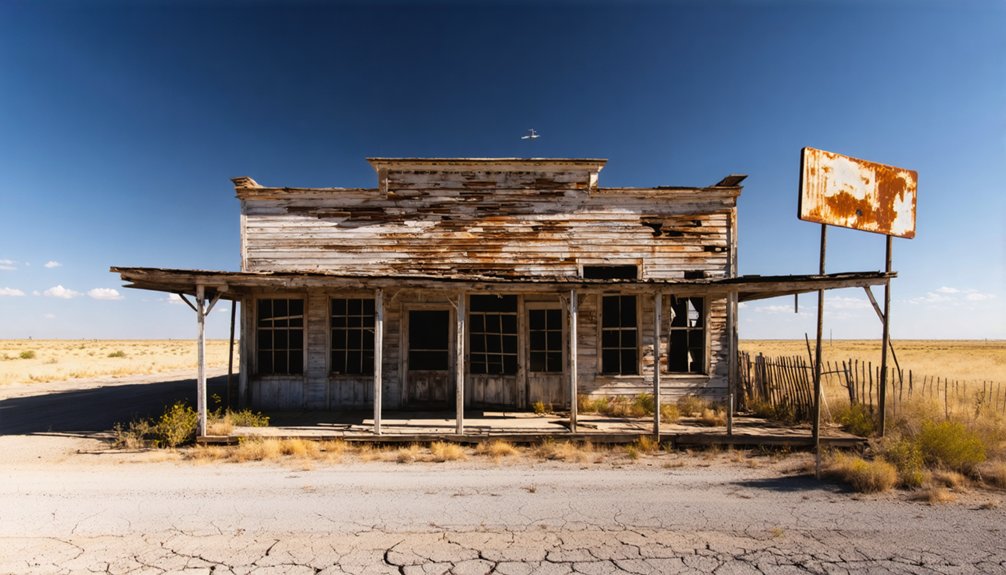
Before you make the drive out to Sanco, there are a few things worth knowing that’ll shape how your visit unfolds. This isn’t a curated tourist destination — it’s a raw, quietly powerful place where ghost town history breathes through crumbling walls and overgrown schoolhouses.
Sanco sits off State Highway 208 in Coke County, accessible by 2WD roads. Winter, spring, and fall offer the most comfortable conditions. You’ll find remnants of a general store, two churches, and an automobile garage — all slowly surrendering to nature.
Local legends tie the land to Comanche chief Sanaco and prehistoric Native American camps, adding spiritual weight to every step.
Come prepared, come respectful, and come curious. Sanco rewards those who look closely.
Frequently Asked Questions
Was Sanco Ever Considered for Official Texas Ghost Town Status?
Yes, Sanco’s history earned it official recognition — it’s a Recorded Texas Historic Landmark since 1966. You’ll find ghost town legends alive among its abandoned buildings, crumbling churches, and cotton-farming roots waiting to be explored.
Are There Any Guided Tours Available for Visiting Sanco?
Like a forgotten whisper on the Texas plains, Sanco offers no guided tours, but you’ll uncover its historical significance independently — wandering freely through abandoned buildings, crumbling churches, and ghost-filled streets that tell their own compelling story.
Is Camping Permitted Near the Sanco Ghost Town Site?
The knowledge doesn’t specify camping regulations for Sanco, so you’ll want to check with local Coke County authorities. The site’s accessibility via 2WD roads makes exploring this evocative ghost town straightforward for freedom-seeking adventurers.
Who Owns the Abandoned Buildings Remaining in Sanco Today?
The knowledge doesn’t specify who owns Sanco’s abandoned buildings, but you’ll want to respect their property ownership. These structures carry historical significance, so don’t trespass — instead, admire them freely from accessible 2WD roads nearby.
Are There Any Annual Events or Gatherings Held in Sanco?
No annual events are documented for Sanco, but you’ll find that exploring its Sanco history and local legends independently offers a uniquely free, self-guided experience, letting you uncover this ghost town’s haunting secrets on your own terms.
References
- https://www.texasescapes.com/TexasTowns/Sanco-Texas.htm
- https://www.ghosttowns.com/states/tx/sanco.html
- https://www.youtube.com/watch?v=mn21CXush1M
- https://en.wikipedia.org/wiki/List_of_ghost_towns_in_Texas