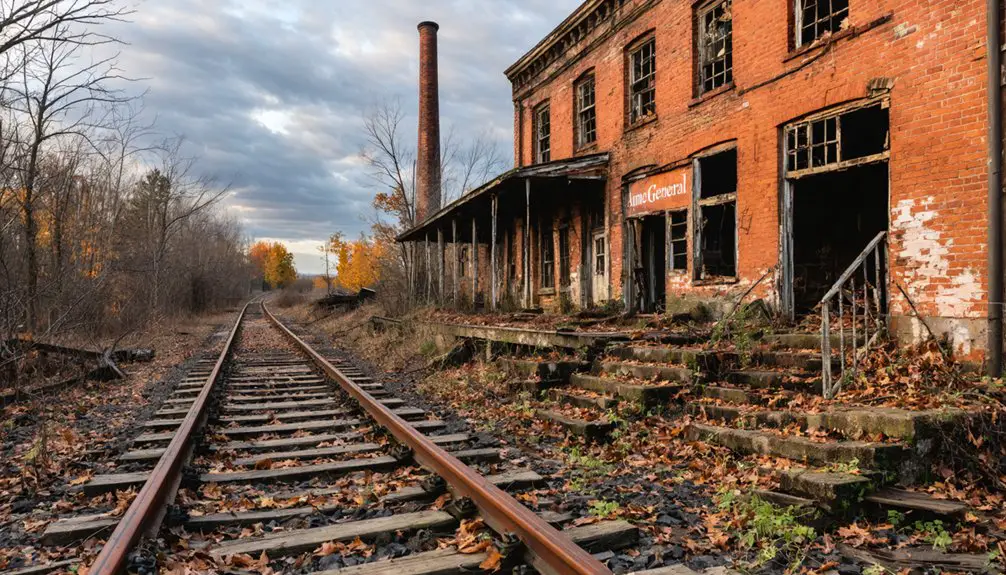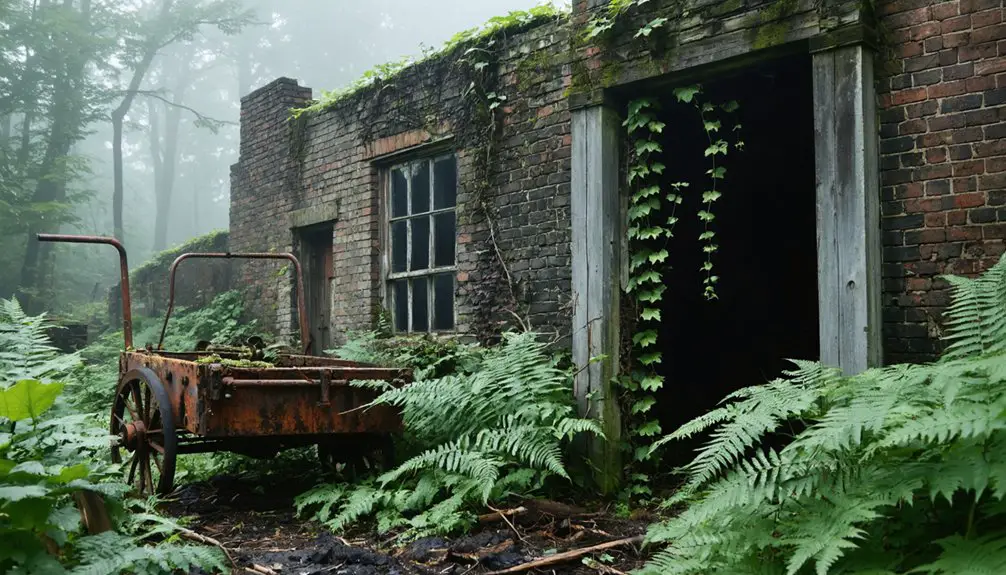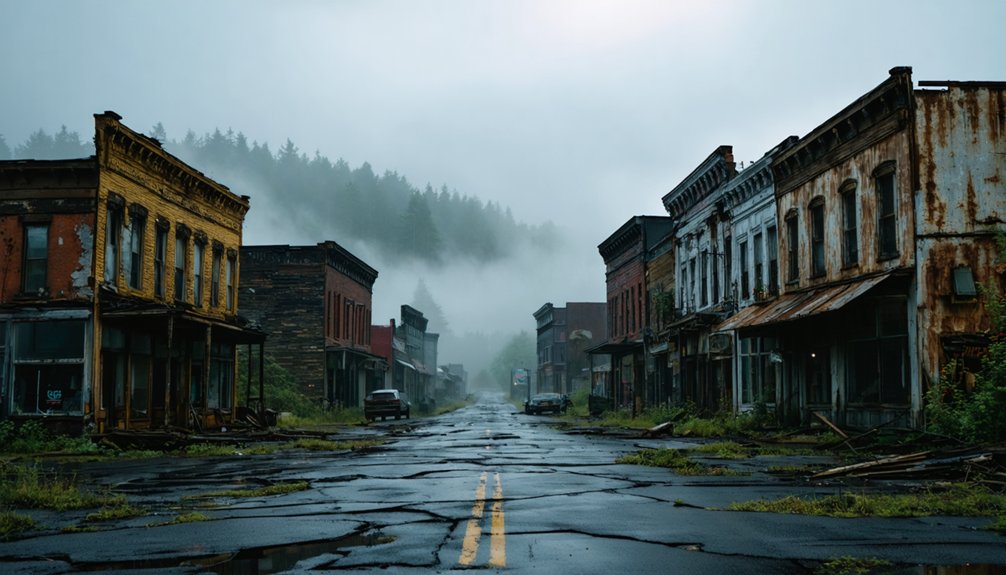
Planning a ghost town road trip to Scottglen, Pennsylvania means heading into Indiana County’s Blacklick Creek valley, where a former coal-mining community now exists as little more than atmosphere along a quiet rail trail. You can’t drive directly to Scottglen — you’ll hike or bike the 36-mile Ghost Town Trail to reach it. Park at nearby Wehrum for the closest access. There’s far more to this forgotten landscape than you’d expect.
Key Takeaways
- Scottglen sits along Indiana County’s 36-mile Ghost Town Trail, a former railroad corridor following the Blacklick Creek valley in Pennsylvania.
- Use the Wehrum trailhead for the most direct parking and access point nearest to Scottglen along the trail.
- No dedicated parking exists at Scottglen itself, so plan your approach from established trail entry points like Black Lick or Dilltown.
- Combine your visit with nearby ghost towns like Wehrum, Bracken, and Webster for a richer, cumulative historical experience.
- Stay on the trail, respect private land boundaries, carry water, and watch for wildlife during your visit.
What Is Scottglen and Why Visit This Ghost Town?
Tucked along Pennsylvania’s Ghost Town Trail in Indiana County, Scottglen is a former coal-mining company town that quietly faded from the map in the early 1900s as the region’s coal industry collapsed. Once a working settlement tied to railroad corridors and mine operations, it’s now a trail-side landmark where history lingers in the landscape rather than in grand ruins.
You won’t find museums or busy main streets here. Instead, you’ll trace a route rich with local legends, passing through terrain that once supported entire communities built around coal. While historical artifacts are scarce and much of the land is privately owned, the Ghost Town Trail gives you direct access to this forgotten world.
It’s a road trip built for curious, independent travelers who’d rather explore than sightsee.
Why Almost Nothing Remains at Scottglen Today
Because Scottglen was a company town, it was never built to last. Miners lived in standardized housing owned by the coal company, and once the mines closed, the company pulled out everything of value. There was no urban development to sustain the settlement, no private landowners invested in preservation, and no civic infrastructure to hold the community together.
Nature moved in quickly after people left. Decades of growth have allowed natural preservation to reclaim foundations, pathways, and remnants that once defined daily life here. Trees now stand where houses once stood.
You’ll also run into private property boundaries along the trail corridor, limiting how close you can get to certain sites. What remains is mostly atmosphere — quiet, overgrown, and honest about how temporary these places were always meant to be.
Where Scottglen Sits on the Ghost Town Trail
Scottglen sits along the Ghost Town Trail in Indiana County, Pennsylvania, one stop among several abandoned coal-mining settlements strung across a 36-mile former railroad corridor. The trail follows the old Cambria & Indiana Railroad right-of-way through the Blacklick Creek valley, threading together ghost towns like Wehrum, Bracken, Armerford, and Webster into a single continuous route.
That trail infrastructure makes Scottglen accessible without requiring you to hunt down remote back roads or trespass on private land. You’re traveling through layers of mining history with every mile, moving from one collapsed community to the next.
The U.S. Department of the Interior recognizes the route as a National Recreation Trail, and access points at Black Lick, Dilltown, and Wehrum let you enter from multiple directions depending on where you’re starting.
Other Ghost Towns on the Ghost Town Trail Worth a Stop
While Scottglen makes a compelling stop, you’ll get far more out of your trip by continuing along the trail to Wehrum, the largest of the Ghost Town Trail‘s former coal settlements.
At its peak, Wehrum supported 230 houses, a hotel, a company store, a jail, and a bank — making it the closest thing to a real town this corridor ever had.
Bracken and other nearby stops round out the route, giving you a fuller picture of how company-town life shaped this stretch of western Pennsylvania.
Wehrum’s Larger Ghost Town
Just a short distance from Scottglen along the Ghost Town Trail, Wehrum stands out as the largest and most historically substantial of the former coal-mining settlements you’ll encounter.
At its peak, this company town supported an entire self-contained community. Historical preservation efforts keep its story alive even as the physical remains fade.
Here’s what made Wehrum remarkable:
- 230 houses once sheltered mining families across the settlement
- A hotel, company store, and bank served daily community needs
- A jail enforced order in this tightly controlled company town
- Community revitalization through trail development transformed abandonment into accessible history
Wehrum gives you the richest context for understanding the Ghost Town Trail’s broader story, making it an essential stop before or after exploring Scottglen.
Bracken And Nearby Stops
Beyond Wehrum, the Ghost Town Trail strings together several more forgotten settlements worth factoring into your route. Bracken sits among the closest stops, a quiet reminder of coal’s grip on this valley.
You’ll also pass through Armerford, Lackawanna No. 3, Webster, Beulah, and Claghorn — each carrying its own local legends of miners, company bosses, and vanished communities.
Don’t expect dramatic abandoned structures at every stop. Most sites show only subtle traces: overgrown foundations, faint grade changes, the occasional crumbling remnant tucked behind tree lines.
Much of the surrounding land is privately owned, so you’ll want to stay on the trail corridor.
String these stops together rather than chasing them individually. The cumulative effect tells a richer story than any single site delivers alone.
Access Points, Parking, and Trail Entry for Scottglen
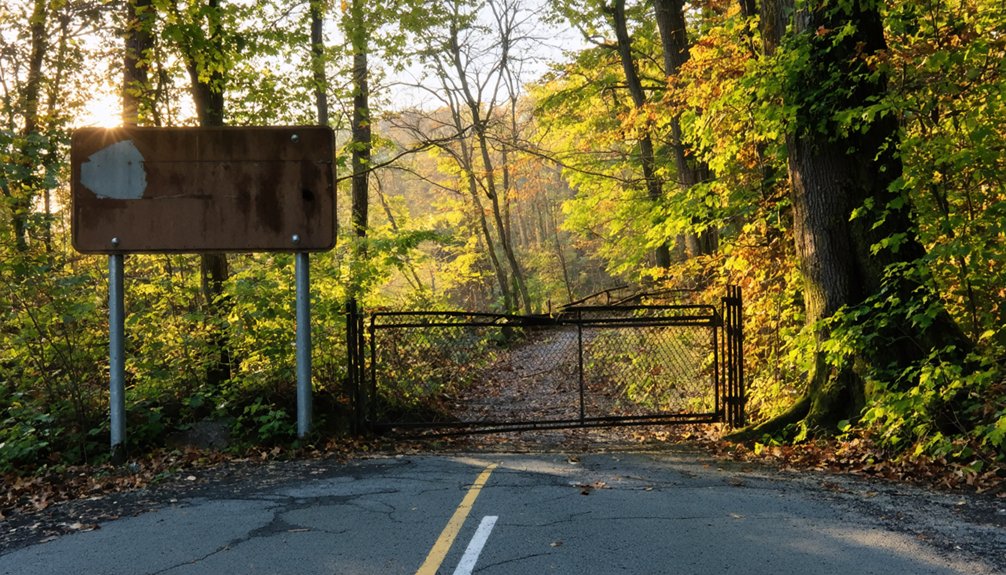
Getting to Scottglen means using the Ghost Town Trail‘s established access points, since the site itself doesn’t have a dedicated trailhead or parking lot. Plan your entry strategically using these key staging areas:
- Black Lick – eastern trailhead with reliable parking and easy trail access
- Heshbon – a mid-route entry point ideal for shorter rides or hikes
- Dilltown – western access with parking and nearby amenities
- Wehrum – closest staging area to Scottglen, recommended for direct access
Watch for local wildlife crossing the trail corridor, and follow standard trail safety practices, including carrying water and informing someone of your route.
Since surrounding land is largely private, stay within the designated trail boundaries and respect posted signage throughout your journey.
Best Seasons to Hike or Bike the Ghost Town Trail to Scottglen
Each season brings a distinct character to the Ghost Town Trail, so the timing of your trip shapes everything from trail conditions to the atmosphere you’ll find along the route to Scottglen.
Spring offers lush greenery and active wildlife encounters, though muddy stretches can slow your pace.
Summer gives you long daylight hours and firm trail surfaces, ideal for cycling.
Fall delivers striking foliage that frames the abandoned landscape dramatically.
Winter opens the corridor to cross-country skiing, though you’ll want to follow basic trail safety tips like dressing in layers and checking conditions beforehand.
Whenever you visit, carry water, tell someone your route, and stay on designated corridors since much surrounding land is private.
Each season rewards differently, so your itinerary should match your preferred conditions.
Frequently Asked Questions
Is the Ghost Town Trail Free to Use for Hikers and Cyclists?
You’ll find the Ghost Town Trail free to explore! Hike or cycle past historical landmarks steeped in local legends without paying a fee — it’s open, accessible freedom through Pennsylvania’s fascinating coal-mining past.
Can You Camp Overnight Along the Ghost Town Trail Near Scottglen?
You’ll find no official overnight camping directly along the Ghost Town Trail near Scottglen, but nearby campgrounds let you rest, explore historical landmarks at dawn, and enjoy wildlife spotting before hitting the trail refreshed.
How Long Does It Take to Bike the Entire Ghost Town Trail?
You’ll need about 3–5 hours to bike the entire 32-mile Ghost Town Trail, though you’ll want extra time to explore historical landmarks and pause at scenic viewpoints revealing Pennsylvania’s fascinating, freedom-filled coal-mining past.
Are Dogs Allowed on the Ghost Town Trail Near Scottglen?
You’ll be happy to know the Ghost Town Trail welcomes your furry companion! Dog-friendly policies allow pets, but trail leash regulations require you keep your dog leashed, ensuring everyone enjoys this historic adventure freely and safely.
Is the Ghost Town Trail Paved or Unpaved Along the Scottglen Section?
Like a path carved from history itself, the Ghost Town Trail’s trail surface near Scottglen is crushed limestone — unpaved but well-groomed. Its maintenance status stays solid, giving you smooth, adventure-ready riding through Pennsylvania’s forgotten coal country.
References
- https://indianacountyparks.org/our-trails/ghost-town-trail/ghost-town-trail-history/
- https://www.thetravel.com/what-to-know-about-hiking-the-ghost-town-trail-in-pennsylvania/
- https://en.wikipedia.org/wiki/Ghost_Town_Trail
- https://en.wikipedia.org/wiki/List_of_ghost_towns_in_Pennsylvania
- https://www.treasurenet.com/threads/pennsylvania-ghost-towns-camria-county.33555/