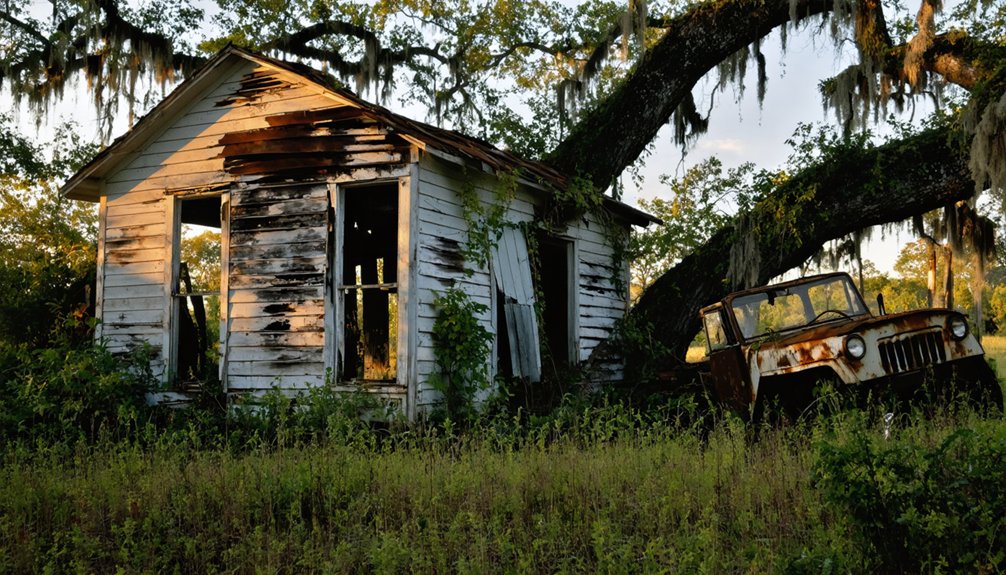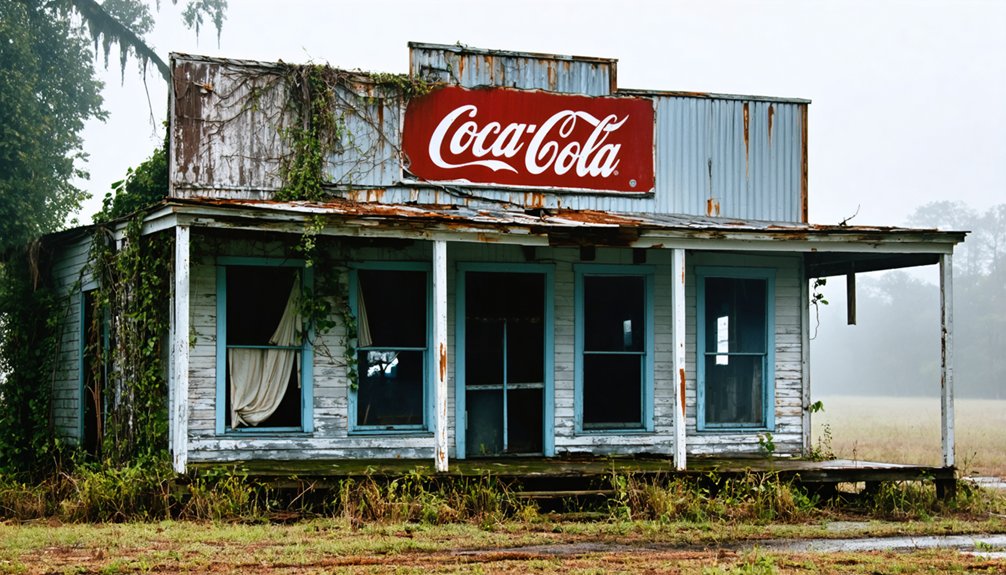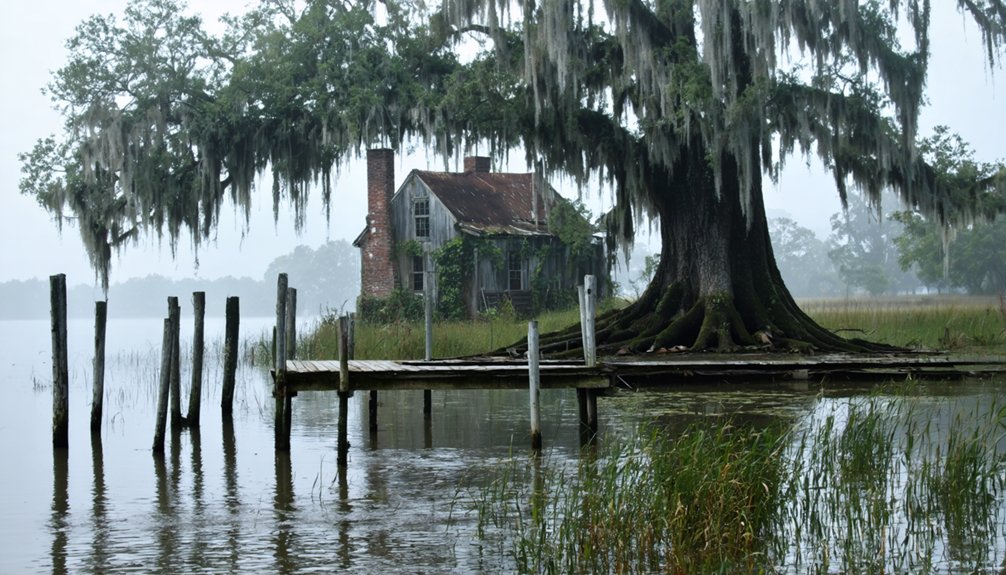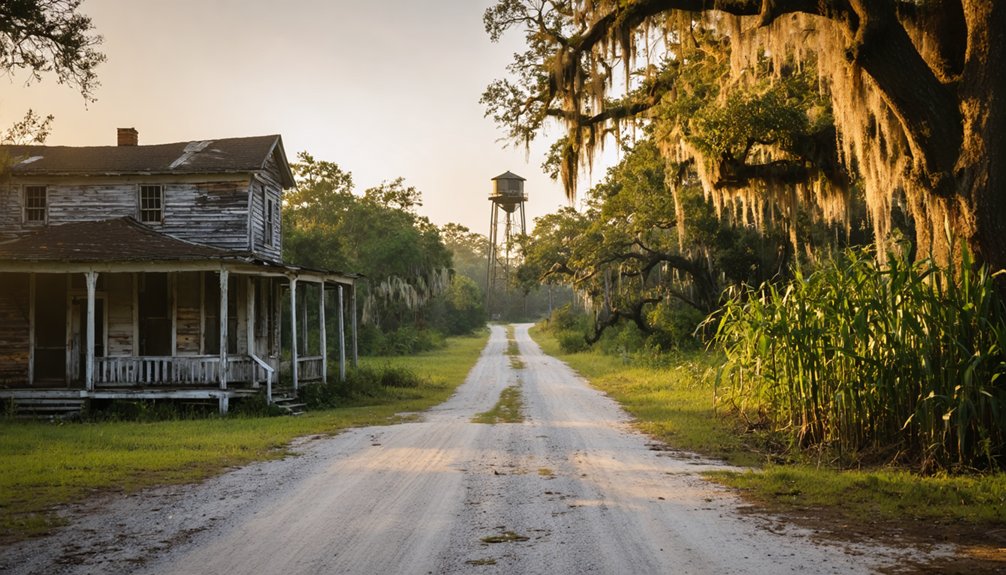
Start your False River road trip in New Roads, Louisiana, where a ghost town, an oxbow lake, and nearly 300 years of Creole history converge along Louisiana Highway 1. You’ll trace roughly ten miles of heritage stops, from Parlange Plantation‘s antebellum architecture to the Ernest Gaines Oak Tree. After the drive, stay for Cajun food and waterfront views. There’s far more to this story than what the highway reveals at first glance.
Key Takeaways
- False River is a ghost town turned oxbow lake in Louisiana, shaped by the Mississippi River abandoning its old channel over time.
- The town vanished after its post office closed and reopened under a different name, becoming New Roads by 1888.
- Follow Louisiana Highway 1 for roughly ten miles, connecting landmarks like Parlange Plantation, Ernest Gaines Oak Tree, and Bergeron’s Pecan Plant.
- Allocate a full day to explore nearly 300 years of Pointe Coupee history along the False River Historical Trail.
- After exploring, stay in New Roads for waterfront views, Creole and Cajun dining, and historic colonial architecture.
What Is False River and Why Does It Count as a Ghost Town?
Colonial history shaped what came next. A post office opened in 1858, closed within three years, then reopened in 1887 under a different name.
By 1888, the town had renamed itself New Roads. False River, as a named place, fundamentally vanished.
That’s exactly what makes it worth chasing. You’re not visiting ruins — you’re tracing a community that quietly transformed and left its ghost behind.
How the Mississippi River Turned an Old River Bend Into a Lake
Before the lake existed, the Mississippi River curved sharply through this stretch of Louisiana, carving the wide bend that French settlers would eventually call Fausse Rivière.
River migration did the rest. Over time, the river cut a straighter path, abandoning the old channel entirely.
That’s oxbow formation in action — the river pinches off its own curve, leaving behind a crescent-shaped lake disconnected from the main flow.
What You’ll See Along the False River Historical Trail
Once you hit the trail, nearly 300 years of Pointe Coupee history unfolds across roughly ten miles of Louisiana Highway 1, running from Lakeland to New Roads. You’ll move through layers of Creole heritage, stopping at cultural landmarks that tell the region’s story without a museum admission fee.
Nearly 300 years of Creole history unfolds across ten miles, no admission fee required.
The Ernest Gaines Oak Tree connects you to one of Louisiana’s most celebrated local legends, rooting literary history directly into the landscape.
Parlange Plantation puts antebellum architecture right in front of you, standing largely unchanged from its original construction.
Bergeron’s Pecan Plant adds an agricultural thread to the route, grounding the history in working land rather than preserved showpieces.
You set your own pace, move freely between stops, and leave with a genuine sense of what shaped this corner of Louisiana.
How to Plan Your False River Road Trip From New Roads
New Roads gives you the most practical starting point for the entire False River loop. The town sits where colonial heritage and river migration history converge, making it easy to move through centuries of story without backtracking.
Pack your day around these four stops:
- Parlange Plantation – one of Louisiana’s oldest surviving Creole estates
- Ernest Gaines Oak Tree – a landmark tied to the region’s literary and cultural identity
- Bergeron’s Pecan Plant – a working piece of local agricultural tradition
- False River lakefront – the oxbow itself, roughly ten miles of abandoned Mississippi channel
Keep Louisiana Highway 1 as your spine. The road connects each stop naturally, so you’re never fighting the route.
Give yourself a full day to move without rushing.
Where to Eat, Stay, and Linger After the Drive
After a full day on Highway 1, New Roads earns its keep as more than just a starting point. The town sits right along the lake, giving you waterfront views without the resort price tag. Local restaurants serve up Creole and Cajun dishes rooted in the same fertile land that drew planters here centuries ago.
Local cuisine here means crawfish étouffée, boudin, and fresh-caught fish pulled from False River itself.
You’ll also find lodging options tucked near streets lined with historic architecture that reflects Pointe Coupee’s French and Spanish colonial past. Walking those blocks after dinner feels like a natural extension of the trail.
Slow down, stay an extra night, and let the town show you what survives when a ghost town refuses to fully disappear.
Frequently Asked Questions
When Was the False River Outfall Channel Built and Why?
Like a safety valve releasing pressure, the False River Outfall Channel was built in 1947 for flood control. You’ll appreciate its historical significance as it replaced Bayou Cirier, protecting the community you’re exploring today.
What Does the French Name Fausse Rivière Actually Mean?
When you explore the French language roots, you’ll find Fausse Rivière means “false river.” It carries deep cultural significance, describing the oxbow lake that fooled early settlers into thinking it was still an active Mississippi River channel.
Did Union Troops Permanently Occupy False River During the Civil War?
No, they didn’t permanently occupy it. During the Civil War occupation, Union troop strategy turned False River into a temporary encampment — one of thousands used across Louisiana’s 64 parishes to control the region’s essential waterways.
Why Did Early Planters Specifically Choose to Settle Around False River?
Early planters chose False River for its fertile delta soil, where local flora thrived and historical legends took root. You’ll find that rich land drew ambitious settlers enthusiastic to build lives on their own terms.
How Long Did the Original False River Post Office Remain Open?
It didn’t last long — the original False River post office’s postal history spans less than three years after its 1858 opening, a fleeting historical significance that you’ll find mirrors the ghost town’s own fragile, fascinating identity.
References
- https://en.wikipedia.org/wiki/False_River
- https://classicrock1051.com/16-ghost-towns-in-louisiana/
- https://en.wikipedia.org/wiki/False_River_(Louisiana)
- https://www.theadvocate.com/curious_louisiana/how-louisianas-false-river-was-formed-curious-louisiana/article_8adc517a-61ea-11ed-ab71-1b68b3bdc9ae.html
- https://falseriver.la/en/false-river-history
- https://onefootforwardrepeat.blogspot.com/2006/10/new-roads-and-false-river.html
- https://www.youtube.com/watch?v=bANcYlkw-Rw
- https://countryroadsmagazine.com/travel/overnight-escapes/on-false-river/