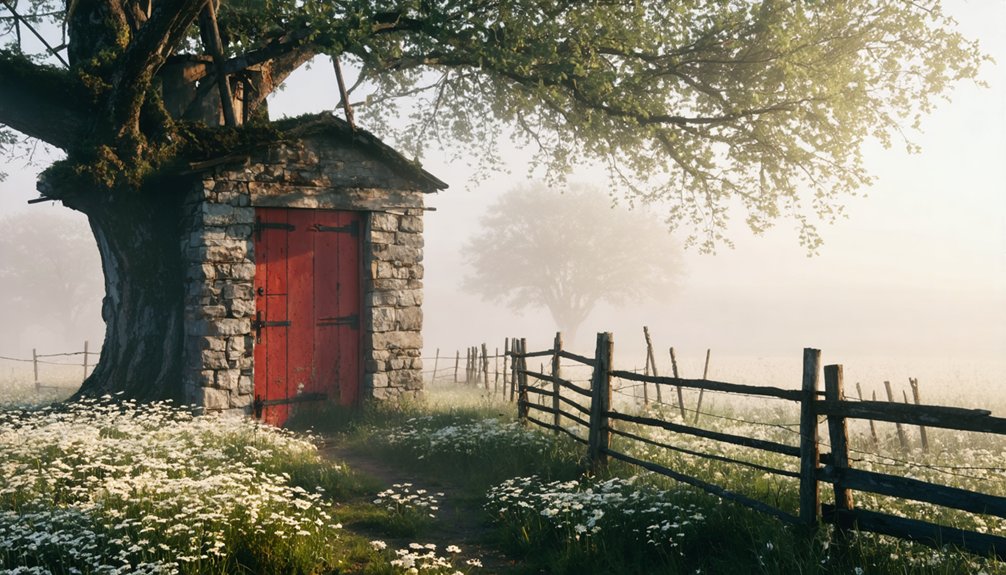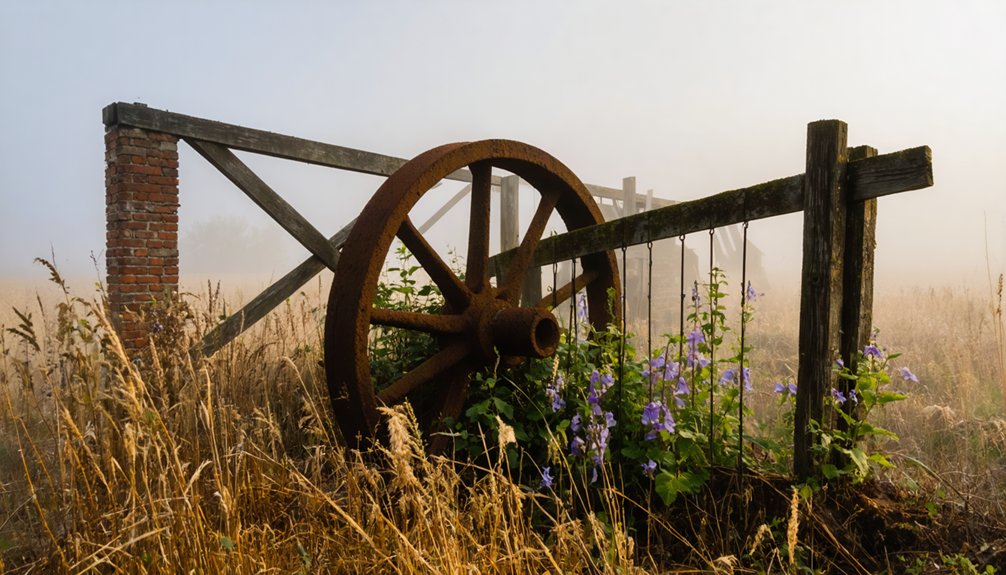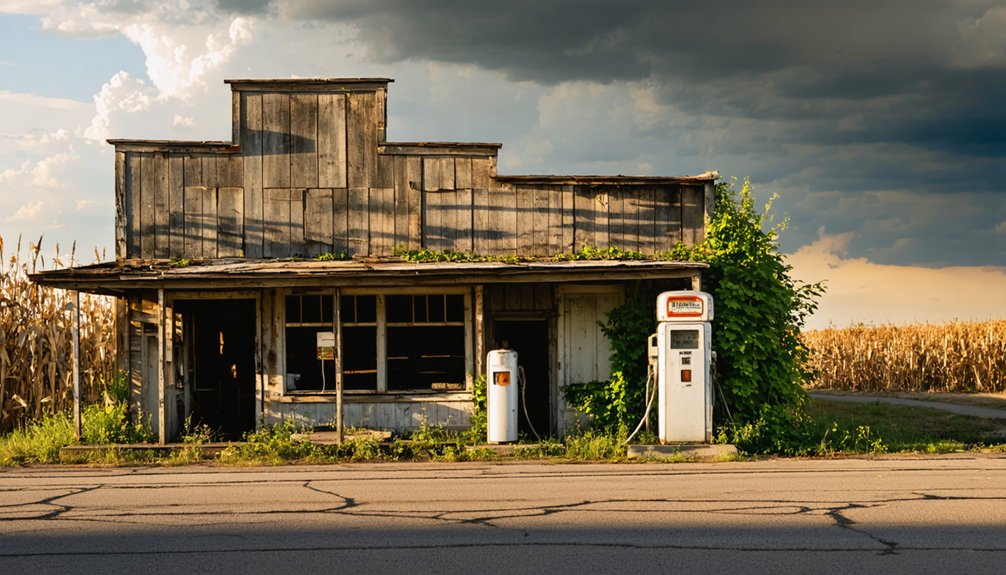
Shady Grove, Iowa, sits at the junction of county roads V65 and D47 in Buchanan County, once home to nearly 100 residents before economic shifts emptied its streets. Today, farmland covers most of what stood here, but flattened earth, aged fence lines, and mature trees still whisper the town’s story. You can reach it easily from Brandon or Jesup along D47. Stick around, and there’s far more to this forgotten crossroads than meets the eye.
Key Takeaways
- Shady Grove sits at the junction of county roads V65 and D47 in Buchanan County, accessible from Brandon or Jesup via D47.
- Few physical remnants remain, but depressions, mature trees, and aged fence lines reward patient, observant explorers.
- Visit in late spring or early fall for the best accessibility and weather conditions.
- Pack sturdy shoes, layered clothing, water, offline maps, a camera, and a first-aid kit for the trip.
- Book accommodations early in Brandon or Jesup, and check local festivals for additional activities during your visit.
What Is Shady Grove, Iowa?
Tucked into the rolling farmland of Buchanan County, Shady Grove is one of Iowa’s forgotten former townsites — a small settlement that once supported around 100 residents before economic shifts quietly erased it from the map.
You’ll find it sitting at the junction of county roads V65 and D47, positioned between Brandon and Jesup in eastern Iowa.
Its historical significance lies not in grand monuments but in what it represents — a community that lived, grew, and faded on its own terms.
Community memories here are embedded in the landscape itself, carried by longtime locals who remember when this crossroads meant something more.
The land here holds memory — spoken softly by those who still remember when this crossroads had a name.
Today, Shady Grove holds no official municipal status, but it rewards curious travelers who value discovering places history almost completely forgot.
What Physical Remnants Survive at Shady Grove Today?
Knowing where Shady Grove once stood is one thing — seeing what remains is another. When you roll up to the junction of county roads V65 and D47, you won’t find crumbling storefronts or weathered signs.
Shady Grove’s remnants exploration reveals something subtler — flattened earth, aged fence lines, and farmland that quietly swallowed a community whole.
That absence carries its own historical significance. You’re standing where roughly 100 people once built lives, traded goods, and shaped a small corner of Buchanan County.
Look closely at the roadside edges and bordering fields — occasional depressions or mature trees sometimes mark where structures once stood.
Bring a map, keep your eyes sharp, and let the landscape tell its story. The freedom of exploration here rewards patience over expectation.
The Rise and Fall of Shady Grove
Shady Grove didn’t always look like open farmland. In its heyday, this small Buchanan County settlement supported nearly 100 residents, carrying real historical significance as a mid-19th century community. You can almost picture the activity that once filled these quiet crossroads between Brandon and Jesup.
Economic shifts gradually drained the life from Shady Grove, pushing residents toward larger towns offering better opportunities. As families left, buildings disappeared, and community memories faded into local folklore. The land reverted to agriculture, erasing most visible traces of what once stood here.
Preservation challenges remain significant — there’s little physical evidence left to protect. Yet that tension between remembering and moving forward is exactly what makes Shady Grove worth visiting.
You’re not just seeing empty fields; you’re reading an honest chapter of rural American history.
Where Exactly Is Shady Grove Located?
Finding Shady Grove means traversing the quiet crossroads of county roads V65 and D47, tucked between the small towns of Brandon and Jesup in Buchanan County, eastern Iowa.
You’ll notice its proximity to Black Hawk County almost immediately, sitting near that county line where rural landscapes stretch endlessly across fertile farmland.
That borderland position isn’t coincidental — it shapes both its historical significance and its community impact, drawing settlers originally and now attracting modern homebuilders seeking lower Buchanan County tax rates.
You won’t find a municipal sign marking your arrival. Shady Grove carries no official status, existing purely as a former townsite on the map.
Grab official county road maps through Buchanan County’s transportation department before you head out, ensuring you navigate those quiet rural crossroads confidently.
How to Get to Shady Grove From Brandon and Jesup
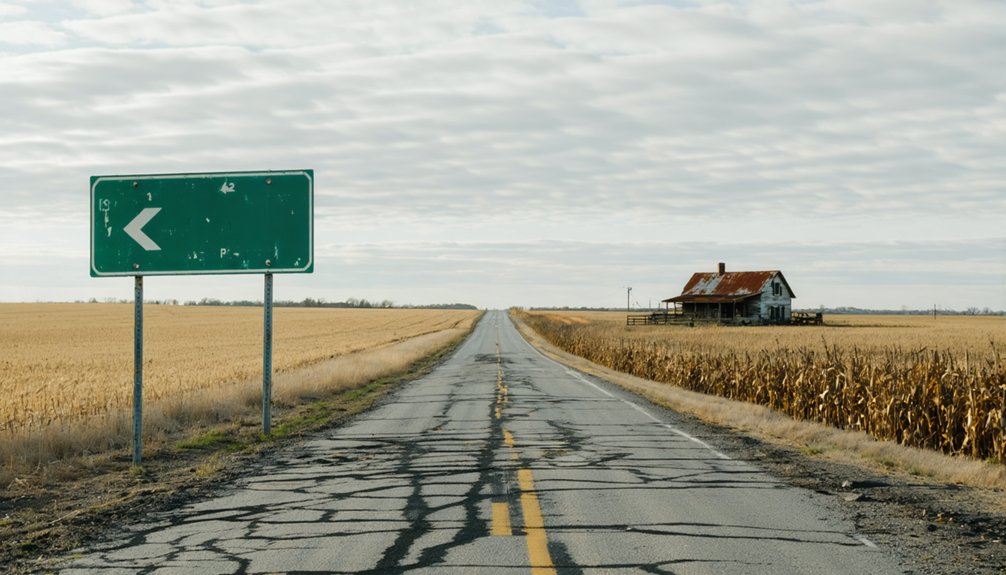
Once you’ve got your county road map in hand, reaching Shady Grove from either direction is straightforward. For your directions overview, the site sits at the junction of county roads V65 and D47, making it easy to pinpoint.
From Brandon, head northwest along D47 until you hit that intersection. From Jesup, travel southeast on the same route — you’ll arrive without traversing complicated detours or urban congestion.
The open farmland along both approaches gives you that genuine rural freedom you’re chasing.
A few travel tips worth noting: download offline maps before heading out, since cell service can be spotty in Buchanan County’s agricultural stretches.
Also, drive slowly near the junction — the area’s quiet character deserves respect, and you won’t want to miss what remains.
Best Time of Year to Visit Shady Grove
Timing your visit well can make the difference between a memorable road trip and a muddy slog through Buchanan County’s back roads. The best seasons to explore Shady Grove are late spring and early fall, when county roads V65 and D47 are dry, accessible, and surrounded by stunning agricultural landscapes.
Summer works too, though Iowa’s humidity can be punishing.
Fall is particularly rewarding — harvest activity fills the surrounding farmland with energy, and you’ll catch the countryside at its most dramatic.
Spring visits let you witness the region awakening after winter, with fewer travelers competing for the same quiet roads.
Check local festivals happening in nearby Brandon and Jesup, as these can enrich your trip with authentic community character while you’re already exploring the area.
Where to Stay Near Shady Grove, Iowa
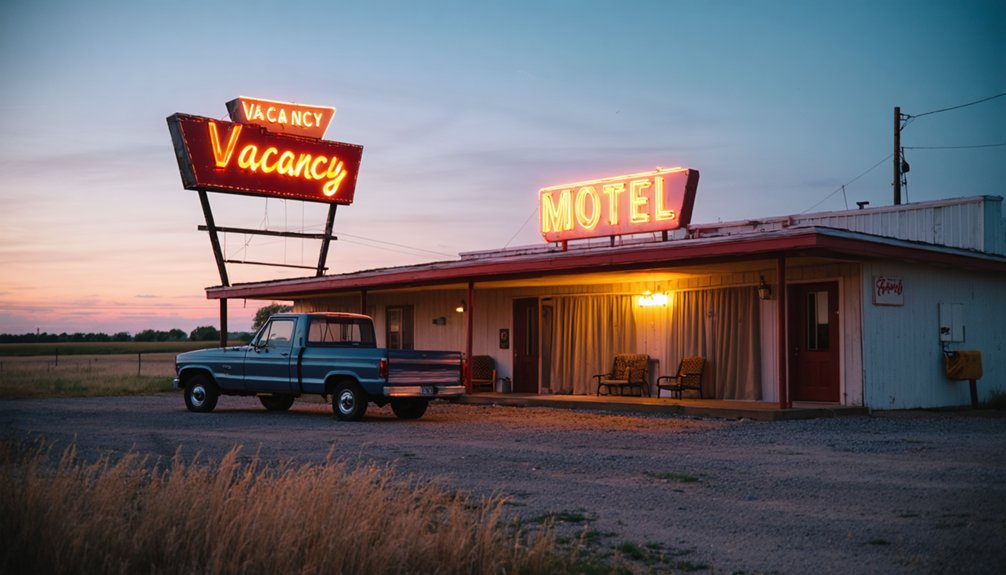
Shady Grove’s ghost town status means you won’t find a bed-and-breakfast waiting at the end of county road V65, so you’ll need to look toward the nearby towns of Brandon and Jesup for overnight options.
Both towns offer practical local accommodations that keep you close to nearby attractions, farmland scenery, and historic backroads worth exploring.
Practical lodgings in Brandon and Jesup keep travelers grounded in farmland scenery and historic backroads worth discovering.
When planning your stay, consider these tips:
- Book early — rural lodging fills quickly during summer and fall travel seasons
- Explore Jesup first — it’s your best hub for dining, fuel, and lodging conveniences
- Use IAGenWeb resources — they’ll point you toward heritage sites beyond Shady Grove itself
Staying nearby lets you rise early, hit county road D47, and experience Shady Grove at its most atmospheric.
Other Iowa Ghost Towns Worth the Drive
Once you’ve explored Shady Grove, you’ll find that Iowa’s ghost town trail stretches well beyond Buchanan County, with Johnson and Floyd Counties offering their own fascinating abandoned sites worth tracking down.
You can grab travel guides and online resources listing Iowa’s top 10 ghost towns to map out a fuller road trip itinerary.
Whether you’re drawn to Floyd County’s forgotten settlements or Johnson County’s historic remnants, each stop adds another layer to Iowa’s rich, often overlooked rural history.
Johnson County Ghost Towns
If you’re willing to extend your ghost town road trip, Johnson County offers several abandoned sites that are worth the detour.
This region holds deep historical significance, giving you rich opportunities for ghost town exploration beyond Buchanan County’s borders.
Pack your map and plan stops at these standout locations:
- Frytown – A quietly faded settlement with remnants that tell compelling stories of early Iowa settlers who built and ultimately abandoned their dreams.
- Morse – Once a thriving rural community, now a stark reminder of how economic shifts reshape landscapes.
- Newport – A forgotten riverside town where you can wander freely and absorb authentic pioneer-era atmosphere.
Each site rewards curious travelers willing to venture off main roads and connect personally with Iowa’s layered, disappearing past.
Floyd County Abandoned Sites
Floyd County pulls you even further north into Iowa’s ghost town circuit, rewarding the extra miles with abandoned buildings that rival anything you’ve found in Johnson or Buchanan Counties.
The sites here carry deep historical significance, once thriving as agricultural and commercial hubs before economic shifts emptied their streets.
You’ll discover crumbling foundations, forgotten cemeteries, and weathered structures that local legends have transformed into something almost mythical.
Residents still whisper stories about the people who built these communities and why they left. That mystery is exactly what makes Floyd County worth the detour.
Bring a good map, respect private property boundaries, and let curiosity drive your pace.
These abandoned places don’t demand anything from you except your attention and willingness to explore.
Top Iowa Ghost Towns
Beyond Johnson, Buchanan, and Floyd Counties, Iowa hides dozens of ghost towns that’ll reward any curious traveler willing to leave the main highways behind.
Ghost town legends and urban exploration opportunities await you across the state, each site offering its own slice of forgotten history.
Here are three Iowa ghost towns worth adding to your road trip:
- Ainsworth (Washington County): A quiet former settlement surrounded by rolling farmland and fading foundations.
- Dolliver (Emmet County): A northern Iowa remnant carrying rich ghost town legends tied to early settler life.
- Iconium (Appanoose County): A southern Iowa treasure perfect for urban exploration enthusiasts seeking raw, undisturbed history.
Each destination rewards you with authentic stories that no museum can fully replicate.
Pack your maps and go explore.
What to Pack for a Buchanan County Ghost Town Visit
Packing smart can make or break your Buchanan County ghost town adventure. You’ll want to bring essentials that support both comfort and curiosity. Start with your packing essentials: sturdy walking shoes, layered clothing, water, snacks, and a fully charged phone with offline maps loaded.
Packing smart can make or break your ghost town adventure — comfort and curiosity both deserve a spot in your bag.
Don’t overlook tools that deepen your connection to historical significance. Carry a small notebook, a camera, and printed excerpts from IAGenWeb archives or local heritage records about Shady Grove’s mid-19th century roots.
Understanding the town’s former 100-resident peak adds meaning to every crumbling foundation you encounter.
Toss in a first-aid kit, insect repellent, and sunscreen since rural Iowa offers little shade.
You’re exploring land that once held real lives — come prepared to honor that.
Your Complete Buchanan County Ghost Town Route
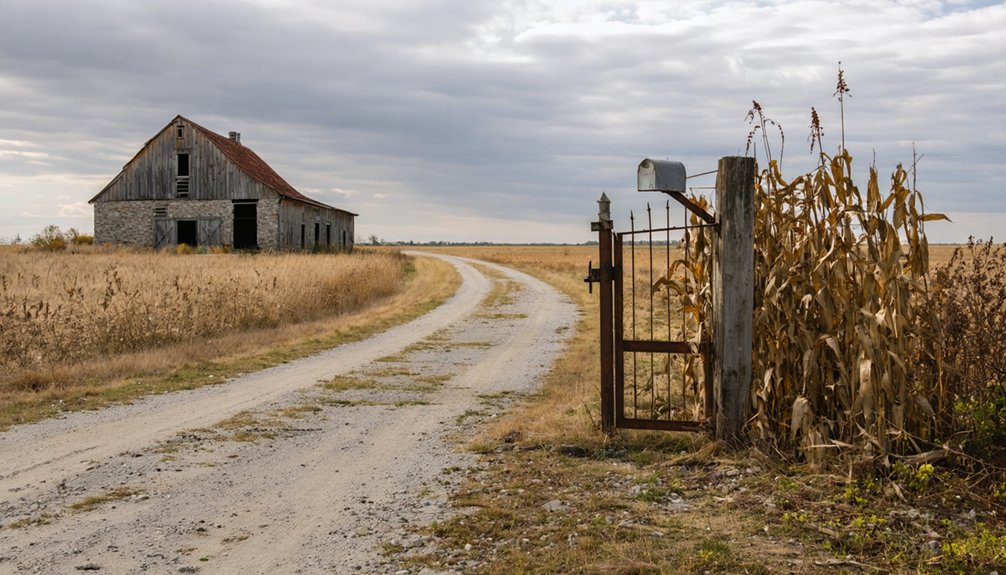
Once you’ve loaded your pack and plotted your offline maps, it’s time to hit the roads connecting Brandon and Jesup through the heart of Buchanan County.
Follow county roads V65 and D47 straight to Shady Grove’s former townsite, where ghost town legends and historical anecdotes reward curious explorers willing to roam freely.
Make the most of your route by keeping these stops in mind:
- Shady Grove junction – Photograph the crossroads where nearly 100 residents once built a thriving community.
- Local archives – Grab historical records through IAGenWeb databases before departing.
- Neighboring ghost towns – Extend your adventure toward Johnson and Floyd Counties using regional travel guides.
You’re traversing living history here — take your time and soak every detail in.
Frequently Asked Questions
Are There Any Entry Fees or Permits Required to Visit Shady Grove?
You don’t need entry fees or permits for ghost town exploration at Shady Grove! It’s accessible via public roads, making rural tourism here beautifully free. Just drive out and embrace the open, unrestricted countryside adventure awaiting you.
Is Shady Grove Currently Experiencing a Housing Boom Near the Former Townsite?
Yes, it’s not just ghost town history here — Shady Grove’s housing trends show a real boom, with 40 new homes under construction nearby, driven by Buchanan County’s lower tax rates attracting freedom-seeking residents craving rural living.
What County Tax Advantages Attract New Residents to the Shady Grove Area?
You’ll find Buchanan County’s lower property tax rates are driving Economic Growth near Shady Grove! These Tax Incentives make housing considerably more affordable than neighboring Black Hawk County, attracting freedom-seeking residents who crave rural living without financial burden.
Can Visitors Access Shady Grove’s Historical Records Through Online Databases?
You can explore Shady Grove’s past through online archives like IAGenWeb databases, diving deep into historical preservation efforts. These resources let you uncover fascinating records about this former townsite from anywhere you roam freely!
Are There Local Heritage Organizations That Offer Guided Tours of Shady Grove?
Like old keys opening forgotten doors, local heritage organizations can guide you through Shady Grove’s ghost town history and local folklore, connecting you to living stories that official records can’t fully capture on their own.
References
- https://en.wikipedia.org/wiki/List_of_ghost_towns_in_Iowa
- https://www.radioiowa.com/2006/12/16/shady-grove-sees-a-revival/
- https://www.youtube.com/watch?v=815TEXn5lHs
- https://en.wikipedia.org/wiki/Shady_Grove
- https://pubs.lib.uiowa.edu/annals-of-iowa/article/id/6960/download/pdf/
- https://www.ghosttowns.com/states/ia/ia.html
- https://www.youtube.com/watch?v=mbmDFj5eNqM
- https://ns2.iagenweb.org/boards/jones/documents/index.cgi?read=748692
- https://ouriowaheritage.com/jc-ghost-towns/
- http://iagenweb.org/floyd/biography/ghost_towns.html