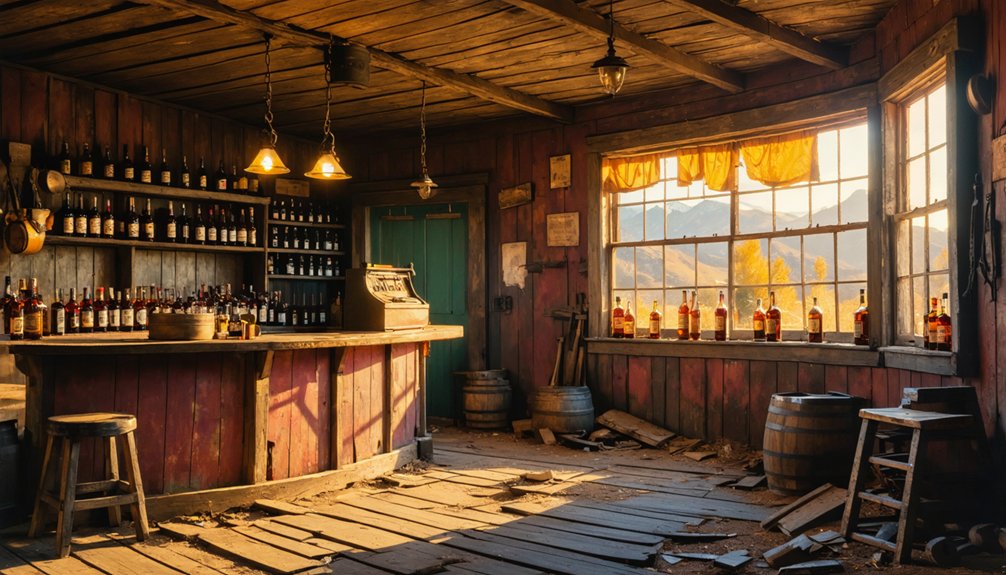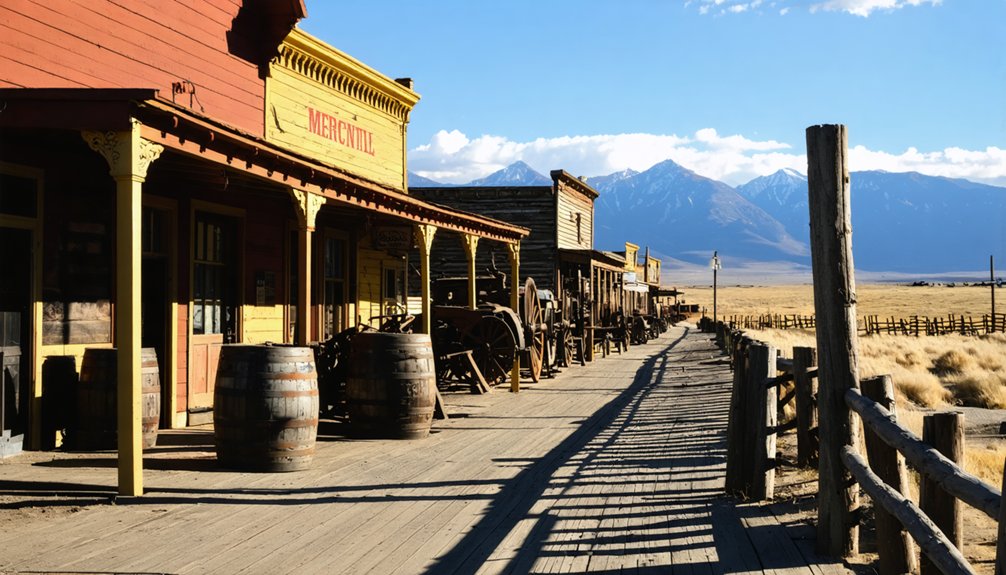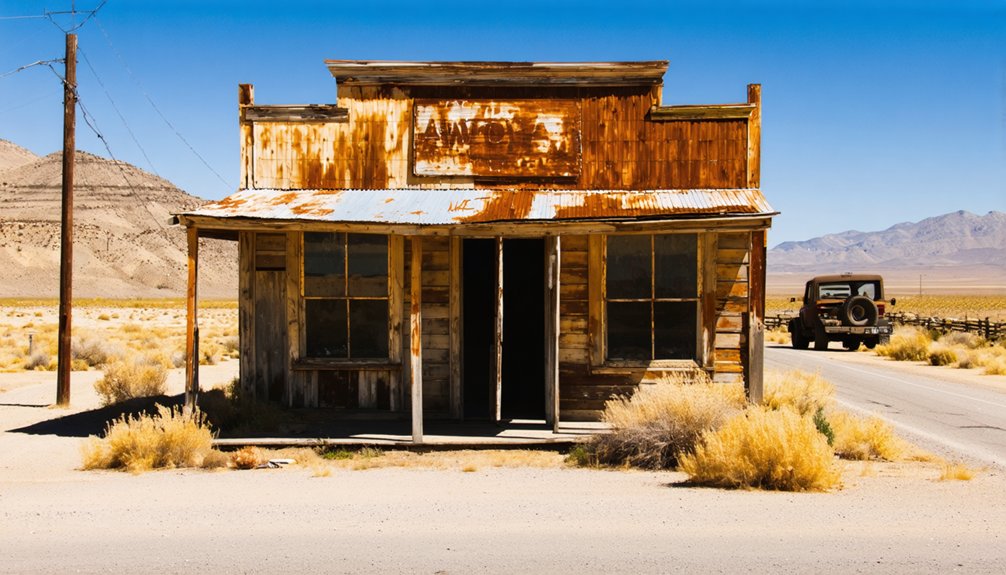
Planning a ghost town road trip to the Salton Sea means stepping into California’s most surreal landscape—a Hollywood playground that dissolved into salt, silence, and toxic shoreline. You’ll navigate abandoned resorts, fish-bone-crusted beaches, and haunting ruins swallowed by decades of ecological collapse. Visit between November and March when temperatures stay manageable, pack an N95 respirator, and carry plenty of water. Everything you need to explore this eerie, unforgettable destination safely is just ahead.
Key Takeaways
- Visit between November and March when temperatures range 60°F–75°F, making exploration safe and comfortable.
- From Los Angeles, take I-10 East to Highway 111 South, arriving in approximately 2.5 hours.
- Book lodging in advance, choosing from motels in Niland, Brawley, camping, RV hookups, or Palm Springs glamping.
- Pair your trip with nearby Salvation Mountain, a vibrant desert art landmark built by Leonard Knight over decades.
- Expect haunting scenery of salt-encrusted ruins, bleached fish bones, and abandoned resort infrastructure reclaimed by desert nature.
What Turned the Salton Sea Into California’s Biggest Ghost Town?
Once a glittering resort destination drawing Hollywood celebrities and weekend boaters, the Salton Sea collapsed under the weight of its own contamination — and it’s now California’s most haunting stretch of abandoned shoreline.
Formed accidentally in 1905 when the Colorado River breached an irrigation canal, it thrived briefly before agricultural runoff poisoned its waters. Rising salinity killed the fish, silencing the wildlife habitats that once buzzed with migratory birds, and drove every resort owner away.
The receding shoreline exposed a toxic lakebed, releasing pesticide-laced dust across the surrounding desert flora. You’ll find sun-bleached marinas, crumbling motels, and fish bones crusting the shore — all frozen in eerie stillness.
This wasn’t a slow fade; it was a collapse you can still feel standing at the water’s edge.
How to Get to the Salton Sea Ghost Towns From Los Angeles and San Diego
Whether you’re leaving from Los Angeles or San Diego, you’ll find the Salton Sea ghost towns surprisingly within reach for a weekend escape.
From LA, you’ll take I-10 East toward Indio, then head south on Highway 86 along the sea’s western shore — a roughly 2.5-hour drive through the Coachella Valley’s sun-bleached expanse.
From San Diego, Highway 78 East through Ramona and Brawley puts you at the water’s edge in under two hours, making it the faster and arguably more dramatic approach.
Driving From Los Angeles
From Los Angeles, you’ll head southeast on I-10, cutting through the Inland Empire before the desert opens up around you like a fever dream.
Merge onto Highway 111 South near Indio, and the Salton Sea will announce itself through your windshield — vast, eerie, and unapologetic.
The drive runs roughly two and a half hours without stops.
This corridor carries real historical preservation weight — these crumbling resorts and receding shorelines document mid-century American ambition and ecological collapse simultaneously.
Wildlife conservation efforts here are ongoing, as the sea still supports massive migratory bird populations despite its toxic reputation.
Pack water, check your fuel in Indio, and bring a camera.
The light out here hits differently, and you’ll want proof you were brave enough to come.
Driving From San Diego
San Diego drivers get a different angle on this same strange destination — head north on I-15 before cutting east on I-8, then pick up Highway 86 North through the agricultural flatlands of the Imperial Valley.
You’ll cover roughly 150 miles, watching the landscape shift from coastal suburbs into open desert. The Salton Sea appears almost without warning, a glittering inland anomaly.
Pull over near the shoreline remnants where wildlife conservation efforts now attempt to reverse decades of ecological damage, protecting migratory bird corridors that still pass through despite the contamination.
Former resort infrastructure crumbles alongside these recovery zones, making historical preservation an active, complicated conversation here rather than a museum exercise.
You’re not just visiting ruins — you’re witnessing a landscape still negotiating its own survival.
Best Routes To Take
Getting to the Salton Sea ghost towns requires choosing your starting point wisely, since Los Angeles and San Diego each offer distinct corridors into this sun-scorched basin.
From Los Angeles, take I-10 East to Highway 111 South. From San Diego, Highway 78 East connects directly into the basin’s edge. Both routes reward historical preservation enthusiasts with roadside markers tracing California’s forgotten resort era.
Chart your path using these proven routes:
- I-10 East to Hwy 111 South — primary LA corridor
- Hwy 78 East from San Diego — direct desert entry
- I-8 East to Hwy 86 North — southern approach through agricultural valleys
- Hwy 62 through Joshua Tree — wildlife conservation corridor with striking desert scenery
- Hwy 74 through Palm Desert — scenic mountain descent into the basin
Pack water before leaving civilization behind.
The Best Months to Visit Before the Heat Becomes Dangerous
You’ll want to plan your visit between November and March, when desert temperatures stay manageable and the cracked lakebeds don’t shimmer with deadly heat mirages.
April and October sit on the edge — still passable, but you’re gambling with afternoon spikes that can push past 100°F with little warning.
From May through September, the Salton Sea basin transforms into one of California’s most unforgiving heat traps, where temperatures routinely exceed 115°F and turn a road trip into a survival situation.
Peak Season Timing
Winter and early spring own the desert — from November through March, temperatures in the Salton Sea basin hover between 60°F and 75°F, giving you clear skies, navigable roads, and the kind of dry stillness that makes a ghost town feel genuinely haunted rather than just hot.
Peak months align with historic preservation efforts and wildlife conservation activity, when migratory birds return to the shoreline remnants:
- November: Crowds thin, light softens, roads open
- December–January: Coldest nights, sharpest visibility, fewest tourists
- February: Peak birding season along the basin
- March: Wildflowers emerge; last comfortable window before heat climbs
- April: Temperatures spike past 90°F — your warning shot
Dangerous Heat Months
Once April arrives, the Salton Sea basin stops welcoming visitors and starts testing them — temperatures climb past 90°F and keep going, routinely hitting 115°F by July in a landscape that offers no shade, no services, and no mercy.
The desert flora that seemed alive in February now retreats into survival mode, and you should too. May through September aren’t months for exploration; they’re months for endurance.
Wildlife conservation efforts in the region actually restrict certain access points during summer nesting cycles, limiting your freedom further.
The ghost towns you came to wander will still be there — but you won’t be in any condition to appreciate them if you arrive unprepared.
Respect the calendar. November through March owns this desert.
Ideal Visiting Windows
November cracks the desert open again — temperatures drop into the 60s and 70s, the toxic dust settles with cooler air, and the ghost town remnants around the Salton Sea become something you can actually stand still long enough to absorb.
Historical preservation efforts are easier to witness when you’re not fleeing the sun.
Wildlife conservation also peaks here; migratory birds return to the shoreline in force.
Your ideal visiting windows:
- November through February — peak comfort, cooler nights
- Early March — wildflowers push through cracked desert floor
- Weekdays — fewer crowds, rawer experience
- Dawn hours — light hits abandoned structures dramatically
- Late February — bird migrations intensify along the shoreline
Don’t waste this window. The desert won’t stay generous long.
Abandoned Resorts, Dead Fish, and Toxic Shorelines: What You’ll Find There
Stepping onto the crumbling shoreline of the Salton Sea, you’ll immediately sense that something went terribly wrong here. Bleached fish bones crunch beneath your boots, barnacle-encrusted docks reach nowhere, and resort buildings stand half-swallowed by salt.
Bleached bones, barnacle-crusted docks, salt-swallowed resorts — the Salton Sea announces its tragedy the moment you arrive.
What was once California’s glamorous inland playground collapsed under rising salinity and agricultural runoff laced with pesticides.
Yet nature hasn’t surrendered entirely. Desert flora reclaims parking lots, and surprisingly resilient wildlife habitats persist along the shoreline, drawing migratory birds that navigate this toxic landscape with stubborn grace.
You’ll smell the sea floor before you see it — that sulfurous, mineral-heavy air carries contaminated dust. Stay aware, limit exposure, and move deliberately.
This place rewards the curious but punishes the careless. It’s beautiful, broken, and absolutely unforgettable.
Should You Visit Salvation Mountain on the Same Trip?
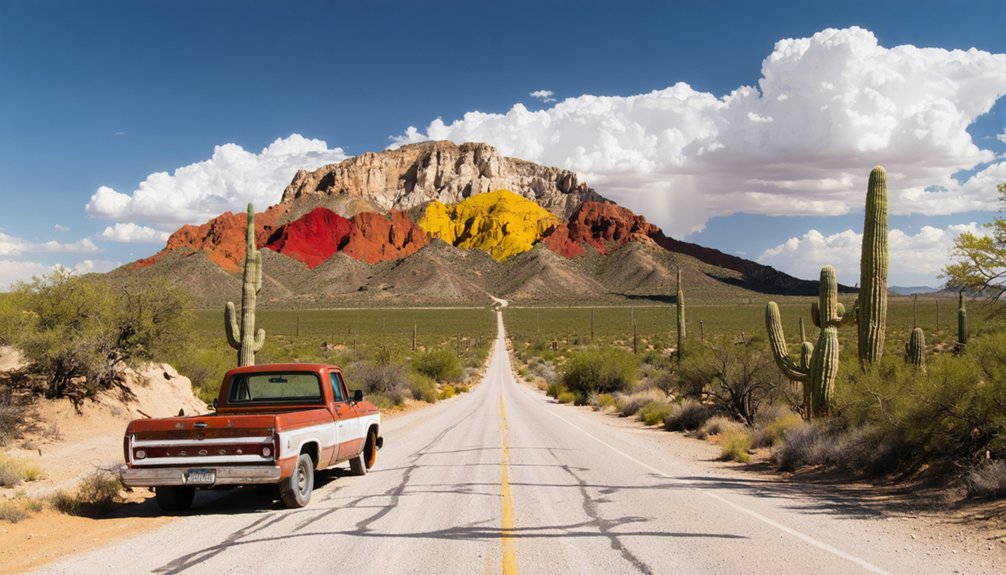
After you’ve walked the salt-crusted shoreline and absorbed that haunting quiet, don’t point your car toward the highway just yet — Salvation Mountain sits only a few miles away, and it earns a stop on its own terms.
Leonard Knight spent decades building this vivid desert art landmark from adobe and paint, transforming raw land into something defiant and devotional.
What makes it worth your detour:
- Volunteers still maintain the site after Knight’s 2016 death
- Bright painted walls contrast sharply against the stark desert
- It costs nothing to enter
- Photography opportunities are genuinely remarkable
- It pairs naturally with the ghost town’s abandoned energy
Both sites share the same desert silence. Together, they make one complete, unforgettable day in California’s forgotten south.
Which Nearby Ghost Towns Pair Best With a Salton Sea Road Trip
The Salton Sea doesn’t have to be your only stop — the California desert rewards those who push a little further, and several ghost towns sit close enough to weave into a single ambitious loop. Head north toward Bodie, where 10,000 souls once chased gold before the mountain swallowed their ambitions whole. California State Parks preserves it in arrested decay, exactly as abandonment left it.
Swing toward Calico Ghost Town along Ghost Town Road in Yermo — gates open at 9 AM, and eight dollars buys you a silver-mining past worth touching. Between stops, you’ll pass desert flora bristling with resilience and wildlife habitats sheltering creatures indifferent to human ambition.
Each detour compounds the story, turning a single destination into a full reckoning with California’s restless, unforgiving frontier spirit.
Day Trip or Overnight: How to Decide Based on Where You’re Starting
Your starting point decides everything — if you’re rolling out of Los Angeles or San Diego, the Salton Sea sits within a manageable 2–3 hour drive, making a day trip genuinely doable.
Push past that radius, say from the Bay Area or Northern California, and you’ll want to book a night in Palm Springs or Indio to avoid burning half your exploring time behind the wheel.
Fortunately, both cities offer solid lodging options that put you within striking distance of the ghost town remnants, Salvation Mountain, and the eerie shoreline before the desert heat peaks.
Distance Determines Stay Length
Whether you’re rolling out from Los Angeles or cutting across from San Diego, how far you’re starting from the Salton Sea ghost towns shapes everything about how you plan this trip.
- Under 2 hours away: a day trip works, but leave early.
- 2–4 hours out: plan an overnight to honor historical preservation properly.
- Arriving after noon: visitor safety demands you don’t rush desert exploration.
- Remote starting points: buffer time for unpaved road conditions.
- Heat season travel: shorter driving windows shrink your usable daylight.
Distance isn’t just miles — it’s heat exposure, road quality, and how deeply you can actually explore.
Rushing these forgotten places does them a disservice. Give yourself room to breathe, wander, and let the desert’s strange, collapsed history settle into you properly.
Lodging Options Nearby
Deciding between a day trip and an overnight stay comes down to one honest question: where are you sleeping tonight if something goes wrong?
The Salton Sea region offers sparse lodging — Niland and Brawley carry basic motels if you’re pushing deep into the desert. Indio and Palm Springs provide more comfortable bases without sacrificing access.
Camping near desert flora and wildlife habitats rewards those willing to sleep under open skies, though extreme heat demands preparation.
If you’re driving from Los Angeles or San Diego, the distance makes an overnight stay worth considering — arriving exhausted dulls the experience.
Book ahead; desert towns fill fast during cooler months when travelers chase that same untamed freedom you’re after.
Don’t leave lodging to chance out here.
Where to Stay When You’re This Far Into the Desert
Sleeping arrangements get interesting once you’ve pushed this deep into the California desert, where the nearest chain hotel might be an hour’s drive back toward civilization.
Local accommodations here reward the self-sufficient traveler committed to historical preservation of these raw, forgotten landscapes.
Your best options:
- Dispersed BLM camping — free, permit-free, and gloriously unregulated across Imperial County
- Niland or Brawley motels — bare-bones but close to the Salton Sea basin
- Salvation Mountain-adjacent campsites — fall asleep under painted desert skies
- RV hookups near Bombay Beach — utilities without sacrificing atmosphere
- Glamping outfitters in Palm Springs — one hour west if comfort wins tonight
Pack water. Pack extra. The desert doesn’t negotiate.
What to Pack for Toxic Dust, Extreme Heat, and No Cell Service
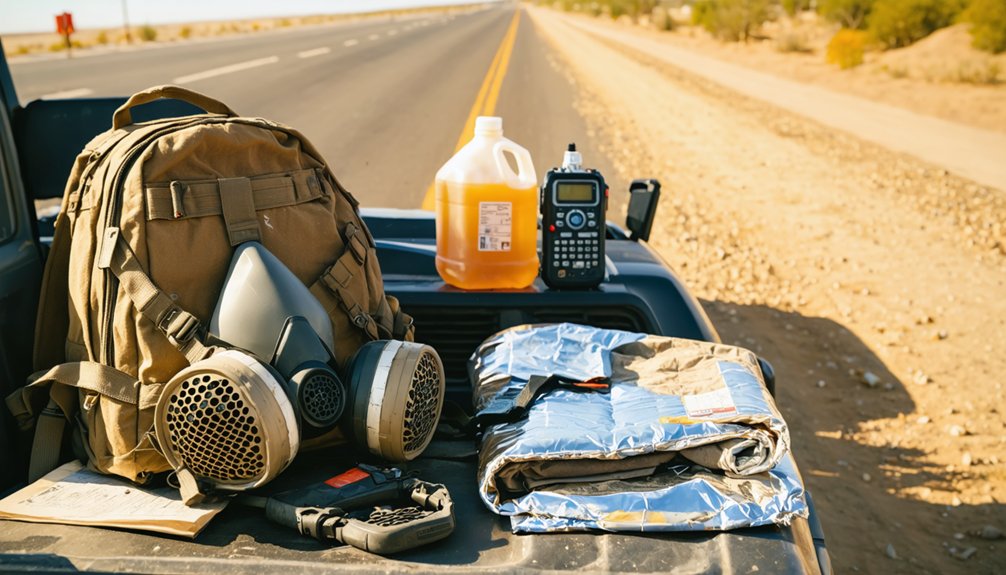
Once you’ve locked down where you’re resting your head, the next gamble is staying alive long enough to see the ghost towns. This desert doesn’t forgive carelessness.
Pack an N95 respirator — the contaminated lakebed kicks up toxic dust that’ll compromise your lungs fast. Layer moisture-wicking clothing against triple-digit heat, and carry a gallon of water per person daily.
Desert flora offers zero shade here, so bring UV-protective gear.
Wildlife encounters are real — rattlesnakes favor abandoned structures and cooling shadows, so watch every step inside crumbling buildings.
Load offline maps before you leave civilization; cell service vanishes completely past the basin’s edge. Carry a paper map, emergency flares, and a portable battery.
Freedom out here means being genuinely self-sufficient, not just feeling like it.
Don’t Visit Without Knowing These Desert Safety Basics
The desert doesn’t care about your timeline, your fitness level, or how many Instagram ghost towns you’ve visited — it operates on its own brutal terms, and it has claimed lives far more prepared than yours.
Respect the landscape and you’ll earn its secrets — including stunning desert flora and rare wildlife spotting opportunities most tourists never witness.
Earn the desert’s trust, and it reveals wonders — ancient flora, elusive creatures, and beauty most visitors never deserve to see.
- Carry one gallon of water per person, per day minimum
- Tell someone your exact route before departing
- Start hiking before 8 AM; retreat before noon
- Never touch unfamiliar desert flora — some species defend themselves aggressively
- Scan rocks and brush carefully during wildlife spotting; rattlesnakes blend perfectly
Your freedom depends on preparation. The ghost towns waited a century for you — they’ll wait another hour while you check your supplies.
Frequently Asked Questions
Is “Shale, California” Actually a Recognized Ghost Town in Official Records?
No, you won’t find “Shale, California” in official records. It’s not a recognized ghost town with historical preservation status. Explore verified tourist attractions like Bodie or Calico instead — your adventurous spirit deserves authentic, documented destinations!
Could “Shale” Be a Misheard or Alternate Name for Another Location?
Could “Shale” be one of history’s lost alternate place names? You’re likely chasing historical name variations of the Salton Sea—California’s ultimate ghost town—where abandoned resorts whisper forgotten stories across cracked, sun-scorched shores awaiting your discovery.
Are Photography Permits Required Before Visiting Abandoned Salton Sea Resort Properties?
You’ll want to secure photography permissions before roaming those haunted shores. The permit application process varies by property owner, so research each site’s rules and embrace your adventurous spirit responsibly while capturing history’s fading echoes.
Can Children Safely Visit Areas With Toxic Dust Near the Salton Sea Shoreline?
Like a sleeping dragon, toxic dust hazards guard the Salton Sea’s shores. You shouldn’t bring children here; child safety guidelines warn that contaminated sediment poses serious respiratory risks, stealing their freedom to breathe safely.
Does the Salton Sea Ghost Town Area Have Any Entrance Fees or Restricted Zones?
You’ll find no entrance fees at the Salton Sea ghost town area, but access restrictions exist near toxic shoreline zones. Roam freely through history’s ruins, yet respect closed areas protecting you from contaminated dust.
References
- https://www.themodernpostcard.com/the-salton-sea-a-ghost-of-former-glory-in-the-california-desert/
- https://californiathroughmylens.com/calico-ghost-town/
- https://www.facebook.com/californialandmarkfoundation/videos/california-ghost-town-bodie-california-is-one-of-the-best-preserved-boomtowns-fr/1639090977198276/
- https://www.yiftahshahar.com/2022/03/cerro-gordo-ghost-town.html