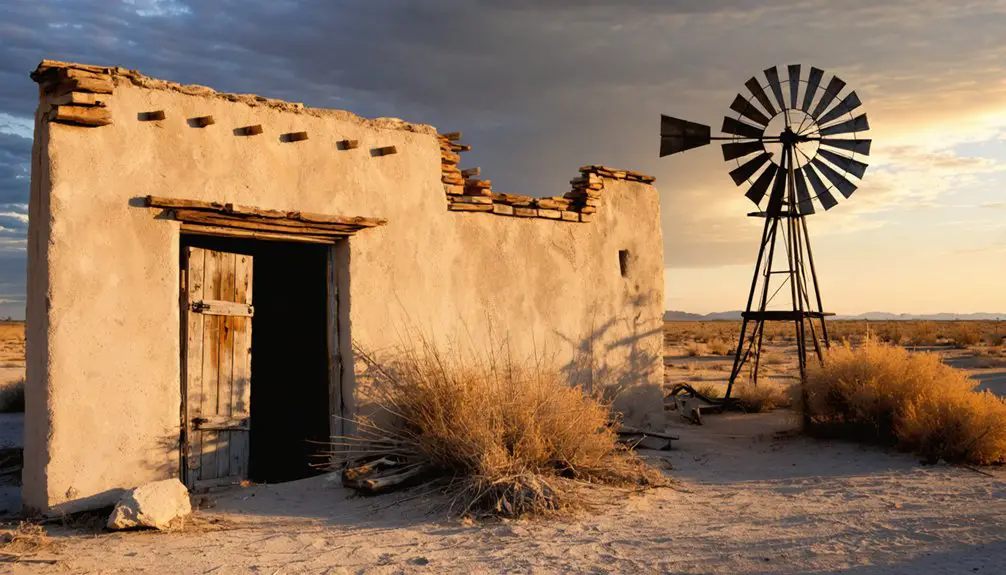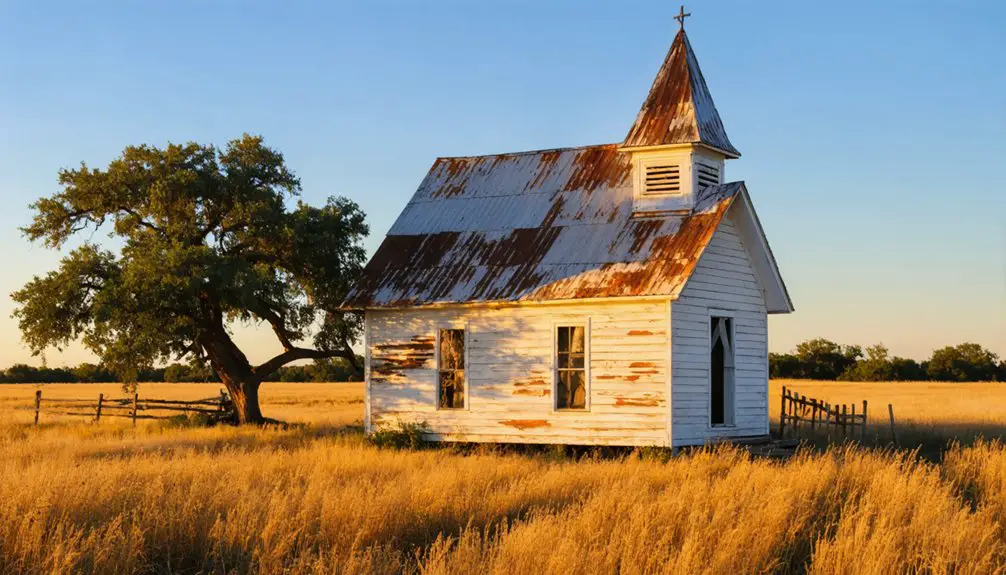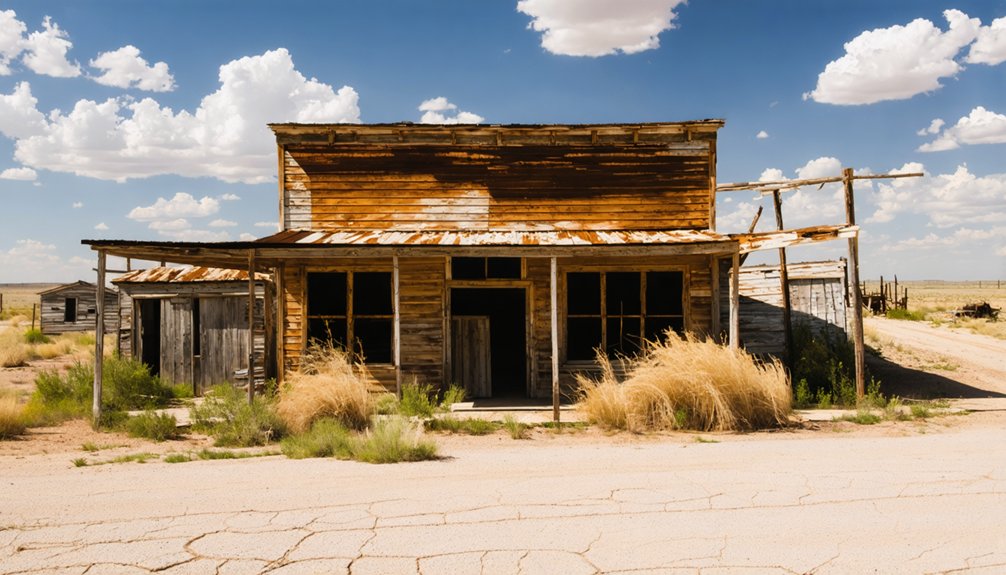
Planning a ghost town road trip to Tucker, Texas means heading into rural Anderson County, about 8 miles southwest of Palestine via U.S. highways 84 and 79. You’ll find scattered dwellings, old churches, aging oil tanks, and Tucker Town Hall anchoring what was once a booming oil field settlement of 6,000 people. Bring a full gas tank, offline maps, water, and a charged camera — there’s no cell service or fuel stops out here. Stick around, and Tucker’s remarkable story gets even more fascinating.
Key Takeaways
- Tucker, Texas lies about 8 miles southwest of Palestine via U.S. highways 84 and 79 in southwestern Anderson County.
- Fill up your gas tank before departing, as Tucker has no gas stations, visitor centers, or reliable cell service.
- Bring offline maps, water, and a charged camera to navigate and document this remote rural ghost town.
- Key attractions include Tucker Town Hall, old oil tanks, historic churches, and markers documenting the Freemen community.
- Tucker’s oil boom rapidly grew its population to 6,000 before economic decline and the Great Depression caused its fall.
What’s Left to See in Tucker, Texas Today?
Though Tucker’s oil boom days are long gone, the town still holds enough history to make the detour worthwhile.
You’ll find the Tucker Town Hall standing at its original site, a tangible anchor to the community’s early 20th-century roots. It’s now available for Texas country-style celebrations, giving the space a living purpose rather than letting it fade quietly.
Among Tucker’s local attractions, the Tucker Town Restaurant keeps things grounded in the town’s historic character. Scattered dwellings, three churches, and old oil tanks round out the landscape, connecting you visually to the boom era.
The Tucker Town Restaurant and weathered oil tanks keep the town’s boom-era character quietly but firmly intact.
Nearby, markers and photographs document the Freemen community and the Green Bay AME Church site, offering a deeper layer of Tucker history that many road-trippers overlook but shouldn’t.
The Oil Boom That Made Tucker, Texas a Ghost Town
Tucker’s story begins not with a town but with a gusher. When Humphrey’s McKie wells struck oil near Chambers Creek, Harry L. Tucker recognized opportunity and built fast.
Within two months, the oil boom pulled 3,000 people onto what had been ranchland. By month three, that number doubled to 6,000.
Tucker sat squarely in the middle of a big pay field, drawing business from every direction. It became one of the most prosperous oil field towns in the region — briefly.
Six months later, drilling moved southwest, and Tucker moved into its long decline. The Great Depression deepened the wound.
What you’re visiting today is the ghost town that prosperity left behind — a place that burned bright, then quietly faded.
How to Reach Tucker, Texas From Palestine or Corsicana?
Now that you understand what drew thousands to Tucker overnight, it’s time to find the place yourself. From Palestine, you’ll head southwest about 8 miles, following U.S. highways 84 and 79 toward the Trinity River.
That Tucker route puts you directly into the heart of southwestern Anderson County, where the Missouri Pacific Railroad once hummed with oil money.
Coming from Corsicana, you’ll travel southeast through Navarro County, passing through Powell and Mildred — the same corridor that fed Tucker’s booming economy during its heyday.
A few travel tips before you go: the roads are rural, so fuel up beforehand.
Tucker Town Hall still marks the original site, giving you a reliable landmark once you arrive.
Keep your eyes open — history hides in plain sight here.
What to Know Before Driving Out to Tucker’s Rural Site
Before you point your vehicle toward southwestern Anderson County, know that Tucker is a rural site in the truest sense — no gas stations, no visitor centers, and no guarantees of cell service once you’re deep in the back roads.
Pack your road trip essentials: a full tank, downloaded offline maps, water, and a charged camera.
Before you hit the road, fuel up, download your maps, and don’t forget water and a camera.
Tucker’s historic significance runs deep — oil boom origins, a resilient farming community, and the legacy of Green Bay AME Church all deserve your full attention, not a rushed drive-through.
The Tucker Town Hall still stands at the original site, and scattered oil tanks remind you this land once roared with activity.
Arrive with curiosity, respect the private property boundaries, and give yourself enough daylight to explore properly.
How Tucker Compares to Other Texas Oil Boom Ghost Towns
What separates Tucker from most Texas oil boom ghost towns is the sheer speed of its rise — 3,000 residents in two months, 6,000 by the third, all anchored to a single crossroads near McKie’s oil wells.
Most boom towns sprawled outward chaotically, but Tucker stretched deliberately along one road, roughly half a mile long, with alleys threading between buildings.
Ghost Town Comparisons reveal that while places like Powell also rode Corsicana’s oil wave, Tucker uniquely survived decades longer, stabilizing at 304 residents well into 2000.
Tucker’s Legacy isn’t just about boom and bust — it’s about resilience.
You’re visiting a place that outlasted its own collapse, kept its town hall standing, and still carries the bones of something that once moved incredibly fast.
Frequently Asked Questions
Did Tucker, Texas Have a Different Name Before 1882?
Yes, you’ll find Tucker’s name origins trace back to Prairie Point, its earlier identity that carried historical significance until 1882, when it was renamed Tucker to honor the influential W.H. Tucker family settling there.
Which Church Did Freed African Americans Establish Near Tucker in 1866?
You’ll discover that freed African Americans established Green Bay AME Church in 1866, a landmark of African American Heritage and Historical Significance, proving that freedom’s spirit thrived near Tucker, Texas, long before the oil boom transformed the region.
Who Originally Owned the Ranch Land Where Tucker Was Founded?
You’ll discover that McKie originally owned the ranch land where Tucker was founded. Harry L. Tucker built this free-spirited community on McKie’s former ranch history, claiming land ownership in 1923 to create something entirely his own.
What Agricultural Goods Did Early Tucker Residents Ship Out Commercially?
You’d have shipped cotton, cottonseed, and fish from early Tucker. Cotton production fueled livelihoods, grain shipment moved commerce forward, and fresh fish fed communities — three industries that once gave residents true economic freedom and independence.
Did Tucker Experience Any Oil Activity During the Early 1930S?
You’d be thrilled to know Tucker’s oil boom continued into 1932–33, when Tidewater and Texas Seaboard drilled profitable oil and gas wells, creating a significant economic impact in both Tucker and the nearby Long Lake oilfield.
References
- http://www.tuckertownhall.com/tuckertown-history.html
- https://www.tshaonline.org/handbook/entries/tucker-tx
- https://www.treasurenet.com/threads/tuckertown-ghost-town-great-pics.107048/
- https://www.texasescapes.com/EastTexasTowns/Tucker-Texas.htm
- https://atlas.thc.texas.gov/Details/5349012341