Planning a ghost town road trip to Sparta, Oregon means heading east from Baker City on Highway 86, then steering through unpaved gravel roads to one of the state’s most authentic abandoned settlements. You’ll find crumbling stone ruins, forgotten cemeteries, and traces of a 32-mile ditch built by Chinese laborers. Pack water, offline maps, and sturdy shoes. Visit in summer or fall for the best road conditions. There’s far more waiting for you at this remarkable high desert destination.
Key Takeaways
- Sparta is located east of Baker City via Highway 86, then unpaved gravel roads requiring offline maps, extra water, and sturdy shoes.
- Key historical sites include Sigmund Heilner’s 1872 store, old cemeteries, the 32-mile Sparta Ditch, and a Chinese cemetery.
- Visit in summer for reliable road access, spring for wildflowers, or fall for scenic foliage; avoid winter completely.
- Combine Sparta with nearby ghost towns like Cornucopia, Sumpter, and Bourne for a comprehensive eastern Oregon mining history loop.
- Expect raw, uncurated historical remains with no polished displays—authentic ruins and artifacts define the Sparta ghost town experience.
What Makes Sparta, Oregon Worth the Drive?
Tucked away in Baker County’s Eagle Creek mining area, Sparta isn’t your average ghost town — it’s a sun-bleached snapshot of Oregon’s wildest boom-and-bust era. You’ll find real mining history here, from the ambitious 32-mile Sparta Ditch that once powered placer operations to the remnants of a thriving Chinese immigrant community.
At its peak, this remote hillside held thousands of miners, complete businesses, and even Oregon’s first electric lights in 1902. Sigmund Heilner’s 1872 store still stands as a rare surviving piece of town architecture, giving you something tangible to connect with.
Stone ruins and old cemeteries round out the experience. If you crave wide-open spaces, authentic history, and roads less traveled, Sparta delivers exactly that kind of hard-earned freedom.
Who Built Sparta: and Who Got Left Behind?
Behind Sparta’s gold rush glory was a workforce that rarely shared in its rewards. Chinese laborers built the 32-mile Sparta Ditch by hand, a feat that made placer mining possible and powered the entire economy.
Chinese laborers built Sparta’s economy — and rarely shared in its rewards.
Yet despite their essential role in Sparta’s mining history, they lived separately in a Chinatown that housed over 1,000 residents, complete with temples, stores, and gambling houses.
That Chinese community built something real here — and then got pushed to the margins of the story. Today, their cemetery remains one of the most quietly powerful stops on your visit.
Walking it, you’ll feel the weight of lives that shaped this place but rarely got credit for it. Don’t skip it. That ground deserves your attention.
How to Get to Sparta, Oregon Without Getting Lost?
Once you’ve walked the Chinese cemetery and paid your respects, you’ll need to find your way out — which means you also need to know how to find your way in. Sparta sits deep in Baker County, far from cell service, so preparation beats improvisation every time.
Take State Highway 86 east from Baker City, then turn left roughly 8–9 miles in. Expect unpaved gravel roads — this isn’t weekend cruising, it’s deliberate exploration.
Pack smart before leaving:
- Offline maps downloaded before departure
- Extra water and snacks
- Sturdy, closed-toe shoes
- A reliable flashlight
- Sun protection for exposed terrain
Summer’s your best window, though spring and fall reward patient visitors. Local folklore thrives here, and ongoing preservation efforts protect what little remains. Respect both — Sparta earned that much.
What Survives at Sparta’s Ghost Town Site?
After you make the drive out, Sparta doesn’t greet you with much — and that’s exactly the point. What survives are honest, unpolished historical artifacts that tell the story better than any museum could.
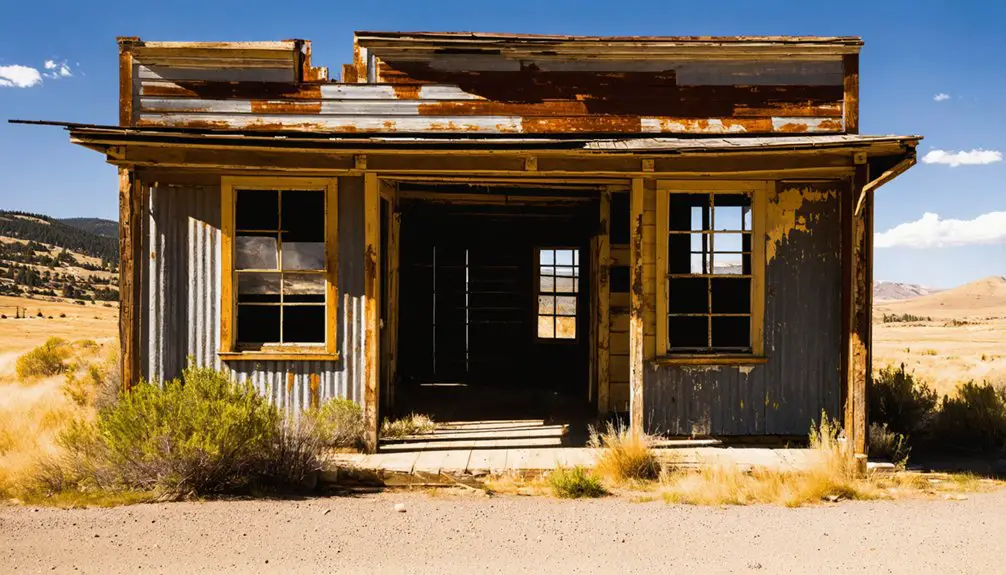
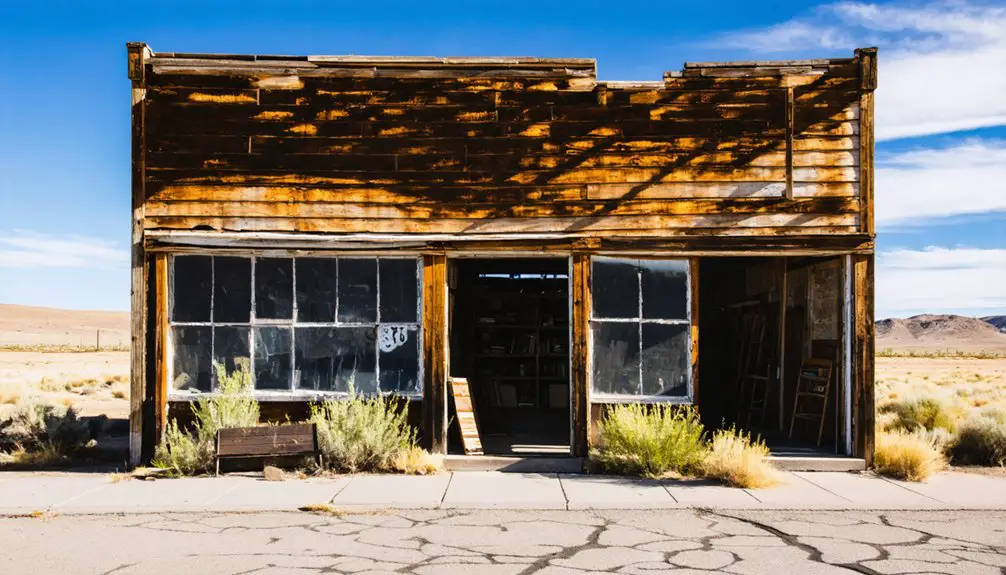
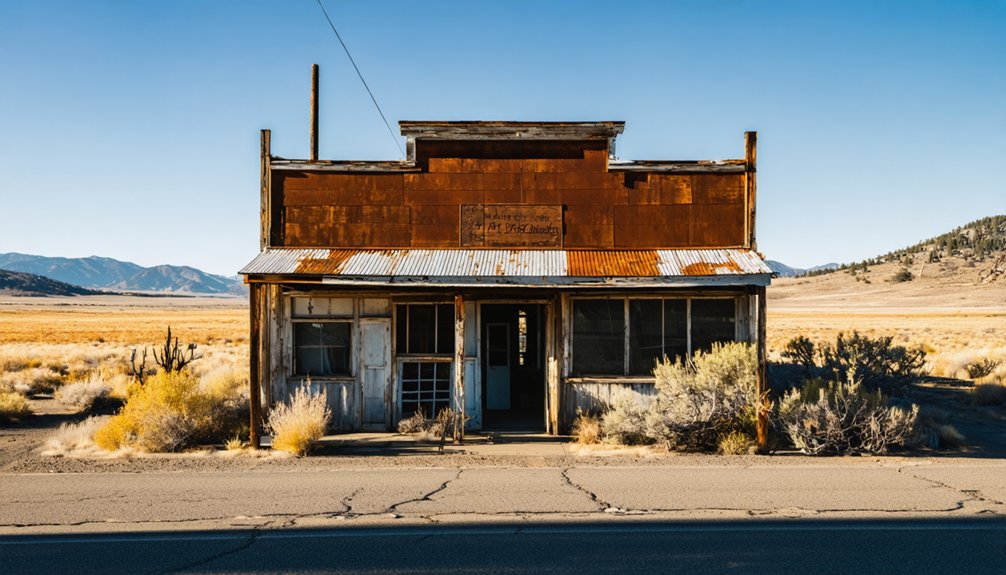
Sigmund Heilner’s 1872 store stands as the sole architectural remnant from Sparta’s peak years. It’s weathered but still standing, a quiet monument to a town that once held thousands.
Beyond the store, you’ll find stone ruins and an old cemetery on the Mackey homestead, dating to around 1870. Traces of the 32-mile Sparta Ditch cut through the landscape, and a Chinese cemetery honors the laborers who built it.
Nothing’s been polished or curated here. You’re walking through raw history — and that freedom to explore it unfiltered is the real draw.
What’s the Best Time to Visit Sparta’s Ghost Town?
You’ll find summer the most reliable season for tackling Sparta’s remote gravel roads, as dry conditions make the rough terrain far more manageable.
Spring and fall tempt with cooler temperatures and dramatic landscapes, though you should watch for muddy stretches that can catch unprepared drivers off guard.
Winter effectively closes off access, so don’t risk the trip unless you’re prepared for snow-blocked roads and complete isolation.
Summer Offers Best Access
Summer is your best bet for visiting Sparta, since the remote gravel roads leading to this high-desert ghost town sit at 4,111 feet and can become treacherous or completely impassable during winter snowpack and spring mud season.
Pack smart and roam free through Sparta’s forgotten world, where local legends of Chinese laborers and gold-rush mining techniques shaped an entire region.
Explore Sigmund Heilner’s 1872 store, the last standing structure.
Walk remnants of the 32-mile Sparta Ditch built by Chinese workers.
Discover the historic Chinese cemetery tucked into the landscape.
Photograph stone ruins on the Mackey homestead dating to 1870.
Bring offline maps, water, and snacks — cell service doesn’t exist here.
Plan a half-day minimum; this remote site rewards the adventurous traveler.
Spring And Fall Appeal
While summer claims the practical advantage, spring and fall bring their own quiet magic to Sparta’s abandoned streets.
In spring, wildflowers push through cracked earth around Sigmund Heilner’s 1872 store, and wildlife sightings become surprisingly common as deer and birds reclaim the landscape. The softer light of early morning creates stunning photography opportunities against stone ruins and the old cemetery.
Fall strips the surrounding hillsides to amber and rust, sharpening the contrast between Sparta’s decay and nature’s renewal. Temperatures cool without becoming hostile, and fewer visitors mean you’ll experience the solitude this ghost town genuinely demands.
The Wallowa Mountains backdrop intensifies during autumn’s clarity, rewarding patient photographers. Both seasons demand the same preparation — water, offline maps, and sturdy footwear — but deliver something summer simply can’t match.
Winter Road Challenges
Winter closes Sparta’s remote gravel roads without warning, and that’s reason enough to cross it off your list from December through February. Snow covered roads and icy conditions make reaching this 4,111-foot elevation site nearly impossible without serious risk.
Winter road challenges you’ll face include:
- Impassable gravel roads buried under heavy snowfall
- No cell service to call for help if you’re stranded
- Zero road maintenance on remote unpaved routes
- Ice patches hiding beneath fresh snow on steep terrain
- Unpredictable weather shifts that trap vehicles for hours
Save Sparta for warmer months when you can actually explore freely. The ghost town rewards those who arrive prepared, not those who gamble against Oregon’s brutal high-elevation winters.
What to Pack for a Remote Oregon Road Trip?
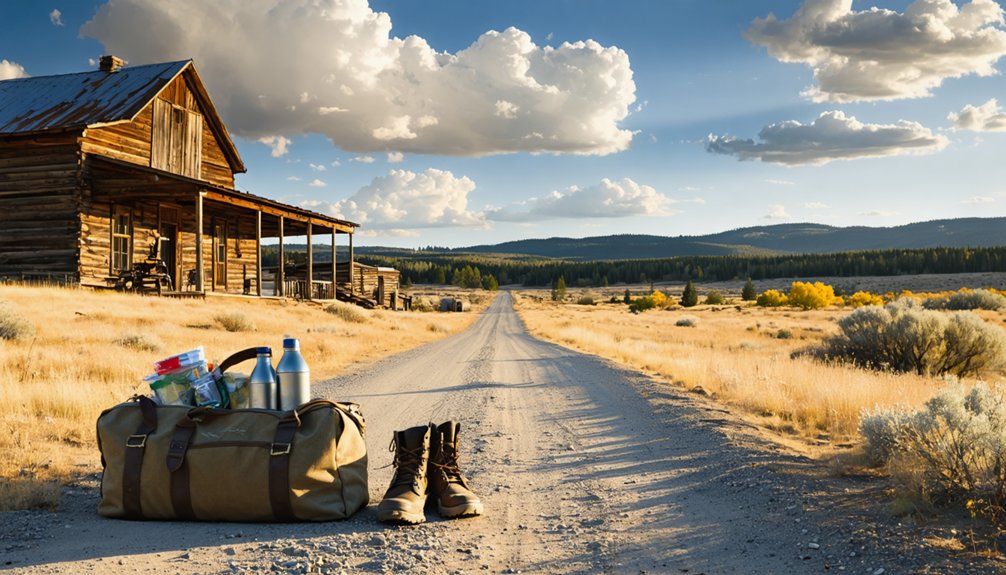
Before you head out to Sparta, pack smart—cell service is nonexistent, and the remote gravel roads leave little room for error. Download offline maps before leaving Baker City, and carry more water than you think you’ll need. The high desert sun at 4,111 feet hits harder than expected.
For visitor safety, toss sturdy shoes, sunscreen, and a flashlight into your bag. You’ll want to explore historical artifacts like the Sparta Ditch remnants and the Chinese cemetery without rushing back before dark.
Pack snacks that sustain energy during a half-day exploration, and bring a basic first-aid kit. Your vehicle should carry a spare tire and emergency tools—gravel roads punish unpreparedness.
Freedom tastes best when you’ve planned well enough to enjoy it fully.
Nearby Ghost Towns Worth Adding to Your Sparta Trip
While you’re already making the trek out to Baker County, you’d be doing yourself a disservice by not exploring the region’s other ghost towns scattered across the same rugged landscape. Oregon’s Baker County alone holds several abandoned mining settlements that share Sparta’s 19th-century gold rush roots.
Making it easy to cluster multiple sites into a single road trip. You’ll find that these historic town remnants tell a broader story of boom-and-bust mining culture that shaped the entire region.
Baker County Ghost Towns
Baker County is a ghost town hunter’s paradise, and if you’re already making the trek out to Sparta, you’d be doing yourself a disservice by not exploring the other abandoned settlements scattered across the region.
The area’s rich mining history left behind dozens of forgotten communities, each holding its own historical artifacts and untold stories. Consider adding these stops to your route:
- Cornucopia – A well-preserved mining camp with striking structural remains
- Sumpter – Home to a massive gold dredge and active museum
- Unity – A quiet remnant of early agricultural settlement
- Bourne – Tucked into Cracker Creek canyon with visible ruins
- Cable City – A remote site with scattered mining-era debris
Each destination rewards curiosity and adds serious depth to your Baker County adventure.
Nearby Abandoned Mining Sites
Once you’ve mapped out your Baker County ghost town stops, it’s worth casting a wider net beyond the county line—because Oregon’s abandoned mining landscape doesn’t stop there. Eastern Oregon’s high desert hides dozens of forgotten camps where mining history carved deep marks into the terrain.
Towns like Cornucopia and Bourne echo Sparta’s story—boomtowns swallowed by silence after the ore ran dry. Each site carries its own layered past, including evidence of a Chinese community that built infrastructure, worked the claims, and shaped regional culture in ways history often undervalues.
Visiting multiple sites in one trip deepens your understanding of how interconnected these communities were. Pack your offline maps, fuel up in Baker City, and give yourself enough daylight to explore more than one stop.
Regional Historic Town Clusters
Sparta pairs naturally with several nearby ghost towns that reward a longer Baker County loop. You’ll find historical artifacts and abandoned structures scattered across the region, making a multi-stop itinerary genuinely worthwhile. Bundle these sites into one unforgettable eastern Oregon drive:
- Cornucopia – A once-thriving gold camp with dramatic mountain scenery and crumbling mill ruins
- Sumpter – Home to a massive gold dredge and a narrow-gauge heritage railroad
- Bourne – A tight canyon hideaway hiding stone walls and mining debris
- Unity – A quiet crossroads anchoring southeastern Oregon’s ranching and mining heritage
- Whitney – A rail-era ghost town slowly surrendering to the high desert
Each stop adds texture to Oregon’s mining story, so map your route and hit them all.
Frequently Asked Questions
Is There an Entrance Fee or Permit Required to Visit Sparta?
Like a true frontier spirit, you’ll roam Sparta freely—no entrance fee or permit’s required! Embrace historical preservation by following visitor guidelines: tread lightly, respect ruins, and let this ghost town’s wild, untamed soul inspire your adventurous heart.
Are Pets Allowed When Exploring Sparta’s Remote Ghost Town Site?
You’re welcome to bring pets, but prioritize pet safety on Sparta’s rugged terrain. Keep them leashed to prevent wildlife encounters, as the remote wilderness harbors unpredictable animals that could threaten your furry adventure companion.
Can You Legally Take Artifacts or Rocks From Sparta’s Grounds?
You shouldn’t remove anything from Sparta’s grounds. Artifact laws protect historical items, making collection illegal without permits. While rock collection seems harmless, it’s best to leave everything untouched, preserving this remarkable ghost town’s legacy for future explorers.
Is Camping Overnight Permitted Near the Sparta Ghost Town Area?
With 200+ Oregon ghost towns, camping regulations vary wildly! For Sparta, overnight restrictions aren’t clearly defined in available sources, so you’ll want to contact Baker County authorities directly before pitching your tent there.
Sparta may show up on Google Maps, but don’t trust GPS accuracy alone—map updates rarely reflect remote ghost towns. You’ll want offline maps downloaded before you venture down those rugged, cell-service-free gravel roads.
References
- https://traveloregon.com/things-to-do/culture-history/ghost-towns/sparta/
- https://en.wikipedia.org/wiki/Sparta
- https://westernmininghistory.com/towns/oregon/sparta/
- https://ghost-towns.close-to-me.com/states/oregon/sparta-or/
- https://dirtyfreehub.org/routes/oregon/sparta/
- https://en.wikipedia.org/wiki/List_of_ghost_towns_in_Oregon
- https://accessgenealogy.com/oregon/sparta-cemetery-sparta-oregon.htm
- https://ghost-towns.close-to-me.com/states/oregon/