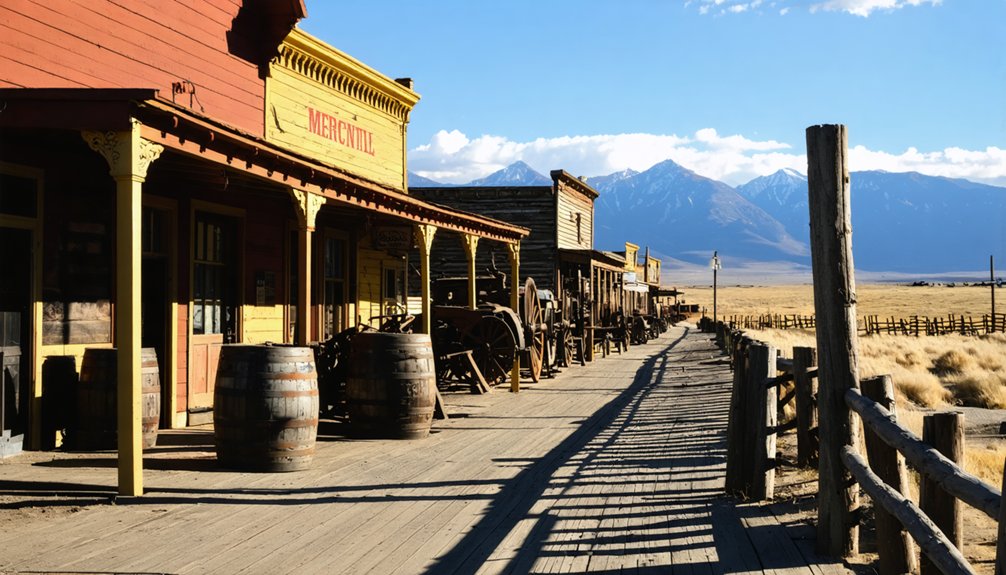
Planning a ghost town road trip to Stoutenburg, California starts in Murphys, your gateway into Calaveras County’s rugged Gold Rush backroads. You’ll navigate toward Coyote Creek using offline maps, since precise GPS directions don’t exist for this forgotten settlement. Bring fuel, patience, and a sharp eye for subtle landscape clues like depressions and rock alignments. Stoutenburg rewards curiosity over convenience—and the deeper you explore this region’s layered mining history, the more its haunting story unfolds.
Key Takeaways
- Start your trip from Murphys, California, the closest modern town serving as the primary gateway to Stoutenburg and surrounding Gold Rush sites.
- Navigate using offline maps and back roads near Coyote Creek, as precise GPS directions to Stoutenburg are largely undocumented.
- Expect no preserved buildings, signage, or tourist infrastructure—bring imagination and look for subtle landscape clues like depressions or rock alignments.
- Pair Stoutenburg with nearby ghost towns like Bodie State Historic Park or Cerro Gordo for a richer, more complete Gold Rush experience.
- Prepare thoroughly by downloading offline maps, fueling up, checking road conditions, and treating the journey as exploration rather than a straightforward destination drive.
What Was Stoutenburg, California?
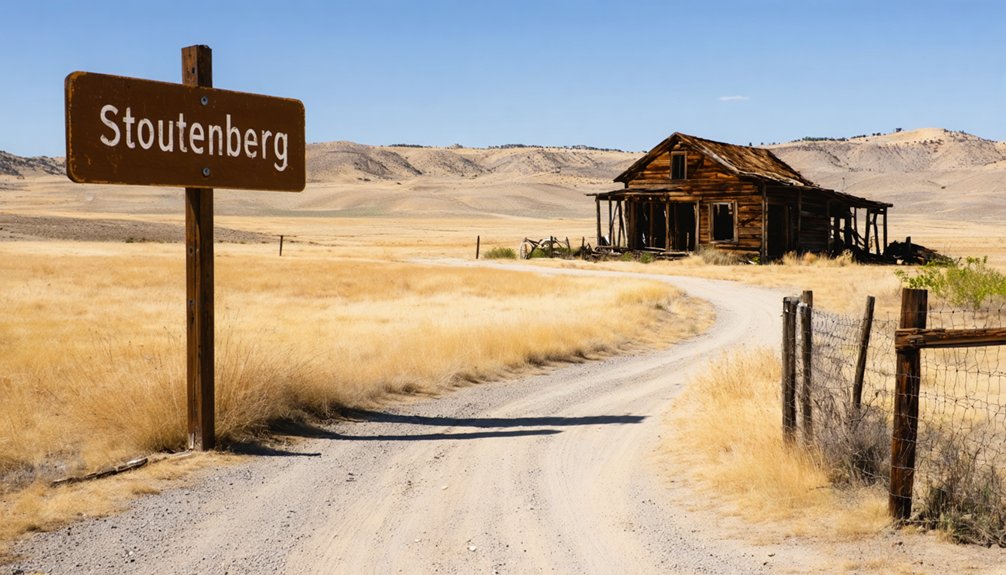
Tucked away in Calaveras County near the banks of Coyote Creek, Stoutenburg was once a small but lively Gold Rush settlement that drew miners and merchants alike to the rugged California foothills. Named after a German miner who helped establish the community, it represents the kind of raw, independent spirit that defined California’s mining history.
Prospectors arrived chasing fortune, businesses followed, and a settlement took shape almost overnight. But when the gold ran dry, people moved on, leaving behind only ghost town legends and faded memories.
Today, Stoutenburg sits near the charming town of Murphys, giving you a natural jumping-off point to explore this vanished community. If you crave open roads and forgotten history, Stoutenburg deserves a spot on your California road trip list.
Where Is Stoutenburg Located in Calaveras County?
You’ll find Stoutenburg tucked away in Calaveras County, California, a region steeped in Gold Rush history and dotted with the remnants of once-thriving mining communities. The settlement sits near Coyote Creek, a natural landmark that likely played a role in the daily lives of the miners who called this place home.
If you’re mapping out your route, the town of Murphys serves as your closest modern reference point, making it a natural base for exploring this forgotten corner of California history.
Calaveras County General Location
Stoutenburg sits in Calaveras County, California, a region steeped in Gold Rush history and scattered with the ruins of boom-and-bust mining settlements. When you’re planning a ghost-town road trip, this county delivers serious historical significance at every turn.
You’ll find yourself traveling through terrain that once drew thousands of fortune-seekers west during the mid-1800s. Murphys, one of the county’s well-preserved nearby towns, serves as a practical base for exploring the surrounding area.
Coyote Creek runs close to where Stoutenburg once stood, offering a natural landmark to orient your journey. Calaveras County isn’t short on tourist attractions, but Stoutenburg appeals to travelers who want something rawer and less commercialized — a genuine fragment of California’s vanished mining past waiting to be discovered on your own terms.
Near Coyote Creek
When you trace your finger along the map of Calaveras County, Coyote Creek becomes your most reliable guide to pinpointing where Stoutenburg once stood. This creek runs through rugged terrain that once drew ambitious miners chasing Gold Rush fortunes, and it still marks the general corridor where the settlement took root.
You’ll find Stoutenburg positioned not far from Murphys, a surviving town that gives you a solid base for exploration. Local legends suggest the creek’s banks once buzzed with activity, and sharp-eyed visitors occasionally spot mining relics scattered across the landscape.
The terrain itself tells the story. Follow the creek, read the land, and you’ll start understanding why miners settled here and why, once the gold ran out, they didn’t stay.
Close To Murphys
Murphys acts as your anchor point for finding Stoutenburg, sitting close enough to give you a familiar landmark in otherwise rugged Calaveras County terrain.
Murphys itself carries deep historical significance as a Gold Rush-era town that survived where others didn’t, making it a worthwhile stop before you push toward Stoutenburg’s forgotten ground.
You’ll find preserved architecture, local museums, and active preservation efforts that keep Murphys alive as a living record of California’s mining past.
Use that context to fuel your appreciation when you seek out Stoutenburg’s quieter, less documented story nearby.
The contrast between Murphys’ surviving identity and Stoutenburg’s near-total disappearance sharpens your understanding of how fortune and geography determined which settlements endured and which ones faded completely into the landscape.
Why Did Stoutenburg, California Disappear?
Like so many Gold Rush settlements scattered across California’s Sierra Nevada foothills, Stoutenburg didn’t fade quietly — it followed a boom-and-bust pattern that was almost inevitable from the start. Its historical significance lies in that very story.
When gold was flowing, miners flooded in, businesses followed, and the community hummed with energy. But mining decline hit hard once the easily accessible deposits ran dry. Miners chased richer prospects elsewhere, and without that economic engine, local shops and services collapsed right behind them.
Nobody stayed to maintain what the rush had built. The population simply drifted away, leaving little behind. That cycle repeated itself across dozens of California mining camps, and Stoutenburg was no exception — just another promising settlement swallowed by the landscape once fortune moved on.
What’s Left of Stoutenburg Today?
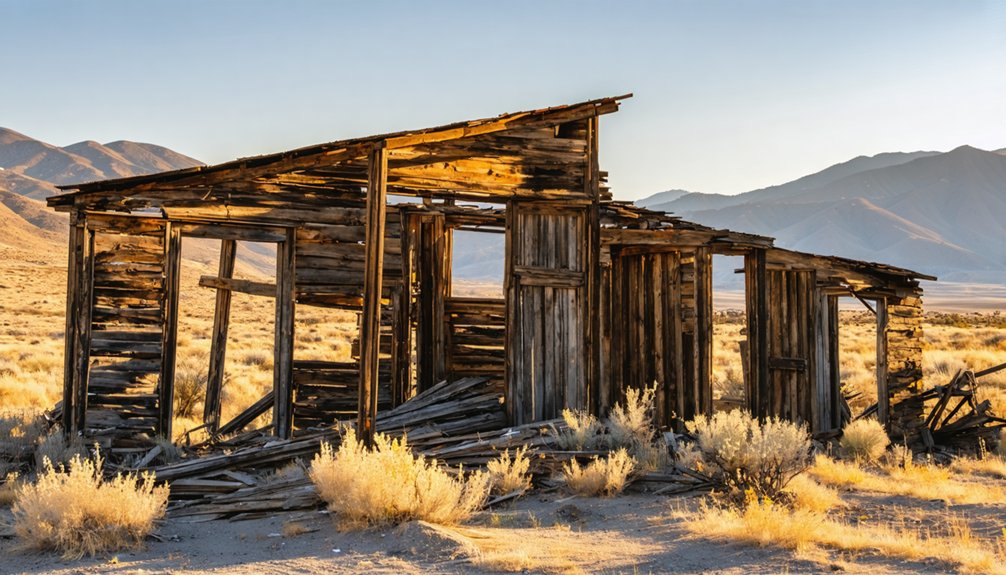
When you arrive at the Stoutenburg site near Coyote Creek, you’ll find little more than the landscape itself — no preserved buildings, no markers, and no developed tourist infrastructure signal that a mining camp once thrived here.
The ground may hold scattered traces of the settlement’s past, but the vanished camp demands imagination more than observation. Still, standing in this quiet corner of Calaveras County, you can feel the weight of a Gold Rush story that played out and faded long before anyone thought to preserve it.
Traces On The Ground
Stoutenburg leaves behind almost nothing you can point to today—no preserved storefronts, no marked cemetery, no interpretive sign staked into the ground near Coyote Creek. Its historical significance lives more in compiled ghost-town records than in anything your boots will find on-site.
The land itself has quietly reclaimed whatever structures once supported a working mining community. You won’t spot foundation stones easily, and no heritage trail guides you through what remains.
That’s actually part of the draw. You’re reading a landscape stripped of ceremony, standing where a German miner’s ambition once shaped a small corner of Calaveras County.
Stoutenburg’s mining legacy doesn’t announce itself—it asks you to imagine it. Bring that curiosity, because the site rewards travelers who find meaning in absence.
A Vanished Mining Camp
What you’ll find at Stoutenburg today is fundamentally a quiet stretch of Calaveras County terrain near Coyote Creek, where the land has swallowed the evidence whole. Historic mining once drove every decision made here — where men dug, where they slept, where they spent their earnings.
Now, abandoned structures either no longer stand or blend invisibly into the landscape, leaving little for your eyes to lock onto.
That absence tells its own story. You’re standing where a German miner’s ambition sparked a community, and where exhausted gold deposits eventually killed it. No marker greets you. No restored buildings frame a photo opportunity.
What remains is raw terrain and the freedom to piece together a vanished world using nothing but imagination and the history you carried in with you.
Visiting The Site Today
Though no restored buildings or roadside markers wait to greet you, visiting the Stoutenburg site still rewards the curious traveler willing to read a landscape on its own terms. Unlike polished tourist attractions, this forgotten corner of Calaveras County speaks quietly. Come prepared and keep your expectations grounded.
Pack your visit around these three priorities:
- Scout near Coyote Creek for depressions, rock alignments, or historical artifacts that hint at former structures.
- Pair the stop with Murphys, a well-documented nearby town offering context, food, and Gold Rush heritage.
- Bring a regional ghost-town map to connect Stoutenburg within a fuller Calaveras County itinerary.
You won’t find interpretive signs here, but that raw, unmediated quality is exactly what makes the stop feel genuinely adventurous.
How Do You Get to Stoutenburg?

Getting to Stoutenburg isn’t as straightforward as plugging an address into your GPS, but that’s part of the adventure. Head to Calaveras County and use Murphys as your base.
From there, navigate toward Coyote Creek, where the settlement once stood amid rich mining history and local legends of Gold Rush fortune-seekers chasing their dreams.
Since precise road access isn’t well documented, come prepared. Download offline maps, fuel up before leaving Murphys, and treat the journey as exploration rather than destination tourism.
Ask locals — they often carry knowledge that no database holds. The roads through this region reward curiosity and patience.
Embrace the uncertainty, because finding a place this forgotten feels earned, and that’s exactly the kind of freedom a ghost-town road trip delivers.
Which Ghost Towns Near Stoutenburg Are Worth the Detour?
Stoutenburg sits in one of California’s richest ghost-town corridors, so while you’re already out in Calaveras County, it’d be a shame not to extend the drive. The region rewards curious travelers who chase local legends and follow historical markers deeper into California’s mining past.
Calaveras County rewards the curious — chase one ghost town and you’ll find yourself chasing them all.
Consider adding these stops:
- Murphys – A well-preserved Gold Rush town with historic buildings, tasting rooms, and documented mining heritage just minutes away.
- Bodie – Further north but worth every mile, this state historic park delivers an almost perfectly frozen ghost town.
- Cerro Gordo – Southeast toward the Owens Valley, this silver-mining ruin carries haunting stories and dramatic desert scenery.
Each stop layers more context onto Stoutenburg‘s quieter story, building a road trip that feels genuinely earned.
How Do You Plan a Calaveras County Ghost Town Road Trip?
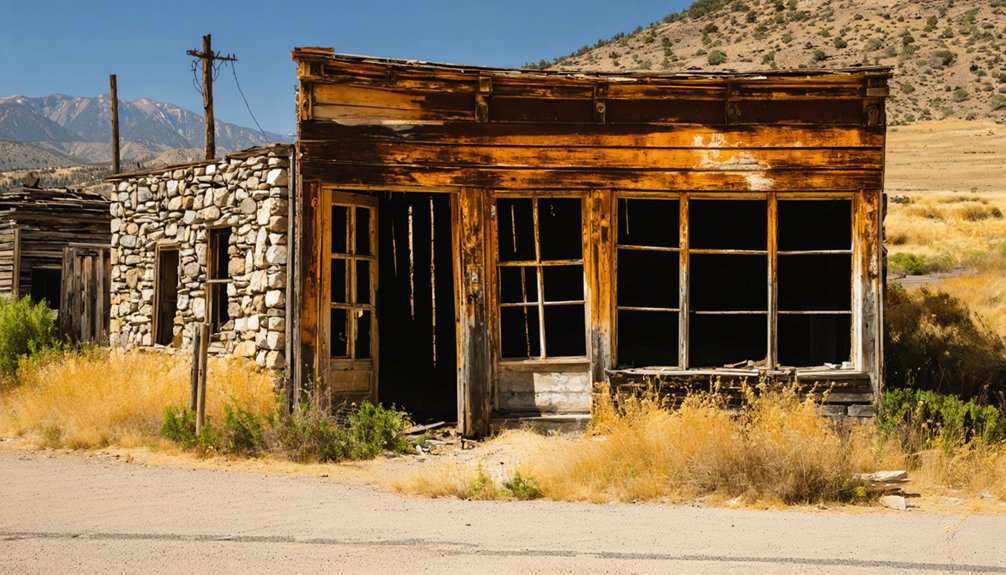
Planning a Calaveras County ghost town road trip starts with anchoring your route around Murphys, which puts you within easy reach of Stoutenburg and the surrounding mining-era remnants. From there, you can fan out along back roads, following Coyote Creek’s corridor toward sites that defined California’s Gold Rush boom.
Prioritize stops that balance historical authenticity with accessibility. Some locations offer tangible structures; others survive only as names on compiled ghost-town lists. Stoutenburg falls into the latter category, so pair it with better-documented sites to keep your itinerary rewarding.
Acknowledge preservation challenges before you go. Many sites lack signage, infrastructure, or maintained access. Carry physical maps, research county road conditions ahead of time, and treat each stop as a piece of a larger, disappearing story worth chasing.
Frequently Asked Questions
Was Stoutenburg Ever Officially Recognized as an Incorporated California Town?
You won’t find Stoutenburg in California’s incorporation records — it never achieved official status. Its town founding history and historical population tied purely to Gold Rush mining, making it a free-spirited, unofficial settlement that vanished as quickly as it appeared.
Are There Any Known Photographs or Illustrations of Stoutenburg From Its Active Period?
You won’t find confirmed historical photographs or artistic illustrations of Stoutenburg from its active period. The settlement’s documentation remains scarce, leaving you to piece together its Gold Rush story through regional records and nearby surviving communities.
Did Stoutenburg Have a Post Office During Its Operational Years?
Like a faded map with missing trails, Stoutenburg’s post office history isn’t confirmed in available records. You won’t find clear historic landmarks or local legends documenting one, leaving this mystery delightfully open for your adventurous exploration.
Is Private Land Ownership an Obstacle When Visiting Former Gold Rush Settlements?
Yes, private restrictions can block your adventure! Before you explore former Gold Rush settlements, always check land access rules. Many sites sit on private property, so you’ll need permission or risk turning back empty-handed.
What Is the Best Time of Year to Visit Calaveras County Ghost Towns?
Calaveras County sees over 300 sunny days annually—so visit in spring or fall. You’ll find mild temperatures perfect for exploring historical preservation sites and tourist attractions without summer’s crowds dulling your adventurous spirit.
References
- https://www.facebook.com/californialandmarkfoundation/videos/california-ghost-town-bodie-california-is-one-of-the-best-preserved-boomtowns-fr/1639090977198276/
- https://www.facebook.com/groups/americansouthwest/posts/1588447071784761/
- https://www.nps.gov/deva/learn/historyculture/death-valley-ghost-towns.htm
- https://www.instagram.com/reel/DQpancHD1NQ/
- https://en.wikipedia.org/wiki/List_of_ghost_towns_in_California
- https://kids.kiddle.co/Stoutenburg
- https://a.osmarks.net/content/wikipedia_en_all_maxi_2020-08/A/List_of_ghost_towns_in_California
- https://www.wikiwand.com/en/articles/List_of_ghost_towns_in_California
- https://fr.wikipedia.org/wiki/Liste_des_villes_fantômes_en_Californie