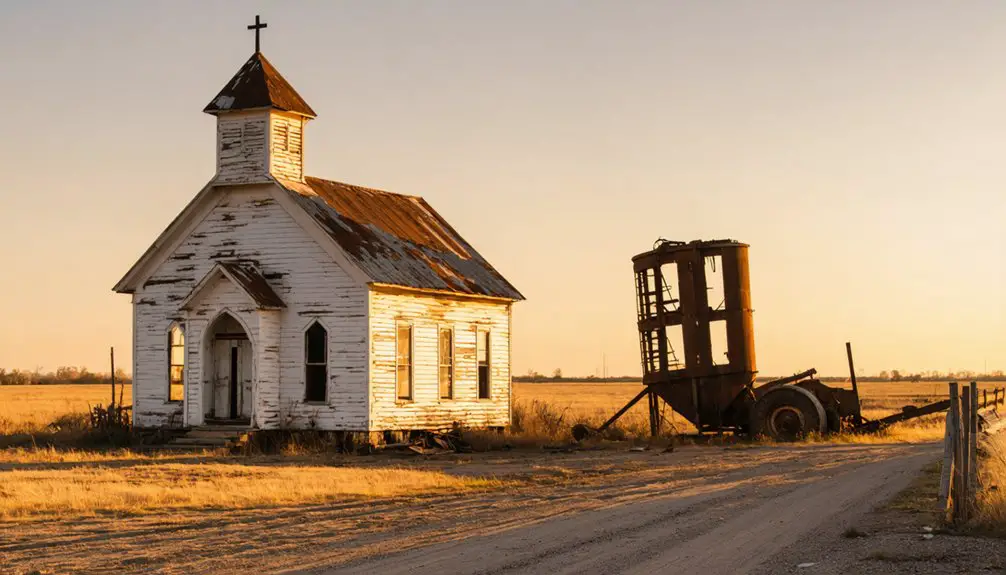
Planning a ghost town road trip to Tahlonteeskee means stepping into Oklahoma’s oldest seat of Cherokee governance, tucked two miles north of Gore in Sequoyah County near U.S. Highway 64. You won’t find signage or tourist infrastructure — just quiet, sacred ground where the Old Settlers built a nation before forced removal changed everything. Bring your knowledge of Cherokee history, respect private property boundaries, and prepare for a profoundly reflective experience. There’s far more to this story than meets the eye.
Key Takeaways
- Tahlonteeskee is located in Sequoyah County, approximately two miles north of Gore, near U.S. Highway 64 and just north of I-40.
- The original site sits on private land, so research access protocols through the Cherokee Nation or local contacts before visiting.
- Expect a solitary, uncurated ghost town experience with no signage, though archaeological remains lie beneath the soil.
- A reconstructed council house and courthouse outside Gore offer tangible historical connections for visitors to explore.
- Prepare by learning Cherokee history beforehand and approach the site quietly, respecting its cultural and archaeological significance.
What Was Tahlonteeskee and Why Does It Matter?
Before there was Tahlequah, there was Tahlonteeskee — Oklahoma’s oldest governmental capital and the first seat of power for the western Cherokee Nation. Founded between 1827 and 1828, this settlement gave the Cherokee Old Settlers a place to govern themselves long before the Trail of Tears forced thousands more westward.
You’re looking at a site where real political history unfolded — council fires, decisions, and a nation holding itself together on unfamiliar land. Its archaeological significance runs deep, with recovered foundations, pottery, and hearths still speaking to those early years.
Cultural preservation efforts tied to this district earned it a spot on the National Register of Historic Places in 1971. This wasn’t just a town. It was proof that the Cherokee never stopped leading.
The Old Settlers, John Jolly, and the Making of the First Cherokee Capital
When you trace Tahlonteeskee’s origins, you’ll find the Old Settlers at its core — western Cherokee who’d moved voluntarily before the forced removals and built their own governing identity far from the eastern homeland.
John Jolly, a respected Old Settler leader, named the capital in honor of his late brother Tahlonteeskee, grounding the new settlement in both grief and legacy.
What emerged between 1827 and 1828 wasn’t just a town but the first formal Cherokee seat of government in Indian Territory, a political achievement shaped entirely by those early western migrants.
Who Were The Old Settlers
Long before the forced marches of the Trail of Tears uprooted thousands of Cherokee from their eastern homelands, a quieter migration had already taken root in the west. These early movers, known as the Old Settlers, chose relocation voluntarily, carrying cultural preservation as their guiding principle. They weren’t refugees — they were pioneers on their own terms.
Three defining traits set them apart:
- They migrated before 1830, well ahead of federal removal policies.
- They established independent governance rooted in Cherokee tradition.
- They left archaeological significance embedded in the Illinois River valley soil.
You’re looking at a people who built something real in unfamiliar territory — and Tahlonteeskee became the proof.
John Jolly’s Lasting Legacy
Though his name appears less often in history books than it deserves, John Jolly left a mark on Oklahoma’s earliest political landscape that’s impossible to ignore. As Tahlonteeskee‘s brother, he honored the fallen chief by naming this western settlement after him, transforming grief into governance.
Under Jolly’s leadership, the Old Settlers built something remarkable — a functioning Cherokee Nation–West with Tahlonteeskee as its beating heart.
When you visit today, you’re walking into that legacy. Historic tourism here isn’t passive; it’s a direct encounter with Cherokee resilience and political ingenuity.
Jolly understood that cultural preservation required roots — a capital, a council, a place to govern freely. That vision shaped Oklahoma long before statehood.
His story deserves your attention, and this landscape still carries it.
Building The First Capital
Before Oklahoma was Oklahoma, a group of Cherokee men and women were already building something permanent in the wilderness east of present-day Gore. Between 1827 and 1828, the Old Settlers established Tahlonteeskee as their governing seat — a deliberate act of nation-building on land secured through Lovely’s Purchase of 1816.
What they left behind still speaks:
- Archaeological remains of council house foundations confirm where Cherokee governance physically stood.
- Historical artifacts — pottery shards and hearths — surface from roughly 40 acres now listed on the National Register of Historic Places.
- John Jolly guided this community as chief, naming the capital after his late brother Tahlonteeskee.
You’re not visiting a myth. You’re visiting a documented seat of sovereign power.
Where Exactly Is the Tahlonteeskee Ghost Town Site?
You’ll find the Tahlonteeskee ghost town site in Sequoyah County, Oklahoma, roughly two miles north of Gore near U.S. Highway 64, just a short drive from I-40.
The original townsite sits on private land, so you can’t simply walk the grounds where Cherokee leaders once convened. However, the surrounding area still carries the weight of that history.
A reconstructed council house and courthouse just outside Gore gives you the closest tangible connection to what once stood as Oklahoma’s first governmental capital.
Sequoyah County, Oklahoma Location
Nestled in Sequoyah County near the small town of Gore, the Tahlonteeskee site sits roughly two miles north of town along U.S. Highway 64, just north of I-40. Local legends describe the land as quietly charged — a place where history breathes beneath the soil. Artistic interpretation of the site has long captured Cherokee council life, helping modern visitors visualize what once stood here.
Before you venture out, keep these practical location details in mind:
- The historic district covers approximately 40 acres in Sequoyah County.
- The site sits on private property, so respect boundaries when exploring.
- A reconstructed council house near Gore offers the most accessible visible landmark.
You’ll find the freedom of open road and deep history waiting just off the highway.
Near Gore Off Highway 64
Though it sits just two miles north of Gore along U.S. Highway 64, Tahlonteeskee feels worlds removed from modern life. You’ll find the site north of I-40 in Sequoyah County, tucked onto private land where archaeology still whispers of council fires and political resolve.
The reconstructed Cherokee council house and courthouse near Gore give you a tangible anchor for heritage tourism, standing as a quiet monument to cultural preservation in a landscape that’s otherwise gone still.
Follow the gravel road access near the reconstruction site, and you’re walking the same general ground where the Old Settlers once governed themselves freely. No crowds, no commercialization — just open country, historic signage, and the weight of a story most travelers never knew existed before they stopped here.
Private Land Access Considerations
Because the original townsite sits on private land, getting close to where Tahlonteeskee actually stood takes more intention than pulling off a highway and walking toward a marker. The archaeological significance of this ground demands respect, and cultural preservation depends on travelers approaching it thoughtfully.
Before you go, consider these three practical steps:
- Research current access protocols through the Cherokee Nation or Sequoyah County historical contacts before visiting.
- Visit the reconstructed council house near Gore as your primary on-the-ground experience of this history.
- Treat boundary lines seriously—trespassing risks damaging the very archaeological record that keeps this story alive.
You’re chasing something real here. That reality includes honoring the quiet weight of ground that history hasn’t fully surrendered yet.
The Reconstructed Council House and What Remains On-Site
While the original townsite of Tahlonteeskee has faded into private land and quiet earth, a reconstructed Cherokee council house and courthouse just outside Gore gives you something tangible to stand in front of. The reconstruction anchors what’s otherwise invisible — a capital that governed, legislated, and then disappeared.
Beneath the surrounding soil, archaeological remains tell a quieter story: council house foundations, pottery shards, and hearths dating to the 1820s and 1830s. These historical artifacts confirm that real governance happened here, not legend.
The historic district spans roughly 40 acres and earned a place on the National Register of Historic Places in 1971. Interpretive signage near the site helps you connect what you’re seeing to the broader Cherokee political story unfolding in this valley before Tahlequah ever existed.
How Do You Actually Get There and What Should You Expect?
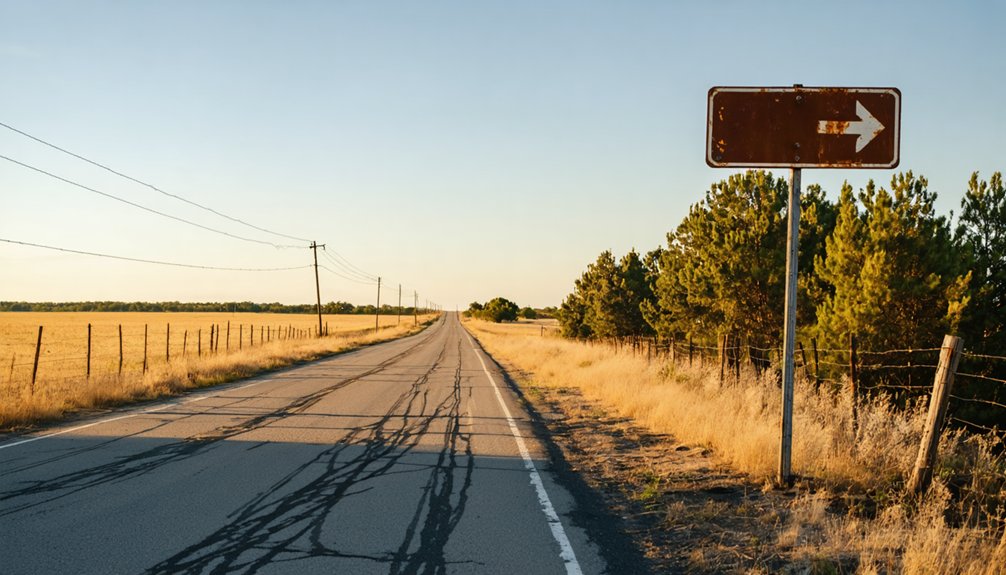
Getting to Tahlonteeskee is straightforward once you know where to aim. Head to Gore, Oklahoma, find U.S. Highway 64, and look roughly two miles north. The site sits quietly on private land in Sequoyah County, so respect boundaries while absorbing its cultural significance.
Here’s what to keep in mind before you go:
- Navigate carefully — The reconstructed council house near Gore gives you a tangible landmark when the original townsite offers no signage.
- Expect solitude — This isn’t a curated attraction; it’s an honest ghost town where archaeological findings whisper beneath the soil.
- Bring your own context — Read Cherokee history beforehand, because the land won’t explain itself.
You’ll leave understanding why Oklahoma’s oldest governmental capital still commands this kind of quiet reverence.
Nearby Cherokee History Sites Worth Adding to Your Route
Once you’ve stood at Tahlonteeskee’s quiet edge, the surrounding region pulls you deeper into Cherokee history—and it rewards the curious traveler who keeps driving.
Head toward Tahlequah, the capital that replaced Tahlonteeskee in 1839, where cultural preservation efforts run deep through the Cherokee Nation’s living institutions. The Cherokee National Capitol building still stands there, grounding you in the political continuity that began at this ghost town.
Dwight Mission’s relocated history also threads through the region, connecting faith and migration in ways worth tracing. Archaeological research has steadily uncovered council foundations, pottery, and hearths across Sequoyah County, reminding you that the land still holds stories.
Each stop compounds the last, turning a single ghost town visit into a full reckoning with Cherokee resilience.
Frequently Asked Questions
Is the Tahlonteeskee Site Accessible to Visitors Year-Round?
Like a locked gate on a forgotten frontier, you’ll find Tahlonteeskee’s private land limits year-round access. Historical preservation restricts open visits, and visitor amenities remain minimal, so you’d plan carefully before exploring this evocative, silent Cherokee capital.
Are There Guided Tours Available at the Tahlonteeskee Historic District?
Formal guided tours aren’t confirmed, but you’ll uncover local legends through interpretive signage tied to historic preservation efforts. Explore freely on your own terms—this forgotten Cherokee capital rewards the curious, independent spirit chasing Oklahoma’s haunting, untamed past.
What Is the Best Time of Year to Visit Tahlonteeskee?
Spring or fall’s your best bet — you’ll dodge brutal seasonal weather and visitor crowds, letting you wander this ancient Cherokee capital in peaceful solitude, feeling the quiet weight of history beneath open, unhurried Oklahoma skies.
Is There an Admission Fee to Visit the Tahlonteeskee Site?
History’s open door awaits you—no admission fees stand between you and Tahlonteeskee’s story. However, since it’s private land, you’ll want to respect visitor regulations and confirm access before you roam freely there.
Are Pets Allowed on the Trails Near the Tahlonteeskee Site?
The available records don’t confirm pet policies or trail regulations for Tahlonteeskee’s paths. You’d want to contact local Cherokee Nation or Sequoyah County authorities before you leash up and wander those quietly haunted, historically rich grounds.
References
- https://kids.kiddle.co/Tahlonteeskee
- https://www.facebook.com/groups/sequoyahcountymemories/posts/1807931536068518/
- https://www.allthingscherokee.com/tahlonteeskee/
- https://en.wikipedia.org/wiki/Tahlonteeskee
- https://www.okhistory.org/publications/enc/entry?entry=GH002
- https://en.wikipedia.org/wiki/List_of_ghost_towns_in_Oklahoma
- https://www.todayinfortsmith.com/post/our-arklahoma-heritage-tahlonteskee-the-cherokee-nation-s-first-established-capital-in-indian-terri