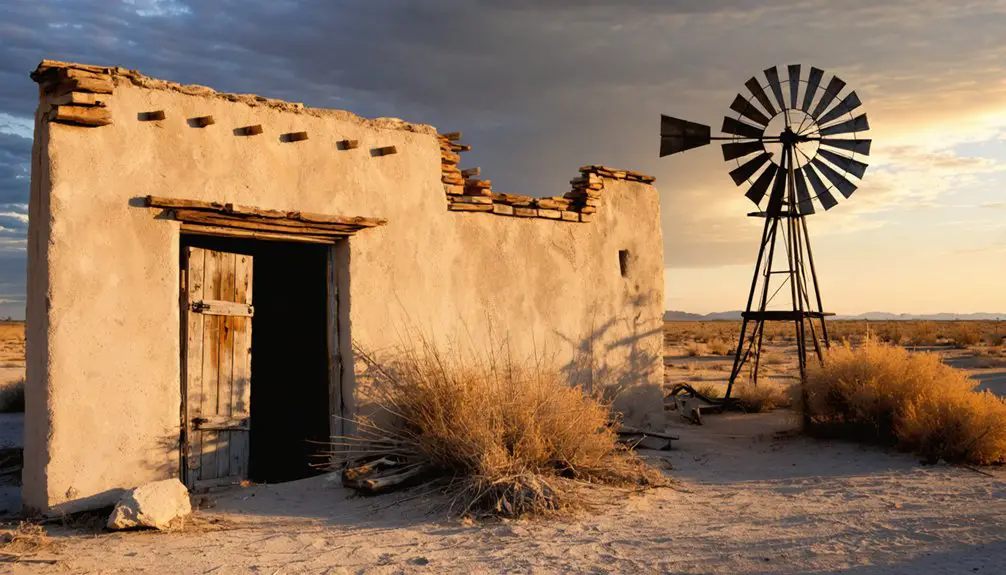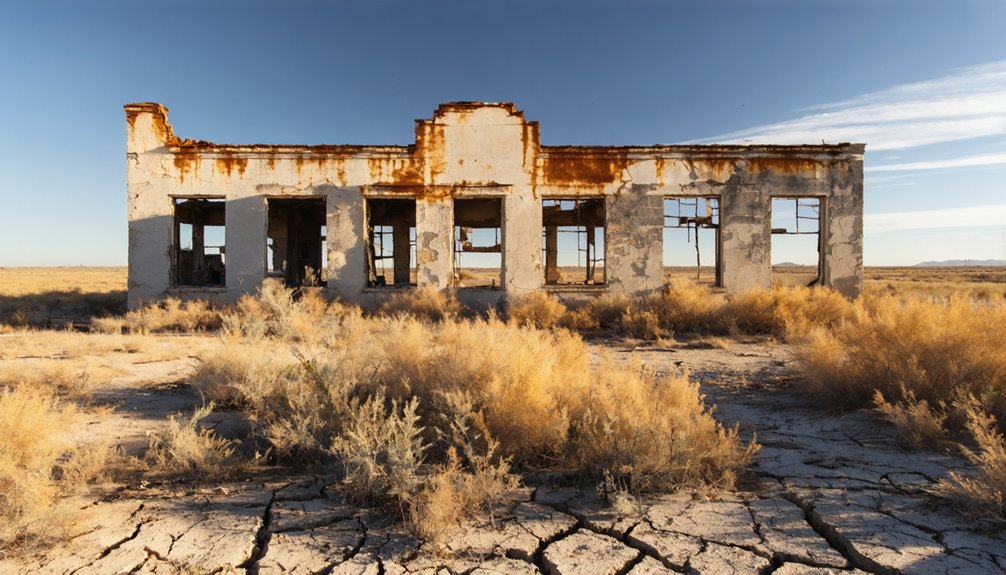
Planning a ghost town road trip to Fort Terrett starts in Sonora, where you’ll fuel up before heading to Exit 429 on I-10, then south on FM 3130 to CR 307. Established in 1852 and abandoned just two years later, Fort Terrett’s original structures now serve as private ranch headquarters marked by a Texas Historic Landmark. It’s raw, quiet, and genuinely fascinating — and there’s plenty more to uncover about this forgotten frontier outpost.
Key Takeaways
- Fort Terrett, established in 1852 and abandoned in 1854, is marked by a Texas Historic Landmark with no museums or reconstructed buildings.
- Base your trip in Sonora, accessing the site via I-10 Exit 429, then FM 3130 south to CR 307.
- Visit during spring, fall, or winter to avoid extreme summer heat; arrive before 10 a.m. for ideal conditions.
- Pack essentials including water, sun protection, offline navigation, and a camera, as no facilities exist on-site.
- Extend your trip by visiting nearby ghost towns Owenville and Wentworth for a full Sutton County historical experience.
What Was Fort Terrett: and Why Does It Matter?
Although it only stood for two years, Fort Terrett left a lasting mark on Texas frontier history. Established on February 2, 1852, this U.S. Army post protected settlers traveling the San Antonio Road from Comanche raids.
Named for Lieutenant John C. Terrett, killed at Monterrey in 1846, the fort honored genuine sacrifice.
When federal troops abandoned it in 1854, the land shifted into ranch country, where local wildlife roams freely today across what was once an active military post.
That change from frontier defense to working ranch defines the site’s quiet power.
Historic preservation efforts gave the location a recorded Texas Historic Landmark marker in 1962, ensuring you can still find and connect with this raw slice of Texas history during your road trip.
How Did Fort Terrett Go From Army Post to Ghost Town?
When federal troops abandoned Fort Terrett on February 26, 1854, just two years after its establishment, they left behind a string of frontier buildings with no military future.
The Army’s withdrawal reflected broader strategic shifts in Texas defense rather than any local failure, and the post simply lost its purpose as protection priorities moved elsewhere.
Ranchers moved in after the soldiers moved out, folding the old fort structures into working ranch headquarters that you can still trace to the Noel ranch today.
Military Abandonment Explained
Fort Terrett’s run as an active military post was surprisingly short — the U.S. Army abandoned it on February 26, 1854, just two years after establishing it. Military strategy shifted as frontier defense priorities changed across western Texas, leaving the post without a clear operational purpose.
The soldiers packed up, leaving behind structures that would quietly evolve into ranch headquarters for the Noel family. No dramatic battle forced the closure — just the cold logic of repositioning resources along a vast frontier.
Today, you won’t find historical artifacts displayed in a museum here. Instead, the land itself tells the story. Those original fort buildings still stand as working ranch structures, preserving a raw, unpolished piece of Texas history that feels far more authentic than any curated exhibit could.
Transition To Ranch Land
Once the Army walked away in 1854, Fort Terrett didn’t crumble into obscurity overnight — it simply changed hands and purpose. The structures that once housed soldiers became the working headquarters of the Noel ranch, blending military history into everyday ranching life. That quiet shift is actually what saved much of the site from total ruin.
You won’t find a restored museum here, but that raw authenticity is part of the appeal. The land tells its own story — one of cultural heritage layered beneath cattle country. Preservation efforts focused on marker designation rather than reconstruction, letting the site breathe on its own terms.
When you stop here, you’re standing inside a living evolution from frontier defense to free-range Texas ranching. That’s worth the detour.
What You’ll Actually Find at the Fort Terrett Site Today
Although Fort Terrett won’t dazzle you with museums or reconstructed buildings, the site still delivers a genuine sense of frontier history. You’ll find a Recorded Texas Historic Landmark marker standing as the clearest on-site evidence of what once existed here.
No museums, no reconstructed buildings — just a historic landmark marker and the quiet weight of frontier history.
The old fort structures now serve as headquarters for the Noel ranch, so public access remains limited.
Don’t expect visitor amenities like restrooms, parking lots, or interpretive displays. Instead, you’ll get an open rural landscape where local flora — native grasses, cedar, and scrub brush — frames the quiet terrain soldiers once patrolled.
That rawness is honestly part of the appeal. You’re standing where frontier defense shaped western Texas, with little between you and that history except wind and wide-open sky.
Getting to Fort Terrett From Sonora
Sonora makes the perfect launching point for your Fort Terrett detour, sitting right along I-10 in Sutton County. Head east on I-10 to Exit 429, then navigate FM 3130 and CR 307 toward the site. The open ranch roads reward you with local wildlife sightings and seasonal blooms painting the roadsides in color.
Follow these three steps to reach the site efficiently:
- Exit I-10 at Exit 429 heading east from Sonora
- Take FM 3130 south toward the North Llano River corridor
- Turn onto CR 307 and watch for the roadside marker
Expect a rural stop with no facilities. The drive itself delivers the real freedom — wide skies, quiet roads, and raw West Texas landscape surrounding you completely.
How Long Should You Spend at Fort Terrett?
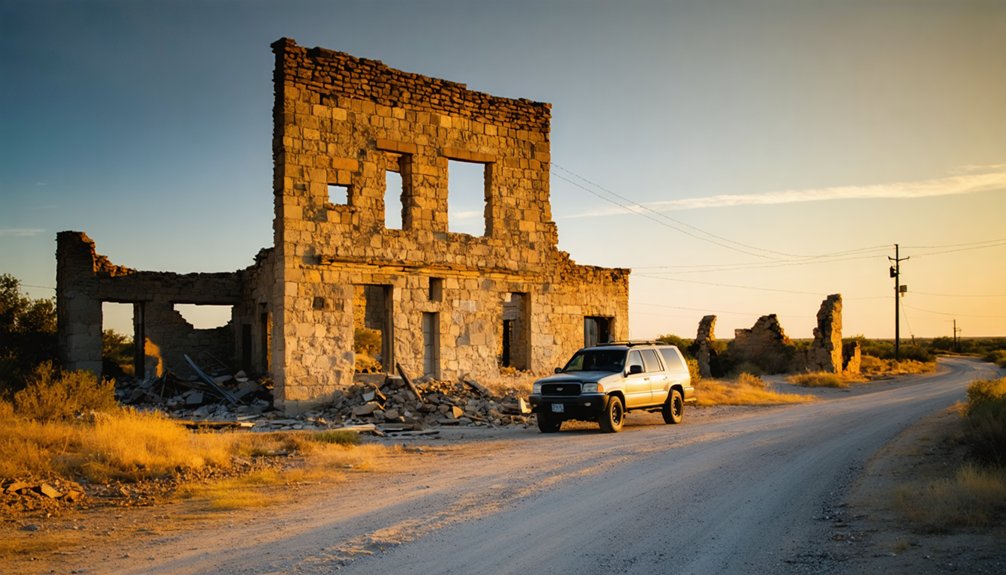
Since Fort Terrett offers a roadside marker rather than a full museum complex, you won’t need more than 20 to 30 minutes at the site itself. Read the marker, photograph the surroundings, and soak in the quiet landscape that once supported an active frontier military post.
Don’t expect visitor facilities like restrooms, gift shops, or interpretive displays showcasing historical artifacts — this is raw, open Texas ranchland. Plan accordingly by fueling up and grabbing supplies in Sonora before heading out.
The real value here is flexibility. You can fold Fort Terrett into a broader West Texas ghost town loop without losing half your day.
Pair it with nearby stops like Owenville or Wentworth, and you’ve built a compact, rewarding itinerary on your own terms.
The Best Time of Year to Visit Fort Terrett
West Texas rewards visitors who time their trips well, and Fort Terrett is no exception. Skip summer’s brutal heat and plan around these ideal windows:
- Spring (March–May): Local flora bursts across Sutton County’s ranchlands, wildflowers line CR 307, and wildlife sightings peak as deer and wild turkey grow active.
- Fall (September–November): Temperatures drop into comfortable ranges, skies stay clear, and golden-hour light makes roadside marker photography genuinely rewarding.
- Winter (December–February): Crowds disappear entirely, giving you solitude that matches the site’s frontier atmosphere perfectly.
Avoid July and August unless you’re prepared for triple-digit temperatures with zero shade. You’re visiting open ranchland, not a shaded museum, so weather matters more than you’d expect.
What to Bring for a Day Trip to Fort Terrett
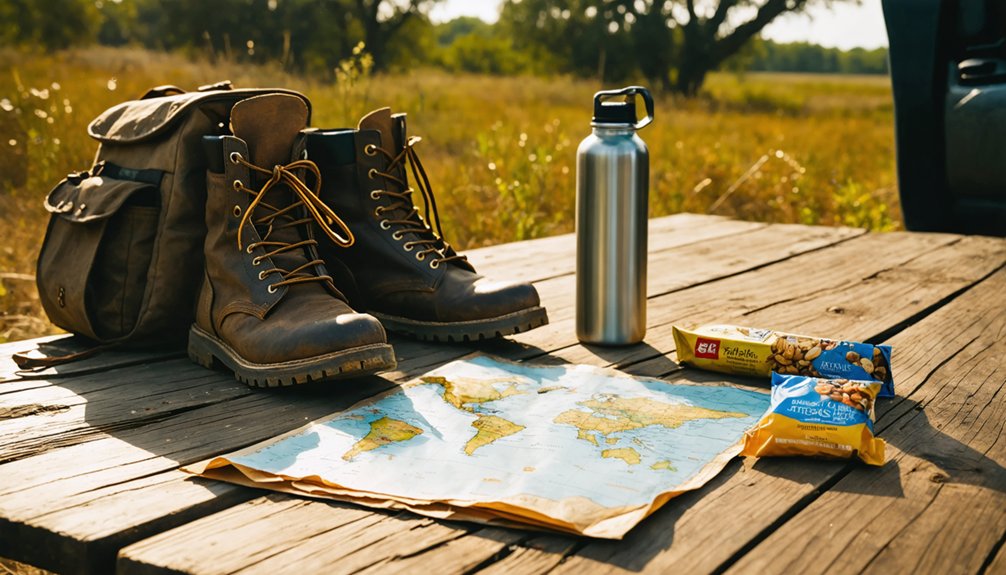
Before you head out to this remote Sutton County site, you’ll want reliable navigation tools like a GPS app with offline maps, since cell service along CR 307 can be spotty.
Pack sun protection, plenty of water, and lightweight clothing, because West Texas heat hits hard even on mild days.
Bring a camera with extra batteries or a fully charged phone, since the marker and surrounding ranch landscape offer compelling shots worth capturing.
Because Fort Terrett sits along rural CR 307 in Sutton County with no visitor center or posted signage beyond the historic marker itself, you’ll want to arrive prepared with more than just a phone signal you can’t count on.
Historical preservation efforts stopped short of infrastructure, and local legends don’t come with GPS coordinates.
Pack these three navigation essentials before leaving Sonora:
- Downloaded offline maps covering Sutton County’s back roads via Google Maps or Maps.me
- A printed turn-by-turn route from I-10 Exit 429 through FM 3130 to CR 307
- A compass or dedicated GPS device that functions independently of cellular towers
These tools keep you moving confidently through open ranch country where dead zones outnumber cell towers.
Sun And Heat Gear
Fort Terrett’s open ranch terrain offers zero shade, so you’ll want to treat sun and heat protection as seriously as you treat navigation gear. Pack a wide-brim hat, UV-rated sunglasses, and SPF 50+ sunscreen before you leave Sonora.
Carry at least two liters of water per person since the site sits within active ranch land that doubles as a wildlife habitat, meaning no water sources are accessible to visitors.
Light, breathable clothing helps you move comfortably while you examine the historical preservation marker without cutting the stop short. A cooling towel and electrolyte packets add smart insurance against West Texas heat.
Arriving before 10 a.m. gives you cooler temperatures and better light for photographing the marker and surrounding landscape.
Camera And Supplies
Once you’ve packed your sun protection, turn your attention to capturing the experience—because Fort Terrett’s historical marker and open ranch landscape reward a thoughtful camera setup. The wide-sky terrain and roadside historical artifacts offer genuine photographic potential if you’re prepared.
Follow these photography tips before heading out:
- Bring a wide-angle lens to capture the expansive West Texas landscape surrounding the marker.
- Pack extra memory cards and batteries—no charging stations exist along CR 307’s rural stretch.
- Use a polarizing filter to reduce glare on the marker’s engraved text under harsh midday sun.
Keep your gear lightweight and your bag organized. You’ll want quick access when you spot the marker, since there’s no formal parking area demanding a lengthy stop.
Where to Eat and Stay in Sonora Before You Go
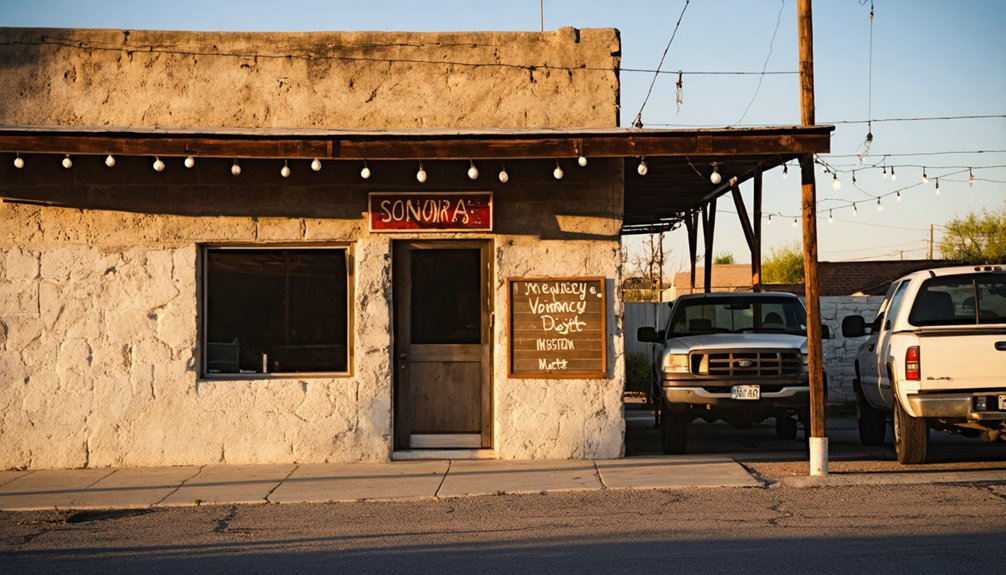
Sonora serves as your best base camp before heading out to Fort Terrett, and it’s got enough creature comforts to make the stop worthwhile. You’ll find solid accommodation options along I-10, including reliable chain motels that won’t drain your road-trip budget. Book ahead if you’re traveling during hunting season, since rooms fill fast.
For local cuisine, check out the downtown spots serving Tex-Mex and classic Texas comfort food that’ll fuel a long day of exploring. The Devil’s River Steakhouse is a local favorite worth your time.
Grab a hearty breakfast before you leave town, because once you head out on CR 307, food stops disappear fast. Sonora keeps things simple, and that suits the independent traveler just fine.
Other Ghost Towns Near Fort Terrett Worth the Detour
Once you’ve stopped at Fort Terrett, you’re already deep in Sutton County territory, so it makes sense to push a little further and hit a few more ghost towns while you’re out there.
Owenville and Wentworth sit close enough to fold into the same day’s drive without much backtracking. These nearby stops won’t add much mileage, but they’ll round out your West Texas ghost town experience in a way that makes the whole trip feel worthwhile.
Nearby Ghost Town Stops
Why stop at just one ghost town when Sutton County and its surrounding region offer several forgotten locales worth folding into your route? Each stop adds historical significance and highlights ongoing preservation efforts across West Texas.
- Owenville – A vanished Sutton County settlement that reinforces just how quickly frontier communities disappeared once economic tides shifted.
- Wentworth – Another nearby ghost town worth a quick detour, offering a quiet glimpse into the region’s sparse but resilient settler past.
- Sonora – Your natural basecamp, where local history museums give context before you venture deeper into abandoned territory.
Combining these stops transforms a single marker visit into a fuller narrative of frontier collapse and survival. You’ll leave understanding far more than any single roadside sign can tell you.
Worth The Extra Miles
Although Fort Terrett anchors your itinerary, the surrounding stretch of West Texas hides enough forgotten settlements to justify pushing the odometer a little further.
Owenville and Wentworth both sit within Sutton County, each carrying local legends tied to ranching families and frontier hardship. Neither site offers polished attractions, but that rawness is exactly the point. You’re chasing authentic history, not theme parks.
Preservation efforts at these locations remain minimal, which means roadside markers and crumbling foundations do most of the storytelling. That honesty rewards curious travelers willing to step off the main highway.
Pack enough water, download offline maps, and treat each detour as a standalone discovery. The miles between these ghost towns aren’t wasted distance — they’re part of the experience West Texas delivers best.
How to Build a Full Sutton County Ghost Town Road Trip
Sutton County rewards ghost town hunters who plan their route carefully, and Fort Terrett works best as one stop on a longer loop rather than a standalone destination.
Pair it with nearby ghost towns to build a route that respects historic preservation while covering real ground.
- Start in Sonora — fuel up, check your map, and head east on I-10 to Exit 429.
- Visit Fort Terrett — read the marker, photograph the ranch headquarters, and appreciate the archaeological findings embedded in this landscape.
- Continue to Owenville or Wentworth — both Sutton County sites extend your itinerary without adding excessive miles.
You’ll cover meaningful history without backtracking, and the open roads keep the experience feeling like genuine freedom rather than a curated tour.
Frequently Asked Questions
Is Fort Terrett Site Accessible to the Public Year-Round?
Like a telegraph from the past, you can access Fort Terrett’s roadside marker year-round! Historical preservation keeps it open, but don’t expect visitor amenities — it’s a rugged, marker-only stop demanding your adventurous spirit.
Are There Any Entry Fees or Permits Required to Visit?
You won’t face any entrance fees or permit requirements to visit Fort Terrett. Simply pull off the road, explore the historic marker freely, and soak in the rugged frontier history on your own terms!
Can You Photograph the Historic Marker and Ranch Buildings Legally?
You can freely photograph the historic marker, but ranch buildings sit on private land — respect that boundary. Historic preservation matters, so always seek photography permissions before capturing images beyond the public roadside marker.
Is the Fort Terrett Site Wheelchair Accessible for Visitors?
You’ll find Fort Terrett lacks formal accessible pathways or wheelchair facilities — it’s a rural roadside marker stop on unpaved terrain. Check conditions before visiting, as the rugged landscape may challenge mobility, but history awaits your exploration!
Does the Noel Ranch Offer Any Guided Tours to Visitors?
Sure, just call ahead and they’ll roll out the red carpet! The Noel Ranch doesn’t offer guided ranch tours, so you’ll handle your historical site exploration independently, respecting private property boundaries during your adventurous, freewheeling visit.
References
- https://www.texasescapes.com/Texas-Ghost-Towns-A-to-Z.htm
- https://en.wikipedia.org/wiki/List_of_ghost_towns_in_Texas
- https://www.texasescapes.com/WestTexasTowns/Fort-Terrett-Texas.htm
- https://en.wikipedia.org/wiki/Fort_Terrett
- https://www.texasescapes.com/WestTexasTowns/Wentworth-Texas.htm
- https://www.texasescapes.com/TOWNS/Texas_ghost_towns.htm
- https://www.tshaonline.org/handbook/entries/camp-terrett
- https://atlas.thc.state.tx.us/Details/5435004799
- https://en.wikipedia.org/wiki/Sutton_County
- https://www.texasescapes.com/Counties/Sutton-County-Texas.htm