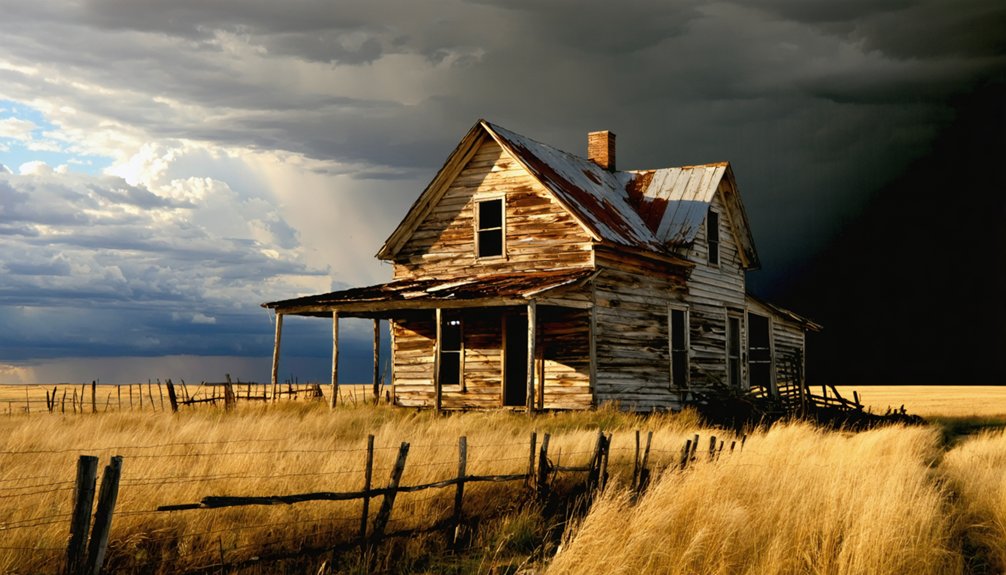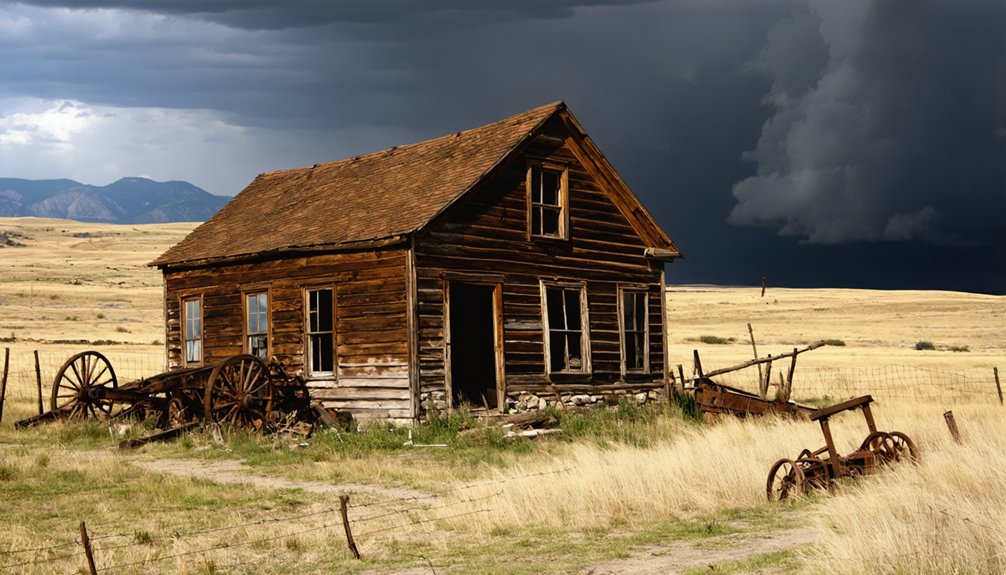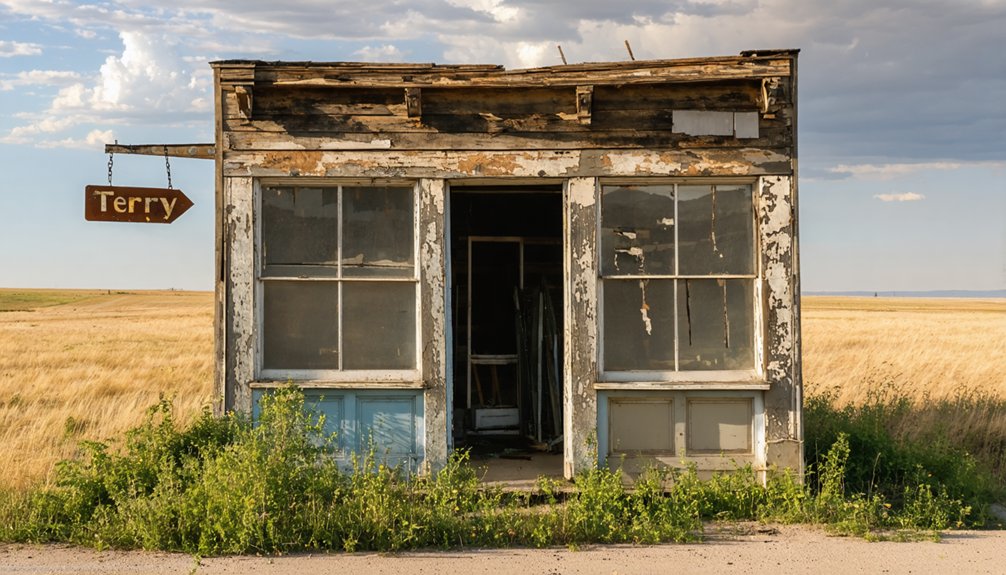
Planning a ghost town road trip to Terry, South Dakota means stepping into the Black Hills’ forgotten mining past. Founded in 1877, Terry boomed to 1,200 residents by 1904, fueled by the Golden Reward mine‘s gold production. Today, you’ll find rusted equipment, crumbling foundations, and eerie silence where a thriving community once stood. High-clearance vehicles, sturdy boots, and offline maps will serve you well — and there’s far more to this story than meets the eye.
Key Takeaways
- Terry, South Dakota, founded in 1877, thrives as a ghost town destination showcasing authentic Black Hills mining history and remnants of its gold rush era.
- Reach Terry via U.S. Highway 85 or 14A from Deadwood or Lead; high-clearance vehicles and offline maps are strongly recommended.
- Summer and fall offer the best road trip conditions, with accessible roads, mild temperatures, and fewer crowds for exploration.
- Explore rusted mining equipment, structural foundations, and nearby vanished camp Terraville, connected through Lawrence County’s scenic backroads.
- Pack water, supplies, layered clothing, and sturdy boots; fuel up beforehand, as services within Terry are virtually nonexistent.
Why Terry, South Dakota Is Worth Adding to Your Road Trip
If you’re mapping out a Black Hills road trip, Terry, South Dakota deserves a spot on your itinerary.
This unincorporated Lawrence County community carries real historical weight as a former hard rock mining camp that peaked around 1,200 residents in 1904.
You’ll find remnants tied directly to the Golden Reward mine, where large-scale mining techniques transformed the surrounding landscape throughout the 1890s.
Walking through Terry connects you to an era when extraction operations drove rapid settlement across the region.
Historical artifacts scattered across the site give you tangible evidence of that boom-and-bust cycle.
Unlike polished tourist destinations, Terry offers raw, unfiltered access to Black Hills mining history.
If you value authentic exploration over curated experiences, this ghost town delivers exactly that kind of freedom.
Terry’s Mining Boom: From Camp to Town in the 1890s
When you look into Terry’s past, you’ll find the Golden Reward mine was the engine that transformed a rough mining camp into a thriving town.
By the early 1890s, the mine’s large-scale gold production drew workers and businesses, pushing the population to around 1,200 residents by 1904.
That rapid growth reshaped Terry from a temporary settlement into a legitimate community with real infrastructure and staying power.
Golden Reward Mine’s Impact
As the Golden Reward mine ramped up production in the early 1890s, Terry transformed almost overnight from a rough mining camp into a proper town. The Golden Reward drove everything — jobs, commerce, and community growth all followed the ore.
By 1904, Terry’s population had climbed to around 1,200 residents, a remarkable figure for such a remote Black Hills settlement. You can still feel that economic legacy when you walk the area today, imagining the bustling activity that once defined this landscape.
When the Homestake Mining Company eventually absorbed the mining assets, production slowed, and Terry’s population faded just as quickly as it had grown. That boom-and-bust rhythm shaped the town’s identity in ways you’ll recognize throughout your visit.
Camp To Town Transformation
Terry’s story didn’t begin with streets and storefronts — it began with tents, muddy boots, and men chasing ore through the Black Hills. Founded in 1877, camp life here was raw and relentless, built around hard rock extraction rather than comfort or permanence.
But gold changes things fast. By the early 1890s, the Golden Reward mine‘s surging output transformed Terry from a rough camp into a functioning town. Saloons gave way to businesses, and temporary shelters became permanent structures.
By 1904, nearly 1,200 people called Terry home. That mining legacy shaped everything — the layout, the economy, the identity.
When you walk Terry’s remnants today, you’re standing inside a real transformation story, where ambition carved a community straight out of the Black Hills wilderness.
The Golden Reward Mine That Built Terry
The Golden Reward mine didn’t just put Terry on the map — it built the town from the ground up. By the early 1890s, large-scale gold production was driving Terry’s rapid expansion, pulling workers, businesses, and families into the Black Hills. Understanding Terry history means recognizing how deeply this single operation shaped everything around it.
Hard rock mining techniques defined the work here — drilling, blasting, and crushing ore pulled from deep underground. It wasn’t easy labor, but it was lucrative enough to push Terry’s population toward 1,200 residents by 1904.
You’re walking ground that once hummed with industrial ambition. The Homestake Mining Company eventually absorbed these assets, signaling the beginning of Terry’s decline. When the mine stopped producing, the town’s reason for existing quietly disappeared.
Why Homestake Mining Shut Terry Down
When you trace Terry’s decline, you’ll find Homestake Mining Company at the center of the story.
Homestake acquired the Golden Reward mine‘s assets after major production wound down, effectively consolidating control over the region’s hard rock operations.
Once Homestake pulled back from significant extraction activity, Terry lost its economic backbone and the population quietly faded away.
Homestake’s Acquisition Of Assets
As gold production from the Golden Reward mine began to wind down, the Homestake Mining Company moved in and acquired the mining assets tied to Terry, effectively sealing the community’s fate.
This acquisition marked the end of independent mining operations in the area, consolidating power under one corporate giant. Homestake didn’t revive Terry — it absorbed what remained and redirected resources elsewhere.
You can still feel the historical significance of that change when you walk the quiet grounds today. The takeover wasn’t violent or dramatic; it was simply economic.
Once Homestake controlled the assets, Terry’s purpose evaporated. Residents left, businesses closed, and the town faded.
Understanding this corporate shift helps you appreciate exactly why Terry stands empty rather than thriving.
End Of Major Production
Once the Golden Reward mine‘s ore veins ran thin, Homestake had little reason to sustain operations in Terry. When profitable gold extraction became impossible, the company pulled out, triggering swift economic decline across the community. Jobs vanished, businesses shuttered, and residents packed up and moved on — leaving Terry’s once-bustling streets eerily quiet.
You can see this mining legacy written into the landscape today. The abandoned infrastructure and weathered remnants tell the story of a town that lived and died by the ore beneath its feet.
Homestake’s departure wasn’t malicious — it was simply economics. When the ground stopped giving, the company stopped taking.
Terry’s collapse mirrors dozens of Black Hills communities that boomed fast, burned bright, and faded the moment the mineral wealth dried up.
What’s Left to See at Terry’s Historic Mining Sites?
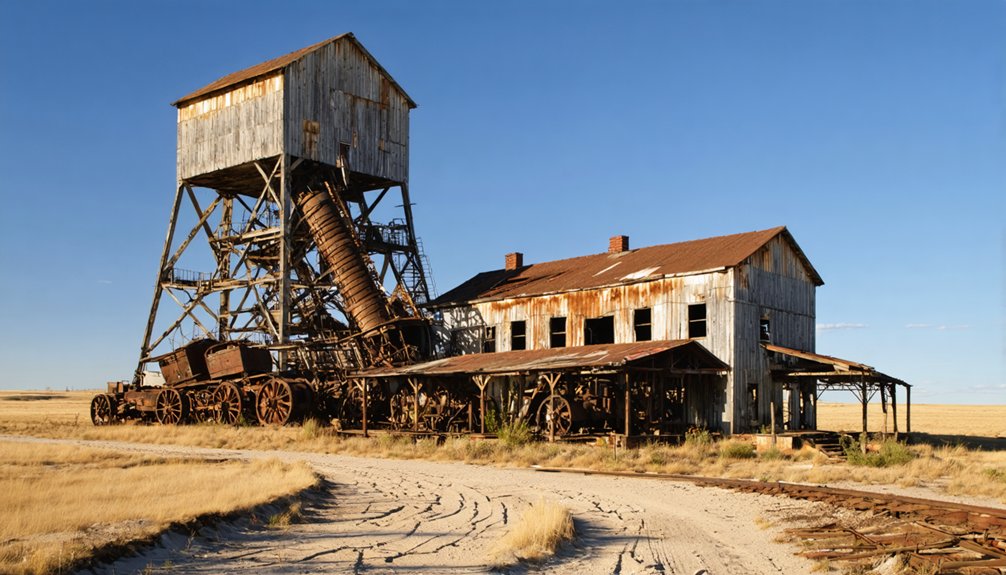
Scattered remnants of Terry’s hard rock mining era still dot the Black Hills landscape, giving you a tangible connection to the boom years of the 1890s.
You’ll find mining artifacts tucked throughout the terrain, from rusted equipment to deteriorating structural foundations that echo Terry history at its peak. Exploring these sites lets you move at your own pace, piecing together how 1,200 residents once built a thriving community around gold extraction.
Nearby Terraville’s story adds sobering context — that ghost town was wiped out in 1982 to make way for new mining operations.
Bring a camera, wear sturdy boots, and take the rural Lawrence County roads slowly. These sites reward curious, self-directed travelers willing to read the landscape carefully.
Pair Your Visit With the Ghost Town of Terraville
Terraville sits just a short drive from Terry, making it a natural companion stop on any Black Hills ghost town itinerary. Founded in 1877 as a mining camp, Terraville shares deep roots with Terry history, growing alongside the region’s hard rock boom before meeting a dramatic end.
Unlike many ghost towns that simply faded, Terraville was demolished in 1982 when the Homestake Mining Company cleared the land for a new mine. That abrupt erasure makes ghost town exploration here feel especially striking. You’re walking ground where an entire community once stood, now reclaimed by industry and time.
Pairing both stops lets you piece together a fuller picture of how the Black Hills built and swallowed whole towns within a single century.
How to Get to Terry, South Dakota?
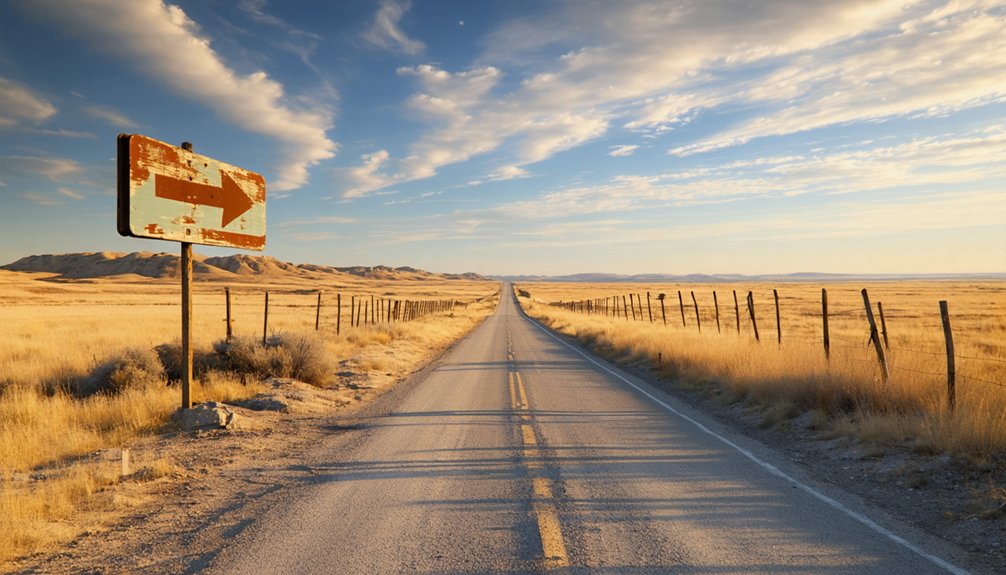
Reaching Terry, South Dakota means heading into Lawrence County, deep in the Black Hills, where rural roads replace highway conveniences.
You’ll want to start from Deadwood or Lead, both easily accessible via U.S. Highway 85 or U.S. Highway 14A. From there, navigate the winding back roads that cut through rugged terrain, keeping Lawrence County’s mining legacy alive in every hillside you pass.
Cell service gets spotty, so download offline maps before you leave. A high-clearance vehicle handles the rural landscape more comfortably, especially after rain.
Terry history rewards those willing to explore beyond paved comfort zones. Fuel up before heading out, since services are minimal in this unincorporated community.
Pack water, supplies, and a sense of adventure — Terry doesn’t come to you.
Best Time of Year to Visit Terry and the Black Hills
Summer draws the most visitors to the Black Hills, and for good reason — long days, accessible roads, and warm temperatures make exploring Terry’s abandoned mining remnants far more practical than any other season.
You’ll find the best hiking conditions between June and August, when trails are dry and visibility through the rugged terrain is sharp.
Spring offers wildflower blooms and active local wildlife, though muddy back roads can slow your progress.
Fall rewards patient travelers with cooler air, golden foliage, and noticeably thinner crowds — ideal if you prefer exploring ghost towns without the summer rush.
Winter closes many rural Lawrence County roads entirely, making access nearly impossible.
Whatever season you choose, check road conditions before departing and pack layers, since Black Hills weather shifts fast.
Where to Stay Near Terry in the Black Hills
Once you’ve settled on your travel window, you’ll want to lock down a base camp before hitting the back roads of Lawrence County.
Deadwood sits closest to Terry and delivers solid accommodation options ranging from historic hotels to budget-friendly motels.
Deadwood puts you closest to Terry with lodging options stretching from storied historic hotels to no-frills motels.
Lead, just minutes away, offers quieter lodging with direct access to local attractions like the former Homestake Mine.
Spearfish rounds out your choices with modern amenities and easy highway access into the Black Hills.
Camping remains a strong option if you crave true freedom — national forest sites put you deep in the landscape you’re there to explore.
Book early during summer months since the region draws consistent traffic.
Whichever base you choose, Terry’s back roads and ghost town remnants stay within easy striking distance.
The Full Black Hills Ghost Town Road Trip Route
With your base camp locked in, you’re ready to map a route that strings together the Black Hills’ most compelling ghost town remnants into a single, cohesive drive.
Terry History runs deep here, and tracing it alongside Mining Techniques used in the 1890s boom adds serious texture to every stop.
Build your route around these anchors:
- Terry – explore the Golden Reward mine site and its hard rock extraction legacy
- Terraville – a vanished 1877 camp erased in 1982 for Homestake’s expansion
- Lawrence County backroads – connect stops through rugged terrain that shaped the region’s entire mining identity
Move between sites with intention. Each location reveals a distinct chapter, and together they deliver a raw, unfiltered portrait of Black Hills frontier ambition.
Frequently Asked Questions
Was Terry, South Dakota Ever Officially Incorporated as a Town?
Terry, South Dakota never officially incorporated as a town. You’ll find its town history tied entirely to its mining legacy, as it remained an unincorporated community even while housing around 1,200 residents during the 1890s boom.
Are There Guided Ghost Town Tours Specifically Covering Terry and Nearby Sites?
You won’t find guided tours specifically covering Terry, but you can explore nearby Lawrence County’s ghost town history through regional Black Hills tours that include guided tours of surrounding historic mining sites and communities.
What Was Terry’s Peak Gold Production Output During the Mining Boom?
You won’t find exact peak gold mining output figures in available records, but Terry’s historical significance peaked in the 1890s when the Golden Reward mine drove explosive growth, attracting 1,200 residents by 1904.
Did Terry Have a School or Church During Its 1904 Population Peak?
While records don’t confirm specifics, a town of 1,200 residents virtually always supported historic education and community gatherings. You’d have found schools and churches thriving at Terry’s 1904 peak — that’s how frontier communities truly survived.
Are Photography Permits Required When Visiting Terry’s Abandoned Mining Structures?
No permits are confirmed as required, but you’ll want to check with Lawrence County authorities before shooting. When exploring abandoned structures, follow basic photography tips: respect boundaries, don’t trespass, and capture Terry’s raw, historic beauty responsibly.
References
- https://www.youtube.com/watch?v=Qt1KIdgSX4Q
- https://www.sdpb.org/arts-life/vanished-south-dakota-in-the-moment
- https://en.wikipedia.org/wiki/Terry
- https://sdarchives.lyrasistechnology.org/subjects/1273
- https://westernmininghistory.com/towns/south-dakota/terry/
- https://hpr1.com/index.php/feature/culture/festivals-of-history-in-south-dakota/
- https://lawrencecountyhistory.blogspot.com/2011/03/another-glimpse-of-past.html
- https://openprairie.sdstate.edu/etd/4061/
- https://www.youtube.com/watch?v=OLIeBp7ZpE8
- https://www.youtube.com/watch?v=caok4lXv4y0