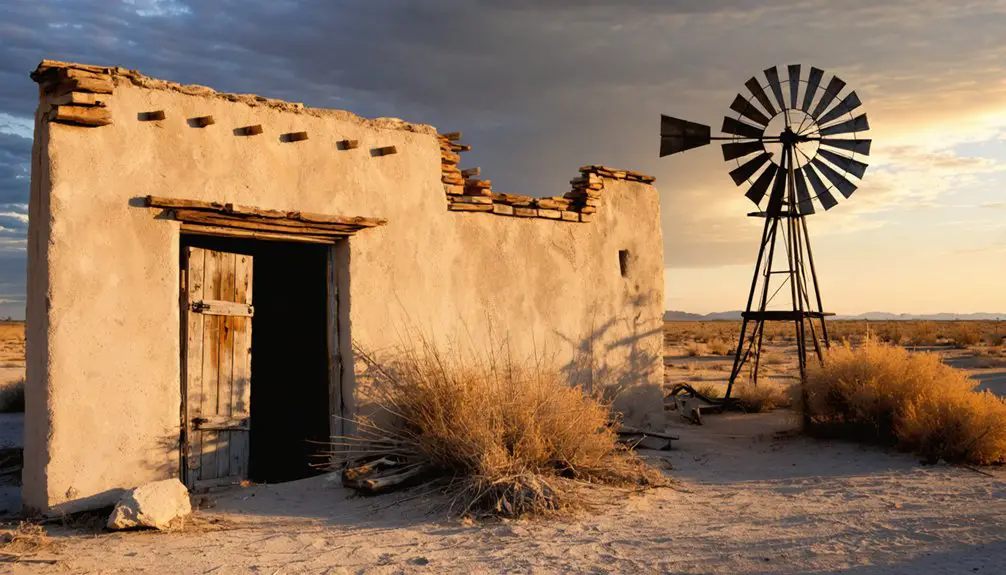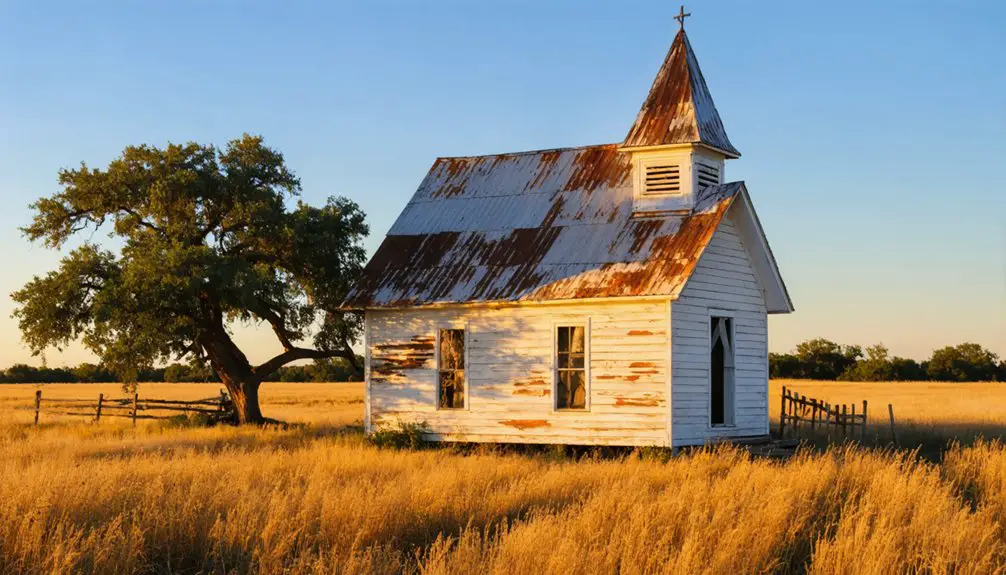
Tolbert, Texas sits along U.S. Highway 287 in northwestern Wilbarger County, making it an easy and rewarding stop on a North Texas road trip. You won’t find crowds or guided tours here—just an open landscape, scattered remnants of a once-thriving wheat town, and a cemetery that tells the whole story. Tolbert peaked near 1,000 residents around 1910 before water shortages quietly ended it. Stick around, and you’ll uncover everything you need to plan the perfect ghost town drive.
Key Takeaways
- Tolbert sits on U.S. Highway 287 in northwestern Wilbarger County, making it an easy, accessible stop on a North Texas road trip.
- Pair Tolbert with nearby ghost towns Harrold, Oklaunion, Electra, and Lockett, all connected along Highway 287 for a full regional experience.
- The town peaked around 1910 with nearly 1,000 residents before declining due to water shortages, closing its post office in the early 1930s.
- Today, Tolbert’s cemetery is the most significant remaining landmark, offering headstones, family histories, and quiet reflection on the town’s rise and fall.
- Expect no signage, crowds, or guided tours—stay alert while driving and embrace an unfiltered, self-guided historical exploration experience.
How to Reach Tolbert, Texas on Highway 287
Whether you’re weaving through North Texas on a ghost-town hunt or simply rolling along U.S. Highway 287, Tolbert sits right on your path in northwestern Wilbarger County. The highway makes access straightforward — no backroads required.
Tolbert sits right on U.S. Highway 287 in northwestern Wilbarger County — no backroads required.
You’ll also notice the Burlington Northern rail line running nearby, a quiet reminder of the railroad roots that built this place. Pull over and you’re standing among historic landmarks that most drivers blow past without a second glance.
Local legends tied to the town’s rise and fall make the stop worth your time. Tolbert isn’t marked by grand signage, so stay alert as you approach the Wilbarger County stretch.
Treat it as a deliberate pause on a longer regional drive, and it’ll reward your curiosity.
What You’ll Actually Find at Tolbert Today?
Once you pull off Highway 287 and look around, Tolbert’s present reality hits fast — there isn’t much left. The commercial district that once buzzed with businesses, a theater, and a telephone office has nearly vanished.
What you’ll find instead is quiet land, scattered remnants, and the cemetery — the site’s most enduring cultural remnant and your clearest window into the town’s past.
That cemetery carries real weight. Headstones connect you to the families who built something here, and local legends about the town’s water-driven collapse add texture to every grave you pass.
No crowds, no admission gates, no guided tours — just open Texas landscape and honest history. For travelers chasing freedom over tourist traps, Tolbert delivers exactly that kind of unfiltered experience.
How Tolbert Rose and Fell: Rail Boom, Water Shortage, Ghost Town
When you trace Tolbert’s story, you find a classic Texas rail-town arc: the Fort Worth and Denver City Railway sparked the settlement in the late 1880s, and by 1910 the town had climbed toward 1,000 residents, supporting businesses, churches, a theater, and a school.
That growth, however, rested on shaky ground — quite literally — because Tolbert never secured a reliable water source. By the early 1930s, the post office had closed, and by 1940 only 75 people remained, leaving a once-busy agricultural hub to quietly empty out.
Railroad Origins And Growth
Before Tolbert earned its name, it was already pulling its weight as a shipping point along the Fort Worth and Denver City Railway in the late 1880s. The settlement went by Wheatland first, a nod to the region’s grain production, until postal authorities rejected the name in 1890.
Officials renamed it Tolbert, honoring county judge J. R. Tolbert, and granted the new post office on June 30 of that year.
From there, the town built real momentum. By 1910, growth was steady, and by the 1920s, Tolbert claimed nearly 1,000 residents, multiple businesses, a theater, three churches, a telephone office, and a school rooted in local folklore dating to 1893.
Traces of historic architecture marked a community that briefly thrived on rail commerce and agricultural ambition.
Water Scarcity Ends Tolbert
What the railroad gave, the land quietly took back. Tolbert’s decline wasn’t dramatic — it was slow, dry, and inevitable. By 1930, the town that once supported a theater, three churches, and nearly 1,000 residents had begun unraveling. The culprit was simple: no adequate water source. Without it, businesses shuttered, families left, and local legends faded into the prairie wind.
The post office closed in the early 1930s. By 1940, only 75 people remained. Within decades, the population dropped to roughly 30.
Whatever historical architecture once defined Tolbert’s commercial district had largely disappeared by the mid-1980s, leaving the cemetery as the town’s most enduring marker.
When you visit today, you’re not seeing failure — you’re seeing what happens when geography wins.
Why the Tolbert Cemetery Is the Site’s Most Important Stop
Though little remains of Tolbert’s commercial district, the cemetery endures as the town’s most tangible link to its past. When you pull off Highway 287 and walk those grounds, you’re stepping into a space where the community’s full arc becomes real — the hopeful arrivals, the wheat-farming families, the slow unraveling after water ran out.
Unlike historic landmarks that require restoration or artistic murals to communicate history, cemeteries speak plainly. The headstones carry names, dates, and bloodlines that no written record fully replaces.
For road-trippers chasing vanished Texas, that directness matters.
Other North Texas Ghost Towns Worth Adding to the Drive
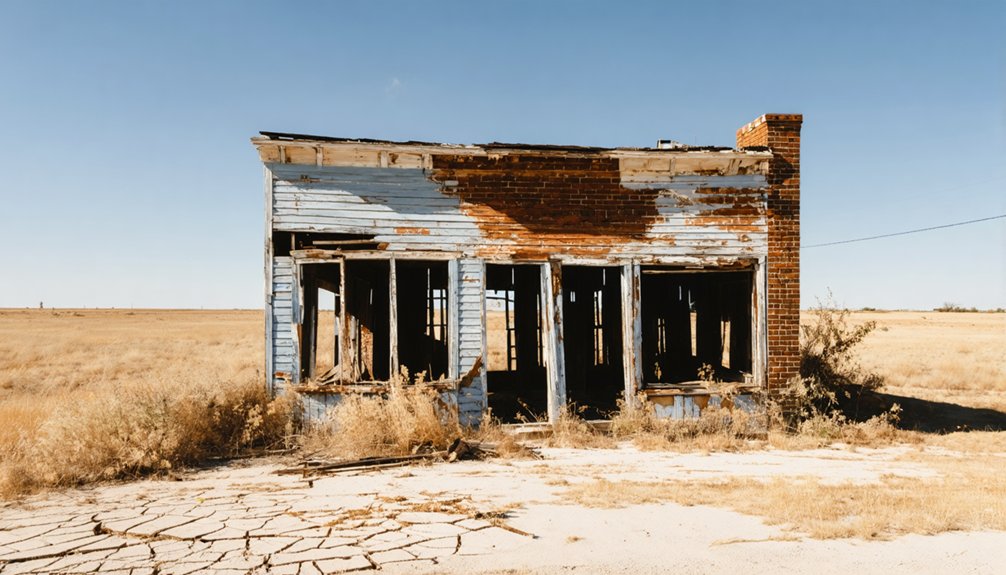
Tolbert doesn’t have to be your only stop. Highway 287 connects you to a stretch of North Texas rich with forgotten towns worth exploring.
Add these four stops to your route:
- Harrold – A once-thriving rail town with remnants of historic architecture still standing along the main corridor.
- Oklaunion – A quiet community where you’ll find traces of early settlement and local cuisine worth sampling at nearby diners.
- Electra – An oil-boom town offering historic architecture and a story of rapid rise tied to Texas petroleum culture.
- Lockett – A small agricultural community that echoes Tolbert’s own rise-and-fade pattern.
Each stop adds depth to your drive, turning a single ghost town visit into a full North Texas history run.
What Makes Tolbert the Right Kind of Texas Road Trip Stop?
You don’t need a complicated detour to reach Tolbert — U.S. Highway 287 puts it squarely on a natural North Texas driving route, making it an effortless fold into a broader regional trip.
The town’s arc from wheat-shipping railroad stop to near-total abandonment gives you a focused, well-documented ghost town story that’s worth stopping for.
What you’ll find most concretely on the ground is the cemetery, and that’s enough — it anchors the site as a place of memory rather than just a dot on a map.
Easy Highway 287 Access
One of the easiest ghost towns in North Texas to actually reach, Tolbert sits right along U.S. Highway 287, putting it directly in your path during any northern Texas drive.
You don’t need back roads or special permits — just the open highway and a full tank.
Here’s why this access point works for freedom-minded travelers:
- Highway 287 connects major regional destinations, making Tolbert a natural mid-route pause.
- You’ll find scenic viewpoints across the rolling Wilbarger County landscape without detours.
- Local cuisine stops in nearby Vernon keep your road-trip momentum going.
- The Burlington Northern rail corridor beside town adds raw, industrial atmosphere worth photographing.
Pull over, walk the land, and move on whenever you’re ready — Tolbert demands nothing more than your curiosity.
Rich Ghost Town History
What separates a worthwhile ghost town stop from a forgettable roadside detour? It’s the story underneath the silence. Tolbert delivers that in full.
Originally called Wheatland, this northwestern Wilbarger County settlement renamed itself in 1890 after county judge J. R. Tolbert. It climbed to nearly 1,000 residents by the 1920s, supporting a theater, churches, and a telephone office.
Then came the hard truth — no reliable water source. By 1940, only 75 people remained.
Today, the cemetery stands as the most visible preservation effort, anchoring local folklore about a town that once thrived on wheat and rail commerce. You won’t find a bustling main street, but you’ll find something better — a place that forces you to imagine what once was.
Cemetery-Led Memory Tourism
When most ghost towns leave nothing but faded foundations, Tolbert holds onto something more personal — its cemetery. It’s a quiet anchor connecting you to local legends and the families who built this wheat-shipping rail town from scratch.
Here’s what makes a cemetery stop worth your time:
- Read the headstones — names reveal the town’s 19th-century settler roots
- Photograph the grounds — any surviving historic architecture nearby adds visual context
- Trace family histories — many graves predate Tolbert’s 1890 postal rename
- Feel the scale of decline — from 1,000 residents to a few families by 1986
You’re not just passing through abandoned land. You’re standing inside a living record that no flood, drought, or highway bypass could erase.
Frequently Asked Questions
Is Tolbert, Texas Named After Writer Frank X. Tolbert?
You’ll find that Tolbert isn’t named after writer Frank X. Tolbert — its ghost town history traces back to county judge J.R. Tolbert, though local legends connecting the famous Texas writer add fascinating intrigue to your visit.
What Was Tolbert Originally Called Before Its Postal Name Change?
Before 1890, you’ll find Tolbert’s historical settlement origins rooted in the name Wheatland, reflecting the area’s thriving wheat fields. Postal naming procedures rejected it, and the town earned its current name honoring county judge J. R. Tolbert instead.
How Many Residents Did Tolbert Have at Its Peak Population?
You’ll find that Tolbert once thrived with nearly 1,000 residents between 1910 and 1930! Today, ghost town tourism and historic landmark preservation keep this remarkable community’s memory alive, reminding you how powerfully a small railroad town once flourished.
When Exactly Did Tolbert Receive Its Official Post Office Designation?
Can you imagine frontier life back then? Tolbert’s historical postal services officially launched on June 30, 1890, weaving local community legends into its identity after authorities rejected “Wheatland,” renaming this remarkable Texas town honoring county judge J. R. Tolbert.
Why Did Postal Authorities Reject the Original Wheatland Name in 1890?
The records don’t reveal the exact reasoning behind the historical naming controversies, but postal service naming procedures often rejected duplicate town names. You’ll find that “Wheatland” likely conflicted with another existing location, prompting the 1890 rename to Tolbert.
References
- https://www.tshaonline.org/handbook/entries/tolbert-tx
- https://www.texasescapes.com/TexasTowns/Tolbert-Texas.htm
- https://www.texasalmanac.com/places/wheatland-3
- https://wheninyourstate.com/texas/mexicos-refugees-built-this-texas-ghost-town-now-famous-for-chili-hiking-and-eerie-ruins/
- https://www.tamupress.com/book/9781585442096/a-bowl-of-red/
- http://genealogytrails.com/tex/pineywoods/houston/history_spanish_ghost_towns.html
- https://www.woodlandsonline.com/npps/story.cfm?nppage=44450
- https://roadfood.com/bests/dallas-austin-hill-country/
- https://en.wikipedia.org/wiki/List_of_ghost_towns_in_Texas
- https://www.txgenwebcounties.com/bandera/newshistory.html