Trinidad, Washington sits nearly 1,000 feet above the Columbia River on Babcock Ridge, offering sweeping canyon views, ghost town history, and a legendary lost gold story. You’ll find the last surviving Smith Brothers General Store, ridge hiking trails, and White Heron Winery all waiting to be explored. Spring and fall are your best bets for visiting, but you’ll need fuel, water, and offline maps before heading out. Stick around — there’s far more to uncover.
Key Takeaways
- Trinidad, Washington, sits atop Babcock Ridge at 928 feet, offering dramatic Columbia River views and rich railroad ghost town history from the 1890s.
- The last original structure, Smith Brothers General Store, and White Heron Winery are must-visit stops within the ghost town area.
- Spring and fall offer the best visits, featuring wildflowers, autumn colors, golden photography light, and the winery’s harvest season.
- Approach via SR-28 from Quincy or SR-243 from Wenatchee, fueling up beforehand since services are extremely sparse near Trinidad.
- Pack at least two liters of water per person, offline maps, sturdy footwear, and ensure your vehicle handles unpaved ridge roads.
Trinidad, Washington: The Ghost Town Hiding Above the Columbia River
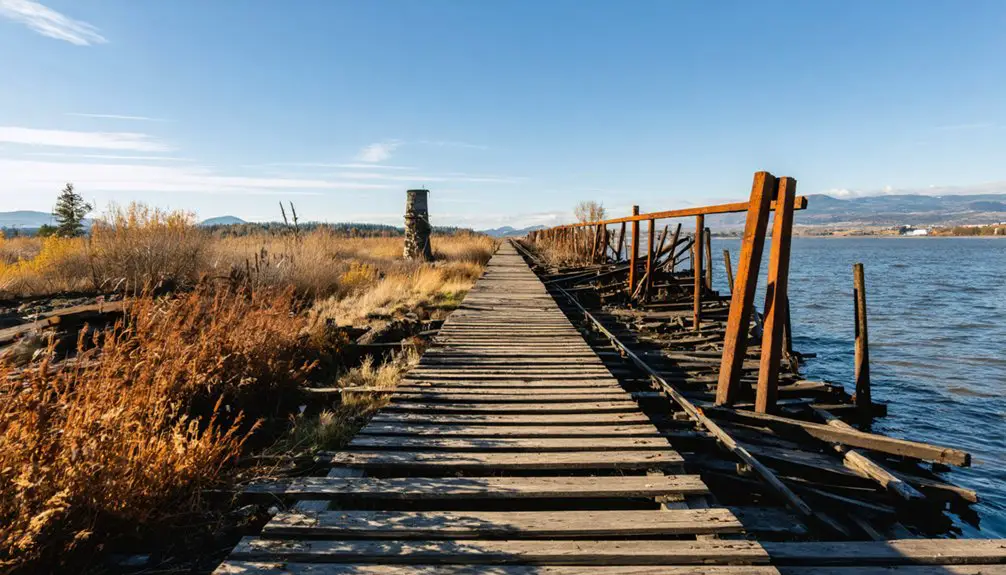
Perched atop Babcock Ridge at 928 feet, Trinidad, Washington, is a ghost town that most travelers blow right past on their way between Quincy and Wenatchee — and that’s exactly what makes it worth stopping for.
You’ll find it overlooking the Columbia River, tucked into a ridge that rewards the curious and the bold. Once a thriving railroad stop with a bank and school, Trinidad now offers something richer than convenience — it offers discovery.
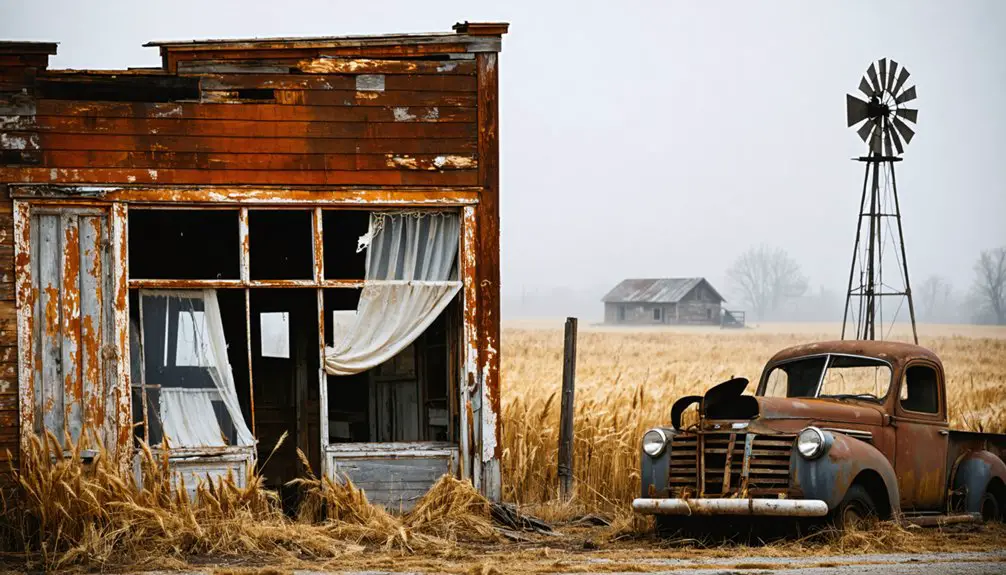
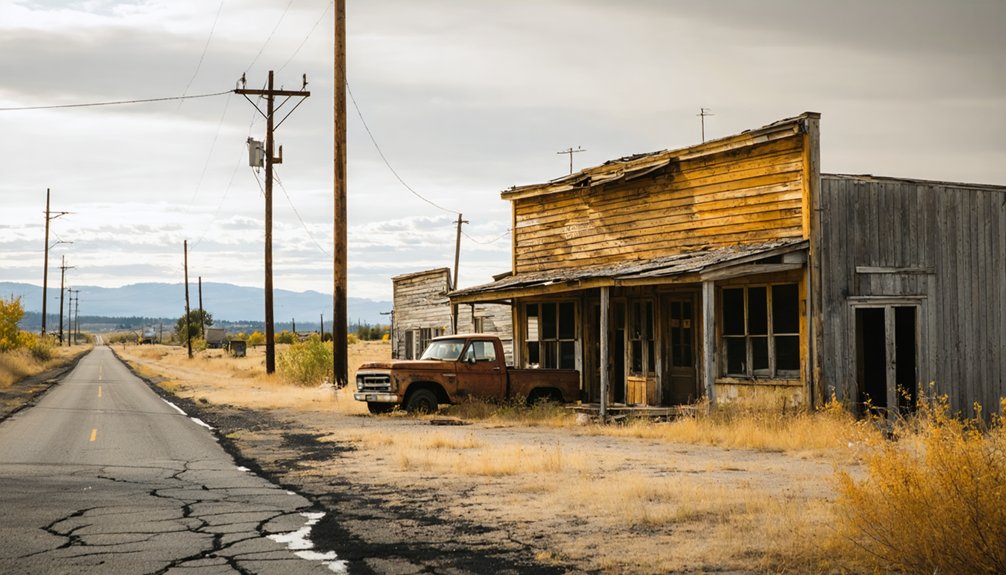
Ghost town exploration here means wandering past the Smith Brothers General Store, the last original structure standing. Add the region’s legendary lost miner gold to the mix, and treasure hunting becomes more than metaphor.
This forgotten outpost sits high above the river, waiting for travelers who’d rather find something real than stay on the beaten path.
From Railroad Stop to Ghost Town: Trinidad’s Rise and Fall
When you trace Trinidad’s roots, you find a classic story of railroad ambition sparking life in an unlikely place.
In the 1890s, the Great Northern Railway established a stop here, and the town quickly grew a bank, a school, and a community identity strong enough to earn its own name — borrowed from Trinidad, Colorado, for their shared geological character.
But when the railroad’s influence faded, so did the town, leaving behind little more than the Smith Brothers General Store as a weathered witness to what once thrived on this ridge.
Railroad Origins Spark Growth
Though it barely registers as a dot on modern maps, Trinidad’s story began with the thunder of Great Northern Railway locomotives rolling through Washington’s Columbia River country in the 1890s. Railroad expansion transformed this remote ridge into a legitimate settlement, giving pioneers a reason to plant roots atop terrain overlooking the Columbia River.
You’d have found a functioning bank and school here once, proof that railroad community impact ran deeper than simple commerce. Settlers named the town after Trinidad, Colorado, recognizing geological similarities between the two landscapes.
Merchants, miners, and travelers all passed through, creating something real from nothing but ambition and rail line access. That momentum wouldn’t last forever, but for a stretch, Trinidad genuinely thrived.
Decline Into Abandonment
Railroad towns lived and died by the decisions of distant executives, and Trinidad proved no exception. Once the Great Northern Railway rerouted operations, decline factors hit fast and hard, stripping the town of its economic lifeline.
You’ll recognize classic ghost town characteristics scattered across Trinidad today:
- The bank closed, leaving residents without financial services
- The school shuttered as families relocated elsewhere
- Businesses collapsed without railroad-driven commerce
- Population drained toward more connected communities
- Infrastructure crumbled without maintenance funding
What remains tells the story honestly. The Smith Brothers General Store stands as the sole original survivor, a weathered monument to what once thrived here.
Trinidad didn’t fade romantically — it simply became economically irrelevant overnight. That brutal reality is exactly what makes visiting it so compelling for freedom-seeking explorers today.
The Lost Gold Legend That Still Haunts Trinidad
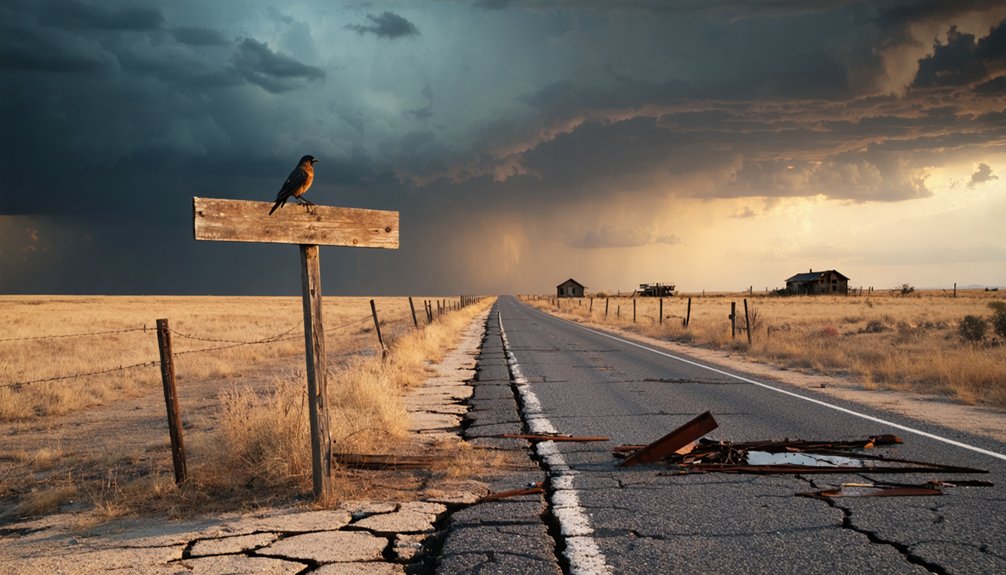
Among the many ghost town legends scattered across the Pacific Northwest, Trinidad‘s lost gold story stands out as one of the most tantalizing.
Miners hauling placer gold from British Columbia’s Fraser River fields never completed their journey to Portland. Renegade Indians attacked them near Trinidad, forcing them to stash their gold discovery somewhere in the surrounding cliffs before fleeing for their lives.
For decades, treasure seekers combed these ridges, driven by the possibility of uncovering a fortune hidden in plain sight.
The legend reportedly reached its conclusion in the 1980s when someone finally recovered the cache.
But you’ll still feel the pull of that story as you hike Trinidad’s rocky outcroppings, scanning ancient cliff faces and imagining what those desperate miners once hid there.
What’s Left To See in Trinidad Today
While Trinidad has faded from its bustling railroad-era heyday, it hasn’t disappeared entirely—and what remains tells a compelling story worth exploring.
Your ghost town exploration starts the moment you arrive, with the Smith Brothers General Store standing as the last original building from Trinidad’s thriving past. Beyond that weathered structure, treasure hunting enthusiasts still roam the ridgelines, imagining where that Fraser River gold might’ve been stashed.
Here’s what you can experience today:
- Smith Brothers General Store – the sole surviving original structure
- White Heron Winery – perched on the hill above town
- Columbia River overlooks – stunning views from the ridge
- Historic Sunset Highway access – a scenic route worth driving
- Ridge hiking trails – perfect for soaking in the landscape and local lore
White Heron Winery: A Hidden Gem Above Town
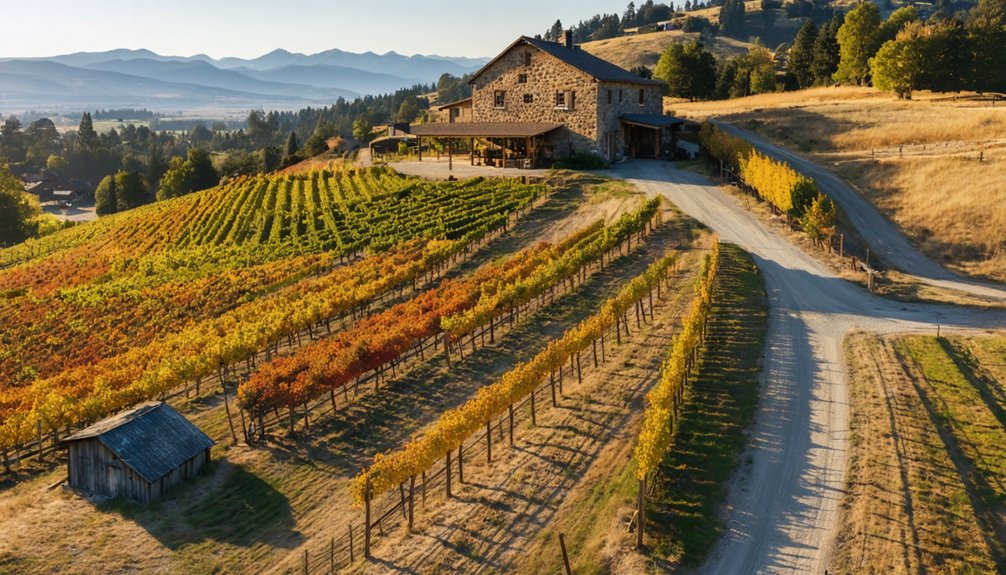
Perched on the hill above Trinidad’s quiet ruins, White Heron Winery offers you a surprising contrast to the ghost town below—a living, thriving operation where you can sample handcrafted wines in an intimate tasting room.
You’ll reach it by continuing up the same rural road that brought you into town, so keep your eyes open for the signage as you climb.
Once there, you’re rewarded with sweeping views of the Columbia River valley that make the detour well worth your time.
Winery Location And Access
Tucked above the quiet remnants of Trinidad, White Heron Winery sits on a hill that gives it commanding views of the surrounding ridge and Columbia River below.
Winery access is straightforward via Historic Sunset Highway, making it a natural stop on your ghost town exploration. Plan your tasting experience around their hours before arriving.
Here’s what to expect when you pull up:
- Scenic hilltop setting with sweeping river panoramas
- Small-batch wines crafted with Pacific Northwest character
- A relaxed atmosphere that rewards spontaneous travelers
- Easy pairing with your Trinidad ghost town walk
- Limited crowds mean you’ll feel like you’ve discovered something personal
Check their schedule ahead of time since rural wineries don’t always keep predictable hours. You won’t want to miss this stop.
Tasting Room Experience
Few tasting rooms in Washington feel as genuinely off-the-beaten-path as White Heron Winery’s intimate space above Trinidad.
You’ll sample small-batch wines while overlooking the Columbia River valley, where the scenery rivals the tasting notes themselves. The winemakers take pride in their craft, and you’ll notice it immediately in every pour.
Ask about vineyard tours if you’re curious about the production process — staff typically welcome guests who show genuine interest.
You’re not walking into a polished commercial operation here. Instead, you’re experiencing something authentically personal, the kind of place where conversations with the winemaker actually happen.
Before visiting, check their seasonal hours since availability varies.
Combining the tasting room stop with Trinidad’s ghost town exploration makes this detour genuinely worthwhile rather than simply another roadside attraction.
Scenic Views From Above
White Heron Winery sits on the hill above Trinidad, and the moment you step outside with your glass, the Columbia River valley opens up beneath you in a way that genuinely stops you mid-sip.
These scenic overlooks deliver raw, unfiltered Washington landscape that rewards every traveler chasing open roads.
For photography tips and pure enjoyment, keep these in mind:
- Shoot during golden hour — morning and late afternoon light transforms the river into hammered copper
- Bring a wide-angle lens to capture the full valley sweep
- Use the winery’s terrace railing as a natural foreground element
- Visit spring through fall for clearest visibility
- Pair your shots with the ghost town ruins below for dramatic contrast
You’ll leave with full memory cards and a fuller glass.
Columbia River Views From Babcock Ridge
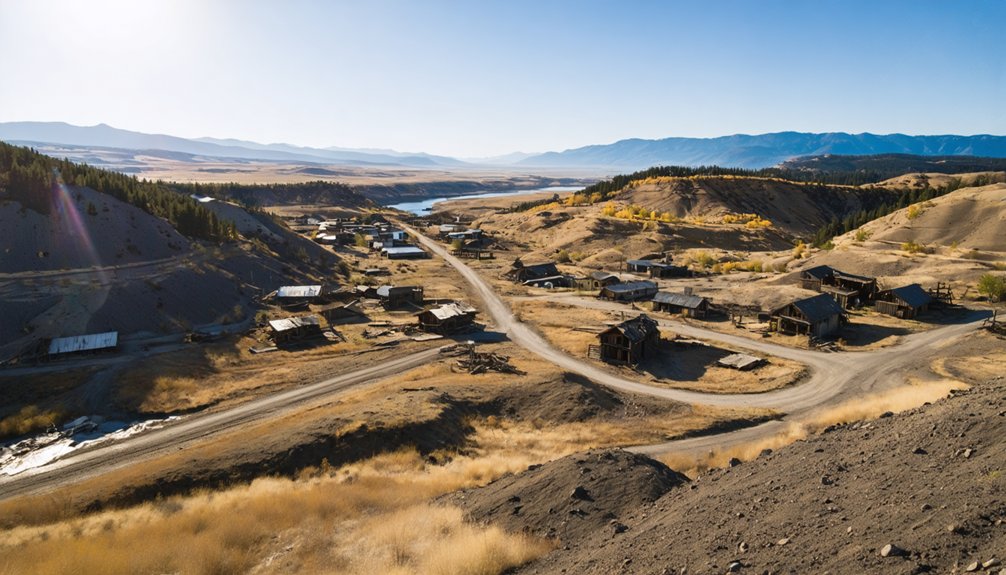
Babcock Ridge rewards visitors with sweeping panoramas of the Columbia River nearly 1,000 feet below, where the water cuts through the high desert landscape in dramatic fashion.
You’ll spot the river’s distinctive blue ribbon winding between basalt cliffs and rolling shrub-steppe terrain that stretches toward the horizon. Trinidad’s position atop the ridge makes it uniquely accessible for these views — you don’t need a strenuous hike to reach them.
Bring binoculars to spot wildlife along the riverbanks and watch the occasional barge maneuvering the current below.
Early morning light transforms the Columbia into something genuinely breathtaking, casting long shadows across the canyon walls.
The West Bar USGS map helps you identify specific geological features before your visit, adding depth to what you’re actually seeing from Babcock Ridge.
Getting to Trinidad: SR-28, SR-243, and What To Expect
Those ridge views don’t come without a bit of planning, and reaching Trinidad requires choosing your route wisely. You’ll approach via SR-28 from Quincy or SR-243 from Wenatchee, both offering rewarding scenic drives through high desert terrain.
Before your ghost town exploration begins, prepare with these essentials:
- Fuel up before leaving Quincy or Wenatchee — services vanish fast
- Pack water since the rural setting offers zero resupply points
- Drive a reliable vehicle capable of handling unpaved ridge access roads
- Visit spring through fall to avoid harsh winter conditions
- Download offline maps because cell coverage gets spotty quickly
You’re trading convenience for freedom out here, and that’s exactly the point.
Trinidad rewards the prepared traveler who shows up ready to roam.
When To Go: Spring and Fall Hit Differently Out Here
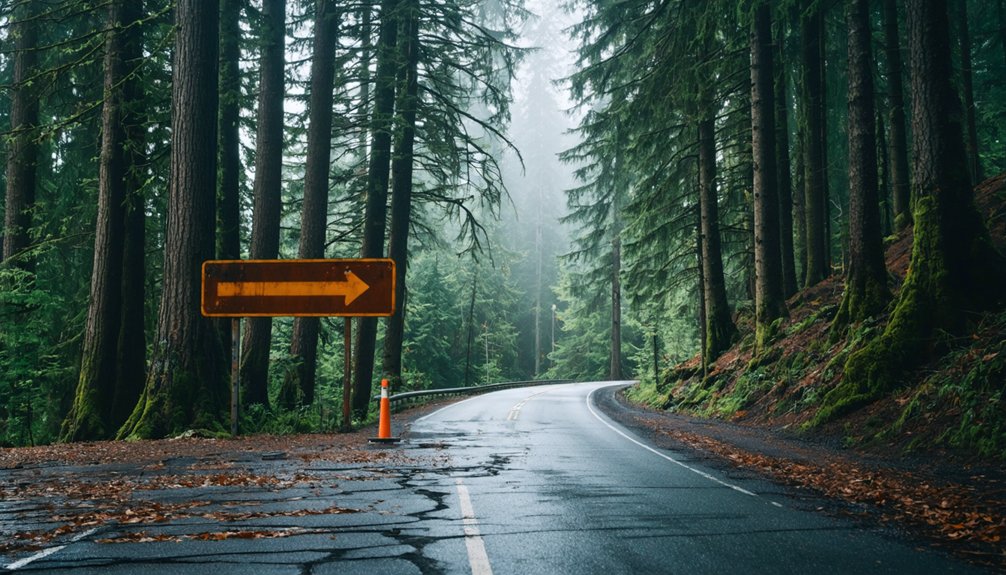
Timing your Trinidad visit changes everything about the experience.
Spring blooms transform the ridge into something alive — wildflowers push through the basalt, the Columbia River runs full and cold below, and the air carries that electric charge of a landscape waking up.
You’ll have the roads mostly to yourself.
Fall hits differently.
Autumn colors sweep across the hillsides surrounding the ghost town, and the light drops golden over the river canyon in a way that makes everything feel cinematic.
Temperatures stay manageable, and the winery’s harvest season gives you another reason to stop.
Avoid summer’s brutal heat and winter’s icy rural roads.
You want freedom out here, not survival mode.
Spring and fall hand you Trinidad at its most rewarding.
What To Bring: Trinidad Has No Gas, No Water, No Services
Trinidad doesn’t care about your comfort — that’s the first thing you need to understand before pointing your vehicle toward the ridge.
This ghost town strips away every modern convenience, leaving only raw terrain and treasure hunting potential. Pack your ghost town essentials before leaving Quincy or Wenatchee, because nothing’s waiting for you out here.
Your survival checklist:
- Full fuel tank — no stations exist nearby
- Drinking water — at least two liters per person
- Snacks and meals — zero food options on-site
- Navigation tools — cell service gets unreliable on the ridge
- Sturdy footwear — those cliff hikes demand real traction
Treat this like backcountry travel wearing a history badge.
Prepare correctly, and Trinidad rewards you completely.
Where To Go After Trinidad: Quincy, the River, and What’s Close
Once you’ve packed out from Trinidad’s ridge and checked the dust off your boots, the surrounding region opens up with real options worth exploring.
Head west toward Quincy, where Quincy attractions include local dining, fuel, and supply stops that reset your road trip momentum. The town keeps things simple and genuine — exactly what you want after a ghost town detour.
For river activities, drop down to the Columbia’s banks and take advantage of fishing access, boat launches, and sweeping canyon views that reward the drive.
The river corridor stretches generously in both directions, giving you flexibility.
Before leaving the area entirely, swing back past White Heron Winery on Trinidad’s hill for a tasting — it’s an unexpected finish that pairs perfectly with the day’s exploration.
Frequently Asked Questions
Is Trinidad, Washington, on Any Official Washington State Historic Registry?
The knowledge base doesn’t confirm Trinidad’s official Historic preservation registry status. You’ll want to research Trinidad history further by contacting Washington’s Department of Archaeology and Historic Preservation directly to discover its current listing status.
Can You Camp Overnight Near Trinidad or Along Babcock Ridge?
You’ll find no designated campgrounds directly at Trinidad, but you can explore nearby Columbia River recreation areas where camping regulations apply. Stay aware of local wildlife, pack your essentials, embrace the freedom, and plan your overnight adventure responsibly.
Are There Guided Ghost Town Tours Available in Grant County?
Grant County doesn’t offer formal guided ghost town tours, but you’ll uncover rich ghost town history and local legends independently as you explore Trinidad’s rugged ridges, weathered storefronts, and dramatic Columbia River overlooks at your own adventurous pace.
Is the Smith Brothers General Store Interior Open to Visitors?
Imagine stepping inside a century-old store — sadly, you can’t here. The Smith Brothers’ History lives outside; you’ll find General Store Artifacts best admired through its weathered exterior, so respect boundaries and capture its rustic charm photographically.
Does White Heron Winery Require Reservations Before Visiting Trinidad?
Before visiting Trinidad, you’ll want to check White Heron Winery’s hours for wine tasting and local events. Contact them directly to confirm whether they require reservations, ensuring you don’t miss this hilltop gem!
References
- http://www.ghosttownsusa.com/trinidad.htm
- https://ghostsofdc.org/2022/03/14/why-is-it-named-trinidad/
- https://en.wikipedia.org/wiki/Trinidad
- https://www.fox21news.com/features/we-are-trinidad/we-are-trinidad-the-lost-town-of-sopris/
- https://www.youtube.com/watch?v=PO7B-vvx9WE
- https://www.sunset-hwy.com/trinidad.htm
- https://www.youtube.com/watch?v=fy4ae4iC2eI
- https://kids.kiddle.co/Trinidad
- https://www.facebook.com/dustin.fox.37/videos/the-secret-caribbean-history-of-trinidad-dchow-one-ne-dc-neighborhood-helped-bui/1928513734452465/
- https://www.instagram.com/reel/DWFSUb-Dgdj/