You can plan your Utah ghost town road trip by grouping stops regionally—hit Grafton, Silver Reef, Frisco, and Old Irontown across Southern Utah, then swing through Central Utah for Sego Canyon and Thistle. Visit in spring or fall to dodge brutal desert heat, pack plenty of water, and respect every relic you encounter. These towns survived boom, bust, and abandonment, and there’s far more to their stories waiting just ahead.
Key Takeaways
- Southern Utah’s ghost towns—Grafton, Silver Reef, Old Irontown, and Frisco—can be grouped together to minimize drive time.
- Spring and fall offer the most comfortable temperatures for exploring Utah’s ghost town sites.
- Most ghost towns, including Silver Reef and Sego Canyon, are free to visit and explore.
- Pack ample water, sturdy footwear, and sun protection before venturing into remote ghost town locations.
- Always test floor stability, respect artifacts, and inform someone of your planned route before exploring.
The Best Utah Ghost Towns Worth Adding to Your Road Trip
Utah’s ghost towns aren’t just abandoned settlements — they’re open-air museums where you can walk through the crumbling remnants of boom-and-bust economies, frontier hardships, and communities that time quietly swallowed.
Whether you’re tracing Grafton history along the Virgin River, exploring Silver Reef’s sandstone silver legacy, or standing inside Old Iron Town’s haunting beehive kilns, each site hands you a different chapter of the frontier West.
Sego Canyon layers coal-era ambition against canyon walls, while Frisco stories of lawlessness and sudden collapse remind you how quickly fortune turns.
Even the Thistle flood offers its own sobering lesson — proof that nature, not just economics, can erase a town.
These six sites give your road trip real weight, real history, and real freedom to explore.
Southern Utah vs. Central Utah: How to Group Your Stops by Region
Grouping these six ghost towns by region saves you serious drive time and shapes two distinct road trip experiences.
Southern Utah clusters Grafton, Silver Reef, Old Irontown, and Frisco into one rugged sweep of desert southern attractions — canyon light, pioneer cemeteries, and silver-boom ghosts waiting around every bend. You’ll feel the weight of frontier ambition out here.
Canyon light, pioneer cemeteries, silver-boom ghosts — Southern Utah’s ghost towns carry the full weight of frontier ambition.
Central Utah pulls you toward quieter, equally compelling central history. Sego Canyon rewards you with dramatic Book Cliffs scenery alongside coal-era ruins, while Thistle confronts you with something rarer — a town swallowed by floodwaters rather than fading economies.
Tackle one region per day, and you’ll cover ground efficiently without sacrificing depth. Each region earns its own dedicated drive.
Ruins, Relics, and Entry Fees: What Each Ghost Town Actually Offers
Once you’ve mapped your route by region, the next question worth asking is what you’ll actually find when you arrive. Each stop delivers something distinct.
Grafton offers intact abandoned buildings — an adobe schoolhouse and weathered cemetery — free to explore.
Silver Reef charges no admission and houses a genuine museum inside a former Wells Fargo station.
Old Irontown’s beehive charcoal oven anchors a site scattered with mining relics, open without fees.
Frisco delivers stone kilns and a historic cemetery carrying real historical significance from its lawless silver boom days.
Sego Canyon pairs ghost town ruins with striking canyon scenery along a free, accessible road.
Thistle’s partially submerged structures offer eerie, immediate impact.
Most sites cost nothing — just your time, curiosity, and willingness to wander.
Best Time of Year to Visit and What to Pack for Utah’s Desert Ghost Towns
Timing your visit to Utah’s desert ghost towns can mean the difference between an unforgettable afternoon and a miserable one. Seasonal considerations matter deeply here — spring and fall deliver ideal temperatures across sites like Grafton and Frisco, while summer scorches these exposed landscapes mercilessly.
Winter brings solitude but icy, unpredictable roads.
Pack these packing essentials before you go:
- Water — carry more than you think you’ll need; these remote sites offer nothing
- Sturdy footwear — uneven terrain, old foundations, and scattered relics demand ankle support
- Sun protection — wide-brimmed hat, sunscreen, and sunglasses shield you against relentless desert exposure
You’re walking through living history on your own terms. Arrive prepared, and these abandoned places will reward your freedom generously.
Ghost Town Etiquette, Safety, and Access Conditions First-Time Visitors Should Know
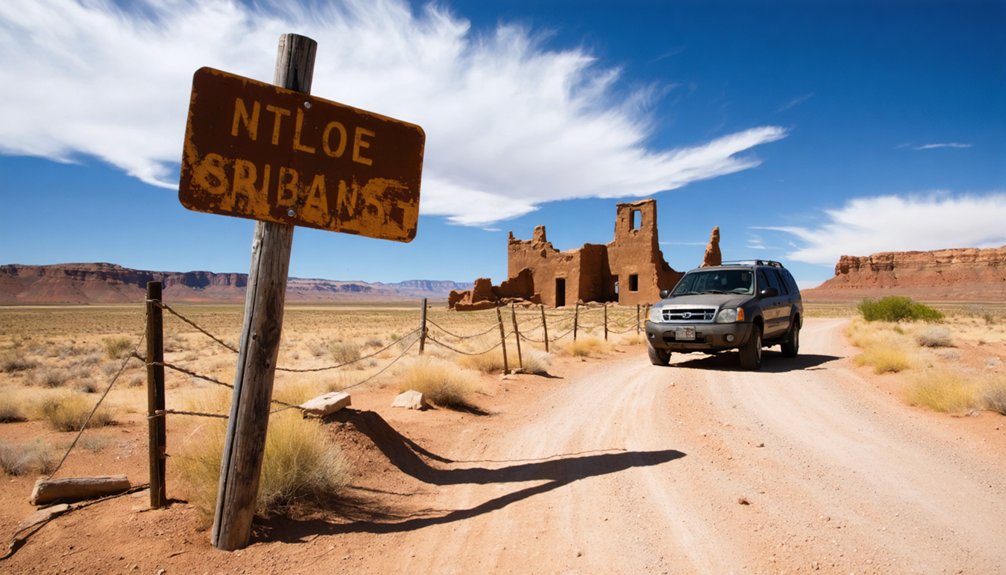
Few places demand as much quiet respect as Utah’s ghost towns — you’re stepping into spaces where real people built lives, buried children, and ultimately walked away from everything they’d worked to create.
Ghost town etiquette starts with leaving everything exactly as you find it. Don’t pocket artifacts, disturb grave markers, or climb deteriorating walls. These structures aren’t photo props; they’re fragile historical records.
For essential safety tips, test the ground before you step — floors collapse without warning, and abandoned mine shafts hide beneath innocent-looking soil. Bring water, tell someone your route, and check road conditions before heading out, since many sites sit along unpaved roads that turn treacherous after rain.
Some locations require permits. Respect those boundaries — they exist to protect both you and the site.
Frequently Asked Questions
Can Children Safely Explore Utah Ghost Towns During a Family Road Trip?
Yes, you can safely bring your kids to explore Utah’s ghost towns! These sites offer unforgettable family activities, from discovering frontier history to sharing ghost stories amid crumbling adobe walls and weathered pioneer cemeteries.
Are Any Utah Ghost Towns Accessible for Visitors With Mobility Limitations?
Silver Reef’s visitor center and Thistle’s roadside ruins offer accessible routes where you’ll connect with Utah’s storied past without rugged terrain. History’s echoes await you, regardless of your mobility.
Which Utah Ghost Towns Allow Overnight Camping Near the Historic Sites?
You’ll find camping near Frisco and Sego Canyon’s historically significant sites, but always check local camping regulations first. These rugged, freedom-embracing landscapes invite you to sleep beneath stars where frontier dreamers once chased silver and coal fortunes.
Do Any Ghost Towns Offer Guided Tours Led by Local Historians?
Right off the bat, Silver Reef’s museum offers you guided history tours rich with local folklore. You’ll uncover fascinating stories from knowledgeable historians who breathe life into southern Utah’s legendary silver boom past.
Are Pets Allowed to Accompany Visitors at Utah Ghost Town Locations?
Pet policies vary by location, but you’ll often bring your furry companion along for ghost town experiences at outdoor sites like Grafton or Frisco — just keep them leashed while roaming those untamed, historically-charged grounds.
References
- https://en.wikipedia.org/wiki/List_of_ghost_towns_in_Utah
- https://www.utahlifemag.com/blog/post/4-ghost-towns
- https://www.visitutah.com/things-to-do/history-culture/ghost-towns
- https://www.youtube.com/watch?v=FLdClYRU0bY
- https://www.utahsadventurefamily.com/5-ghost-towns-in-utah-for-families/
- https://opendata.gis.utah.gov/datasets/ghost-towns-in-utah/about