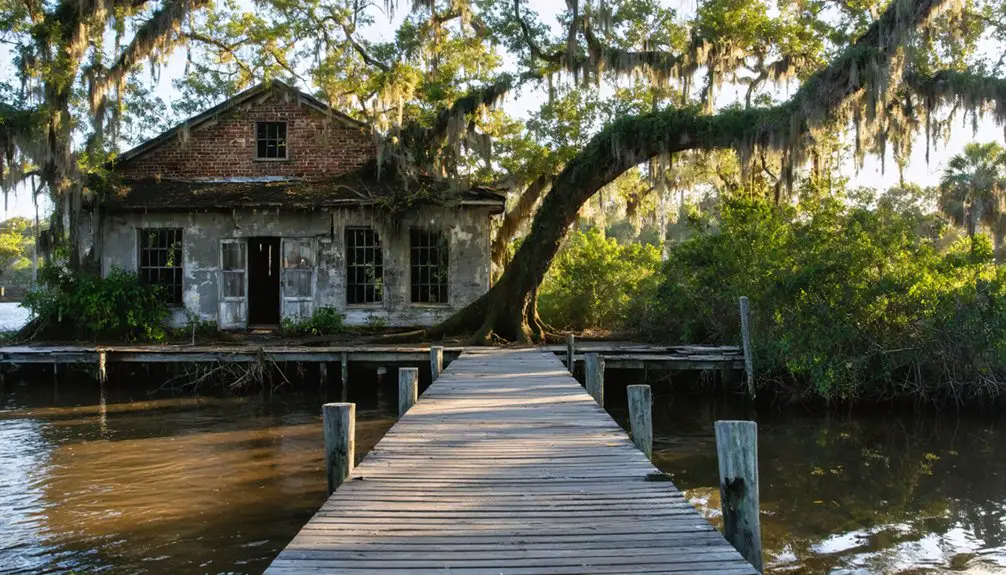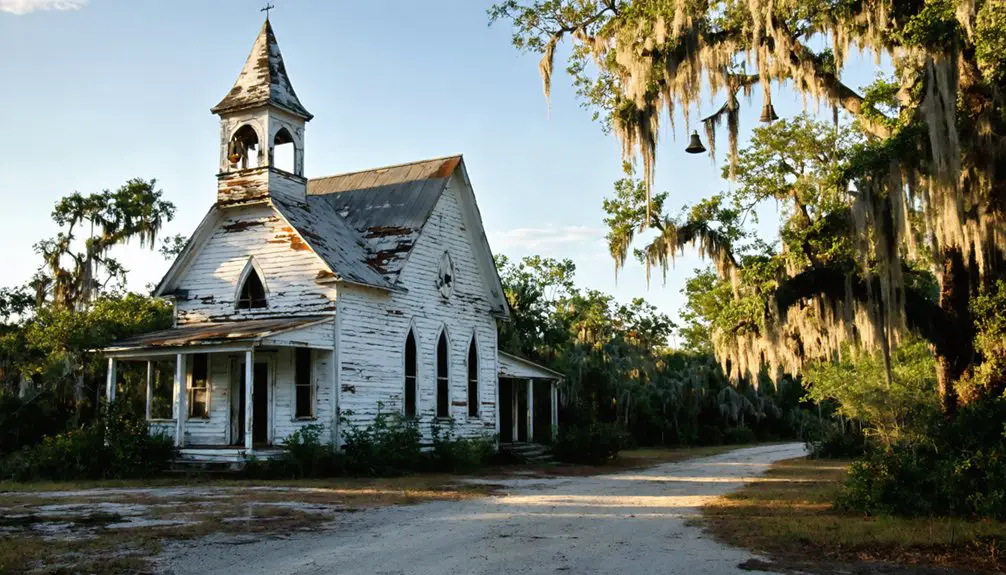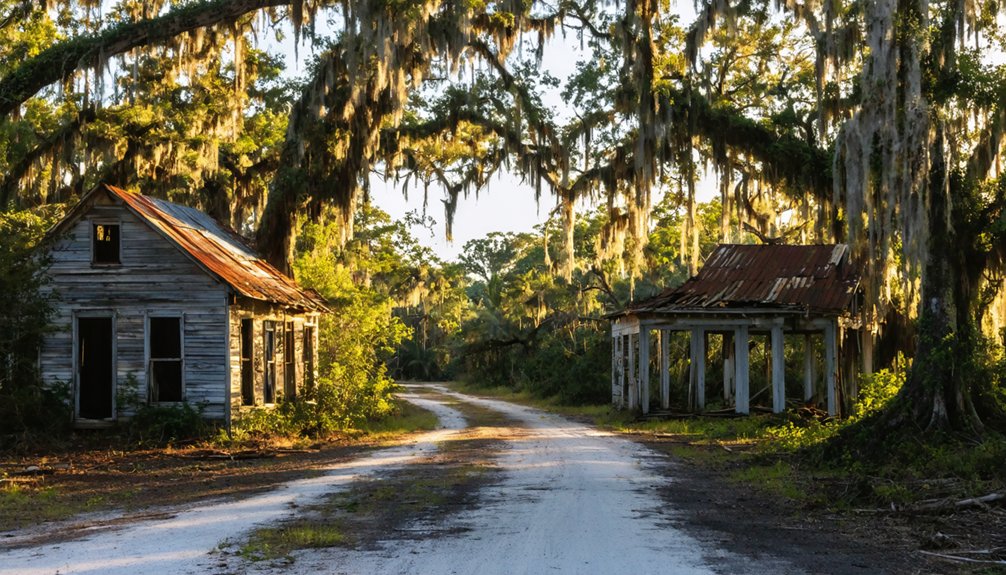
Planning a ghost town road trip to Rye, Florida means heading to Manatee County, where an abandoned pioneer settlement hides within Rye Wilderness Preserve along the Manatee River. You’ll hike a short quarter-mile trail to discover an overgrown cemetery dating to the late 1800s, historical markers, and wildlife-rich wilderness. Once home to 70 residents, this forgotten community quietly faded after the steamboat era ended. Stick around, and you’ll uncover everything you need to make this adventure unforgettable.
Key Takeaways
- Rye, Florida, was once a thriving Manatee River community of 70 residents, complete with a post office and sawmill.
- Access Rye Wilderness Preserve in Manatee County using a navigation app directed to the Rye Wilderness Trail trailhead.
- A short quarter-mile hike on the Rye Settlement Trail leads to scenic river views and historical remnants.
- Rye Cemetery, dating to the late 1800s, is the last standing remnant of the settlement, marked with pioneer history.
- Nearby heritage sites like Gamble Plantation and De Soto National Memorial make ideal additions to your road trip itinerary.
What Made Rye, Florida a Ghost Town?
Once a thriving homestead community nestled along the banks of the Manatee River, Rye, Florida bustled with up to 70 residents, a post office, and a sawmill that supplied wood for the construction of the iconic Gandy Bridge.
The Rye settlement’s historical significance can’t be overstated — dredging operations once improved steamboat access, fueling remarkable growth throughout the late 1800s.
Dredging operations transformed Rye into a thriving hub, unlocking steamboat access that fueled extraordinary growth throughout the late 1800s.
But when the steamboat era ended, so did Rye’s lifeline. Community decline accelerated as new river crossings bypassed the town entirely, and the post office shuttered by 1929.
Residents gradually packed up and moved on, leaving behind classic ghost town characteristics — abandoned structures, overgrown paths, and an eerie silence where lively activity once thrived.
Today, only a weathered cemetery remains, whispering stories of the freedom-seeking pioneers who once called Rye home.
How to Get to Rye Wilderness Preserve
Tucked within Manatee County, Florida, Rye Wilderness Preserve sits along the banks of the Manatee River, waiting to be explored.
To get there, plug the Rye Wilderness Trail trailhead into your directions navigation app and head toward the preserve’s entrance.
Once you arrive, you’ll start your adventure with a short quarter-mile hike along the Rye Settlement Trail. The path cuts through Florida’s raw, untamed landscape, rewarding you with scenic views of the river and surrounding wilderness.
You won’t need much gear — just solid walking shoes and a sense of curiosity. The trail leads directly to the old settlement remnants, including the historic Rye Cemetery.
It’s an accessible, straightforward journey that puts a forgotten piece of Florida history right at your fingertips.
What to See on the Rye Settlement Trail?
Walking the Rye Settlement Trail, you’ll discover a landscape where Florida’s wild beauty and forgotten history collide. The quarter-mile hike packs surprising depth, rewarding curious explorers with genuine remnants of a once-thriving 1800s community.
Here’s what you won’t want to miss:
- Rye Cemetery – The settlement’s last standing remnant, featuring historical markers that connect you directly to the families who built this forgotten community.
- Wildlife Spotting Opportunities – The surrounding wilderness preserve teems with native Florida wildlife, making every step an unpredictable adventure.
- Old Settlement Remnants – Scattered traces of the original homestead community ghost through the landscape, telling stories no textbook captures.
Come prepared with sturdy footwear, since overgrown paths and invasive vegetation like Caesar’s weed make the trail authentically wild.
What Should You Know Before Visiting Rye Cemetery?
Before you lace up your hiking boots and head to Rye Cemetery, there are a few things worth knowing to make your visit worthwhile. The cemetery dates back to the late 1800s, and its historical significance runs deep as the last surviving remnant of a once-thriving settlement.
Rye Cemetery dates back to the late 1800s, standing today as the last remnant of a once-thriving settlement.
Expect overgrown paths and invasive plants like Caesar’s weed along the trail.
Practice proper cemetery etiquette by staying on marked paths, avoiding stepping on grave sites, and leaving everything undisturbed. The preserve sees low visitor traffic, so you’ll likely explore in peaceful solitude.
Heritage Days events in March occasionally bring organized cleanups, making that an ideal time to visit. Check current conditions beforehand, as COVID-19 previously halted preservation events, and trail maintenance may be inconsistent.
What Other Manatee County Heritage Sites Are Worth Visiting?
Rye Cemetery is just one piece of Manatee County’s rich historical puzzle, and the surrounding region offers plenty more heritage stops worth adding to your itinerary.
These historic landmarks reveal layers of cultural heritage that shaped Florida’s western coast.
- Manatee Village Historical Park – Explore restored 19th-century buildings, including a courthouse and church, that bring pioneer life vividly to life.
- Gamble Plantation Historic State Park – Walk through Florida’s only surviving antebellum plantation house, a powerful window into pre-Civil War history.
- De Soto National Memorial – Follow the trail where Spanish explorer Hernando de Soto landed in 1539, connecting you directly to Florida’s earliest European contact stories.
Each site deepens your understanding of the region and makes your road trip genuinely unforgettable.
Frequently Asked Questions
Is Rye Wilderness Preserve Suitable for Young Children or Elderly Visitors?
You’ll find Rye Wilderness Preserve manageable for families, as child safety is supported by a short quarter-mile trail. However, accessibility features are limited, so elderly visitors should prepare for uneven, overgrown wilderness paths beforehand.
Are Pets Allowed on the Rye Settlement Trail During Visits?
The knowledge doesn’t confirm pet policies for Rye Settlement Trail, so check with Manatee County before heading out! Practice good trail etiquette, keep your adventure respectful, and you’ll uncover this ghost town’s wild, untamed history freely.
What Is the Best Time of Year to Visit Rye?
Visit Rye during March for the best seasonal activities! You’ll catch Heritage Days events, enjoy cooler weather considerations, and explore the historic cemetery with guided cleanups. It’s your perfect adventure into Florida’s fascinating ghost town history!
Is There an Admission Fee to Enter Rye Wilderness Preserve?
You don’t pay an admission fee to explore Rye Wilderness Preserve! You’ll freely discover Rye history and incredible wildlife diversity as you hike trails leading to the ghost town’s last surviving remnants, including its hauntingly beautiful cemetery.
Are Guided Tours of Rye Wilderness Preserve Available for Visitors?
The knowledge doesn’t confirm guided tours are available, but you can explore Rye Wilderness Preserve independently, chasing wildlife sightings and discovering ghost town remnants along the Rye Settlement Trail at your own adventurous, free-spirited pace!
References
- https://www.youtube.com/watch?v=WFcRnN98IrY
- https://www.youtube.com/watch?v=uW159Vn79IM
- https://ellaemhoff.substack.com/p/soft-travels-rye-beach
- https://ryehistory.wordpress.com
- https://www.yourobserver.com/news/2021/mar/17/manatee-county-wont-bury-its-history-during-heritage-days/
- http://www.bradenton.com/news/local/article210116059.html
- https://www.ncf.edu/wp-content/uploads/2021/09/NCPAL-Report-1-Rye-Village_compressed.pdf