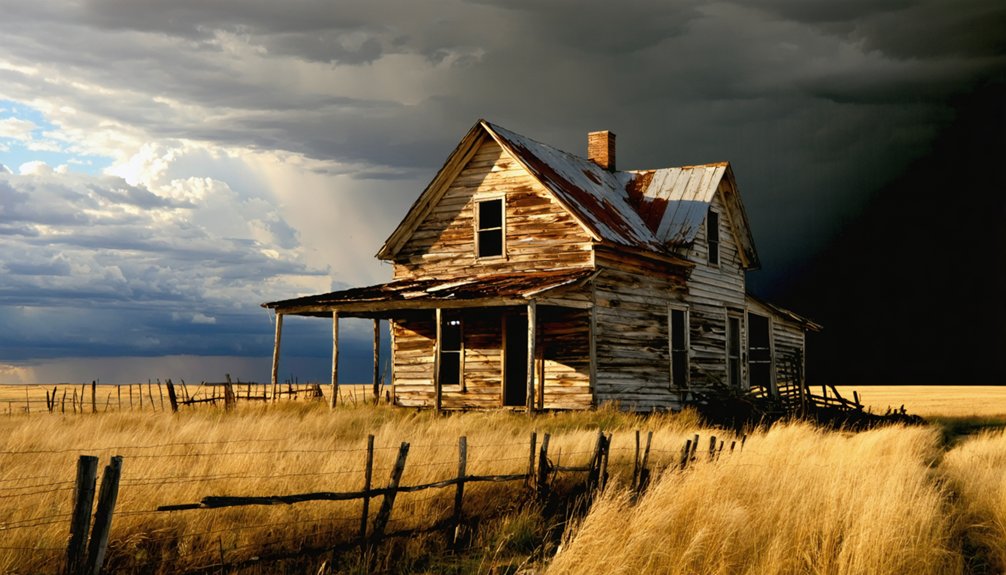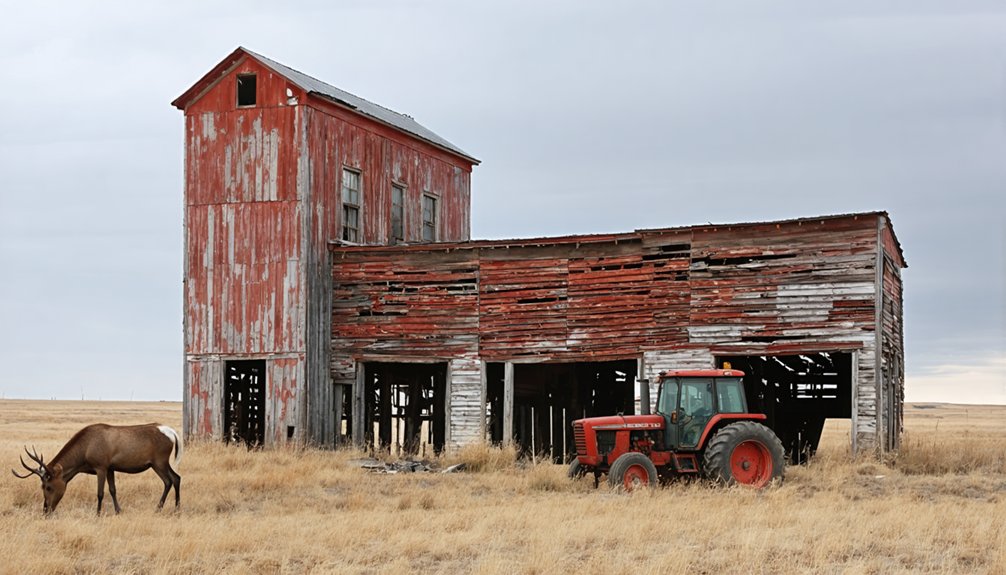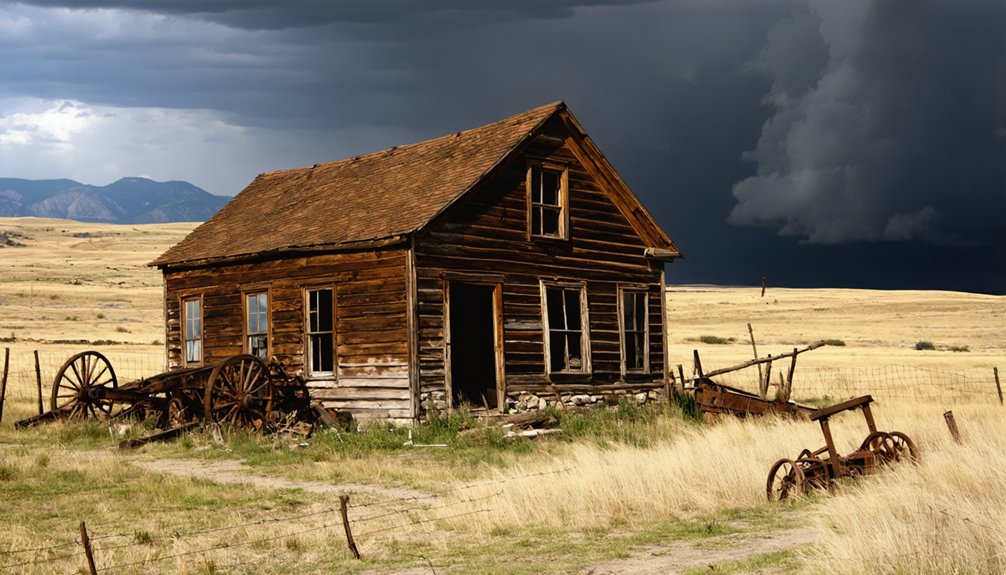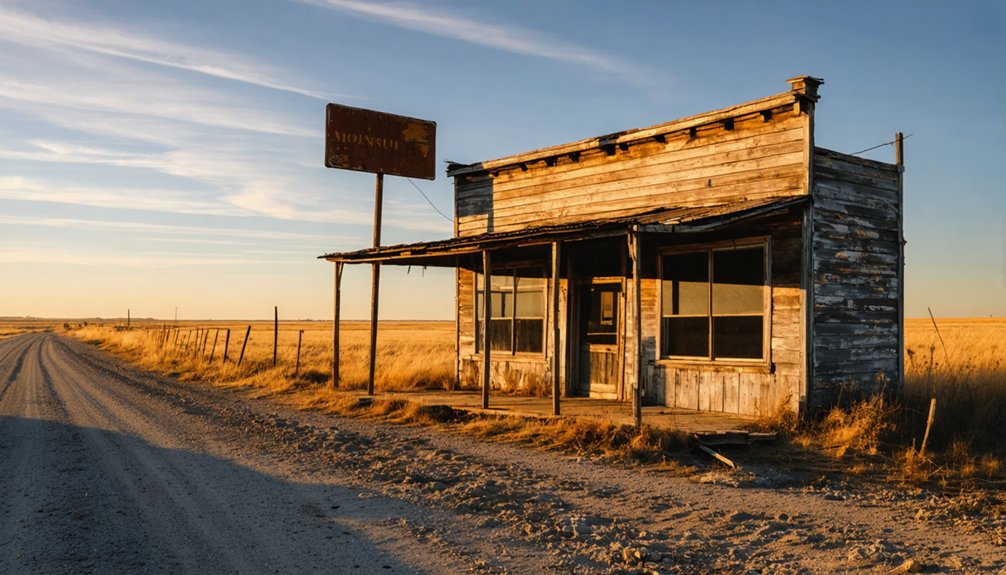
Planning a ghost town road trip to Williamsburg, South Dakota means embracing the unexpected—there’s nothing left to find. No crumbling walls, no rusted foundations, just open terrain and eerie silence where an entire Black Hills mining town once stood. Start in Deadwood, use Route 385 and Highway 16, and pack detailed maps, sturdy boots, and a camera. Nearby stops like Spokane and Bismuth add powerful context to Williamsburg’s haunting absence—and there’s far more to this vanished landscape than you’d ever expect.
Key Takeaways
- Williamsburg, South Dakota, is a Black Hills ghost town with no physical remnants, requiring flexible exploration along Route 385 and Highway 16.
- Pack essential supplies including detailed maps, sturdy boots, camera gear, and permission documentation before embarking on your ghost town road trip.
- Key stops include Spokane, Bismuth, and Whitetail, each offering unique abandoned structures showcasing the Black Hills’ boom-and-bust mining history.
- Use Deadwood, a National Historic Landmark, as your base camp, offering hotels, restaurants, fuel, and rich frontier history nearby.
- Strategically connect each ghost town stop to the broader boom-and-bust narrative, balancing travel distance with time spent exploring each location.
What Is Williamsburg, South Dakota’s Vanished Ghost Town?
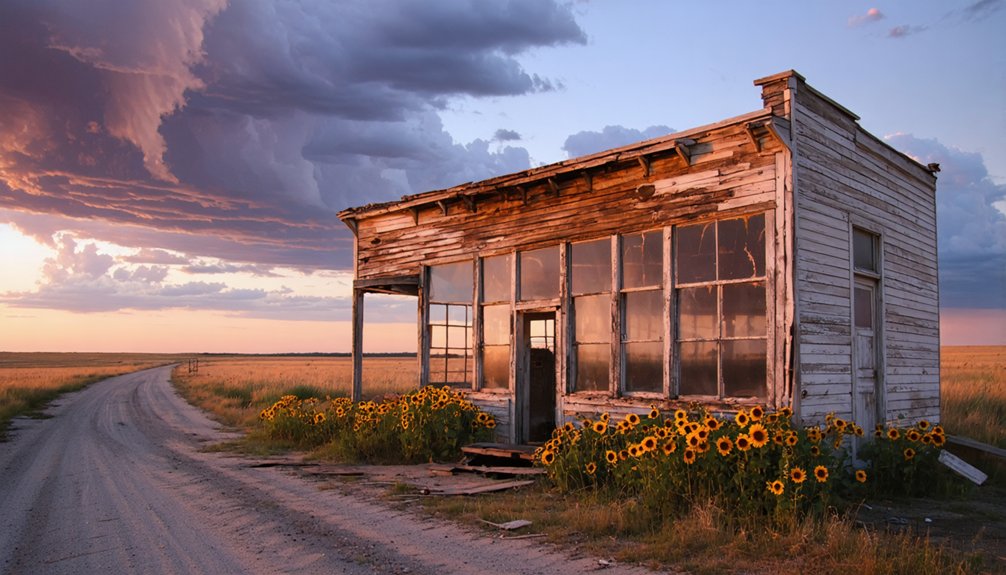
Buried somewhere in Lawrence County, South Dakota, Williamsburg stands as one of the Black Hills’ most elusive ghost towns — a settlement so thoroughly erased by time that even its exact location remains unknown.
Williamsburg history traces back to the Black Hills Gold Rush of the late 1800s, when fortune-seekers flooded the region, built communities overnight, and abandoned them just as fast.
Today, nothing remains — no foundations, no markers, no ruins. It’s completely barren.
Ghost town legends surrounding places like Williamsburg remind you that freedom once meant chasing gold into wild, uncharted territory.
You’re not just visiting a forgotten place; you’re standing at the edge of a vanished world that boom-and-bust mining culture built and swallowed whole.
How the Black Hills Gold Rush Built Williamsburg: and Erased It
When gold fever swept the Black Hills in the late 1800s, towns like Williamsburg exploded into existence almost overnight, drawing fortune-seekers who built communities from nothing in record time.
You can trace Williamsburg’s entire life story through the boom-and-bust cycle that defined the era — a frantic rush of activity followed by an equally swift abandonment once the gold dried up.
Today, you’ll find no buildings, no ruins, and no markers left to confirm Williamsburg ever stood, making it one of Lawrence County’s most completely erased chapters of history.
Gold Rush Origins
Like so many Black Hills settlements, Williamsburg didn’t grow slowly — it exploded into existence during the frenzied gold rush of the late 1800s, when prospectors flooded Lawrence County chasing rumors of fortune buried in the hills.
Gold mining drove everything — people, commerce, and ambition — into these remote landscapes almost overnight. Towns like Williamsburg weren’t planned; they were summoned by desperation and opportunity.
That historical significance can’t be overstated. You’re looking at a place that once represented real human dreams, carved out of raw wilderness by people willing to risk everything.
When the gold thinned and the rush moved on, so did the people. Williamsburg didn’t fade gradually — it simply emptied, leaving nothing behind but its name on old maps and the wind moving through open hills.
Boom-And-Bust Cycle
The boom-and-bust cycle that defined the Black Hills Gold Rush wasn’t unique to Williamsburg — but it hit with the same brutal efficiency here as it did across Lawrence County. Gold drew people fast, built communities overnight, then vanished just as quickly when the ore ran out.
Those economic fluctuations left no room for sentiment. Towns that thrived one decade became empty land the next.
Williamsburg followed that exact pattern. You won’t find buildings, foundations, or markers when you visit — just open terrain reclaiming what miners once claimed.
That erasure *is* the story. The mining heritage here isn’t preserved in structures; it’s preserved in absence. Understanding that cycle transforms your visit from a simple drive into something far more meaningful — a firsthand look at freedom’s cost.
Williamsburg’s Disappearance
Gold built Williamsburg fast and erased it just as completely. When the Black Hills Gold Rush collapsed, miners packed up and moved on without looking back.
No gradual decline, no slow fade — just absence. Today, you can’t pinpoint Williamsburg’s exact location on a map, and no structures remain to anchor its story to the land.
That’s what makes its mining history both haunting and compelling. You’re fundamentally chasing ghost town lore into open terrain, searching for a place that refused to leave evidence behind.
Lawrence County absorbed Williamsburg back into its landscape like it never existed.
For road trippers craving raw, unfiltered history, that erasure *is* the attraction — a reminder that the Black Hills giveth and the Black Hills taketh away.
What Williamsburg Looks Like When You Visit Today
When you arrive at Williamsburg today, you won’t find crumbling foundations, weathered timbers, or even a rusted nail to mark where a community once stood.
The land has swallowed every trace of the town whole, leaving nothing but open terrain that gives no hint of its gold rush past.
You’re fundamentally standing in a ghost town that’s become a ghost of itself — stripped bare by time until even the ruins have vanished.
Barren Land Today
Visiting Williamsburg today means arriving at a stretch of land that offers virtually zero evidence a town ever existed here. The barren landscape gives you nothing to anchor your imagination — no foundations, no rusted relics, no crumbling walls. It’s a ghost town in the truest, most literal sense.
You’ll find open land reclaimed entirely by nature, stripped of every trace of human ambition that once defined this Black Hills settlement. Unlike nearby ghost towns with a few standing structures or scattered debris, Williamsburg delivers only silence and open sky.
For explorers who value raw, unfiltered history, that emptiness carries its own power. You’re standing where gold rush dreams once burned bright, and now there’s absolutely nothing left to prove it.
No Visible Remnants
Arriving at Williamsburg, you’ll find zero physical evidence that a town ever stood here — no foundations poking through the soil, no rusted hardware half-buried in the dirt, no stone walls reclaimed by creeping vines.
The land stretches open and indifferent, offering nothing to confirm the ghost town legends surrounding this Lawrence County site.
That absence hits differently than crumbling buildings would. You’re standing somewhere historically significant, a place the Black Hills Gold Rush briefly animated with human ambition, yet the earth has erased every trace.
No marker orients you. No artifact rewards your curiosity.
This complete erasure actually deepens the historical significance — Williamsburg forces you to imagine rather than observe, making its silence louder than any standing ruin you’ll encounter elsewhere on your South Dakota road trip.
How to Access Williamsburg and What to Bring Before You Go
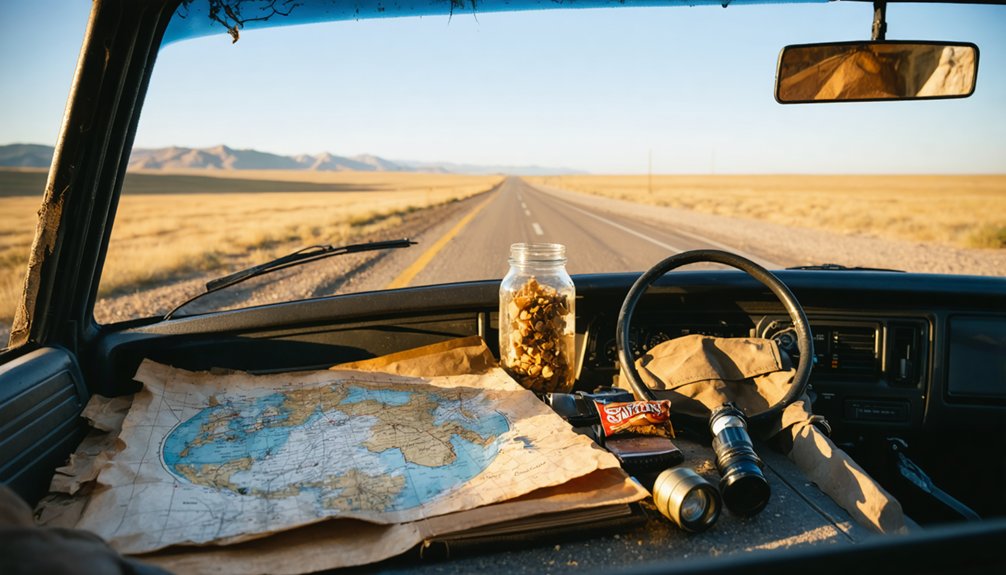
Planning a trip to Williamsburg, South Dakota, means embracing a different kind of ghost town adventure—one where the destination itself has virtually vanished. You’re chasing ghost town legends across abandoned landscapes where Lawrence County’s rugged terrain holds silent secrets.
Chasing Williamsburg means chasing a legend—where Lawrence County’s rugged terrain swallows ghost towns whole.
Since no exact location exists, combine your search with Route 385 and Highway 16 for maximum exploration freedom.
Pack smart before you go:
- Detailed maps and GPS — official coordinates don’t exist, so flexibility matters
- Sturdy boots — uneven, overgrown terrain demands serious footwear
- Camera gear — surrounding Black Hills scenery deserves capturing
- Permission documentation — nearby intact sites sit on private property
Pair your visit with Deadwood’s haunted tours just miles away, transforming an uncertain destination into an unforgettable Black Hills journey.
The Best Ghost Towns Near Williamsburg to Visit on the Same Trip
Once you’ve packed your gear and mapped your flexible route toward Williamsburg, the real reward of this Black Hills adventure stretches well beyond a single barren site.
Nearby Spokane delivers haunting ghost town legends through rusted cars and crumbling structures slowly reclaimed by nature.
Deadwood, founded in 1876, offers a preserved National Historic Landmark where mining heritage breathes through every street and brothels-turned-casinos welcome curious wanderers.
Bismuth once thrived with a store, houses, and even a baseball team by 1901, making it a compelling stop.
Whitetail sat near the Trojan-to-Lead rail line around 1900, adding railroad history to your route.
Combine Route 385 with Highway 16 to connect these sites efficiently and experience the full boom-and-bust story of South Dakota’s Black Hills.
How to Build a Black Hills Ghost Town Road Trip Around Williamsburg
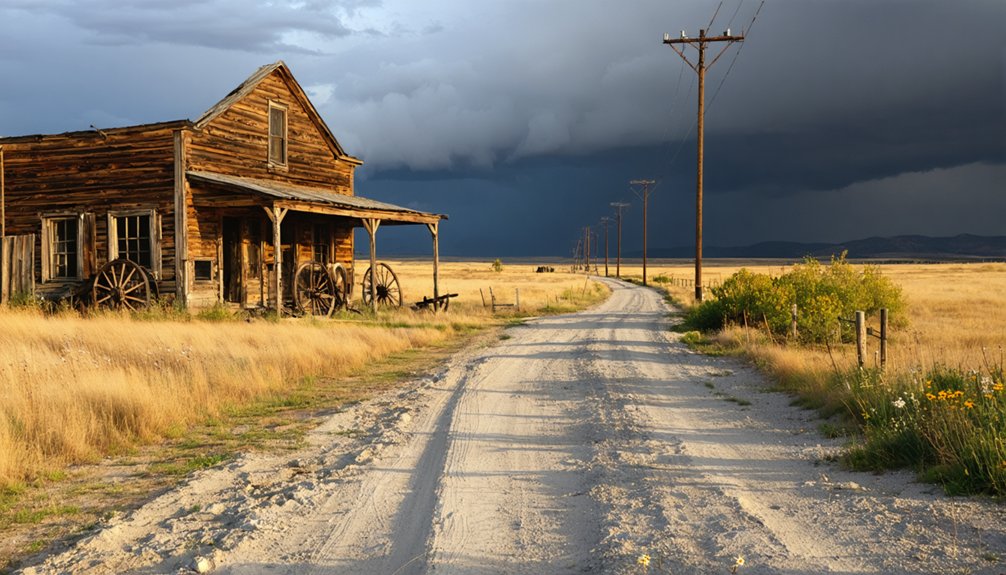
Building a Black Hills ghost town road trip around Williamsburg means accepting its barren nature as your launching pad rather than your destination. From here, you’ll chase ghost town legends across Lawrence County’s forgotten landscape.
Williamsburg isn’t the destination — it’s the beginning. Let its emptiness launch you into Lawrence County’s forgotten ghost town legends.
Plot your route strategically:
- Spokane – Walk among rusted cars and crumbling foundations slowly surrendering to wilderness.
- Bismuth – Imagine a thriving 1901 community with a baseball team where silence now rules.
- Whitetail – Stand where a rail junction once connected ambitious miners to their dreams.
- Deadwood – End your journey at a living monument where brothels became casinos and history breathes.
Each stop reveals abandoned structures reclaimed by time.
You’re not just sightseeing; you’re witnessing what ambition leaves behind when fortune disappears.
Why Deadwood Makes the Perfect Base Camp for Your Williamsburg Visit
Deadwood anchors your ghost town road trip with everything a wandering explorer needs. You’ll find hotels, restaurants, and fuel just miles from scattered Lawrence County ruins.
Founded in 1876, Deadwood earned its National Historic Landmark status through raw, unfiltered history that breathes life into local legends you’ve only read about. Walk the same streets where outlaws once ruled, then chase ghost stories through brothels-turned-casinos after dark.
Deadwood’s central location puts you within striking distance of Williamsburg, Spokane, and Whitetail without forcing you to scramble for lodging in remote territory. You’ll return each evening to genuine western character instead of chain hotel anonymity.
Deadwood doesn’t just support your adventure — it deepens it, connecting every barren ghost town site to a living, breathing frontier story.
Frequently Asked Questions
Is Williamsburg’s Exact Location Marked on Any Official Maps?
You won’t find Williamsburg’s exact location marked on official maps. Its ghost town history remains a mystery—no abandoned structures survive, no coordinates confirmed. You’re chasing whispers of a vanished past, lost to time.
Are There Guided Ghost Town Tours Available in Lawrence County?
You won’t find official guided ghost town tours in Lawrence County, but you can explore Deadwood’s haunted tours, uncovering historical significance and thrilling local legends that’ll ignite your adventurous spirit across these enchanting, freedom-filled Black Hills landscapes.
What Is the Best Time of Year to Visit Williamsburg?
Summer’s your absolute golden ticket for visiting Williamsburg! You’ll dodge brutal winter frost, catch the best seasons when trails blaze with life, and align with local events in nearby Deadwood for an unforgettable, freedom-fueled ghost town adventure.
Can Metal Detecting Be Legally Done at Williamsburg’s Site?
Since Williamsburg’s exact location is unknown and likely on private land, you’ll need permission before swinging a detector. Metal detecting laws protect historical artifacts here, so always research ownership and secure proper authorization before you explore!
Are There Any Known Photographs of Williamsburg During Its Peak?
You won’t find known photographs of Williamsburg at its peak, but you can chase its historical significance through archives and local legends that paint vivid pictures of this vanished Black Hills gold rush settlement.
References
- https://www.youtube.com/watch?v=uZWYRDLR0iU
- https://www.youtube.com/watch?v=_0WNYsFLSLA
- https://en.wikipedia.org/wiki/List_of_ghost_towns_in_South_Dakota
- https://coratravels.com/blog/ghost-towns-in-south-dakota
- https://usghostadventures.com/deadwood-ghost-tour/
- https://www.powderhouselodge.com/black-hills-attractions/fun-attractions/ghost-towns-of-western-south-dakota/
- https://kids.kiddle.co/List_of_ghost_towns_in_South_Dakota
- https://www.travelsouthdakota.com/trip-ideas/abandoned-beauty-ghost-towns-structures-south-dakota
- https://www.blackhillsbadlands.com/blog/post/old-west-legends-mines-ghost-towns-route-reimagined/