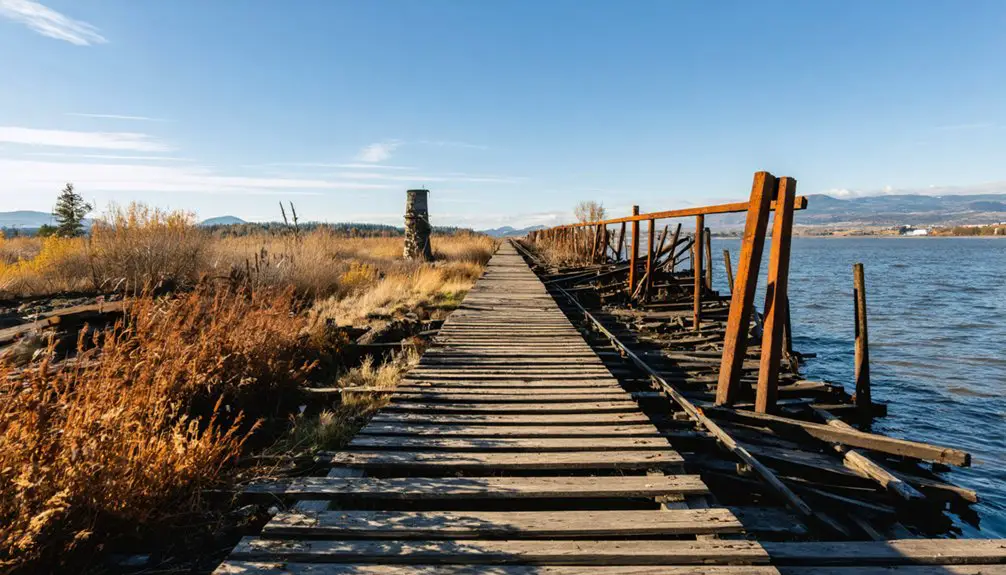
Planning a road trip to Wellington, Washington means stepping into one of America’s most haunting historical sites. It’s roughly a two-hour drive from Seattle via U.S. Highway 2, passing through charming towns like Monroe and Skykomish. Once there, you’ll explore concrete snowsheds, crumbling ruins, and the very slopes where a catastrophic 1910 avalanche buried two trains and killed 96 people. Visit between July and October for the best trail conditions, and keep exploring to uncover everything this ghost town has to offer.
Key Takeaways
- Wellington, site of the 1910 deadliest U.S. avalanche killing 96 people, is a historically significant ghost town near Stevens Pass, Washington.
- Located two hours from Seattle via U.S. Highway 2, Wellington is accessible following signs near Stevens Pass to the Iron Goat Trail.
- The Wellington trailhead offers a manageable two-mile round trip with under 50 feet of elevation gain, suitable for all fitness levels.
- Visit between July and October when trails are snow-free; pack sturdy boots, layered clothing, and a flashlight for tunnel exploration.
- Highlights include concrete snowsheds, overgrown foundations, haunting landscapes, and optional dining in nearby Skykomish on your return trip.
The Ghost Town at the Heart of America’s Deadliest Avalanche
Tucked into the Cascade Mountains near Stevens Pass, the ghost town of Wellington holds a dark place in American history—it was the site of the deadliest avalanche the country has ever seen.
On March 1, 1910, a massive wall of snow, a quarter mile wide, swept two stranded trains 150 feet into the Tye River valley, killing 96 people. The avalanche aftermath was so devastating that the town was renamed Tye in a failed attempt to escape its grim reputation.
Today, through dedicated historical preservation efforts, you can walk the same ground where this tragedy unfolded. Interpretive signs, crumbling foundations, and surviving railway structures tell the story that time hasn’t erased.
The 1910 Wellington Avalanche That Buried Two Trains
When you stand at Wellington, you’re standing at the site of the deadliest avalanche in U.S. history.
On March 1, 1910, after nine days of relentless blizzard, a quarter-mile-wide wall of snow roared down the mountainside and swept two trains—a passenger train and a mail train—150 feet into the Tye River valley below.
The avalanche buried both trains under 40 feet of snow, killing 96 people in total, including 61 railroad employees and 35 passengers.
Deadliest U.S. Avalanche
On March 1, 1910, the deadliest avalanche in U.S. history roared down the slopes above Wellington, burying two trains and killing 96 people in a matter of seconds.
After nine brutal days of snowfall, a massive quarter-mile-wide wall of snow swept a passenger train and mail train 150 feet into the Tye River valley, entombing them under 40 feet of snow.
The historical significance of this tragedy reshaped how railroads approached avalanche safety, ultimately driving the construction of a new tunnel to protect future travelers.
Sixty-one railroad employees and 35 passengers lost their lives; only 23 survived.
Standing at this site today, you’ll feel the weight of that catastrophic moment — a stark reminder of nature’s unchecked power.
Two Trains Buried
After nine relentless days of blizzard conditions, a quarter-mile-wide wall of snow broke loose from Windy Mountain and buried two trains — a passenger express and a mail train — under 40 feet of snow, killing 96 people in seconds.
Picture the avalanche aftermath through three devastating details:
- Two fully loaded trains vanished beneath a crushing white wall in moments.
- Rescuers fought through brutal conditions during train rescue efforts, digging frantically through 40 feet of compacted snow.
- Survivors emerged broken, buried alive alongside 96 souls who never escaped.
The Tye River valley below absorbed the full violent force of that slide.
Walking the Iron Goat Trail today, you’ll stand directly above where those trains disappeared — a sobering reminder of nature’s unchecked power.
How to Get to Wellington From Seattle
Getting to Wellington from Seattle is straightforward, and the roughly two-hour drive is scenic in its own right. Head east on U.S. Highway 2 from Seattle, passing through charming small towns like Monroe and Skykomish along the way.
These Seattle Routes offer several scenic stops worth exploring before you reach your destination.
About 10 miles east of Skykomish, watch for signs near Stevens Pass directing you toward the Iron Goat Trail. Follow those signs to the Wellington trailhead parking lot, your launching point for exploring the site.
The highway itself winds through dense forest and dramatic mountain terrain, so you’ll feel the journey building anticipation long before you arrive.
Bring layers — elevation and unpredictable mountain weather can shift quickly, especially near the pass.
Where to Park and Which Trailhead to Use
Once you arrive via U.S. Highway 2, follow the signs for the Wellington trailhead, where you’ll find a small parking area that puts you closest to the avalanche site and historical ruins.
From here, you’ve got two directions to explore: head east for the old tunnel entrance and building foundations, or head west for the concrete snowsheds and the slope where the 1910 disaster struck.
If you’re planning to tackle the full 6-mile Iron Goat Trail, you can also start from the Martin Creek or Scenic trailheads, but Wellington is your best bet for a focused 2-hour visit.
Wellington Trailhead Parking Details
There are three trailheads along the Iron Goat Trail—Martin Creek, Scenic, and Wellington—but the Wellington trailhead is your best starting point for exploring the ghost town site directly.
Wellington parking sits just off U.S. Highway 2 near Stevens Pass, roughly two hours from Seattle. Follow the Iron Goat Trail signs once you exit the highway. From the lot, you’ll have immediate trail access to the most historically significant areas.
Picture yourself stepping out and choosing your direction:
- Head east toward the original Cascade Tunnel entrance and building foundations
- Walk west toward the massive concrete snowsheds and avalanche site
- Explore both directions for the full experience within a comfortable two-mile round trip
The elevation gain stays under 50 feet, keeping the route open to everyone.
Choosing Your Starting Point
Knowing where to park shapes your entire visit, so it’s worth matching your trailhead to your goals before you leave home.
Three starting point options exist: Wellington, Martin Creek, and Scenic. Wellington suits most visitors — it’s closest to the avalanche site and tunnel entrance, offering an easy two-mile round trip with minimal elevation gain.
If you’re hiking the full six-mile Iron Goat Trail, coordinate your travel logistics by leaving a vehicle at both Wellington and Scenic, letting you walk the entire route one way.
Martin Creek works well as a middle-ground entry point. All trailheads connect off U.S. Highway 2 near Stevens Pass, roughly two hours from Seattle.
Check WTA.org for current conditions before committing to your chosen trailhead.
Snowsheds, Tunnels, and Ruins Along the Iron Goat Trail
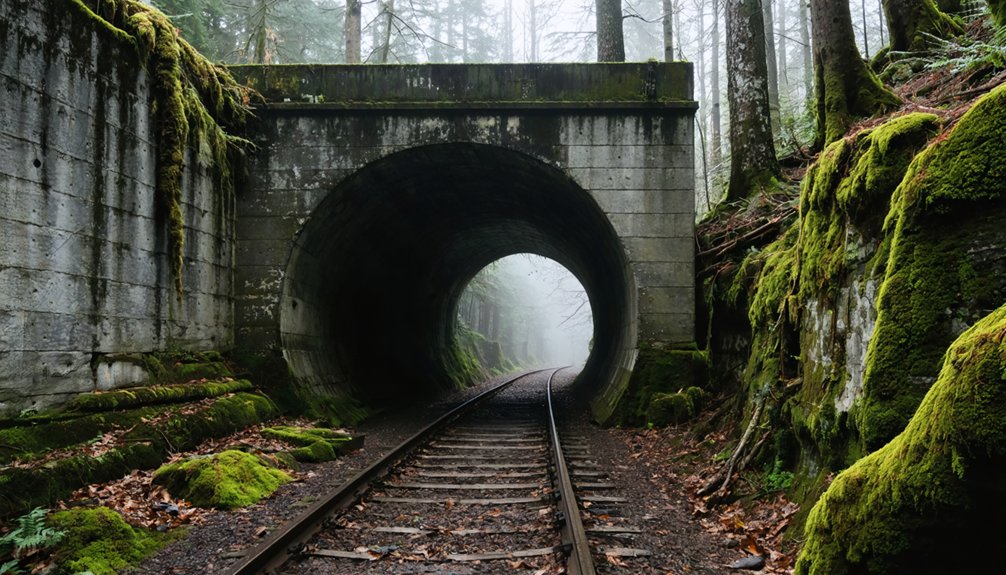
Walking the Iron Goat Trail feels like stepping into a forgotten chapter of Pacific Northwest history, where concrete snowsheds, darkened tunnel mouths, and moss-covered foundations tell the story of a railroad town swallowed by time.
Walking the Iron Goat Trail means stepping into Pacific Northwest history, where ruins speak louder than words.
Snowshed exploration and tunnel history reward curious travelers who embrace railway heritage with open eyes.
Three unforgettable stops define your hike:
- The half-mile concrete snowshed — a cathedral-like structure once shielding two sets of tracks from crushing avalanche debris
- The original Cascade Tunnel entrance — a darkened portal where ghost town stories echo through cold mountain air
- Building foundations and the depot site — silent footprints of lives once lived here
Interpretive signage guides your path while reinforcing avalanche awareness and historical preservation.
Hiking safety matters — check conditions before heading out.
How Long Does a Wellington Day Trip Take From Seattle?
How long does a Wellington ghost town day trip realistically take from Seattle? Plan on roughly six to eight hours total.
The drive along U.S. Highway 2 takes about two hours each way, offering scenic routes through the Cascades that rival many Seattle attractions on their own.
At Wellington, you’ll want two to four hours for outdoor activities, nature walks through the Iron Goat Trail, and exploring historical sites like the snowsheds and tunnel ruins.
It’s genuinely family friendly, accessible for all ages without demanding fitness levels.
If you’re craving local cuisine, stop through the charming town of Skykomish on your return.
Leave Seattle early, pack a lunch, and you’ll experience one of Washington’s most hauntingly beautiful day trip destinations comfortably before dark.
Best Time to Visit Wellington and What to Pack
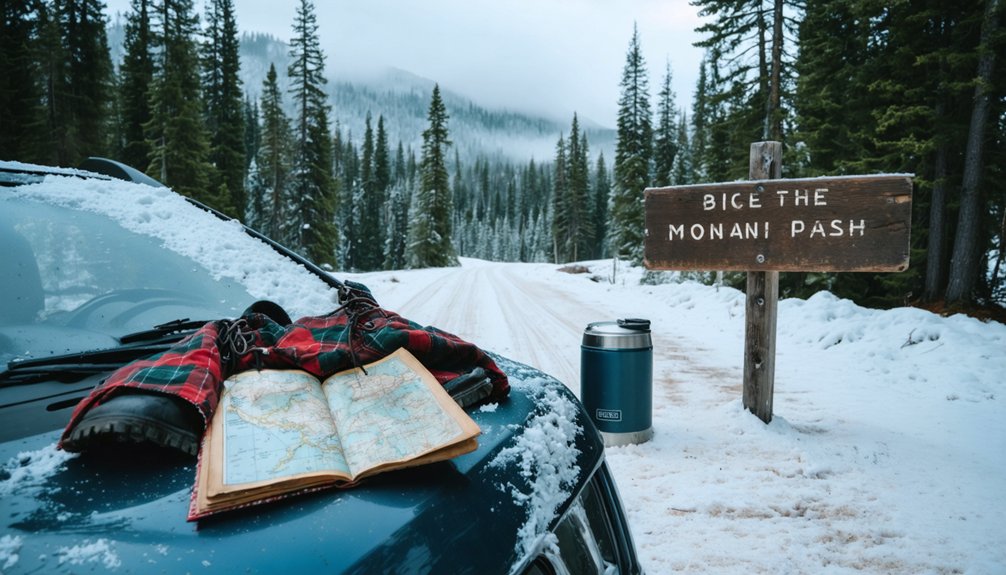
Summer and early fall are your best windows for visiting Wellington, typically July through October, when snow has cleared the trails and the surrounding Cascades show off their dramatic beauty.
This best season rewards you with dry paths through snowsheds, visible foundations, and crisp mountain air.
Pack this essential gear before heading out:
- Sturdy hiking boots — you’ll navigate uneven terrain through concrete snowsheds and overgrown foundations
- Layered clothing — mountain temperatures shift quickly, dropping sharply even on sunny afternoons
- Headlamp or flashlight — tunnel interiors stay pitch dark regardless of outside conditions
Avoid spring visits; lingering snowpack makes trails inaccessible and genuinely hazardous.
Winter closes the area entirely. Arrive prepared, and Wellington’s haunting landscape will deliver an unforgettable experience.
Frequently Asked Questions
Was Anyone Ever Held Legally Responsible for the Wellington Avalanche Deaths?
No one faced legal consequences for the Wellington avalanche deaths. You’ll find the legal implications were avoided, as courts ruled it an act of nature, highlighting early avalanche safety standards weren’t yet legally enforceable.
Can You Enter the Original Cascade Tunnel During Your Visit?
You can walk to the west entrance of the original Cascade Tunnel, exploring its rich Cascade tunnel history firsthand. However, tunnel safety concerns mean you shouldn’t venture deep inside—stay near the entrance and soak it all in!
Are Pets Allowed on the Iron Goat Trail at Wellington?
While the knowledge base doesn’t explicitly confirm pet friendly policies, don’t leave your dog behind — Iron Goat Trail’s open spirit welcomes exploration. Just practice proper hiking etiquette: keep pets leashed and respect fellow adventurers sharing this historic path.
Is the Wellington Site Accessible for Visitors With Mobility Limitations?
You’ll find Wellington’s easy 2-mile round trip trail welcoming for mobility aids, with less than 50 feet of elevation gain. The accessibility features include relatively flat terrain, letting you explore snowsheds and historical foundations freely.
Are There Any Nearby Restaurants or Restrooms Close to Wellington?
Don’t let remote locations deter you—though Wellington lacks local eateries and restroom facilities on-site, you’ll find both about 10 miles west in Skykomish before hitting the trail. Plan ahead and you’re set!
References
- https://www.justfrances.com/ghosts-of-wellington-washington/
- https://www.ghosttownsofwashington.com/portfolio-collections/mines-king-county-wa/wellington
- https://en.wikipedia.org/wiki/Wellington
- https://hike2hike.com/trail-run/wellington-ghost-town/
- https://www.youtube.com/watch?v=YgmK9WpEKk8
- https://www.wta.org/go-hiking/hikes/wellington-ghost-town
- https://www.youtube.com/watch?v=xXAPa8L0pj8
- https://steemit.com/adventure/@lilyraabe/an-afternoon-jaunt-to-wellington-ghost-town-or-photo-album
- https://www.youtube.com/watch?v=33KlgdJ0Iv8
- https://kids.kiddle.co/Wellington