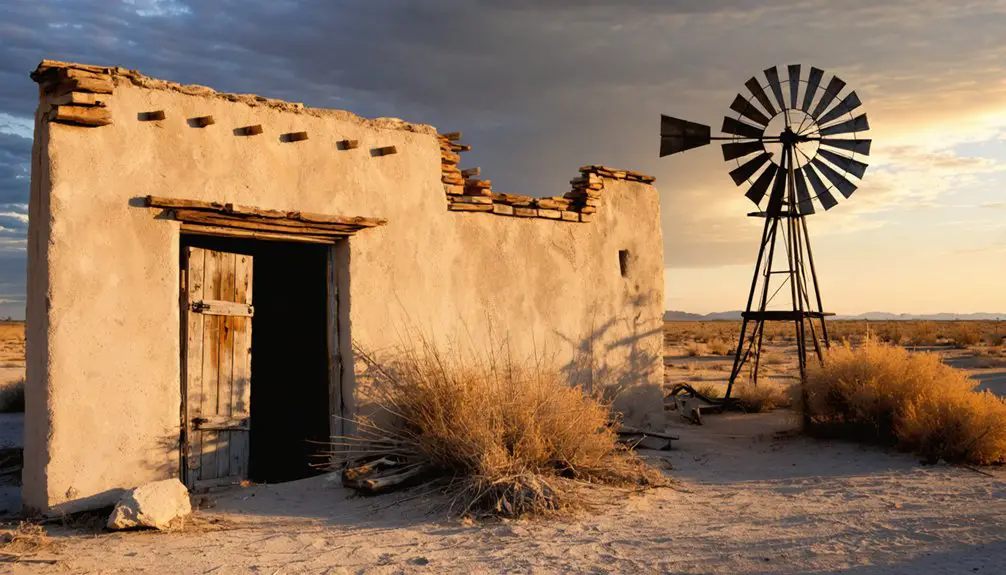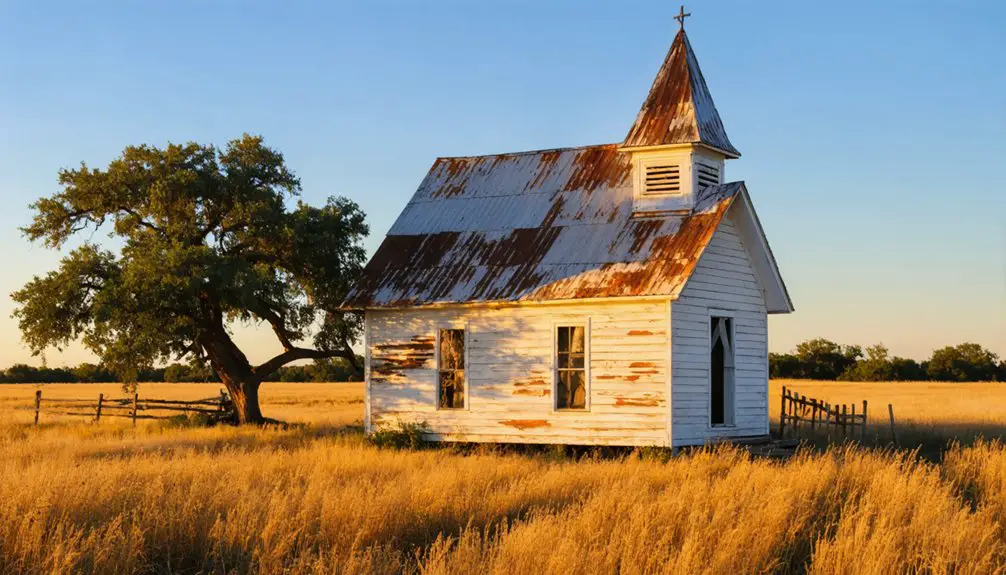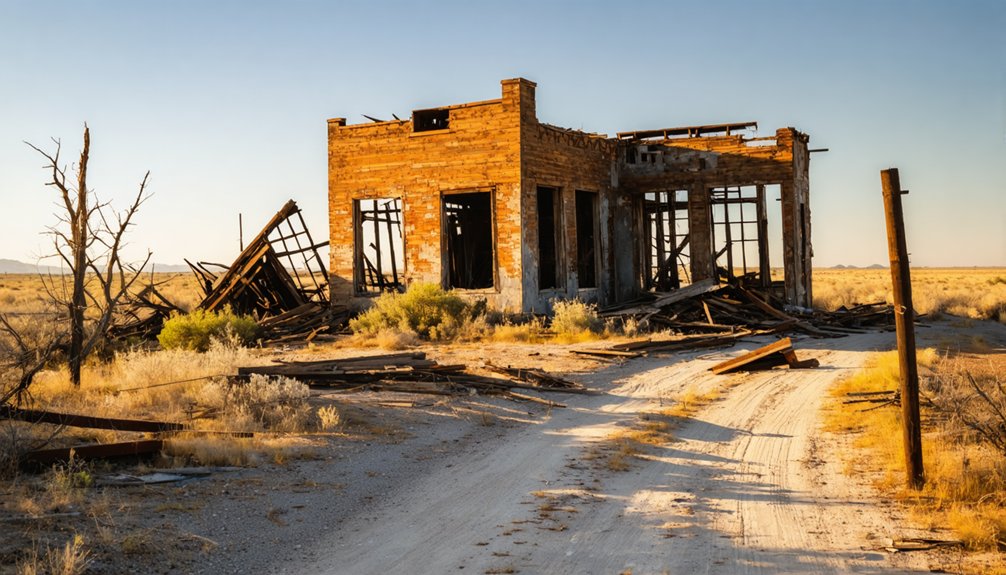
Planning a ghost town road trip to Dye Mound, Texas means heading into the quiet heart of Montague County, where a once-thriving 1850s cotton town slowly faded into near-abandonment by the mid-20th century. You’ll find the historic cemetery along FM 677, a preserved 1890 church, and scattered artifacts telling forgotten stories. Spring and fall offer the best visiting conditions. There’s more to this peculiar Texas community than first meets the eye.
Key Takeaways
- Dye Mound is located in Montague County, Texas, forming a triangle between Saint Jo, Forestburg, and Montague, accessible via standard 2-wheel drive roads.
- The Dye Mound Cemetery, established in 1859, remains open year-round and serves as the primary navigational landmark along FM 677.
- A preserved 1890 church building is visible on-site but closed to the public, along with scattered historical artifacts like old wood stove fragments.
- Spring and fall offer the best visiting conditions, with mild temperatures, wildflowers, and scenic golden light enhancing the ghost town atmosphere.
- Despite a recorded 2000 census population of 2,000, limited standing structures and a commemorative school plaque contribute to Dye Mound’s deserted appearance.
What Is Dye Mound, Texas?
Tucked into the heart of Montague County, Texas, Dye Mound sits at the center of a triangle formed by Saint Jo, Forestburg, and Montague — a once-thriving cotton town that’s now little more than a whisper of its former self.
Dye Mound history stretches back to the late 1850s, when a trapper founded a trading post at the foot of nearby hills. Originally called Dye, Texas, the settlement grew through the 1880s, establishing a post office, school, and church.
Dye Mound significance lies in its quiet resilience — a community that peaked as a cotton economy hub before fading into ghost town territory by 1956.
Today, a handful of structures remain standing, and the open cemetery keeps its story alive for curious road trippers like you.
How to Get to Dye Mound
You’ll find Dye Mound tucked away in Montague County, Texas, sitting at the center of a triangle formed by the towns of Saint Jo, Forestburg, and Montague.
The cemetery, one of the site’s most accessible landmarks, sits along FM 677, making it a reliable navigational anchor as you plan your route.
Fortunately, the roads leading into the area are 2-wheel drive accessible, so you won’t need a specialized vehicle to make the trip.
Dye Mound’s Geographic Location
Dye Mound sits in the heart of Montague County, Texas, positioned at the center of a triangle formed by the towns of Saint Jo, Forestburg, and Montague.
Pull up historical maps before you head out, and you’ll notice how this remote settlement blends into the rolling topographical features of North Texas.
The good news is you won’t need a four-wheel drive or special equipment — standard 2-wheel drive roads give you access to the area without hassle.
Summer brings intense heat, so pack accordingly if you’re planning a warm-weather visit.
The cemetery, your primary destination, sits along FM 677 and remains open year-round.
Navigate confidently, embrace the open road, and let the landscape guide you straight into this forgotten corner of Texas history.
Getting to Dye Mound takes just a few straightforward turns once you’ve pinpointed its location in central Montague County. Nestled in the triangle between Saint Jo, Forestburg, and Montague, this forgotten settlement sits within easy reach of anyone willing to explore its quiet corners.
The good news is that local roadways leading to Dye Mound don’t require a high-clearance vehicle or four-wheel drive. Your standard car handles the access routes comfortably, making this ghost town road trip accessible to virtually everyone.
The Dye Mound Cemetery sits directly along FM 677, giving you a reliable landmark to navigate toward.
Pull up a map, identify those three surrounding towns, and plot your course. You’ll find the roads manageable and the journey pleasantly uncomplicated.
Nearby Landmark Reference Points
Three small towns serve as your compass points for reaching Dye Mound: Saint Jo to the north, Forestburg to the east, and Montague to the south.
These nearby attractions anchor your journey through landmarks history, giving you freedom to explore this forgotten corner of Montague County.
Use these reference points to orient yourself before heading out:
- Saint Jo — A charming northern anchor with its own rich Texas heritage worth exploring.
- Forestburg — Your eastern marker, sitting quietly amid rolling Hill Country terrain.
- Montague — The southern touchstone, home to the county seat and deeper historical context.
Position yourself within this triangle, and Dye Mound reveals itself along FM 677.
You’re not just traversing roads — you’re tracing pathways through Texas history.
From Cotton Town to Ghost Town: Dye Mound’s Rise and Fall
When you stand in what’s left of Dye Mound today, it’s hard to imagine the town once hummed with the energy of a thriving cotton economy.
During its peak years, cotton drove the community’s growth, sustaining local businesses, families, and institutions.
But by the 1920s, that prosperity started unraveling, setting Dye Mound on a slow, steady path toward the ghost town you’re exploring now.
Cotton Town Peak Years
During its peak years, Dye Mound thrived as a cotton town, with the crop driving nearly every aspect of life in this small Montague County settlement. Cotton production shaped the community’s identity, giving residents purpose, income, and connection.
Its economic significance touched every family, every harvest season, every handshake deal made under an open Texas sky.
Picture what daily life looked like during those prosperous times:
- Farmers hauled wagons overflowing with white bolls toward the trading post.
- Neighbors gathered to celebrate successful harvests, strengthening community bonds.
- Local businesses flourished, funded by cotton profits flowing freely through town.
You can almost feel the energy that once pulsed through these now-quiet roads — a reminder that freedom and hard work once built something remarkable here.
Economic Decline Begins
By the 1920s, Dye Mound’s cotton-fueled prosperity had begun to unravel. Economic shifts across the South hit small cotton towns hard, and Dye Mound couldn’t escape the fallout. As cotton production became less profitable and markets tightened, the community’s financial foundation crumbled.
Residents who’d built their lives around the crop faced impossible choices — stay and struggle or leave for better opportunities elsewhere.
You can still feel that slow fade when you visit today. The school that once served local families closed its doors in 1946, and the post office had already gone silent decades earlier.
What You Can Actually See at Dye Mound Today?
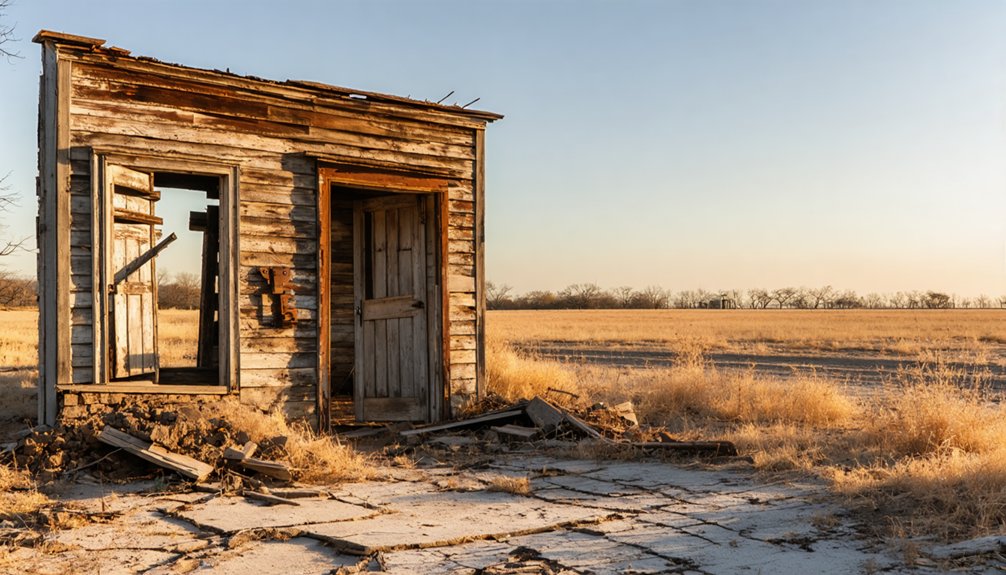
Though Dye Mound has faded into near-obscurity, you’ll still find a handful of tangible remnants worth exploring. Cemetery exploration along FM 677 connects you directly to the town’s earliest settlers, while scattered historical artifacts tell stories no textbook captures.
Dye Mound may be forgotten by history, but its cemetery and scattered artifacts refuse to stay silent.
Here’s what awaits you:
- Dye Mound Cemetery – Open year-round, this 3-acre burial ground purchased in 1859 remains your most accessible window into the past.
- The preserved church building – Still standing since 1890, it’s visible but closed, making it a hauntingly beautiful sight from the road.
- Old wood stove fragments and petrified wood – These physical remnants scattered across properties remind you that real people once built lives here.
Roam freely and let the silence do the storytelling.
Dye Mound Cemetery on FM 677: What to Expect
When you turn onto FM 677, the Dye Mound Cemetery announces itself quietly — no grand entrance, no signage fanfare, just a modest 3-acre plot that’s been holding the town’s history since 1859.
Originally established on land purchased from S.T. Boswell, it predates the town’s formal settlement by decades, giving it a historical significance that outlasted everything else Dye Mound ever built.
You’ll find the grounds open year-round with no access restrictions — a rare freedom among historical sites. The trees provide genuine shade and visual character worth pausing to appreciate.
Practice standard cemetery etiquette: walk thoughtfully, photograph respectfully, and leave everything as you found it.
This place isn’t maintained for tourism — it’s still actively serving the surrounding community, which makes your presence a privilege, not a right.
Best Time to Visit Dye Mound
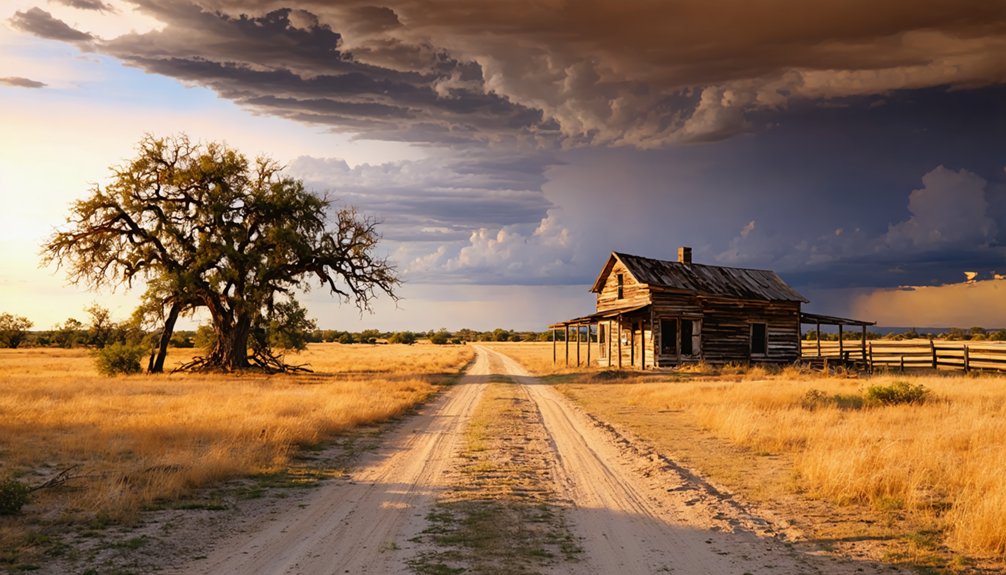
Dye Mound welcomes visitors year-round, but timing your trip thoughtfully makes a meaningful difference.
Seasonal insights help you experience this forgotten place authentically rather than uncomfortably.
Consider these best visiting windows:
Consider these best visiting windows — each season offers something distinct, something worth experiencing on its own quiet terms.
- Spring — Mild temperatures and blooming wildflowers soften the cemetery’s quiet solemnity, making reflective walks genuinely peaceful.
- Fall — Cooler air and golden light filtering through the notable trees creates an atmosphere that feels almost cinematic and deeply moving.
- Winter — Sparse crowds and stark landscapes strip Dye Mound down to its rawest, most honest form.
Avoid summer if possible. The Texas heat hits hard here, and exposed roads offer little shade.
Whatever season you choose, you’ll find the cemetery open, the history waiting, and the freedom to explore entirely yours.
Is Dye Mound Actually a Ghost Town?
Whether Dye Mound truly qualifies as a ghost town depends on who you ask.
Despite its abandoned appearance and fascinating settlement history dating back to the 1850s, neither the Texas Almanac nor the Handbook of Texas officially supports a ghost town classification for Dye Mound. In fact, the year 2000 census recorded a population of 2,000 residents, which complicates the label further.
Wikipedia’s List of Ghost Towns in Texas acknowledges this ambiguity directly.
Yet you’ll find few standing structures, a closed church, and a school reduced to a commemorative plaque. The community feels undeniably deserted.
Frequently Asked Questions
Who Founded Dye Mound and What Was Their Occupation?
A trapper founded Dye Mound, and you’ll find their founders’ occupation fascinating — they operated a trading post at the foot of the hills in the late 1850s, shaping this now-mysterious Texas ghost town.
Where Did Dye Mound Residents Receive Mail After 1905?
After 1905, you’d have collected your mail through historical routes leading to Mallard, Texas. This shift in mail delivery marked another chapter in Dye Mound’s slow fade, giving you a glimpse into its evolving, untethered past.
Who Sold the Land for Dye Mound Cemetery in 1859?
S.T. Boswell sold the land for Dye Mound Cemetery in 1859! You’ll appreciate the historical significance of this 3-acre plot, where Boswell’s land ownership helped establish a lasting piece of Texas’s fascinating frontier heritage.
How Many Acres Make up the Dye Mound Cemetery Property?
“Good things come in small packages!” You’ll find Dye Mound Cemetery’s cemetery history spans just 3 acres, yet it’s packed with ghost town legends that’ll make your adventurous spirit roam freely through time.
What Towns Form the Geographic Triangle Surrounding Dye Mound?
You’ll find Dye Mound nestled within a triangle formed by Saint Jo, Forestburg, and Montague — three towns steeped in historic landmarks and local legends just waiting for you to explore their fascinating stories.
References
- https://www.ghosttowns.com/states/tx/dyemound.html
- https://en.wikipedia.org/wiki/List_of_ghost_towns_in_Texas
- https://www.therainwatercollection.com/reference/1561.pdf
- https://www.youtube.com/watch?v=NdZOFY-u2AQ
- https://www.texasescapes.com/CentralTexasTownsNorth/Dye-Texas.htm
- https://thewanderingrver.com/tag/ghost-towns/