To plan your ghost town road trip to Wilson, Michigan, head 18 miles west of Escanaba along US-2, about a 25-minute drive through the Upper Peninsula’s rugged landscape. You’ll discover crumbling ruins, including an eerily preserved 1902 saloon, scattered house foundations, and rusted mining equipment. Visit during late spring through early fall for the best conditions. Pack sturdy boots, bring a paper map, and use a high-clearance vehicle. There’s much more to uncover ahead.
Key Takeaways
- Wilson, Michigan, is located 18 miles west of Escanaba, approximately a 25-minute drive along US-2 through the Upper Peninsula.
- The most intact structure is the 1902 Saloon, built by Menominee Brewing Co., evoking frontier-era atmosphere similar to Dodge City.
- Best visiting seasons are late spring, summer, and early fall; avoid winter due to heavy snowfall and impassable roads.
- Use a high-clearance vehicle, bring a paper map, wear sturdy boots, and explore only during daylight hours for safety.
- Extend your trip by visiting Escanaba’s Little Bay de Noc, Ludington Park, and Hereford & Hops Restaurant nearby.
What Makes Wilson, Michigan a True Ghost Town?
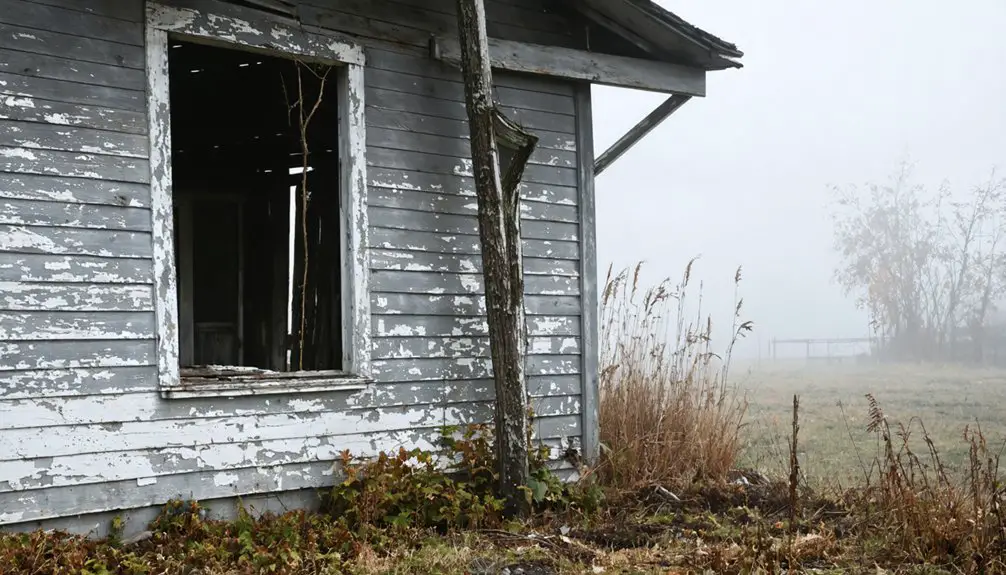
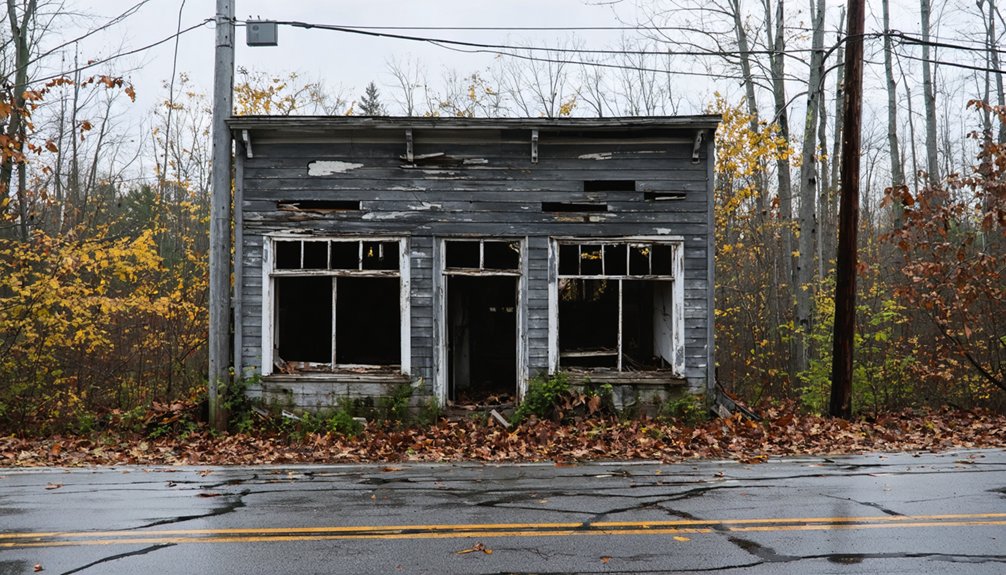
Once a thriving railroad and mining settlement, Wilson, Michigan now stands as a textbook ghost town — uninhabited, roofless, and slowly reclaimed by time. You’ll find scattered foundations, crumbling ruins, and rusted mining equipment that paint a vivid picture of a community that once housed nearly 1,000 residents during its copper boom peak.
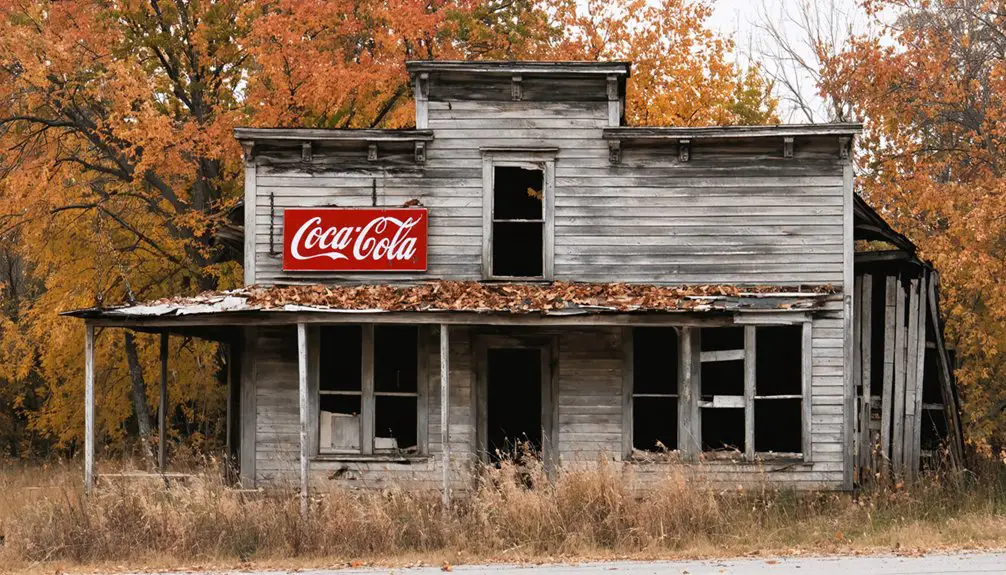
What earns Wilson its true ghost town status isn’t just the absence of people — it’s the raw, unfiltered remnants left behind. The 1902 saloon still dominates the landscape, serving as a critical landmark for historical preservation efforts in the region.
As you explore, tourist safety remains a priority; abandoned mining sites carry real hazards. Respect the ruins, stay aware of your surroundings, and you’ll experience Michigan’s forgotten past on your own terms.
How Do You Get to Wilson From Escanaba?
Nestled just 18 miles west of Escanaba, Wilson is a straightforward drive that’ll take you roughly 25 minutes along US-2 heading west through Menominee County’s Upper Peninsula landscape. Once you’re near Harris Township, watch for local markers guiding you toward the site.
For tourist safety and historical preservation, keep these essentials in mind before arriving:
- Verify property boundaries — some ruins sit on private land requiring prior authorization
- Contact Michigan DNR if you’re uncertain about legal access points
- Pack sturdy footwear — uneven terrain around mining ruins demands careful footing
- Bring a paper map — cell service gets unreliable in remote Upper Peninsula areas
Self-guided exploration gives you total freedom to experience Wilson’s haunting beauty on your own terms.
What’s Still Standing in Wilson’s Ruins?
Once you arrive in Wilson, the 1902 Saloon immediately commands your attention — a remarkably intact structure built by the Menominee Brewing Co. that once served as the town’s social heartbeat.
You’ll also spot scattered house foundations half-swallowed by vegetation, giving you a tangible sense of where families once lived and thrived.
Rusty mining equipment ruins round out the scene, silently marking the copper-driven ambitions that built this community and ultimately couldn’t sustain it.
The 1902 Saloon
Though most of Wilson has crumbled into rubble and overgrown foundations, the 1902 Saloon still stands as the town’s most striking survivor. Built by the Menominee Brewing Co., this piece of historical architecture once served as the community’s beating social heart.
You’ll notice its uncanny resemblance to Dodge City’s Long Branch Saloon — a detail that sparks local legends and fuels your imagination.
Here’s what makes the saloon worth your stop:
- It’s the most intact structure remaining in Wilson
- Menominee Brewing Co. constructed it during the town’s copper boom era
- Its design mirrors the iconic Long Branch Saloon of the American West
- No supernatural legends exist, but its atmosphere speaks volumes
Walk around it, photograph it, and let the history sink in.
Mining Equipment Ruins
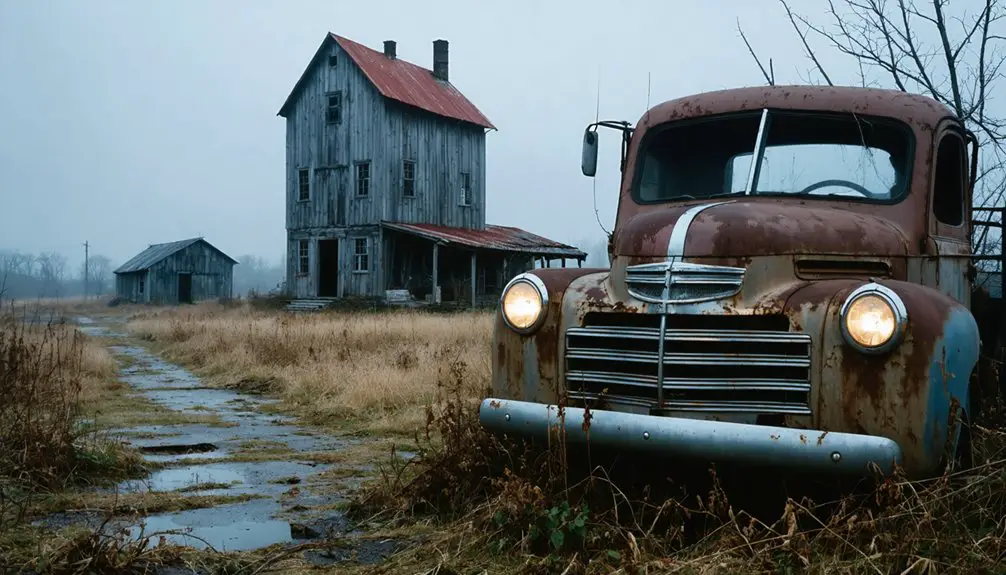
Beyond the saloon’s weathered walls, Wilson’s industrial past surfaces in a different form — scattered mining equipment ruins that dot the landscape like frozen relics of a copper rush long gone. These mining relics aren’t museum-polished or labeled; they’re raw, half-swallowed by earth and vegetation, exactly as time left them.
As you wander the site, you’ll encounter abandoned structures reduced to crumbling foundations and rusted machinery that once drove copper extraction across the region. It’s a tactile history lesson — no guided narration required.
You can move freely, read the land on your own terms, and piece together Wilson’s economic story yourself.
Just tread carefully. Unstable ground and deteriorating metal make caution essential. Respect what remains, and let these silent ruins speak.
Scattered House Foundations
Scattered across Wilson’s overgrown terrain, house foundations press up through the soil like quiet confessions of a town that once buzzed with over a thousand residents. These foundation sites don’t just mark where families lived — they map an entire vanished community.
You’ll notice how abandoned structures once clustered together, revealing neighborhood patterns beneath decades of wild growth.
Walk these grounds and let the stonework tell its story:
- Stone perimeters outline former living rooms, kitchens, and bedrooms
- Sunken earth patches indicate collapsed cellar floors beneath old homesteads
- Scattered debris fields of glass, metal, and brick sit undisturbed for decades
- Vegetation patterns — dense shrubs growing in rectangles — signal former foundation sites
Respect what remains. These aren’t just ruins; they’re unwritten history beneath your feet.
When Is the Best Time to Visit Wilson, Michigan?
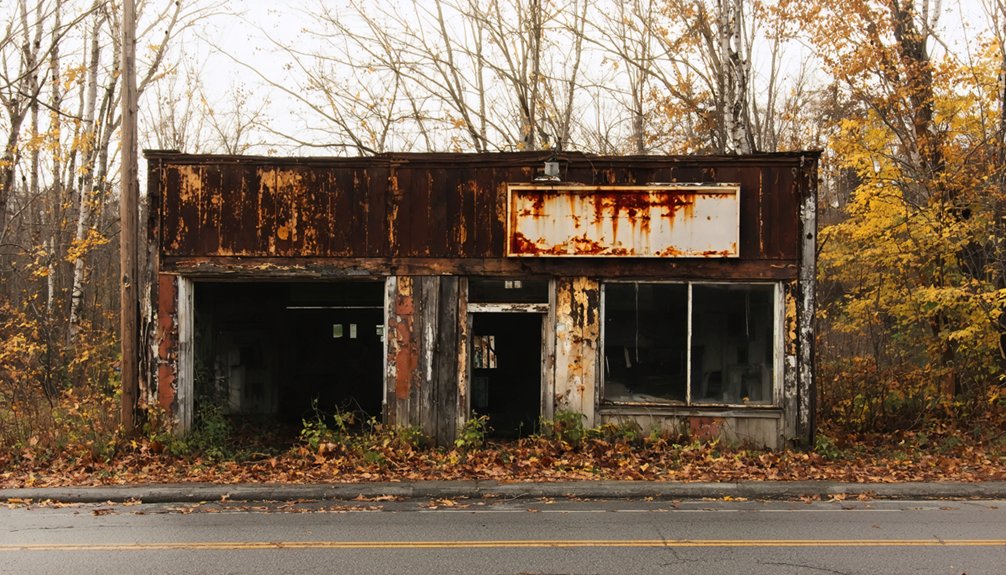
You’ll get the most out of your visit to Wilson if you plan your trip between late spring and early fall, when Michigan’s Upper Peninsula sheds its harsh winters and the roads become reliably passable.
Summer months offer the best visibility through the ruins, though you should expect occasional rain showers that can make unpaved trails slippery.
Avoid late autumn and winter entirely, as heavy snowfall can close rural roads and make traversing the scattered foundations genuinely dangerous.
Ideal Seasons for Visiting
While Wilson, Michigan sits in the Upper Peninsula, its best visiting seasons fall between late spring and early fall, when mild temperatures and longer daylight hours make outdoor exploration far more manageable. You’ll move freely through ruins, foundations, and overgrown trails without battling ice or deep snow.
- Late Spring (May–June): Fresh growth frames the ruins beautifully, and wildlife observation opportunities peak as animals emerge.
- Summer (July–August): Maximum daylight gives you the most exploration time across the scattered site.
- Early Fall (September–October): Stunning seasonal foliage transforms the ghost town into a dramatic, atmospheric landscape.
- Avoid Winter: Heavy Upper Peninsula snowfall buries foundations and makes site navigation genuinely dangerous.
Each season offers something distinct, but fall delivers the most visually rewarding experience for road trippers chasing authentic ghost town atmosphere.
Weather and Road Conditions
Michigan’s Upper Peninsula throws some of the harshest weather in the Midwest, so timing your visit to Wilson takes real planning. The local climate swings hard between extremes — brutal winters dump several feet of snow, making back roads nearly impassable from November through March.
Spring thaws create muddy, unpredictable trail conditions that can strand your vehicle.
Seasonal weather hits its sweet spot between late June and early September. Roads dry out, temperatures stay manageable, and daylight stretches long enough for thorough exploration. September offers cooler air and stunning fall color without the mud risk.
Always check Michigan road condition reports before heading out. Rural Menominee County roads receive minimal maintenance, so a high-clearance vehicle gives you a serious advantage when traversing Wilson’s remote terrain.
How Do You Explore Wilson Safely?
Exploring Wilson’s ruins is an adventure worth taking, but safety should always come first. You won’t find urban legends or folklore stories haunting these grounds, but you’ll encounter unstable structures, overgrown terrain, and abandoned mining hazards that demand your respect and attention.
Follow these essential safety guidelines before you go:
- Stay off private property — verify access permissions with Michigan DNR beforehand
- Wear sturdy boots and long pants — sharp debris and uneven foundations create real injury risks
- Never enter roofless or deteriorating buildings — structural collapse is a genuine danger
- Bring a map and charged phone — Wilson’s remote location means limited emergency access
Treat every crumbling wall and rusted artifact as irreplaceable history. You’re free to explore, but responsible exploration keeps this ghost town accessible for everyone.
Which Historic Sites Should You Prioritize in Wilson?
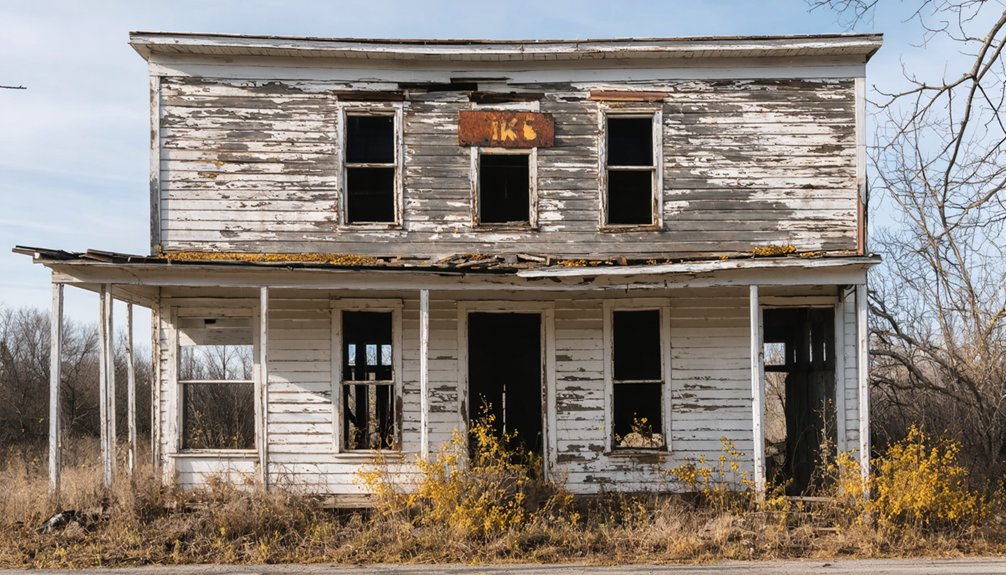
When you step into Wilson’s ghost town, one structure immediately commands your attention: the 1902 Saloon, built by the Menominee Brewing Co. and still the most prominent surviving landmark on the grounds. Its resemblance to Dodge City’s Long Branch Saloon makes it feel like you’ve wandered into living history.
Beyond the saloon, you’ll want to explore the scattered house foundations and ruined mining equipment that quietly echo Wilson’s copper boom era.
Crumbling foundations and rusted mining relics whisper of Wilson’s copper boom, scattered across the grounds like forgotten punctuation.
The 1881 school site, originally called Myra, is another worthwhile stop. While no local legends of supernatural activity surround these ruins, their raw authenticity is compelling enough.
Preservation efforts remain minimal here, so treat every structure with care. You’re not just a visitor — you’re a temporary steward of what little remains.
What’s Worth Seeing Near Wilson After Your Visit?
After wrapping up your Wilson exploration, you’ll find Escanaba just 18 miles east — and it’s well worth the short drive. This Upper Peninsula city delivers fresh local cuisine, waterfront views, and genuine Yooper character.
The nearby lakes also make a compelling case for extending your trip.
Here’s what deserves your attention:
- Little Bay de Noc – kayak, fish, or simply breathe in the open water views
- Ludington Park – a lakeside green space perfect for unwinding after hours of ruin-walking
- Hereford & Hops Restaurant – a local cuisine staple serving craft beer and hearty UP fare
- Flowing Well County Park – a quiet natural stop where nearby lakes and forest trails reward curious travelers
Frequently Asked Questions
What Was Wilson, Michigan Originally Called Before Being Renamed?
Dating back to 1872, you’ll find Wilson, Michigan was originally called Ferry Switch! This historical landmark’s name changed in 1881, and local legends say it’s tied to sawmill owner Frank D. Wilson’s growing influence.
Who Was Frank D. Wilson and Why Was the Town Named After Him?
You’ll find that Frank D. Wilson was a sawmill owner who shaped the town’s historical landmarks. They named it after him in 1881, honoring his industrial legacy — though no local legends surround his mysterious past.
Did Wilson, Michigan Ever Have Documented Ghost Sightings or Supernatural Legends?
You won’t find any documented ghost sightings or supernatural legends tied to Wilson, Michigan. Despite its haunting ruins and eerie silence, the town’s mysteries remain purely historical — waiting for you to uncover them firsthand.
What Railroad Company Originally Supported Wilson’s Early Economic Development?
Like iron rails cutting through wilderness, the Chicago & North Western Railway was Wilson’s economic lifeline. You’ll find this railroad company history shaped historic train routes that fueled the town’s early copper and sawmill-driven prosperity.
Which Brewing Company Built Wilson’s Iconic 1902 Saloon Structure?
You’ll find that Menominee Brewing Co. built Wilson’s iconic 1902 saloon, a masterpiece of historic architecture that reflects the town’s vibrant local brewing culture — it’s strikingly reminiscent of Dodge City’s legendary Long Branch Saloon.
References
- https://99wfmk.com/wilsonmichigan/
- https://en.wikipedia.org/wiki/List_of_ghost_towns_in_Michigan
- https://www.visitkeweenaw.com/blog/post/our-top-7-keweenaw-ghost-towns-to-explore/
- https://www.facebook.com/upperlimitsmedia/posts/the-ghost-town-of-wilson-michiganwilson-was-a-railroad-town-established-around-1/1187176844760510/
- https://www.hourdetroit.com/travel/the-spirit-of-place-u-p-ghost-towns/