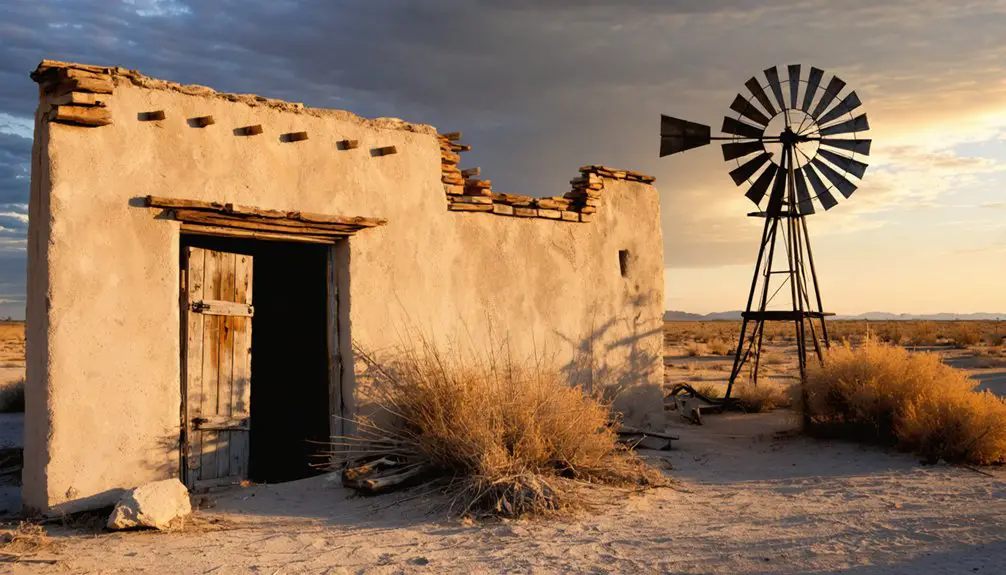
Longfellow, Texas is a ghost town in Pecos County that’s been nearly forgotten since the Southern Pacific Railroad abandoned it in the mid-1980s. You’ll find haunting ruins of the old depot, telegraph office, and water facilities scattered across a stark desert landscape. Use Sanderson as your base camp, pack at least a gallon of water per person, and fuel up before you leave. There’s much more to uncover before you hit the road.
Key Takeaways
- Use Sanderson, located sixteen miles east, as your base camp before exploring Longfellow and nearby ghost towns like Dryden and Maxon.
- Download offline maps and enable GPS before departing, as minimal signage makes navigation challenging along Highway 90.
- Pack at least one gallon of water per person and a basic first aid kit for this remote desert destination.
- Depart early morning to avoid peak heat, wear light clothing, and apply sunscreen throughout your visit.
- Explore remnants including the depot foundation, telegraph office ruins, water facility remains, and abandoned Southern Pacific railroad tracks.
What Is Longfellow, Texas?
Tucked away in extreme southern Pecos County, Longfellow, Texas is a ghost town that’s barely a whisper on the Texas map — a forgotten railroad stop sitting sixteen miles west of Sanderson along U.S. Highway 90. Railroad officials named it after poet Henry Wadsworth Longfellow when the Galveston, Harrisburg, and San Antonio Railway established it in 1881.
Longfellow history begins as a livestock shipping point, growing around a Southern Pacific depot, telegraph office, and water facilities that kept steam locomotives running across the arid Pecos County terrain.
Once diesel engines replaced steam, the town’s purpose evaporated. By the mid-1980s, it was functionally abandoned.
Its ghost town significance lies in what it represents — one of over 500 Texas ghost towns reminding you that progress doesn’t wait for anyone.
How Longfellow Went From Railroad Town to Ghost Town
Longfellow’s rise was built entirely on steam — and that was its undoing. Its railroad history follows a familiar town evolution: boom, utility, obsolescence, silence.
Four milestones sealed its fate:
- 1881 — Southern Pacific establishes a depot, telegraph office, and water facilities
- 1944 — Freight and telegraph operations permanently close
- 1954 — Locomotive water facilities shut down after diesel engines eliminate the need
- Mid-1980s — Population collapses; only ranch operations remain
Once diesel locomotives replaced steam engines, Longfellow lost its entire purpose.
No trains needed water stops. No water stops meant no workers. No workers meant no community.
Today, you’ll find crumbling railroad structures and open desert — a raw, honest reminder that freedom and isolation can look remarkably similar.
What’s Left to See at Longfellow Today
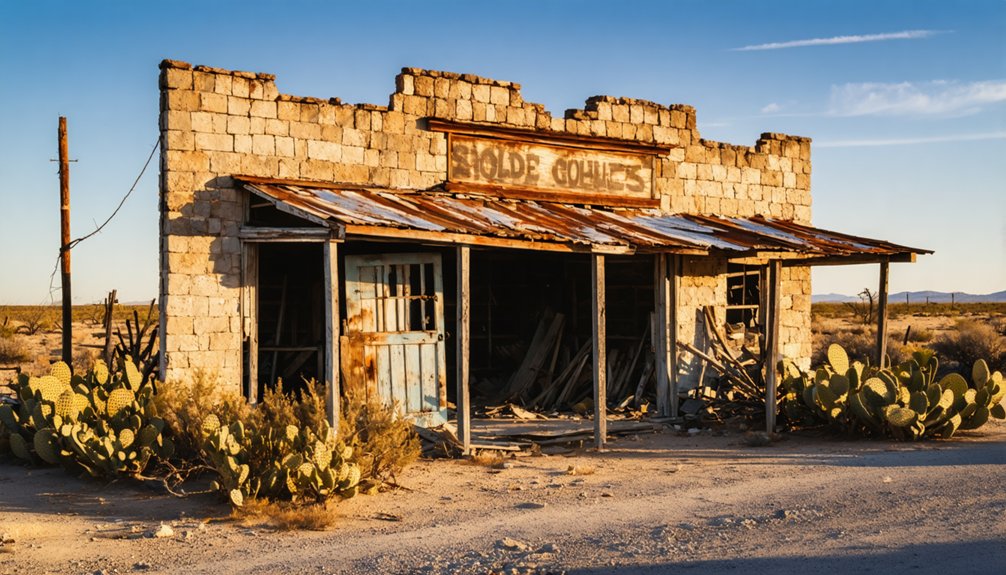
When you pull off U.S. Highway 90 at Longfellow today, you’ll find a hauntingly sparse landscape where railroad building ruins stand as the town’s most striking reminders of its past.
You can still spot the remnants of ranch headquarters that kept a small human presence alive long after the trains stopped running.
The wide, open views along Historic Highway 90 frame it all, giving you a sense of just how isolated this forgotten railroad stop truly was.
Abandoned Railroad Building Ruins
Though little remains of Longfellow’s once-busy railroad operations, what’s still standing tells a compelling story.
You’ll find scattered ruins that speak directly to the town’s railroad history and ghost town architecture.
Look for these key remnants:
- Depot foundation – Stone and concrete outlines mark where passengers and freight once moved through daily.
- Water facility ruins – Crumbling structures that supplied steam locomotives until 1954.
- Telegraph office remains – Evidence of the regional communications hub that closed in 1944.
- Southern Pacific track bed – The abandoned rail corridor still cuts visibly through the desert landscape.
Walk the grounds and you’ll feel the weight of a community that once connected an entire region.
Bring water, wear sturdy shoes, and let the ruins speak for themselves.
Ranch Headquarters Remnants
Beyond the railroad ruins, a second layer of Longfellow’s story quietly persists in the form of ranch headquarters remnants. Before the railroad ever arrived, Mexican ranchers worked this rugged desert terrain, establishing the ranch history that would define the region’s identity.
When the Galveston, Harrisburg, and San Antonio Railway rolled through in 1881, Longfellow became a critical livestock shipping hub, connecting isolated ranchers to distant markets. That economic relationship shaped every structure built here.
Today, you’ll find weathered remnants of those original ranch operations still standing against the desert landscape. They’re sparse, stripped down by time and neglect, but unmistakably present.
Walk the property and you’re tracing the footsteps of cattlemen who carved a living from one of Texas’s most unforgiving environments.
Historic Highway 90 Views
Pulling off U.S. Highway 90, you’ll immediately notice the raw, windswept beauty of this historic landscape stretching endlessly across Pecos County.
Ghost town photography enthusiasts will find compelling subjects everywhere they look. Here’s what greets you:
- Abandoned railroad structures — crumbling foundations and rusted remnants marking where the Southern Pacific depot once stood
- Desert terrain — sparse vegetation framing the skeletal ruins against vast Texas sky
- Highway 90 itself — a ribbon of asphalt connecting you visually to Sanderson, sixteen miles east
- Scattered ranch infrastructure — weathered buildings silhouetted against the horizon
You won’t find parking lots or visitor signs here. That’s exactly the point.
Longfellow rewards travelers who embrace unfiltered, unpolished history standing quietly beside a well-traveled road.
Ghost Towns Near Longfellow Worth Adding to Your Route

If you’re already making the trek out to Longfellow on U.S. Highway 90, you’d be smart to extend your route and hit a few other ghost towns scattered across this remote stretch of West Texas.
Sanderson, just sixteen miles east, serves as your best base camp for mapping out stops, since the surrounding Pecos County region holds several abandoned communities tied to the same railroad era that shaped Longfellow.
Plan your route carefully, carry extra fuel and water, and use GPS navigation, because out here, the roads are long and the ghost towns don’t advertise themselves.
Nearby Abandoned Texas Towns
Longfellow doesn’t stand alone in this stretch of desolate West Texas — the surrounding region is dotted with other ghost towns that make natural additions to your route.
Each site carries its own ghost town history, shaped largely by Texas railroads and the booms they created — then abandoned.
Consider adding these stops:
- Dryden — A faded railroad settlement southeast of Longfellow along Highway 90
- Maxon — A remote ranching community with scattered structural remnants
- Hovey — A small agricultural ghost town deep in Pecos County’s interior
- Bullis Gap — A rugged, isolated site reflecting early frontier settlement patterns
Together, these towns paint a broader picture of West Texas’s rise and collapse, giving your road trip genuine historical depth and purpose.
Route Planning Tips
Planning your route through this stretch of Highway 90 rewards you with more ghost towns than you might expect within a short drive of Longfellow. Sanderson, sixteen miles east, makes a practical base camp before you head west toward the abandoned railroad site.
Build your route highlights around early morning departures, since desert heat intensifies quickly and you’ll want clear light for photography among the ruins.
Pack extra water, fuel up in Sanderson, and download offline maps before leaving cell range behind. GPS navigation keeps you oriented where signage disappears entirely.
The scenic stops along Highway 90 deliver sweeping Chihuahuan Desert views between each destination, making the drive itself worthwhile. Give yourself a full day, move at your own pace, and let the open road decide your timeline.
How to Get to Longfellow From Sanderson
Getting to Longfellow from Sanderson takes just one simple step: head west on U.S. Highway 90 for sixteen miles. Road conditions are suitable for standard passenger vehicles, making this an easy drive through open Pecos County desert.
Follow these steps for a smooth arrival:
- Start in Sanderson and head west on U.S. Highway 90
- Drive sixteen miles through the arid Chihuahuan Desert landscape
- Enable GPS navigation before departing, as signage is minimal
- Watch for abandoned Southern Pacific Railroad tracks marking the site
You won’t find paved parking or visitor facilities when you arrive — just wide open desert, railroad ruins, and silence.
That raw, unfiltered freedom is exactly what makes Longfellow worth the short drive.
Water, Heat, and No Services: How to Prepare for the Drive

Because Longfellow offers absolutely nothing in the way of services, you’ll need to prepare before leaving Sanderson. The desert heat in Pecos County hits hard, and your water supply should reflect that reality. Pack more than you think you’ll need — at least one gallon per person for the short sixteen-mile drive and your time exploring the site.
Heat management matters just as much as hydration. Start your drive early in the morning to avoid peak afternoon temperatures, and keep a hat, sunscreen, and light clothing within reach.
Your vehicle’s fuel tank should be full before you leave Sanderson, since no gas stations exist along the route. A basic first aid kit and a charged phone round out your essential preparations for this remote desert stop.
Frequently Asked Questions
Is Photography Permitted at the Abandoned Railroad Structures in Longfellow?
While there’s no official ban, you’ll want to respect private property near the abandoned structures. Bring your camera and capture history’s beauty with these photography tips: shoot at golden hour for dramatic, engaging shots!
Are There Any Guided Ghost Town Tours Available Near Longfellow, Texas?
You won’t find guided tours at Longfellow, but nearby Sanderson’s locals can share ghost town history. You’re free to explore independently, uncovering abandoned railroad remnants and dusty desert landscapes on your own thrilling terms.
What Wildlife Might Visitors Encounter in the Desert Terrain Around Longfellow?
You’ll encounter fascinating desert fauna around Longfellow, including roadrunners, rattlesnakes, jackrabbits, and mule deer. It’s a paradise for wildlife photography, where the rugged, arid terrain lets you roam freely and capture nature’s untamed beauty.
Can Visitors Legally Access the Private Ranch Headquarters Still Standing Today?
You can’t freely access the ranch headquarters, as private property guidelines strictly protect it. Respect ranch access regulations by staying on public roads — you’ll still experience Longfellow’s haunting abandoned railroad ruins without trespassing.
What Is the Best Time of Year to Visit Longfellow?
With over 500 Texas ghost towns awaiting you, visit Longfellow in spring or fall for the best weather. You’ll dodge brutal summer heat, experience mild desert air, and though seasonal events are nonexistent, the solitude’s absolutely unmatched.
References
- https://www.texasescapes.com/TOWNS/Texas_ghost_towns/Longfellow_Texas/Longfellow_Texas.htm
- https://www.ghosttowns.com/states/tx/longfellow.html
- https://www.tshaonline.org/handbook/entries/longfellow-tx
- https://bostonghosts.com/longfellows-wayside-inn/
- https://en.wikipedia.org/wiki/List_of_ghost_towns_in_Texas
- https://academic.oup.com/whq/article-abstract/19/1/91/1918178
- https://www.longfellowwhatever.com/ghost-groceries-of-longfellow-2/
- https://www.tamupress.com/book/9781623499099/the-birth-of-a-texas-ghost-town/
- https://texashistory.unt.edu/ark:/67531/metapth61101/m1/167/
- https://texashistory.unt.edu/ark:/67531/metapth61101/m1/168/