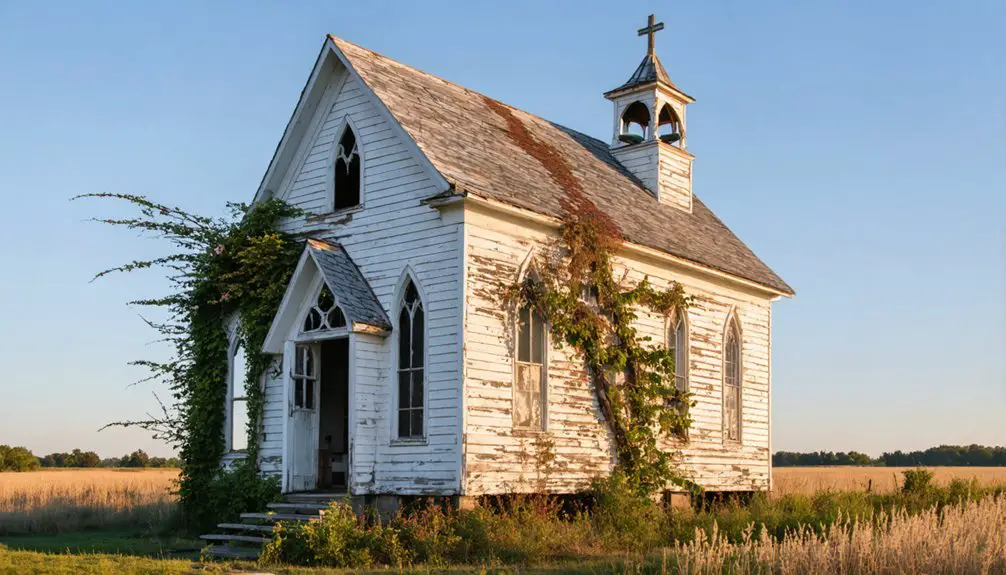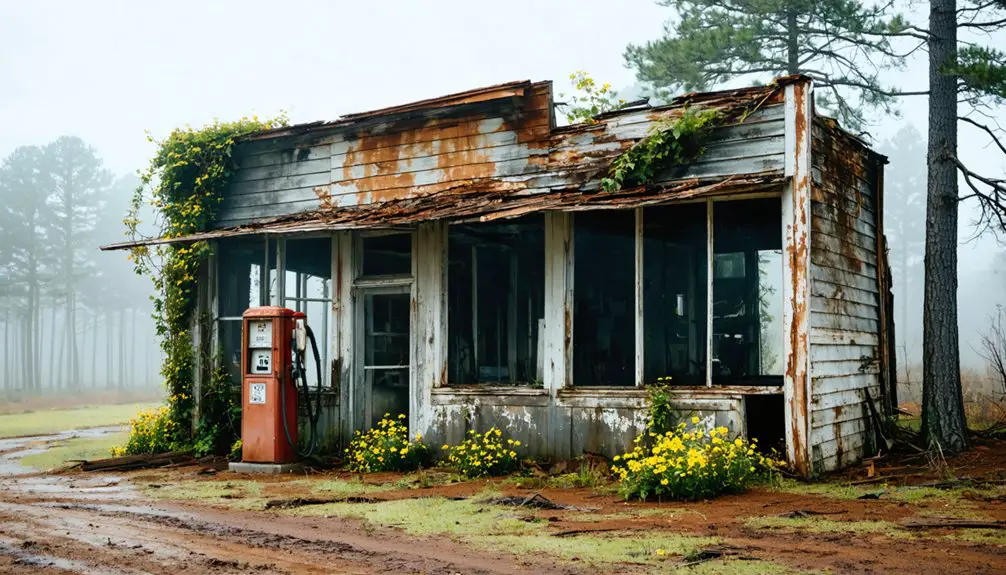
Planning a ghost town road trip to Westville, Mississippi starts in Mendenhall, the current Simpson County seat, before heading down Highway 49 into pine-forested back roads. You’ll want to visit in spring or fall for the best weather, bring offline maps since GPS can mislead you, and always check land access permissions before stepping onto private property. Westville’s forgotten courthouses, crumbling walls, and silent streets hold far more history than you’d expect — and there’s plenty more to uncover ahead.
Key Takeaways
- Start your road trip in Mendenhall, traveling along Highway 49, and use offline maps since GPS may not accurately locate ghost town sites.
- Visit during spring or fall for mild temperatures, avoiding summer humidity and winter’s unpredictable freezing conditions for the best exploration experience.
- Research property ownership through Simpson County land records beforehand, as Westville sits on private land requiring visitor permission to access.
- Explore nearby landmarks like the Simpson County Courthouse, Historic Mendenhall District, and pioneer cemeteries to enrich your understanding of the region’s history.
- Pack sturdy boots, water, a charged phone, and a physical map, as rural roads have unreliable cellular coverage and uneven terrain.
What Is Westville, Mississippi: and Why Does It Matter?

Westville, Mississippi isn’t just another dot on an old map — it’s a window into the early heartbeat of Simpson County. Founded in 1824, this once-thriving settlement served as the county seat, driving commerce, law, and community life for an entire region.
Understanding Westville’s significance means grasping how quickly a town can rise, anchor a county’s identity, then quietly fade when administrative power shifts elsewhere.
When the county seat relocated, Westville lost its pulse. Buildings emptied, roads grew silent, and the Simpson County legacy became something you’d only find in archived records and historical society collections.
But that’s exactly what makes it worth chasing. You’re not just visiting a ghost town — you’re standing inside a living lesson about ambition, loss, and the relentless passage of time.
How Westville Became Simpson County’s First Seat
Few towns in Mississippi came into the world with as much built-in purpose as Westville did. Founded in 1824, it wasn’t just another settlement scratched out of the wilderness — it was Simpson County’s first official seat of government.
That Westville origins story carries real weight. From day one, the courthouse anchored everything, drawing residents, commerce, and legal authority into one concentrated place.
County significance meant that Westville functioned as the administrative heart of the entire region, handling everything that made organized settlement possible.
You’re fundamentally looking at the DNA of Simpson County’s early identity when you look at Westville. Power, purpose, and infrastructure all converged here first.
That foundation made its eventual fall into ghost town status all the more striking.
The Courthouse Fires and the Slow Death of a County Town
That foundation, however, couldn’t survive fire — and Westville’s courthouse burned more than once. Each blaze reshaped the town’s courthouse architecture and stripped away records, authority, and momentum.
Fire impact like that doesn’t just destroy buildings; it dismantles a community’s identity.
Fire doesn’t just consume wood and stone — it erases the stories, trust, and shared memory a town is built on.
When the county seat eventually moved elsewhere, Westville lost its reason to exist. Residents followed opportunity, businesses shuttered, and the streets fell quiet.
What had been Simpson County’s administrative heart became a footnote.
Today, you’re driving through land that once buzzed with legal proceedings, commerce, and civic life. The silence feels heavy when you know the history.
Westville didn’t vanish overnight — it faded slowly, fire by fire, decision by decision, until almost nothing remained worth staying for.
What Still Stands in Westville Today
When you pull off the road and step into what’s left of Westville, you’re walking through the skeletal remains of a town that once ran Simpson County’s daily affairs.
A few crumbling structures still break the tree line, offering tangible proof that a real community once thrived here.
You’ll want to move carefully through the site, because what stands today tells a quieter, more fragile version of Westville’s story than any historical record can.
Remaining Physical Structures
Arriving in Westville today, you’ll find nature has largely reclaimed what was once a thriving county seat. The ghost town remnants scattered across this landscape tell a powerful story of rise and fall.
Explore these remaining structures as you wander through:
- Courthouse foundations – Stone and brick remnants mark where Simpson County’s administrative heart once stood.
- Crumbling walls – Weathered brick structures hint at former commercial and residential buildings.
- Cemetery grounds – Maintained burial sites preserve the memory of Westville’s earliest settlers.
- Overgrown pathways – Original roadbeds trace the town’s former street layout beneath encroaching vegetation.
Each element rewards the curious traveler willing to look closely.
Westville doesn’t announce itself loudly — it whispers its history through broken stone and reclaimed earth.
Notable Historical Landmarks
Beyond the scattered foundations and overgrown pathways, a handful of landmarks still hold their ground in Westville, quietly defying the decades of neglect that have swallowed so much of the town.
These historic structures whisper stories of a once-thriving county seat, where administrative life bustled and commerce moved through dirt streets.
The most compelling remnants tie directly to Westville’s courthouse legacy, the administrative heartbeat that originally justified the town’s existence.
You’ll notice how the abandoned infrastructure reveals deliberate 19th-century construction — buildings weren’t thrown together carelessly. They were built to last, even if their purpose eventually vanished.
Walking these grounds, you’re fundamentally stepping through Simpson County’s forgotten chapter.
Every crumbling wall and weathered timber represents a moment when Westville mattered deeply to the people who called it home.
How to Get to Westville, Mississippi

Getting to Westville, Mississippi is half the adventure. Nestled in Simpson County, this forgotten county seat carries deep historical significance along every back road leading to it. Pack your essentials, fuel up, and embrace the open highway.
Every mile toward Westville tells a story. Fuel up, embrace the backroads, and let Mississippi’s forgotten history guide you.
- Start in Mendenhall, Simpson County’s current seat, as your base for traversing rural Mississippi roads.
- Use GPS cautiously — ghost towns don’t always appear on modern maps, so download offline routes before departing.
- Travel Highway 49 through Simpson County, soaking in the pine-forested landscape that defined 19th-century Mississippi settlement.
- Plan your road trip during daylight hours — rural roads lack lighting, and you’ll want full visibility to appreciate the surrounding terrain.
Freedom waits around every curve of Mississippi’s forgotten backroads.
The Best Time of Year to Visit Westville
Spring and fall offer you the best conditions for exploring Westville, with mild temperatures making the outdoor wandering far more enjoyable than Mississippi’s brutal summer heat and humidity.
If you visit between March and May or September and November, you’ll dodge both the scorching summer months and the occasional winter cold snaps that can make open-air ghost town exploration uncomfortable.
Pack light layers in the changing seasons, as Mississippi mornings can run cool even when afternoons warm up considerably.
Ideal Visiting Seasons
When planning your ghost town adventure to Westville, Mississippi, timing can make all the difference between a memorable outing and a miserable one.
For the richest ghost town experiences and fullest appreciation of Westville’s historical significance, choose your season wisely:
- Spring (March–May): Mild temperatures and blooming landscapes make exploration comfortable and visually stunning.
- Fall (September–November): Cooler air and golden foliage create dramatic atmosphere perfect for photography and discovery.
- Winter (December–February): Sparse crowds offer solitude, though muddy terrain can challenge access.
- Summer (June–August): Mississippi heat and humidity turn exploration grueling — venture out only at dawn or dusk.
Spring and fall deliver the ultimate balance of comfort and atmosphere, letting you roam freely without battling extreme elements.
Weather Considerations for Visitors
Understanding Mississippi’s climate is essential before you pack your bags and head out to Westville. Weather patterns here can make or break your ghost town adventure.
Spring and fall deliver mild temperatures, perfect for exploring overgrown ruins and decaying structures without battling brutal heat or bone-chilling cold.
Summer’s seasonal impacts are intense — humidity soaks through your clothes while temperatures push past 90°F, turning an exciting exploration into an exhausting ordeal. Afternoon thunderstorms roll in fast, so you’ll want rain gear within arm’s reach.
Winter visits are manageable but unpredictable, with occasional freezing temperatures limiting outdoor comfort. You’re chasing freedom and discovery out here, so plan strategically.
Target October through November or March through April for the most rewarding, comfortable Westville experience.
How to Research Westville’s History Before You Go

Before you hit the road for Westville, dig into the Simpson County Historical & Genealogical Society’s archives, which hold some of the richest records on the town’s rise and fall.
Understanding Westville’s historical significance transforms ghost town tourism from a casual drive into a meaningful expedition.
Understanding Westville’s history doesn’t just enrich your visit — it completely reframes how you experience the silence.
Here’s what to research beforehand:
- Westville’s 1824 founding and its role as Simpson County’s original county seat
- The courthouse fires that scarred the town’s administrative heart
- The county seat relocation that triggered Westville’s decline into abandonment
- Early 19th-century Mississippi settlement patterns that shaped the town’s layout
These details sharpen your perspective once you’re standing on Westville’s quiet ground, letting you read the landscape like an open historical record rather than just empty space.
Other Simpson County Sites Worth Adding to Your Route
While you’re already making the trip to Simpson County, you’d be doing yourself a disservice to skip the other historical landmarks scattered throughout the region.
Swing by local museums to uncover artifacts and records that bring 19th-century Mississippi settlement life into sharp focus, giving Westville’s story even richer context.
The Simpson County Heritage Sites throughout the area round out your route perfectly, connecting the dots between the county’s active past and its quieter present.
Nearby Historical Landmarks
Simpson County holds several historical landmarks worth adding to your Westville ghost town route. Each stop deepens your understanding of the region’s historical significance and showcases diverse architectural styles that defined 19th-century Mississippi.
- Simpson County Courthouse (Mendenhall) – The current county seat replaced Westville’s administrative role, making it a compelling contrast stop.
- Historic Mendenhall District – Walk streets lined with preserved commercial buildings reflecting evolving Mississippi architectural styles.
- Simpson County Cemetery Sites – Weathered headstones document pioneer families who shaped the region’s earliest settlements.
- Rural Plantation Remnants – Scattered across the county, these structures reveal the agricultural economy that once drove Westville’s growth and eventual decline.
Pack your curiosity and camera — Simpson County rewards explorers who dig beneath the surface of its layered history.
Simpson County Heritage Sites
Rounding out your ghost town itinerary, Simpson County’s heritage sites offer rich stops that connect Westville’s story to the broader arc of 19th-century Mississippi history.
The Simpson County Historical & Genealogical Society stands as a cornerstone of heritage preservation, maintaining archives that document regional settlements, courthouse records, and genealogical trails you won’t find elsewhere. Their collections illuminate Westville’s rise and fall with striking clarity.
As you navigate the county, you’ll encounter historic markers and community landmarks that reinforce the cultural significance of this often-overlooked Mississippi region. Each stop deepens your understanding of how administrative shifts, economic pressures, and geographic realities shaped entire communities.
Don’t rush through — Simpson County rewards the curious traveler who’s willing to explore beyond the well-worn tourist path.
Local Museums To Visit
Beyond the ghost town itself, Simpson County’s local museums and heritage stops deserve a place on your route.
You’ll find stories that breathe life into the region’s past, connecting Westville’s ghost town narrative to a richer, living history.
- Simpson County Historical & Genealogical Society – Dig into local artifacts documenting 19th-century settlement patterns, including Westville’s rise and decline.
- County Courthouse Records Archive – Explore administrative documents tracing the county seat shift that sealed Westville’s fate.
- Regional Preservation Centers – Witness active preservation efforts protecting Mississippi’s fragile historical footprint before it disappears entirely.
- Local Heritage Exhibits – Discover photographs, maps, and pioneer artifacts painting a vivid portrait of early Simpson County life.
Each stop deepens your understanding and makes the road trip genuinely worthwhile.
What to Know About Accessing Westville’s Site Safely
Before you head out to explore Westville’s forgotten landscape, you’ll want to plan carefully since the site sits on private or undeveloped land typical of Mississippi ghost towns.
Ghost town access often requires securing landowner permission before setting foot on the property, so research ownership through Simpson County land records beforehand.
Always secure landowner permission before exploring ghost towns by researching property ownership through local county land records.
Wear sturdy boots, watch for uneven terrain, and stay alert for overgrown vegetation concealing structural hazards.
Carry water, a charged phone, and a map since cellular coverage can be unreliable in rural Simpson County.
Respect historical preservation principles by leaving everything you find untouched.
Taking artifacts or disturbing remnants damages irreplaceable history for future explorers.
Photograph what you discover, document your observations, and leave the site exactly as you found it.
Your responsible visit keeps Westville’s story alive.
Other Mississippi Ghost Towns to Visit on the Same Trip
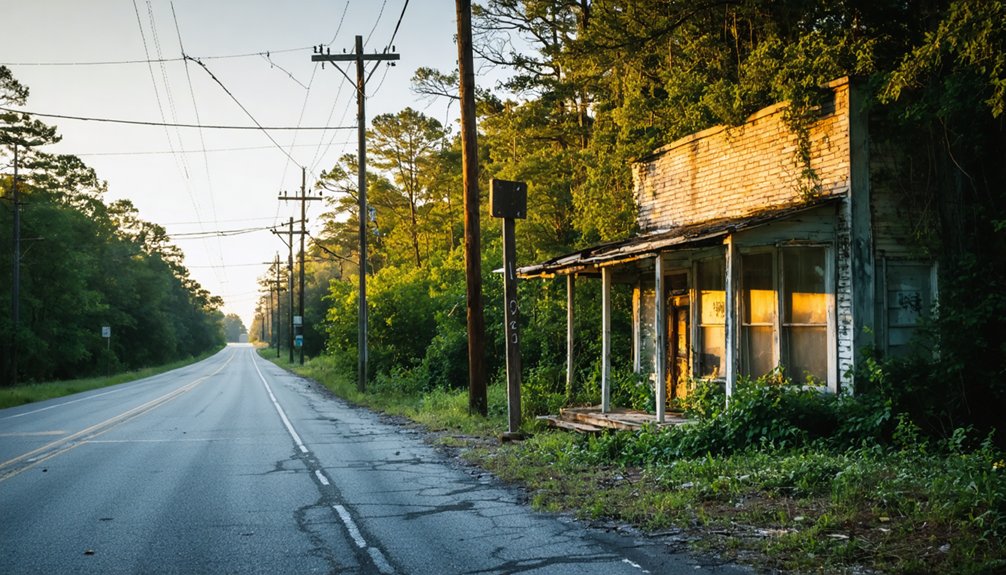
While you’re already exploring Simpson County’s forgotten past, why not extend your Mississippi ghost town adventure by adding a few more abandoned settlements to your itinerary?
Mississippi harbors remarkable ghost towns with abandoned buildings carrying deep historical significance. Consider these stops:
- Rodney – A once-thriving river port frozen in time, featuring crumbling antebellum structures along the Mississippi River bluffs.
- Rocky Springs – A Natchez Trace ghost town with eerie ruins and a still-standing church surrounded by overgrown lots.
- Deasonville – A forgotten farming community where abandoned buildings tell stories of Mississippi’s agricultural past.
- Coffeeville – A Civil War-era settlement preserving historical significance through its weathered structures and battlefield proximity.
Each destination rewards curious travelers willing to chase Mississippi’s untamed, forgotten history beyond conventional tourist trails.
Frequently Asked Questions
Was Westville Ever Considered for Any State-Level Administrative Functions?
You’d have thought Westville could’ve crowned itself state capital, but its administrative history reveals no state-level functions. It simply served as Simpson County’s seat before fading into ghostly silence.
Are There Any Descendants of Westville’s Original Founders Still in Simpson County?
You’ll likely find descendants still rooted in Simpson County! Immerse yourself in descendant interviews and explore family histories through the Simpson County Historical & Genealogical Society — they’re your gateway to uncovering Westville’s living legacy and untold founding stories.
Has Westville Ever Been Featured in Mississippi Ghost Town Photography Books?
I don’t have confirmed details on whether Westville’s appeared in ghost town photography books, but you’ll find Mississippi history enthusiasts actively documenting its haunting remnants through regional publications, photography collections, and adventurous explorers capturing its forgotten landscape.
Were Any Famous or Notable Historical Figures Born in Westville?
“Every town has its story.” The historical record doesn’t confirm any famous residents tied to Westville’s historical significance, but you’re exploring a place where ordinary pioneers shaped extraordinary regional history worth discovering yourself.
Has Any Formal Archaeological Survey Ever Been Conducted at Westville’s Site?
No formal archaeological survey’s been confirmed at Westville’s site, but you’ll find its archaeological significance undeniable. Explore this forgotten landscape, champion historic preservation, and you might uncover Mississippi’s buried secrets waiting for adventurous souls like yours!
References
- https://kids.kiddle.co/Westville
- https://mississippifolklife.org/articles/haunted-by-a-ghost-town-the-lure-of-rodney-mississippi
- https://fromthepage.com/article/show?article_id=69169
- https://www.schgs.net/articles