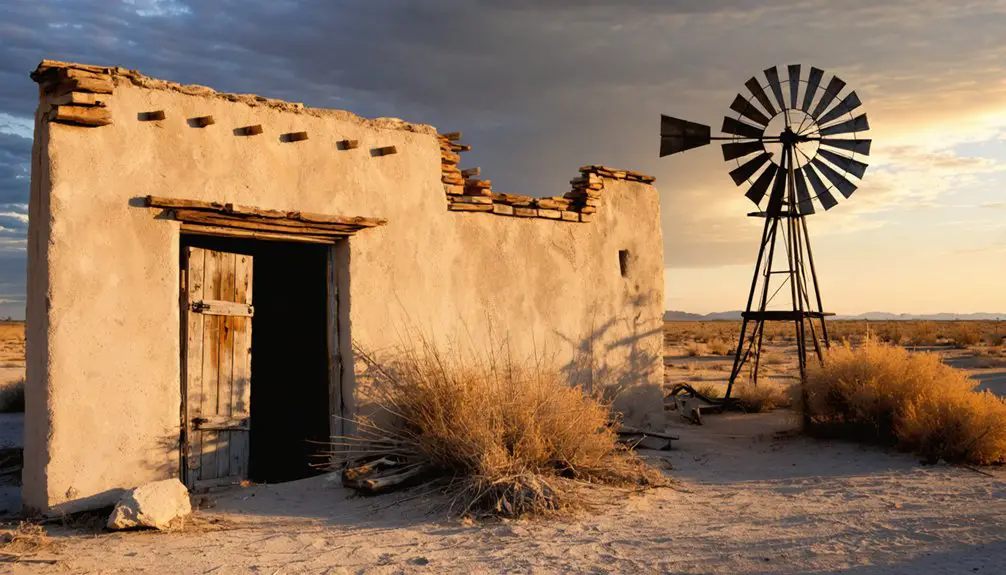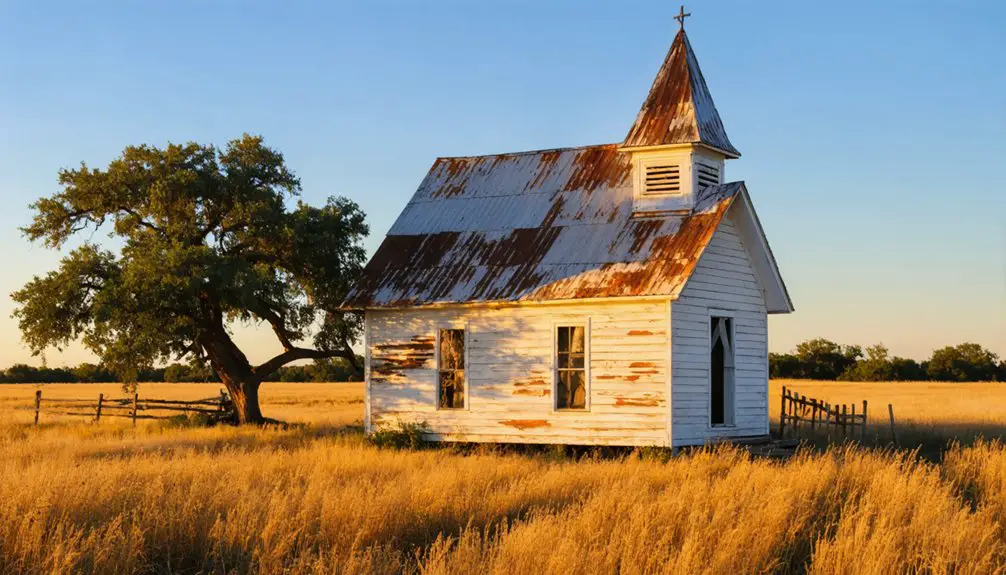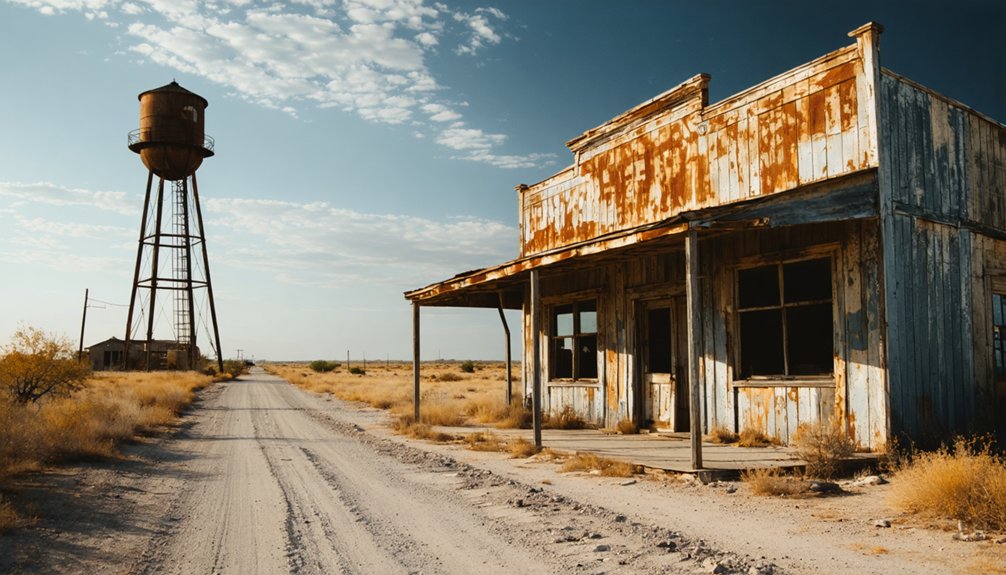
Planning a ghost town road trip to Mill Creek, Texas means visiting a place where history whispers through absence rather than architecture. Settled in 1835 by Alexander Wright in Jasper County, this pioneer community left no walls, foundations, or artifacts behind. You’ll navigate county roads off US-96, ideally during spring or fall when temperatures stay comfortable. Pair it with nearby ghost towns like New Birmingham for a fuller East Texas experience, and there’s much more you’ll want to know before you go.
Key Takeaways
- Mill Creek, located in Jasper County, Texas, is accessible via US-96 heading north from Jasper through county roads.
- Visit during spring (March–May) or fall (October–November) for mild temperatures and better road conditions.
- Download offline maps before arriving, as cell service is spotty and GPS may not locate the site accurately.
- Nearby ghost towns New Birmingham and Gent offer additional stops, maximizing your East Texas exploration.
- Arrive early to maximize daylight, wear weather-appropriate clothing, and prepare for limited modern infrastructure on-site.
What’s Left of Mill Creek, Texas Today?
Mill Creek, Texas, settled in 1835 by Alexander Wright in Jasper County, has faded into near-obscurity, leaving behind little more than scattered traces of its early pioneer roots.
When you visit today, you won’t find bustling streets or standing structures. Instead, you’ll encounter a site where nature has quietly reclaimed what settlers once built.
The historical significance of Mill Creek lies in its role as one of Texas’s earliest frontier communities, giving you a tangible connection to the state’s raw beginnings.
Ghost town exploration here means reading the land itself, noticing subtle clues embedded in the soil and surrounding wilderness.
Bring your curiosity, because Mill Creek rewards those willing to look beyond the obvious and appreciate history written in absence rather than architecture.
Why Did Mill Creek Disappear So Completely?
When you stand at the site of Mill Creek today, you’ll find no crumbling walls or rusted relics to hint at its past — just open land where a community once took root in 1835.
The town’s early settlement left it vulnerable, lacking the economic infrastructure and transportation connections that kept other Texas communities alive through hard times.
Without a railroad lifeline or sustaining industry, Mill Creek simply faded, its residents scattering and its structures vanishing until nothing remained to mark its existence.
Early Settlement Abandonment Causes
Settled in 1835 by Alexander Wright, Mill Creek in Jasper County never grew into the bustling hub its founders likely envisioned.
This early settlement faced the kind of economic failures that swallowed countless Texas communities whole. Without reliable railroad access, merchants couldn’t move goods efficiently, and ambitious settlers eventually packed up and chased better opportunities elsewhere.
You’d have found no dramatic explosion or catastrophic flood erasing Mill Creek from the map — just the quiet, relentless grind of financial hardship wearing down community resolve.
When economic lifelines dried up, residents simply left, leaving nature to reclaim what human ambition once carved out.
Understanding these abandonment causes helps you appreciate why almost nothing survives today — Mill Creek didn’t collapse dramatically; it just quietly faded into the East Texas landscape.
No Remaining Physical Traces
Unlike ghost towns that leave crumbling facades or rusted machinery behind, Mill Creek vanished so completely that you won’t find a single wall, foundation, or artifact marking where settlers once built their lives.
Nature reclaimed every trace, erasing the cultural remnants that typically anchor a site’s identity to its past.
What you’ll encounter instead is open land, unremarkable to the untrained eye yet loaded with historic significance beneath the surface.
Early settlement patterns, economic hardship, and population drift conspired to strip Mill Creek down to nothing visible.
No church skeleton, no cemetery gate, no weathered signpost survives.
You’re fundamentally standing inside a story told only through documents and oral histories.
Bring your curiosity, because the land itself offers you no physical clues to decode.
How Do You Get to Mill Creek From Jasper County?
Tucked away in Jasper County, Mill Creek traces its roots back to 1835, when Alexander Wright first settled the area.
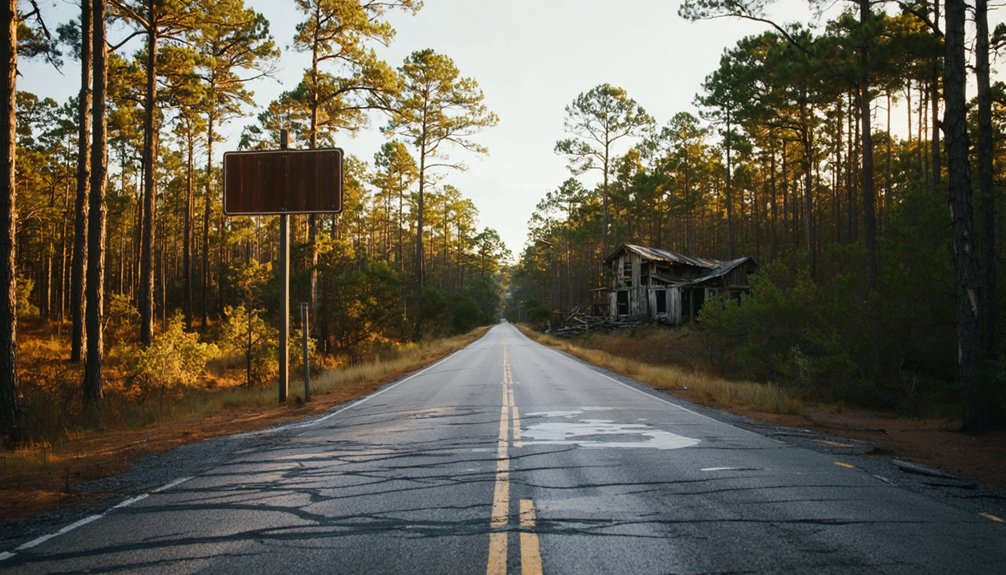
Getting there requires a solid directions overview before you hit the road. From Jasper, head north along US-96, then follow county roads toward the historic settlement site.
Plan your route carefully: head north from Jasper on US-96, then wind through county roads to reach the historic site.
Keep your travel tips handy — cell service gets spotty in these rural stretches, so download offline maps beforehand. You’ll navigate through dense East Texas pine forests, so watch for unmarked turnoffs.
Since no structures remain, your GPS may not pinpoint the exact location. Cross-reference historical markers with county records before departing.
Visiting during daylight hours guarantees safer navigation across potentially private surrounding land. Combine your trip with nearby Cherokee County ghost towns to maximize your East Texas exploration.
What to See Near Mill Creek?
Once you’ve navigated the pine-thick back roads to Mill Creek, you’ll want to stretch that drive further by exploring what surrounds it.
Jasper County rewards curious travelers with historic landmarks scattered across forgotten corners of East Texas. Push west toward Cherokee County, where New Birmingham‘s historical marker stands as the lone reminder of a once-booming iron-mining city that vanished completely by the early 1900s.
Local legends surrounding its dramatic collapse — furnace explosions, economic panic, burned hotels — make the barren site feel almost haunted.
Nearby Rusk serves as your modern base, offering amenities before you head northwest to Gent, another ghost town that peaked at 500 residents before railroad decisions erased it entirely.
These clustered sites make one unforgettable road trip through Texas’s industrial ghost country.
Which East Texas Ghost Towns Pair Well With Mill Creek?

If you’re already exploring Mill Creek, you can easily extend your East Texas ghost town road trip by heading northwest to Cherokee County, where New Birmingham and Gent await your discovery.
New Birmingham, founded in 1888, once boasted a five-story hotel, iron furnaces, and electric lights before economic collapse and a furnace explosion erased nearly every trace — today, only a historical marker remains two miles east of Rusk.
Pair that stop with a visit to Gent, a once-thriving settlement of 500 residents that the railroad bypassed into abandonment by 1913, leaving only minimal traces behind.
New Birmingham Mining Ruins
While Mill Creek offers a quiet, early settlement story, New Birmingham delivers something far more dramatic — a full-scale industrial boomtown that vanished almost without a trace. Founded in 1888, this iron mining settlement east of Rusk once housed 2,000 residents, two furnaces, electric lights, and a five-story hotel.
Its historical significance is undeniable — few Texas towns rose and collapsed so completely. The Panic of 1893, a furnace explosion, and restrictive land laws dismantled everything.
By World War I, locals had repurposed the bricks for Rusk, erasing nearly every structure. You’ll find only a historical marker today, but standing there, you can almost feel the ambition that once filled the air.
It’s a powerful contrast to Mill Creek’s humble beginnings.
Cherokee County Ghost Towns
New Birmingham isn’t the only ghost town worth chasing in Cherokee County. Gent, also called Ghent, once supported 500 residents nine miles northwest of Rusk by 1890.
Its town history reads like a classic boom-and-bust tale — stores, sawmills, churches, and a school all thrived until railroad shifts pulled the economic rug out by 1913.
Cherokee mining activity fueled both settlements, yet neither survived the 20th century intact. Gent retains minimal traces today, while other county sites offer only historical markers or scattered cemetery remnants.
You’ll want to cluster your visits, hitting New Birmingham and Gent together since Rusk sits conveniently between them.
Before exploring, contact Cherokee County’s historical commission for oral histories that’ll deepen your understanding of what once stood here.
Gent’s Abandoned Settlement
Three ghost towns pair remarkably well with Mill Creek if you’re building an East Texas road trip worth the drive: Gent, New Birmingham, and Terlingua each offer distinct flavors of abandonment.
Gent history begins nine miles northwest of Rusk, where around 500 residents once built a thriving community featuring stores, sawmills, churches, and a school. By 1890, Gent was genuinely alive.
Gent’s decline came swiftly and decisively when railroad routes shifted, bypassing the settlement entirely and strangling its economic lifeline. By 1913, residents had scattered, leaving behind minimal traces of what once existed.
You’ll find Gent’s remnants modest compared to New Birmingham’s complete erasure, but that contrast makes pairing them worthwhile.
Drive both sites back-to-back from Rusk and you’ll experience Cherokee County’s iron-era boom-and-bust story firsthand.
What Makes Mill Creek Different From Other Texas Ghost Towns?
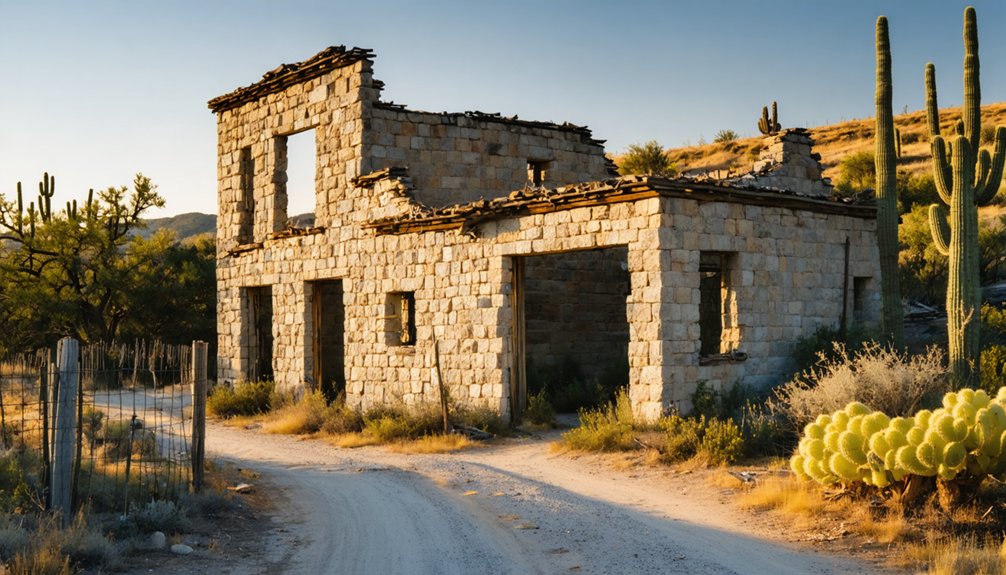
Unlike the iron-mining ghost towns of Cherokee County, Mill Creek in Jasper County carries a quieter, more personal history rooted in early Texas settlement rather than industrial ambition.
While towns like New Birmingham rose and collapsed under economic pressures and furnace explosions, Mill Creek’s unique legacy stems from its 1835 founding by Alexander Wright, making it one of East Texas’s earliest settlements.
You won’t find dramatic ruins or repurposed bricks here. Instead, Mill Creek offers something rarer — a sense of pioneer-era stillness that industrial ghost towns can’t replicate.
Its historical significance lies in representing the humble, agrarian beginnings of Texas before boom-and-bust cycles reshaped the landscape.
Visiting Mill Creek means stepping into a foundational chapter of Texas history, not just witnessing its economic failures.
When Is the Best Time to Visit Mill Creek?
When should you plan your visit to Mill Creek? Timing matters when you’re exploring a site with no modern infrastructure.
Spring and fall offer the best seasons for your road trip — mild temperatures make outdoor exploration comfortable, and you won’t battle brutal Texas heat or unpredictable winter cold snaps.
Weather considerations are critical here. Summer in East Texas brings oppressive humidity and temperatures exceeding 100°F, turning a casual exploration into an exhausting ordeal.
Winter visits risk muddy, impassable terrain after rainfall.
March through May and October through November hit the sweet spot — clear skies, cooler air, and manageable conditions let you move freely across the site.
Arrive early in the morning to maximize daylight and avoid afternoon heat, especially if you’re combining your visit with nearby Cherokee County ghost towns.
Frequently Asked Questions
Who Originally Founded Mill Creek and What Year Was It Established?
As fate would have it, you’ll discover Alexander Wright founded Mill Creek in 1835, where pioneer life bloomed on Cherokee County’s frontier. His founding history shapes the freedom-seeking spirit you’re chasing today.
What Economic Industries Supported Mill Creek’s Early Population Growth?
The knowledge doesn’t detail Mill Creek’s economic industries, but as you explore its 1835 roots, you’ll find agricultural development, mining operations, transportation routes, and community events likely shaped its early growth and pioneering freedom.
Are There Guided Tours Available Specifically for Mill Creek Ghost Town?
Like Brigadoon’s fleeting magic, you won’t find guided tours for Mill Creek’s ghost town legends. You’ll explore independently, embracing historical preservation through county commission resources and daylight visits to uncover its forgotten, untamed stories yourself.
What Photography Equipment Is Recommended for Documenting Mill Creek Remnants?
Bring a wide-angle lens for sweeping ruins and a macro lens for close-up details. You’ll want to adjust your camera settings for harsh daylight, capturing Mill Creek’s haunting remnants with vivid, freedom-inspiring clarity.
Does Mill Creek Have Any Documented Oral Histories From Former Residents?
Once vibrant, now silent—you’ll find Mill Creek’s oral traditions are sparse. Cherokee County’s historical commission actively preserves resident stories, so you should contact them directly to uncover any documented histories from former settlers.
References
- https://blogs.baylor.edu/texascollection/category/texas-cities-and-counties/ghost-towns/
- https://mix931fm.com/cherokee-county-ghost-towns/
- https://www.southernthing.com/ruins-in-texas-2640914879.html
- https://www.ghostsandgetaways.com/blog-1/27-fascinating-ghost-towns-in-texas
- https://www.tshaonline.org/handbook/entries/mill-creek-jasper-county-RBMET
- https://en.wikipedia.org/wiki/List_of_ghost_towns_in_Texas
- https://www.wilcotx.gov/1635/Historical-Abandoned-Towns
- https://www.redriverhistorian.com/post/history-in-ghost-towns