Indiana’s ghost towns tell stories you won’t find in any textbook. You’ll discover drowned communities like Monument City and Elkinsville, swallowed by rising waters in the 1960s. You’ll find Tunnelton, once a crucial Underground Railroad hub, and erased African-American settlements like Lick Creek. Some towns vanished overnight due to railroad reroutes, gas boom collapses, or forced buyouts. Stick around, and you’ll uncover the full, haunting truth behind Indiana’s forgotten places.
Key Takeaways
- Indiana’s ghost towns declined due to railroad rerouting, economic collapse, industrial decline, natural disasters, and forced buyouts that displaced entire communities.
- Southern Indiana features eerie ghost towns like Tunnelton, Youngs Creek, and Marengo, each with crumbling structures and haunted histories of courage and resilience.
- Monument City and Elkinsville were literally submerged underwater, with remnants only resurfacing during severe droughts, symbolizing complete erasure of history.
- Aberdeen and Chatterton are “living ghost towns,” still inhabited by fewer than 50 residents who serve as guardians of local history.
- Tunnelton is among Indiana’s most historically significant ghost towns, featuring intact architecture and ties to the Underground Railroad and 1882 Wilson Gang Massacre.
Why Indiana’s Thriving Towns Became Ghost Towns
Once thriving hubs of commerce and community, Indiana’s ghost towns didn’t simply fade—they collapsed under the weight of economic shifts, resource depletion, and geographic misfortune.
Railroad impact redirected trade, bypassing once-vital settlements and triggering rapid population migration toward growing urban centers.
Industrial decline gutted towns built around gas booms, like Mollie in Blackford County, leaving hollow shells behind.
Natural disasters and deliberate damming drowned others entirely. Urban expansion absorbed neighboring communities, erasing their independence.
Yet you’ll find that historical preservation efforts still honor these places, keeping their cultural legacy alive through cemeteries, ruins, and recorded histories.
Community resilience shaped some survivors, but most couldn’t outrun progress.
Understanding why these towns vanished helps you appreciate what thriving communities must protect to avoid the same fate.
Indiana’s Most Haunting Ghost Towns in the South
If you’re drawn to eerie, forgotten places, Southern Indiana’s ghost towns won’t disappoint you.
You can still walk through 13 visitable towns like Tunnelton, Marengo, and Youngs Creek, where crumbling structures give each settlement a post-apocalyptic feel that makes it seem like residents vanished overnight.
Economic collapse, railroad bypasses, and resource depletion drove most of these communities into abandonment, leaving you with haunting reminders of once-thriving settlements.
Southern Towns Still Standing
Southern Indiana harbors some of the state’s most hauntingly preserved ghost towns, where you can still walk the same streets that bustling communities once called home. Towns like Marengo, Greenville, Borden, and Campbellsburg offer glimpses into lives abruptly left behind, their abandoned architecture standing as silent witnesses to forgotten eras.
You’ll find Fort Ritner, Tunnelton, and Mitchell particularly compelling, each carrying deep historical significance worth exploring independently. Scotland, Silverville, and Worthington round out this collection of remarkable sites where historical preservation efforts have kept remnants accessible to curious visitors.
Youngs Creek carries an especially eerie atmosphere, feeling almost recently vacated.
These towns don’t just represent decay — they represent your direct connection to communities that once thrived, breathed, and ultimately surrendered to time’s relentless progression.
Eerie Abandoned Settlements
Among Indiana’s southern ghost towns, certain settlements have earned a reputation for feeling genuinely unsettling — places where abandonment doesn’t simply suggest decay but instead evokes something far more immediate, as though the last residents stepped away only yesterday.
You’ll find eerie landscapes where forgotten memories linger in doorways and crumbling foundations.
Four settlements stand out:
- Youngs Creek – structures remain disturbingly intact
- Hindostan Falls – Martin County’s silent riverside ruins
- Lick Creek – an African-American community erased by time
- Tunnelton – an Underground Railroad hub carrying violent history from the 1882 Wilson Gang Massacre
Walking through these places, you sense lives interrupted rather than concluded.
Indiana’s southern corridor preserves these haunting pockets where history refused a clean ending.
Why These Towns Vanished
These towns didn’t simply fade — economic forces, geographic misfortune, and industrial collapse actively dismantled them. When you trace the history, you’ll find economic shifts hit hardest and fastest. Industries collapsed, railroads bypassed certain routes, and floods swallowed others entirely.
Resource depletion devastated gas boom settlements like Mollie in Blackford County — once the gas stopped flowing, residents left immediately. Damming rivers deliberately drowned Monument City and Elkinsville, erasing entire communities beneath rising water.
Some towns simply surrendered to stronger neighbors. When a thriving settlement grew nearby, smaller communities like Corwin lost their purpose and population naturally.
You’re looking at a pattern of abandonment driven by practicality, not tragedy alone. These vanished communities reflect the unforgiving reality that prosperity was never permanently guaranteed anywhere.
Northern and Central Indiana’s Forgotten Communities
As you venture into Northern and Central Indiana, you’ll find that Warren County once held several small, thriving settlements that have since vanished almost entirely from the map — Brisco, for example, no longer exists in any recognizable form.
You can also trace the rise and fall of gas boom towns like Mollie in Blackford County, where natural gas discoveries sparked rapid growth before the resource dried up and took the community with it.
These forgotten places remind you that Indiana’s interior was once far more populated and industrious than its current landscape suggests.
Warren County’s Vanished Settlements
Warren County, tucked in northern Indiana, harbors the remnants of once-thriving settlements that time has nearly swallowed whole.
Warren County’s history reveals lost communities that once buzzed with ambition before fading into silence. You’ll find these vanished places humbling, reminding you how quickly civilization surrenders to nature and neglect.
Here’s what defined these forgotten settlements:
- Brisco — completely erased from modern maps, leaving zero physical remnants.
- Chatterton — reduced to a single mailbox and one standing house.
- Corwin — overshadowed and absorbed by the neighboring town of Romney.
- Economic collapse — proximity to thriving nearby towns drained residents away permanently.
Exploring these sites connects you directly to Warren County‘s raw, unfiltered past — freedom found in forgotten places.
Gas Boom Ghost Towns
Northern and Central Indiana once thrummed with an energy boom that drew settlers, speculators, and laborers into towns that barely existed before the gas rush arrived.
When the gas boom ignited in the late 1800s, communities like Mollie in Blackford County exploded overnight. You’d have witnessed wooden storefronts, bustling workers, and boundless optimism filling streets that’d previously held nothing but farmland.
Then the gas depleted. Almost immediately, those abandoned communities became hollow shells, their residents scattering toward opportunities elsewhere.
Mollie fundamentally vanished from Indiana’s map entirely, leaving behind little evidence it ever thrived. If you visit Blackford County today, you’ll find no streets, no buildings—just quiet land whispering of fortunes chased and lost.
The gas boom’s promise dissolved as quickly as it arrived.
Indiana’s Drowned Ghost Towns: Monument City and Elkinsville
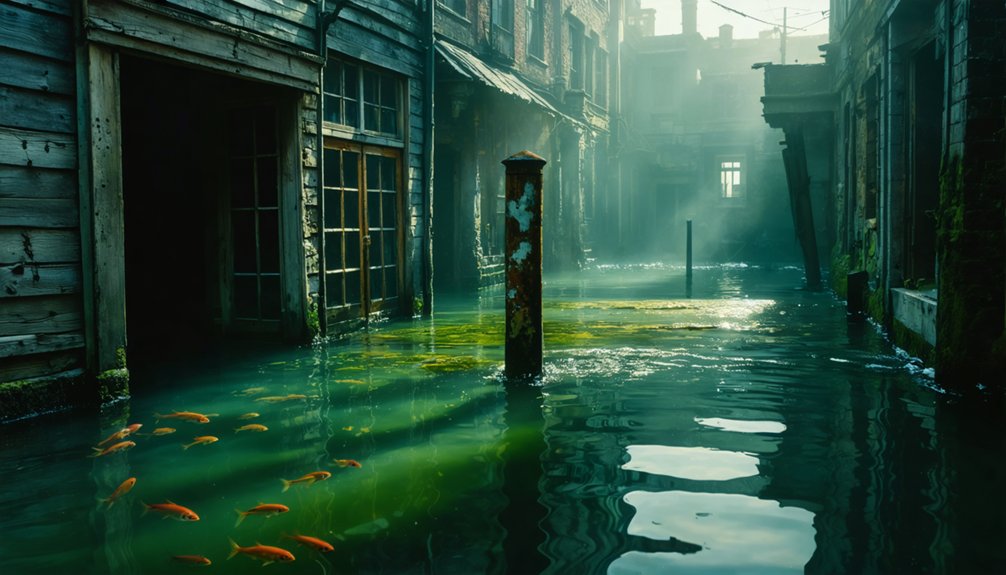
Among Indiana’s roughly 41 ghost towns, two carry a particularly haunting distinction: they weren’t simply abandoned — they were swallowed whole.
Monument City and Elkinsville vanished beneath rising waters, erasing generations of Elkinsville history and community identity forever. Damming projects consumed both towns, stripping residents of their homes and futures.
Two towns swallowed by rising waters, their histories erased, their residents stripped of everything they’d ever known.
Here’s what makes these drowned towns unforgettable:
- Monument City disappeared beneath reservoir waters, leaving no visible trace.
- Elkinsville was flooded to create Monroe Lake in the 1960s.
- Residents received forced buyouts, severing deep generational roots.
- Remnants occasionally resurface during severe droughts, offering ghostly glimpses below.
You can still visit Monroe Lake’s shoreline and imagine the streets, homes, and lives that once thrived freely beneath your feet.
Indiana Ghost Towns With Dark and Violent Histories
Some of Indiana’s ghost towns carry histories far darker than simple economic decline or natural disaster — they bore witness to violence, tragedy, and cultural upheaval that still echoes today.
Tunnelton, once a crucial Underground Railroad hub, harbored freedom seekers risking everything to escape bondage. Then in 1882, the Wilson Gang Massacre shattered the town’s fragile peace, adding blood-soaked ghost stories to its already turbulent past.
Lick Creek sheltered a determined African-American settlement that defied oppression before eventually fading into silence.
These places don’t just sit abandoned — they carry haunted histories that demand your respect and attention. When you walk these grounds, you’re stepping through layered narratives of courage, brutality, and resilience that no history book fully captures.
Indiana’s Gas Boom Ghost Towns of Blackford County
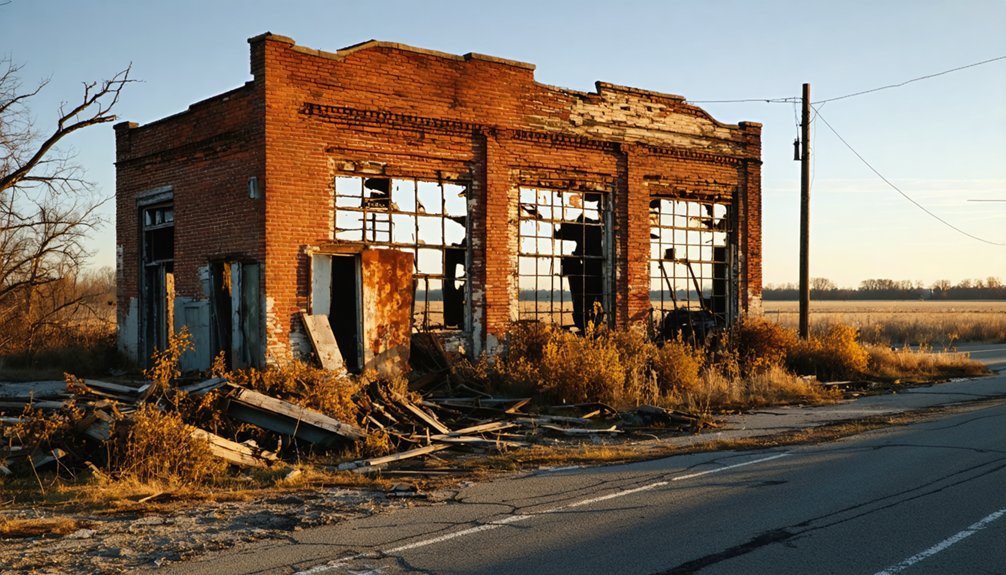
When Indiana’s natural gas boom ignited in the late 19th century, Blackford County transformed almost overnight into a hub of feverish industry and rapid settlement — towns like Mollie sprang up to house the workers, speculators, and families chasing sudden prosperity.
These Blackford Boomtowns burned bright, then collapsed just as fast once the gas reserves dried up, leaving Economic Decline in their wake.
Here’s what shaped their rise and fall:
- Natural gas discovery fueled rapid population surges
- Industries built entirely around a single finite resource
- Gas depletion triggered immediate business and population exodus
- Abandoned structures left frozen in time after departure
You can still feel that abrupt silence today — a county that once roared with ambition now quietly holds the memory of what was lost.
Indiana Ghost Towns Where People Still Live
Not every Indiana ghost town stands completely empty — while Blackford County’s boomtowns fell silent and shed their last residents, other faded communities across the state held on, clinging to life with just a handful of stubborn souls who never left.
Take Aberdeen in Ohio County, where fewer than 50 residents still call home a town established back in 1819.
Chatterton in Warren County keeps one mailbox and one house standing.
These living ghost towns offer something unique for ghost town tourism — you’re walking through actual history, not just ruins.
Residents who stayed often become the last guardians of historical preservation, keeping stories alive that maps have nearly erased.
You’ll find these places carry a quiet dignity that completely abandoned towns simply can’t replicate.
Indiana Ghost Towns You Can Actually Visit Today
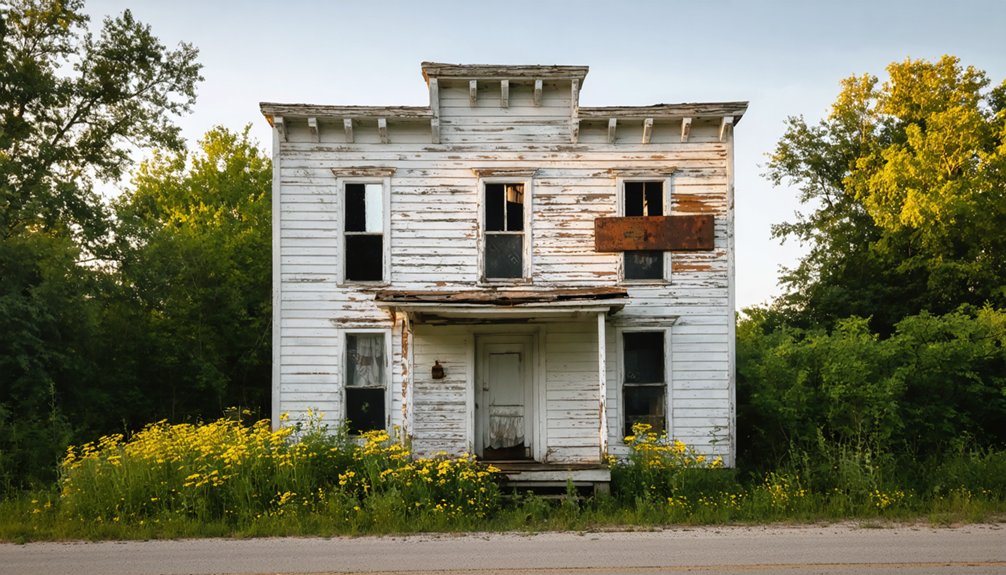
Southern Indiana alone offers 13 ghost towns worth tracking down, and each one delivers a different flavor of abandonment.
You’ll find abandoned architecture ranging from crumbling storefronts to forgotten cemeteries, all carrying local legends that locals still whisper about today.
Four towns that deserve your attention:
- Tunnelton – An Underground Railroad hub with a violent past, including the 1882 Wilson Gang Massacre.
- Youngs Creek – Eerie stillness that feels recently vacated.
- Marengo – Weathered structures frozen in another century.
- Fort Ritner – Remote enough to feel genuinely undiscovered.
These aren’t tourist traps.
They’re raw, unfiltered slices of Indiana’s forgotten past.
Pack your curiosity, respect the land, and explore on your own terms.
Indiana Ghost Towns Ranked by What’s Left to See
If you’re planning a ghost town exploration road trip through Indiana, knowing what’s actually left to see can make or break your itinerary. Some sites reward you richly; others offer nothing but memories.
Most to Least Remaining:
- Tunnelton — Intact abandoned architecture, Underground Railroad history, and an 1882 massacre site
- Aberdeen — A small population under 50 remains, preserving Ohio County’s 1819 Scottish heritage
- Granville — A persistent cemetery near the Wabash River marks Wea Native American history
- Chatterton — One mailbox and house stand as quiet reminders
- Mollie — Faded gas boom remnants in Blackford County
- Brisco — Completely erased, not even appearing on modern maps
Plan accordingly — some stops demand a camera; others deserve only a moment of silence.
Frequently Asked Questions
How Many Total Ghost Towns Have Been Identified Across Indiana?
You’ll find approximately 41 forgotten settlements identified across Indiana, where abandoned railroads and economic decline shaped their fates. These ghost towns whisper stories of freedom, resilience, and lives once lived in communities now lost to time.
Which Indiana Counties Are Most Known for Hosting Ghost Towns?
With 13 visitable ghost towns, Southern Indiana counties lead the way! You’ll find abandoned settlements rich in historical significance across Warren, Blackford, Tippecanoe, and Martin counties, each whispering stories of forgotten communities you’re free to explore.
What Role Did Native Americans Play in Indiana Ghost Town Histories?
You’ll find Native Tribes shaped Indiana’s ghost towns through Cultural Influence and Settlement Patterns. Historical Conflicts displaced communities, like Granville’s Wea heritage near the Wabash River, where their presence echoes through abandoned lands you can still explore today.
Are Any Indiana Ghost Towns Protected as Historical Landmarks or Preserves?
With 41 ghost towns across Indiana, you’ll find some sites enjoy historical preservation status. You can explore ghost town tours at places like Tunnelton, where the Underground Railroad’s legacy keeps its memory officially protected and alive.
How Does Indiana’s Ghost Town Count Compare to Other Midwestern States?
You’ll find Indiana’s ~41 ghost towns modest compared to states like Kansas or Missouri, but don’t underestimate their depth. Your ghost town exploration uncovers rich midwestern history, where each abandoned settlement tells freedom’s forgotten story.
References
- https://wkdq.com/southern-indiana-ghost-towns/
- https://en.wikipedia.org/wiki/List_of_ghost_towns_in_Indiana
- https://www.youtube.com/watch?v=3J6ZADuP0A4
- https://www.youtube.com/watch?v=45D4dbASJyE
- https://www.onlyinyourstate.com/experiences/indiana/ghost-towns-in
- https://www.ezhomesearch.com/blog/ghost-towns-in-indiana/
- https://storymaps.arcgis.com/stories/9a3b3f4a63ba4031a46cb53907a0515c