Planning a ghost town road trip to Weta, South Dakota means stepping into a place where frontier ambition quietly faded after 1907. You’ll find crumbling foundations, weathered structures, and an open cut mine that tells the story of tin ore, cassiterite, and broken dreams. Start your journey from Jackson County, visit between June and September for the best conditions, and bring sturdy boots. There’s far more to this forgotten corner of the prairie than first meets the eye.
Key Takeaways
- Weta, established in 1907 in Jackson County, South Dakota, is a ghost town featuring crumbling foundations, weathered structures, and remnants of a historic mining operation.
- Begin your journey from Jackson County, carefully mapping poorly marked routes and watching for abandoned homesteads as helpful landmarks along the way.
- Visit between June and September for dry trails, longer daylight hours, and vibrant landscapes ideal for photographing the ruins.
- Prioritize safety by wearing sturdy boots, bringing water, traveling with a companion, and staying cautious around open foundations and uneven terrain.
- Photograph freely during golden hour for dramatic shots, but leave all artifacts undisturbed to preserve the site for future visitors.
What’s Left of Weta, South Dakota Today?
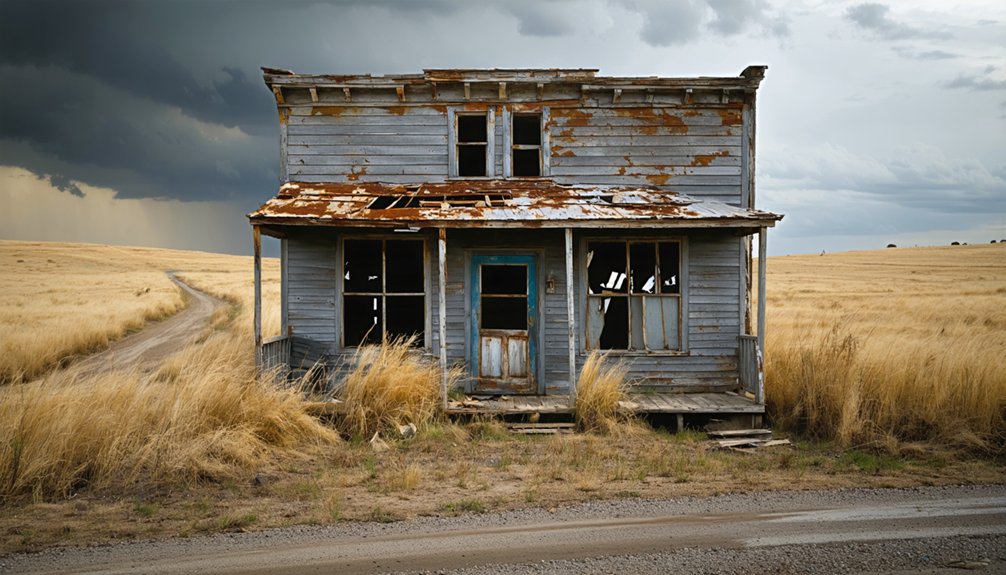
Few ghost towns in South Dakota feel as genuinely forgotten as Weta. Tucked away in Jackson County, this neglected site has sat largely undisturbed since 1907, making it a raw, unfiltered window into the past.
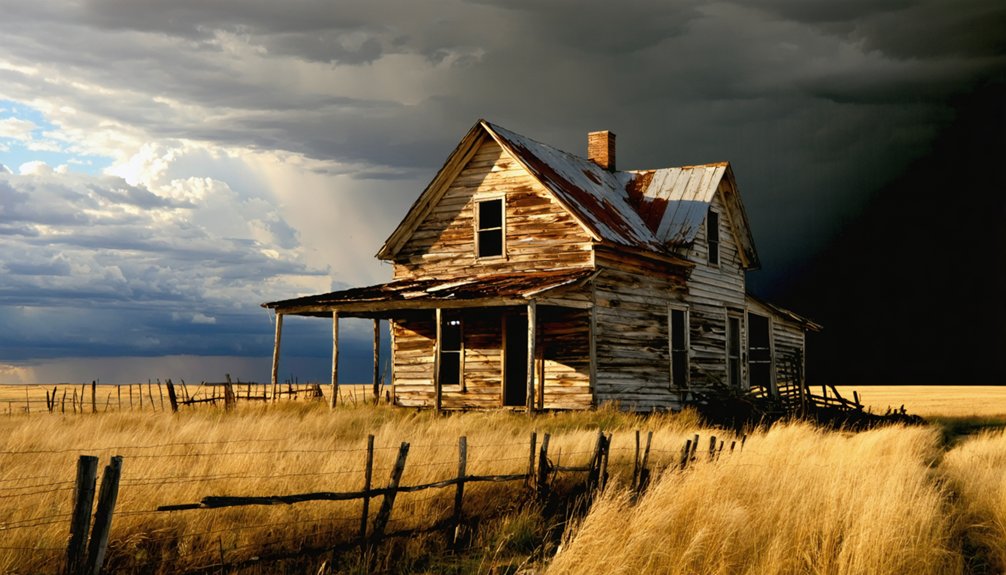
When you visit, you’ll find scattered remnants that speak volumes about Weta history — crumbling foundations, weathered wood, and the quiet absence of a community that once existed.
Crumbling foundations and weathered wood — silent proof that Weta was once a living, breathing community.
Unlike polished tourist destinations, Weta demands that you look closely. You might stumble across Weta artifacts half-buried in the earth, small but powerful reminders of lives once lived here.
There are no guided tours, no gift shops, and no guardrails. Just open land, fading structures, and the kind of freedom that only a truly forgotten place can offer.
The Rise and Fall of Weta After 1907
After 1907, Weta’s story became one of slow erasure, as the forces that once built it up quietly dismantled everything it stood for.
You can trace the town’s collapse through the usual culprits — depleted resources, shifting economies, and a population that simply moved on when opportunity dried up.
What remains today is a haunting shell, a Jackson County landmark that time forgot but history buffs like you’re still determined to find.
Weta’s Post-1907 Decline
Once a promising settlement in Jackson County, Weta began its slow fade into obscurity after 1907, leaving behind little more than weathered remnants and unanswered questions.
The mining impact that once drew settlers to this remote South Dakota outpost eventually dried up, stripping the town of its economic purpose.
As resources dwindled, residents packed up and moved on, chasing opportunity elsewhere across the frontier.
Buildings sat empty, roads grew quiet, and nature reclaimed what ambition had built.
Weta history tells a familiar story across South Dakota’s ghost town landscape — bold beginnings followed by quiet abandonment.
Today, you’ll find a neglected site where life once buzzed with activity.
It’s a raw, unfiltered glimpse into the boom-and-bust cycle that shaped this rugged region’s identity.
Abandonment And Lasting Legacy
Weta’s story didn’t end with 1907 — it simply stopped moving forward. What remains today carries real historical significance, quietly preserving a chapter of Jackson County’s forgotten past.
Nature has reclaimed the land, leaving behind structures that speak louder than any written record. You’ll find no tour guides here, no polished exhibits — just raw, unfiltered history waiting for you to discover it.
That freedom to explore independently is exactly what makes Weta worth the detour. Ghost stories have naturally woven themselves into the site’s atmosphere, drawing curious travelers who sense something deeper beneath the silence.
Weta reminds you that South Dakota’s history isn’t confined to monuments or museums. Sometimes it’s standing in a neglected field, letting a forgotten town tell its own story on its own terms.
What the Site Still Has: Ruins, Structures, and Open Land
Stepping onto the Etta Ghost Town site, you’ll find the remnants of a once-thriving mining operation scattered across open land — rusted equipment, crumbling foundations, and weathered structures that hint at the hundreds of miners who worked here.
The jaw-dropping open cut mine remains the site’s most striking feature, offering a raw, unfiltered window into the region’s mining history. Ghost town artifacts dot the landscape, rewarding curious explorers willing to look closely.
The open cut mine stands as a striking scar on the landscape — a raw, rewarding glimpse into forgotten history.
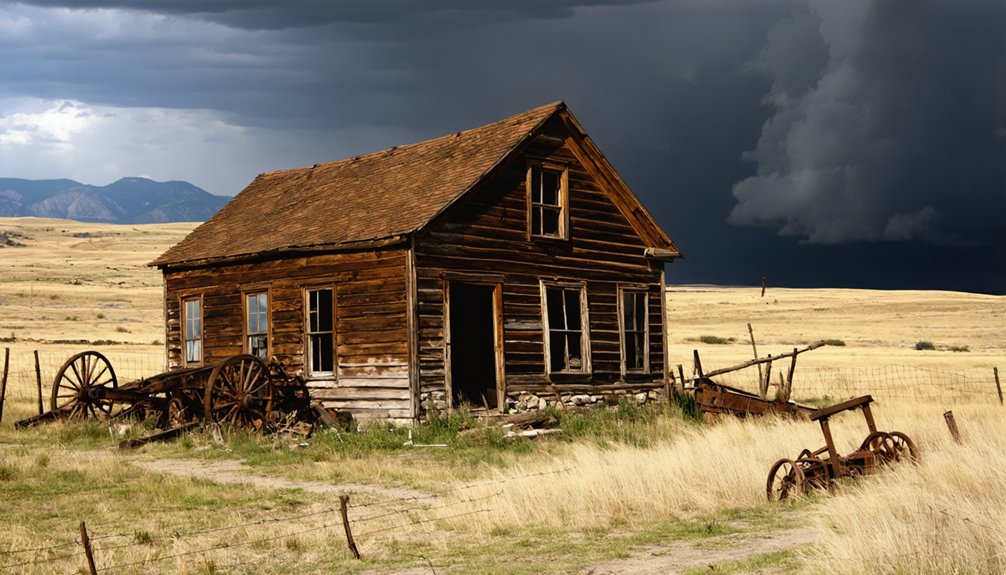
Weathered timber frames and stone foundations mark where buildings once stood, while the surrounding open land gives you room to roam freely and piece together the past.
Watch your footing near unstable ruins, respect the structures, and let the silence do the storytelling — Weta’s remains speak volumes without saying a word.
How to Get to Weta From Jackson County
Starting your journey in Jackson County puts you close to Weta’s forgotten streets, with rural roads cutting through wide-open prairie that feels untouched by time.
You’ll want to map your route carefully, since the roads leading out here aren’t always well-marked and GPS can lose reliability in remote stretches.
Keep an eye out for landmarks like abandoned homesteads and weathered fence lines, which signal you’re heading in the right direction toward the site.
Starting Point In Jackson County
Jackson County serves as your launching pad for one of South Dakota’s most overlooked ghost town destinations — Weta, a site left to the elements since 1907. This sprawling, sparsely populated county carries deep historical significance, having once supported small settlements fueled by frontier ambition and economic promise.
Today, it’s your gateway to stepping back into that forgotten era.
You’ll want to start in the county’s central area, where open prairie roads stretch toward Weta’s neglected remains. There’s no crowded tourist infrastructure here — just raw landscape and quiet history waiting for you to uncover it.
Fuel up, load your maps, and pack water before heading out. Jackson County rewards explorers who come prepared and crave the freedom of discovering South Dakota’s overlooked past on their own terms.
Roads Leading To Weta
Traveling to Weta from Jackson County means embracing the kind of roads that don’t show up on most tourist maps. You’ll navigate unpaved backroads and rolling prairie stretches where cell service fades and the horizon takes over.
Weta Access isn’t complicated, but it rewards those willing to venture beyond paved convenience.
Start by heading through Jackson County’s sparse highway network, then cut onto gravel routes heading toward the site’s neglected grounds. The Scenic Routes through this region offer sweeping grassland views that make the drive worthwhile even before you arrive.
Keep your fuel tank full and your expectations open — there are no signs welcoming you to Weta. The landscape itself becomes your guide, pulling you deeper into South Dakota’s forgotten frontier history.
Landmarks Along The Route
Where do the landmarks begin on a drive toward Weta? They start almost immediately once you leave Jackson County’s sparse main roads.
You’ll notice the prairie stretching endlessly, broken only by weathered fence posts and abandoned homesteads that hint at forgotten settlement patterns.
Watch for scenic viewpoints where rolling grasslands meet dramatic sky — these natural frames remind you why settlers once staked claims here.
Landmark highlights include crumbling stone foundations visible from roadside pull-offs, silent reminders of communities that thrived briefly before economics forced everyone out.
Unlike polished tourist corridors, this route rewards patient observers.
Keep your eyes sharp for rusted equipment half-buried in tall grass. Each mile deepens the story you’re chasing, building anticipation before Weta’s neglected structures finally come into view.
Ghost Towns Near Weta Worth the Detour
While Weta itself may be the star of your Jackson County detour, the surrounding region rewards curious travelers with a string of ghost towns that each tell their own chapter of South Dakota’s boom-and-bust story.
Swing through Okaton for its weathered prairie buildings and ghost town legends that once drew curious tourists off the interstate.
Head into the Black Hills and you’ll uncover Etta, where mining history runs deep — from tin ore and cassiterite to the largest spodumene crystal ever discovered.
Rockerville offers a gold rush camp reborn and abandoned again, while Pactola now sleeps beneath a lake.
Each stop layers onto your journey, turning a simple road trip into a living, breathing timeline of frontier ambition, failure, and resilience.
How to Explore Weta’s Ruins Safely
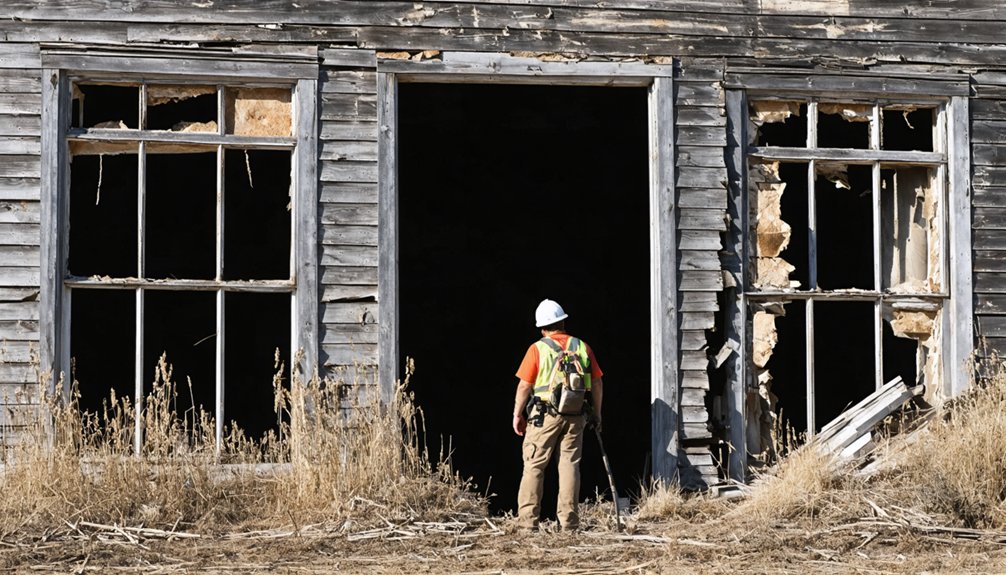
Reaching those ghost towns is only half the adventure — exploring them safely is where smart travelers separate themselves from the reckless ones.
When you’re planning your Weta Exploration, respect the ruins without testing their limits. Structures neglected since 1907 aren’t stable, so don’t climb walls, enter collapsed buildings, or lean on deteriorating frames.
Safety Guidelines for sites like Weta are straightforward: wear sturdy boots, bring water, and travel with a companion. Watch your footing on uneven terrain, especially near open foundations.
Photograph freely, but leave artifacts where you find them — preserving history keeps these sites accessible for future explorers.
Cell service is unreliable in remote Jackson County, so download offline maps before you leave pavement behind.
Best Time of Year to Visit Weta
When’s the best time to visit Weta? Late spring through early fall gives you the most comfortable conditions for exploring the ruins.
Late spring through early fall is prime time — comfortable conditions, open trails, and ruins worth every step.
June through September delivers longer daylight hours, dry trails, and ideal lighting for best photography — golden hour shots of abandoned structures hit differently when the prairie grass sways around them.
Summer also puts you near seasonal events in the Black Hills region, letting you combine your Weta visit with ghost town gatherings like Galena’s annual June celebration.
Fall brings dramatic skies and rich amber tones that make every frame look cinematic.
Avoid winter if possible — snow obscures uneven terrain, turning an already rugged site into a genuine hazard.
You want freedom to roam, so give yourself the conditions to do it safely.
Frequently Asked Questions
Was Weta Ever Connected to the Black Hills Gold Rush?
Weta’s history doesn’t directly tie it to the Black Hills gold rush. You’ll find it’s more of a neglected prairie settlement abandoned since 1907, with gold mining fame belonging to nearby Black Hills ghost towns instead.
Are There Any Ghost Legends or Haunting Stories Associated With Weta?
No specific ghostly encounters or spectral sightings are documented for Weta, but you’ll find eerie legends and haunting mining ghost stories scattered throughout South Dakota’s Black Hills region, fueling your adventurous, freedom-seeking spirit.
Did Weta Have Businesses Like Dance Halls During Its Peak?
While specifics on Weta aren’t documented, you’d have likely found dance hall culture and local entertainment thriving there, as over 300 miners in similar Black Hills boom towns enjoyed businesses, dance halls, and vibrant community life.
Are Nearby Ghost Towns Like Etta and Rockerville Worth Combining Visits?
Sure, because who needs ordinary tourism? You’ll love Etta attractions like its jaw-dropping open-cut mine, and Rockerville history offers a quirky gold rush revival. Combine both with Weta for an authentically rebellious Black Hills ghost town adventure you won’t forget!
What Mining Resources Were Extracted From the Weta Region Historically?
You’ll find Weta’s historical roots tied to gold mining and silver extraction, though the region’s records remain sparse. The Black Hills’ boom drew daring prospectors chasing fortunes, leaving behind abandoned dreams you can still explore today.
References
- https://en.wikipedia.org/wiki/Etta
- https://blackhillsvisitor.com/learn/etta-mine/
- https://www.powderhouselodge.com/black-hills-attractions/fun-attractions/ghost-towns-of-western-south-dakota/
- https://www.blackhillsbadlands.com/blog/post/old-west-legends-mines-ghost-towns-route-reimagined/
- https://en.wikipedia.org/wiki/List_of_ghost_towns_in_South_Dakota
- https://www.southdakotamagazine.com/galenas-ghosts
- https://kids.kiddle.co/List_of_ghost_towns_in_South_Dakota
- https://watch.weta.org/show/south-dakota-documentaries/collections/black-hills-and-badlands/
- https://www.youtube.com/watch?v=jmSADvq4Lek