Planning a ghost town road trip to Watson, Texas means exploring not one, but three distinct abandoned communities spread across different counties. You’ll encounter the haunted Watson House in Strawn, eerie cemetery relics in Burnet County, and crumbling foundations in Comanche County. Each location carries its own collapsed history and unsettling atmosphere. Visit between October and April for the best conditions, pack water, offline maps, and sturdy boots — and there’s far more to uncover ahead.
Key Takeaways
- Watson, Texas features abandoned structures, haunted legends, and forgotten history, making it an ideal destination for ghost town road trip enthusiasts.
- Visit between October and April to avoid extreme summer heat exceeding 100 degrees and enjoy manageable exploration conditions.
- Pack essentials including water, offline maps, a compass, sturdy boots, and a first aid kit for remote terrain navigation.
- Always research access permissions through local county offices or landowners to avoid trespassing on private ghost town properties.
- Inspect abandoned structures carefully for cracks, sagging floors, and unstable supports before entering to ensure personal safety.
Why Watson, Texas Belongs on Every Ghost Town Road Trip
Whether you’re chasing forgotten history or simply craving an off-the-beaten-path adventure, Watson, Texas delivers a hauntingly rich experience that most travelers overlook. This small town carries layers of ghostly folklore woven into its very foundation, from oil boom origins to whispered legends that linger long after you leave.
You’ll find abandoned architecture that tells a story no museum could replicate. The Watson House, once a functioning funeral home for 52 years, stands as a hidden gem locals proudly call haunted.
Some ruins speak louder than any exhibit — the Watson House whispers of death, history, and haunting secrets locals swear are real.
Even the Dillon Depot carried dual purpose, serving both travelers and the departed.
Watson isn’t just another dot on a Texas map. It’s a rare, unfiltered glimpse into a past that refuses to disappear, and it’s waiting for the bold traveler willing to explore it.
The Haunted History of Watson House in Strawn, TX
If you’re chasing eerie history on your Watson road trip, the Watson House in Strawn, TX is a stop you can’t skip.
Built in 1919 during the Texas oil boom, this building spent 52 years operating as a funeral home — with the nearby Dillon Depot doubling as an additional mortuary space.
Today, locals and visitors alike know it as one of the region’s most haunted hidden gems, and its dark past makes every creaking floorboard feel like a story waiting to be told.
Watson House Haunted Origins
Built in 1919 during Texas’s oil boom, the Watson House in Strawn, Texas, carries a haunted past as rich as the history baked into its walls.
Originally operating as a funeral home for 52 years, the building absorbed decades of grief, loss, and restless energy. The Dillon Depot also served as a funeral home, deepening the town’s connection to the afterlife.
Today, Watson House stands as a hidden gem for those chasing haunted legends and unexplained experiences. Visitors who’ve walked its halls report ghostly encounters that shake even the most skeptical travelers.
You’ll feel the weight of history the moment you step inside. If you crave authentic, off-the-beaten-path exploration, Watson House delivers something few places can — a genuine brush with the unknown.
Decades Of Funeral History
For 52 years, the Watson House in Strawn, Texas operated as a working funeral home, quietly absorbing the weight of the town’s grief beneath its roof.
Built in 1919 during the Texas oil boom, it carried deep historical significance as a cornerstone of community life. Funeral traditions played out within its walls through booming decades and quiet ones alike.
Notably, the Dillon Depot also served as a funeral home during this era, suggesting that Strawn handled death with a matter-of-fact practicality unique to small Texas towns.
When you walk through Watson House today, you’re stepping into layered history — decades of final goodbyes, mourning families, and solemn rituals.
That accumulated energy is precisely what many believe fuels the haunting experiences visitors still report.
Strawn’s Hidden Haunted Gem
What makes a building genuinely haunted rather than simply old and creaky? Watson House in Strawn answers that question boldly. After 52 years of funeral history, this 1919 oil-boom structure carries Strawn legends that’ll raise the hair on your neck.
Here’s how you can experience its haunted tales firsthand:
- Walk the original rooms where decades of funeral services left an unmistakable atmospheric weight.
- Ask locals about specific encounters — Strawn residents hold stories that never made official records.
- Visit at dusk when the building’s century-old character becomes most palpable.
You’re not just touring an old structure — you’re stepping into layered history where grief, community, and mystery converged for generations.
Watson House rewards curious, fearless explorers who crave authentic experiences beyond tourist traps.
Watson Burnet County Ghost Town: Church, Cemetery, and What Remains
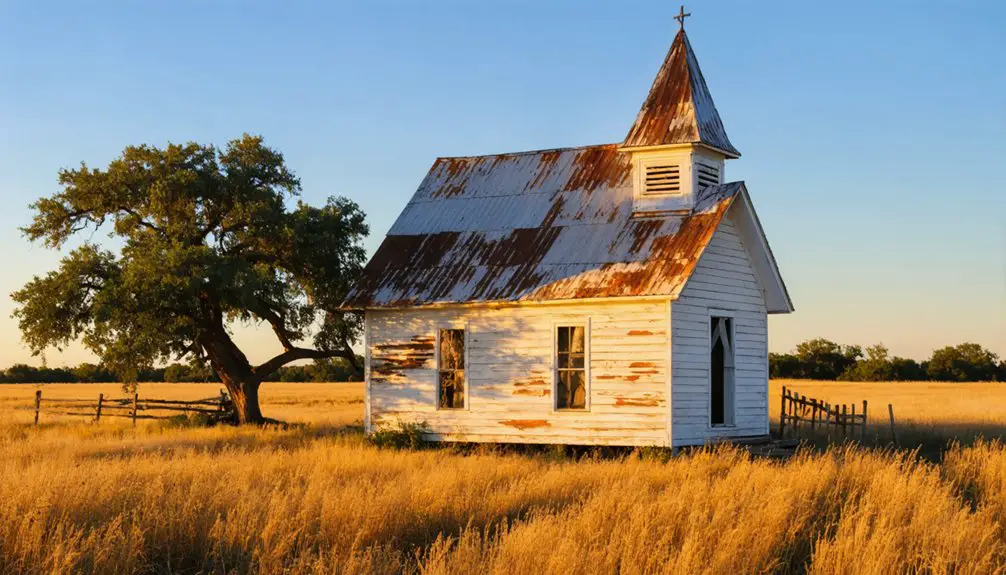
Tucked away in Burnet County, the ghost town of Watson — also known as Watson’s Store — carries over a century of quiet history. Named after local store operator Ed Watson, this small settlement once supported a school that opened in 1879.
The Pleasant Hill school later merged with it in the 1930s before everything faded. Today, you’ll find church relics and a standing cemetery worth exploring.
The cemetery stories here run deep, connecting you to families who built their lives in this remote Texas landscape. With a population of just 98 recorded in 2000, Watson isn’t completely gone — it’s simply waiting for curious travelers willing to wander off the main road and let history speak for itself.
What Survives in Watson’s Comanche County Ghost Town?
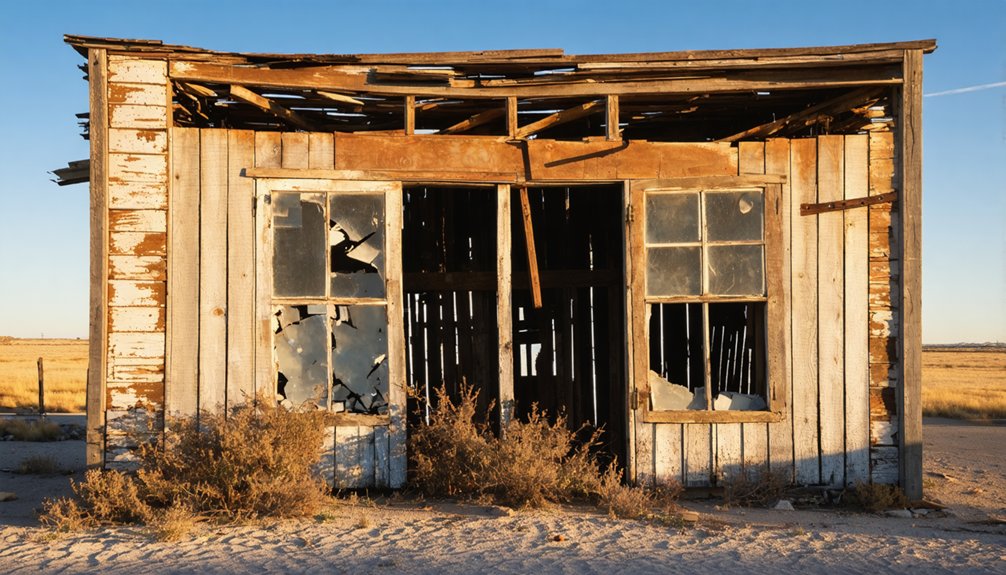
Once a functioning community with a recorded population of 67 in 1930, Watson in Comanche County had nearly vanished from the map by 1936.
Today, you’re exploring one of Texas’s most quietly erased ghost towns, where ghostly remnants and abandoned structures tell a story of rapid decline.
Watson, Texas: a ghost town quietly erased, where abandoned remnants whisper stories of heartbreakingly rapid decline.
Here’s what you might encounter:
- Scattered foundations – Crumbling remnants mark where buildings once stood, offering raw, unfiltered history beneath your feet.
- Overgrown lots – Nature has aggressively reclaimed the land, creating an eerie, untouched atmosphere worth photographing.
- Rural road access – Off-highway routes lead you directly into the site, rewarding explorers who enjoy off-the-beaten-path freedom.
Pack your GPS coordinates, check seasonal road conditions, and prepare for an honestly humbling encounter with a town time completely swallowed.
Watson vs. Cheapside: Which Texas Ghost Town Is Worth the Drive?
Both ghost towns carry their own distinct personality, so choosing between Watson in Comanche County and Cheapside in Gonzales County really depends on what kind of explorer you are.
If Watson ghost stories and eerie silence fuel your curiosity, Watson’s minimal remains create a raw, unfiltered atmosphere where you’ll genuinely feel history fading beneath your feet.
There’s no crowd, no signage, just open land telling a quiet story.
Cheapside history runs deeper with tangible roots. Settled in 1836, it evolved from a cotton hub into a community that still holds church services.
The Freeman-Watson store stood until 1989, and traces of organized life remain visible.
Watson suits the solitary wanderer. Cheapside rewards those craving context.
Honestly, if distance allows, visit both and decide for yourself.
Finding Watson, Texas When Your GPS Gives Up
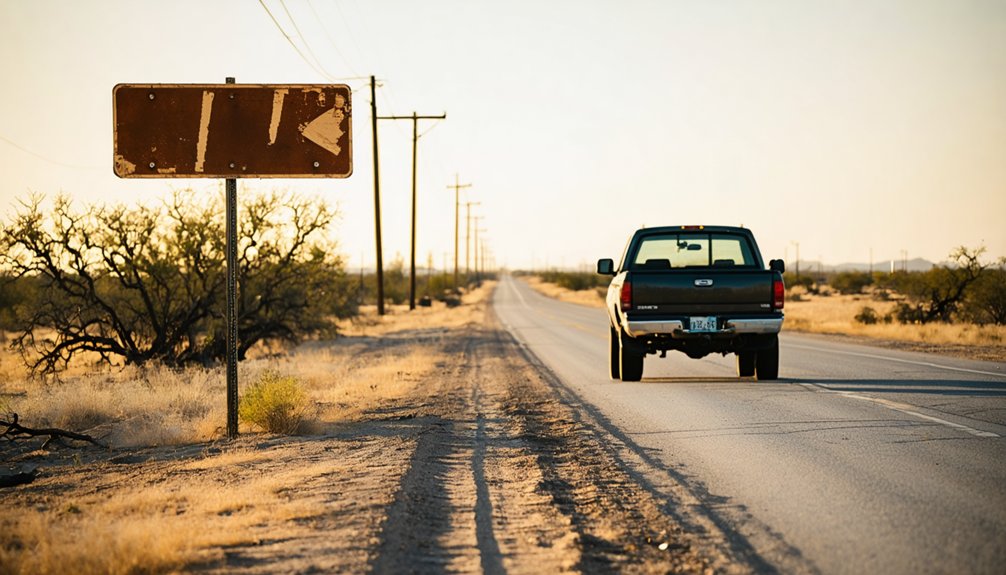
Deciding where to go is only half the battle — actually getting there’s where the real adventure starts. GPS navigation often fails in rural Texas, so you’ll need backup strategies to reach Watson’s historically significant remnants.
Getting there is half the adventure — GPS fails in rural Texas, so come prepared for the real journey.
Here’s how to navigate like a pro:
- Download offline maps — Cell service disappears fast near Comanche and Burnet counties, so save your scenic routes before leaving civilization.
- Ask locals for directions — Residents near Strawn carry local legends and shortcuts that no algorithm knows.
- Cross-reference historical markers — Texas historical significance signs appear roadside even when satellite signals don’t.
Embrace the detours. Watson’s ghost town atmosphere hits differently when you’ve earned it through a little old-fashioned exploration and a paper map spread across your dashboard.
Best Time to Visit Watson’s Texas Ghost Towns
Timing your visit to Watson’s ghost towns can mean the difference between a memorable road trip and a miserable slog through Texas heat. The best visiting season runs from October through April, when temperatures stay manageable and you can actually enjoy exploring crumbling foundations and overgrown cemeteries without sweating through your clothes.
Ideal weather conditions hit their sweet spot in late October and early November — crisp air, golden light, and minimal crowds make photographing ruins genuinely rewarding. Spring works well too, though March can bring unpredictable storms across Comanche and Burnet counties.
Avoid July and August entirely unless you enjoy 100-degree punishment. Weekdays offer quieter exploration than weekends, especially around Strawn’s Watson House, where weekend ghost tour crowds can interrupt your independent wandering.
What Watson’s Remote Terrain Demands You Pack
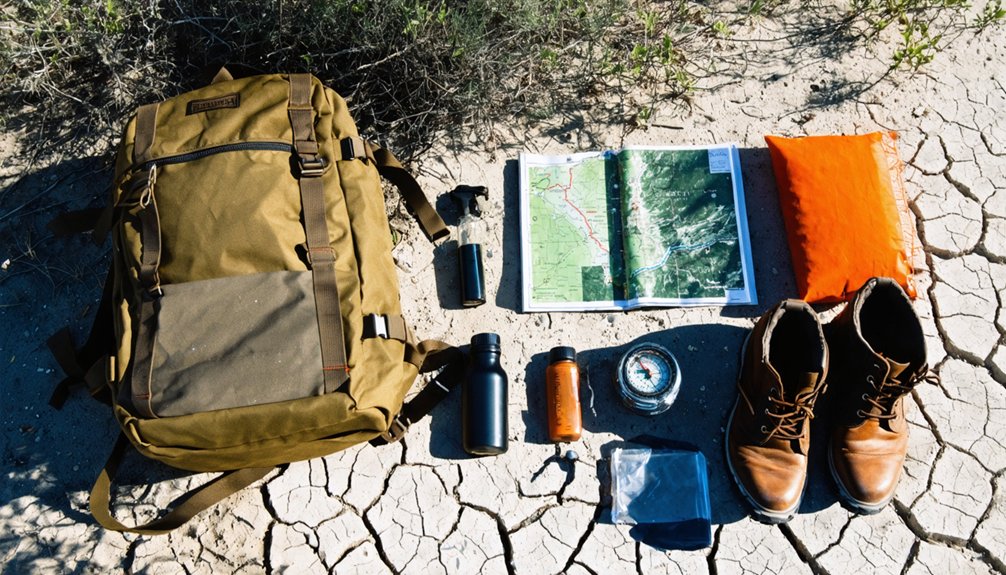
Before you set out for Watson’s scattered ruins and forgotten cemeteries, you’ll need to pack smart because these remote Texas landscapes don’t forgive the unprepared.
Toss in essentials like water, a first-aid kit, a paper map, a charged portable battery, and sturdy boots that can handle uneven terrain and overgrown brush.
Conditions shift fast out here, so you’ll also want to anticipate everything from blazing heat and flash flooding to dead cell zones that can turn a minor wrong turn into a real problem.
Essential Survival Gear Checklist
Packing 10 essential items can mean the difference between a memorable ghost town adventure and a dangerous situation when you’re exploring Watson’s remote terrain.
These ghost town essentials keep you self-sufficient when cell service disappears and help isn’t nearby. Smart packing tips start with knowing what the land demands.
- Water and filtration system — Carry at least one gallon per person daily plus a portable filter for emergency sourcing.
- Navigation tools — Download offline maps and bring a physical compass since GPS signals drop in isolated areas.
- First aid kit with emergency blanket — Remote locations mean delayed emergency response, so you’re handling initial injuries yourself.
Pack intentionally, travel confidently, and let Watson’s forgotten streets reveal their secrets on your terms.
Watson’s remote terrain doesn’t forgive unpreparedness—flash flooding, extreme heat, and sudden temperature drops can turn an exciting ghost town crawl into a survival situation within hours.
You’ll want offline maps downloaded before you lose signal on isolated back roads near Strawn or Comanche County’s forgotten ruins.
Road trip safety means monitoring weather forecasts obsessively, because Texas skies shift without warning. Carry extra fuel since remote stretches offer nothing between destinations.
Ghost town etiquette matters equally here—don’t disturb crumbling structures, as unstable foundations collapse without notice. Respect posted boundaries and leave everything exactly as you found it.
Tell someone your exact itinerary before departing. If your route changes, communicate that update.
Watson’s scattered locations reward prepared explorers who treat both the land and its history with genuine respect.
Nearby Texas Ghost Towns Worth Adding to Your Route
Why stop at just one ghost town when Texas has so many waiting to be explored? Pair your Watson visit with these nearby ghost town attractions steeped in local legends:
- Watson, Comanche County — Once home to 67 residents, this ghost town vanished entirely by 1936, leaving only eerie silence along rural roads.
- Watson, Burnet County — Formerly Watson’s Store, this settlement retains a church and cemetery, connecting you directly to 19th-century Texas frontier life.
- Cheapside, Gonzales County — Settled in 1836, this former cotton hub still holds occasional church services at its community center, blending history with living tradition.
Each stop adds depth to your journey, giving you a richer picture of Texas’s forgotten communities without requiring major detours.
How to Explore Watson’s Abandoned Sites Without Getting Hurt
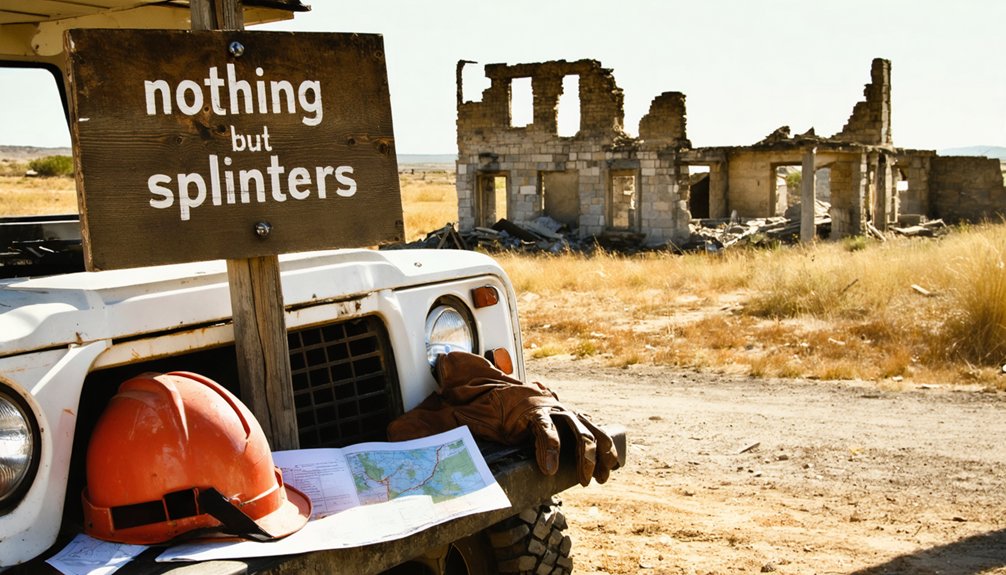
Before you step inside any crumbling structure in Watson or its surrounding ghost towns, test the floors, walls, and ceilings for stability, since decay can make even solid-looking buildings collapse without warning.
You’ll also want to gear up with sturdy boots, thick gloves, a hard hat, and a dust mask to protect yourself from rusty debris, broken glass, and hazardous materials like asbestos.
Finally, don’t assume abandoned land is open to the public — research property ownership and secure any necessary permissions before you visit to avoid trespassing charges.
Check Structural Stability First
Abandoned sites like Watson’s crumbling structures in Comanche County or the weathered remnants in Burnet County can turn a thrilling ghost-town adventure into a dangerous situation if you’re not paying attention to what’s above and beneath you.
Quick safety assessments before entering any structure keep you exploring longer and safer.
Before stepping inside anything:
- Scan walls and ceilings for visible cracks, sagging rooflines, or leaning supports — these signal imminent collapse risk.
- Test flooring by pressing firmly with one foot before shifting your full weight, especially on wooden surfaces rotted by decades of exposure.
- Conduct informal structural inspections from the outside first, circling the building to identify compromised corners or foundation shifts.
Trust your instincts — if something feels unstable, it probably is.
Wear Protective Safety Gear
Packing 5 essential pieces of protective gear before stepping onto Watson’s crumbling grounds could be the difference between a memorable road trip and a trip to the emergency room.
Start with steel-toed boots to navigate broken foundations and debris. Add thick gloves to protect your hands from rusted metal and jagged wood.
Wear protective clothing like long sleeves and durable pants to shield against sharp edges, thorns, and insect exposure throughout Strawn’s abandoned structures. A hard hat guards against falling ceiling fragments inside deteriorating buildings.
Finally, bring a dust mask, since decades-old structures release hazardous particles when disturbed.
These safety precautions aren’t optional — they’re your ticket to exploring Watson’s haunted history freely without cutting your adventure short.
Gear up smart, explore boldly.
Research Access Permissions Beforehand
Stepping onto Watson’s crumbling grounds without checking access permissions first is a fast track to trespassing fines or worse.
Ghost town regulations vary widely across Texas, and Watson’s scattered sites sit on private or county-managed land. Don’t assume abandonment means open access.
Here’s how to stay legally free while exploring:
- Contact local county offices in Palo Pinto or Comanche County to clarify permission requirements before arrival.
- Reach out to landowners directly — many welcome respectful explorers when asked politely in advance.
- Check Texas Historical Commission records online for designated sites with public access guidelines.
Doing this homework keeps you exploring freely, legally, and without interruption. A quick phone call today prevents a costly confrontation tomorrow.
Frequently Asked Questions
Can Children Safely Visit Watson’s Ghost Town Sites in Texas?
Yes, you can bring kids to Watson’s ghost town sites for child safety and historic education! Explore Strawn’s haunted landmarks and Burnet’s cemetery together, but you’ll want to supervise children closely around aged ruins.
Are There Guided Ghost Town Tours Available Near Watson, Texas?
Like treasure maps waiting to be unfolded, guided tours near Watson, Texas let you explore local history firsthand. You’ll find haunted tours in nearby Strawn, where Watson House’s 52-year funeral home legacy brings ghost town stories alive.
Is Photography Permitted at Watson’s Abandoned Cemeteries and Church Grounds?
You’ll generally find photography permitted at Watson’s abandoned cemeteries and church grounds, but practice proper cemetery etiquette — don’t disturb abandoned artifacts, respect burial markers, and always tread lightly through these historically significant, hauntingly beautiful spaces.
Do Any Watson Ghost Town Sites Charge an Admission Fee?
With 98 residents recorded in 2000, Watson’s ghost town history remains freely accessible. You won’t encounter any admission policies blocking your exploration — these forgotten sites welcome your curiosity without charging a single fee.
Which Watson Ghost Town Site Is Most Accessible for Disabled Visitors?
Watson House in Strawn offers you the most accessible routes and visitor facilities since it’s an active funeral home turned haunted attraction, meaning you’ll find maintained pathways and amenities that other remote ghost town sites simply don’t provide.
References
- https://www.ghosthuntingbeauties.com/watson-house
- https://theforgottensouth.com/cheapside-texas-ghost-town-history/
- http://www.expeditionutah.com/forum/index.php?threads/ghost-town-watson.5608/
- https://www.texasescapes.com/TexasHillCountryTowns/Watson-Texas.htm
- https://en.wikipedia.org/wiki/List_of_ghost_towns_in_Texas
- https://www.tshaonline.org/handbook/entries/watson-tx-comanche-county
- https://texaslegacy.org/transcript/geraldine-watson/