White Cloud, Kansas was once a booming Missouri River port where over 2,000 settlers resupplied before heading west — today, it’s a hauntingly preserved ghost town with 67 historic buildings still standing on the bluffs. You can walk the same streets steamboat passengers once traveled, explore a National Register Historic District spanning 41 acres, and uncover stories tied to the Gatling Gun and *Paper Moon*. There’s far more to this forgotten river town than first meets the eye.
Key Takeaways
- White Cloud, Kansas, a historic ghost town on the Missouri River bluffs, features 67 preserved buildings from the 1860s listed on the National Register.
- Travel via K-7 highway, park along Poplar, 6th, or Chestnut Streets, and bring a printed map due to unreliable cell service.
- Visit during Spring or Fall Flea Markets for a lively atmosphere, or Winter for a quiet, authentic ghost-town experience.
- Pack comfortable walking shoes, a camera, and cash, as the historic district is best explored on foot independently.
- Pair your visit with nearby historic towns like Kennekuk and Padonia to fully experience northeast Kansas’s rich frontier history.
White Cloud, Kansas: A Living Ghost Town on the Missouri River Bluffs
When you stand on the Missouri River bluffs of Doniphan County, Kansas, you’re standing on ground that once hummed with the energy of a thriving river port town called White Cloud.
Named for Ioway Chief Ma-Hush-Kah, this place carries deep Ioway heritage beneath its weathered streets.
Founded in 1856, White Cloud rode the wave of Steamboat History, welcoming vessels loaded with western supplies and more than 2,000 residents at its peak.
At its peak, White Cloud bustled with steamboats, western supplies, and over 2,000 souls chasing frontier promise.
Then the railroads arrived, and the docks fell quiet.
Today, roughly 180 people call it home — not quite a ghost town, but a place where the past breathes through 67 historic buildings.
You won’t find a buzzing metropolis here.
You’ll find something rarer: authentic American history waiting to be explored on your own terms.
From 2,000 Residents to 115: How the Railroads Killed a Missouri River Port
Once, you’d have found White Cloud’s docks crowded with over 2,000 residents hauling western supplies off steamboats, the Missouri River practically humming with commerce.
Then the railroads arrived in the 1860s, rerouting trade inland and quietly strangling the town’s reason for existence.
Today, you’ll walk streets shared by just 115 souls, the echoes of a booming port town still visible in the weathered storefronts left behind.
Railroads Replaced River Trade
The steamboats that once crowded White Cloud’s Missouri River docks made this bluff-top town one of the most essential supply ports heading west — but the railroads that arrived in the 1860s rendered all of that irrelevance overnight.
River trade didn’t just slow down; it collapsed. Settlers heading west no longer needed Missouri River ports when railroad lines offered faster, more reliable transport inland.
The economic impact on White Cloud was devastating and swift. A town that had built its entire identity around supplying westward-bound travelers suddenly had nothing left to offer.
Businesses shuttered, residents moved on, and the population that once exceeded 2,000 people shrank dramatically.
What railroads didn’t finish, declining agricultural labor needs completed, leaving White Cloud a quiet shadow of its former self.
Population Collapse After 1860
At its peak, White Cloud wasn’t just a town — it was a pulse point for westward America, home to more than 2,000 residents who kept its docks crowded and its storefronts humming.
Then the railroads arrived in 1860, and the economic shifts were swift and merciless.
You can almost feel the silence that followed. Population changes happened fast — merchants packed up, laborers followed the work, and families chased opportunity elsewhere.
By the early 1900s, roughly 1,500 residents remained. Today, only about 115 call White Cloud home.
Agricultural technology deepened the wound, eliminating the farm labor that might’ve sustained a smaller community.
What’s left isn’t quite a ghost town, but it’s close enough to make you wonder what freedom truly costs when progress moves on without you.
White Cloud’s National Register Historic District: 67 Buildings Across 41 Acres
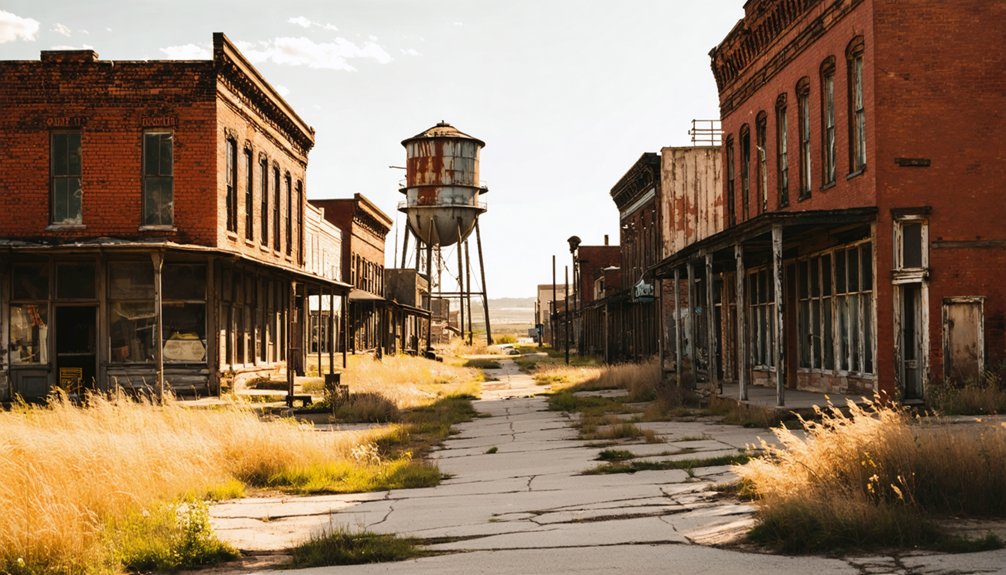
Spread across 41.3 acres of Missouri River bluff country, White Cloud’s entire downtown district earned a place on the National Register of Historic Places, preserving 67 contributing buildings and sites that once hummed with steamboat commerce and frontier ambition.
You’ll walk streets where historic preservation has kept 1860s storefronts standing, including the White Cloud Barber Shop from 1864 and Bailey & Noyes Fancy Dry Goods Store from 1868-69. These structures aren’t just old walls — they’re cultural heritage you can touch, anchoring a town that refuses to fully disappear.
The district runs between Poplar, 6th, and Chestnut Streets along K-7, making it easy to explore on foot. Each building carries a story of a community that once outfitted westward-bound dreamers chasing their own freedom.
Walking the Historic District: Barber Shop, Dry Goods Store, and the Poulet House
Walking White Cloud’s historic district feels like stepping into a daguerreotype that never faded.
You’ll pass the White Cloud Barber Shop, built in 1864, where frontier men once traded gossip alongside haircuts — a quiet monument to barber shop history when community gathering happened face-to-face.
Nearby, Bailey & Noyes Fancy Dry Goods Store (1868-69) reminds you how dry goods significance shaped frontier survival, housing not just merchandise but a bank and post office under one roof.
Don’t miss the Poulet House, constructed between 1879 and 1880, separately honored on the National Register since 1971.
These structures aren’t museum pieces behind glass — you walk beside them freely, breathing the same Missouri River air that once drew steamboat captains and westward-bound settlers chasing their own untamed horizons.
The Gatling Gun Inventor and the Paper Moon Film Crew Who Came to White Cloud
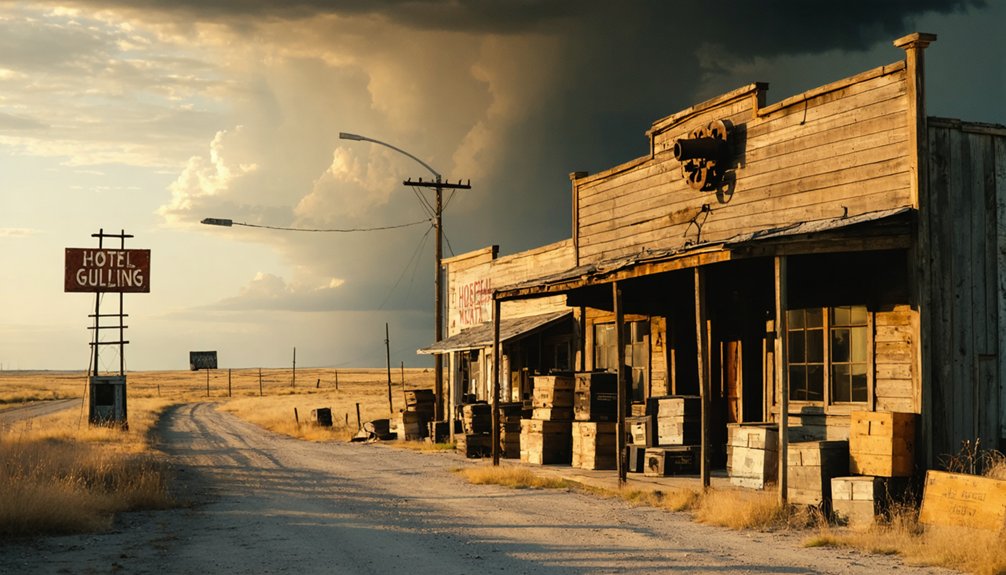
White Cloud’s story takes an unexpected turn when you learn that Dr. J. R. Gatling, the town’s organizer, invented the Gatling Gun right here in this quiet Missouri River community.
Fast-forward to 1973, and Hollywood discovered what history already knew — White Cloud’s weathered streets and authentic 19th-century character made it the perfect backdrop for scenes in *Paper Moon*.
You’re walking through a town that shaped both military history and cinema, and most travelers drive right past it without ever knowing.
Gatling Gun’s Local Origins
Beyond the weathered storefronts and quiet bluffs of White Cloud lie two surprising footnotes to American history. Dr. J.R. Gatling, the town’s organizer, shaped local history forever when he invented the Gatling Gun.
Walk these same streets and feel that weight.
Here’s what connects White Cloud to bigger American stories:
- Dr. J.R. Gatling organized the town’s early development
- Gatling later invented the revolutionary Gatling Gun
- His local history roots tie directly to this quiet Kansas bluff town
- The 1973 film *Paper Moon* used White Cloud’s authentic streets as its backdrop
You’re standing where innovation and cinema once intersected.
White Cloud didn’t just survive history — it quietly shaped it, one weathered brick at a time.
Paper Moon Film Locations
The same streets that once felt Dr. Gatling’s footsteps later attracted Hollywood’s attention. In 1973, director Peter Bogdanovich chose White Cloud’s weathered storefronts and scenic views as film locations for *Paper Moon*, the beloved Depression-era road movie starring Ryan and Tatum O’Neal.
You can walk those same streets today, recognizing corners where cameras once rolled.
White Cloud’s authentic, unrestored architecture made it irresistible to filmmakers seeking genuine period atmosphere. These weren’t fabricated sets — they were real buildings shaped by a century of American life.
When you stand among these structures, you’re experiencing the same scenic views that convinced a Hollywood crew to haul equipment to this small Kansas bluff town. History doesn’t just live here; it performs.
White Cloud’s Hollywood Legacy
Two remarkable legacies worth knowing:
- Dr. J.R. Gatling organized White Cloud’s founding.
- Gatling later invented the iconic rapid-fire Gatling Gun.
- *Paper Moon* filmmakers chose White Cloud’s authentic backdrop in 1973.
- Those filmed streets remain largely unchanged today.
You’re walking through living history — where invention and cinema intersected against Missouri River bluffs that time forgot to modernize.
Driving to White Cloud: Routes, Road Conditions, and Parking

Perched on the Missouri River bluffs in Doniphan County, White Cloud’s most direct route runs along K-7 highway, which traces the same corridors that once guided steamboat travelers and westward-bound settlers toward this bustling river port.
Driving conditions along K-7 are generally manageable, though rural roads demand respect, particularly after heavy rainfall when Missouri River bottomland moisture can create slick patches. You’ll want to drive deliberately, absorbing the landscape that hasn’t fundamentally changed since Ma-Hush-Kah’s people called these bluffs home.
Parking options remain pleasantly uncomplicated, reflecting the town’s intimate scale. You can pull directly along the historic district, bounded by Poplar, 6th, and Chestnut Streets.
During bi-annual flea markets, arrive early to secure convenient spots before antique hunters from surrounding counties claim the prime positions.
The Best Time to Visit White Cloud, Kansas
Timing shapes everything when visiting a place where history has already slipped away once. White Cloud rewards those who plan around its best seasons and local events.
- Spring Flea Market – Arrive when Sparks Antiques and Collectibles fills the streets with dealers and treasure hunters.
- Fall Flea Market – Cooler air and harvest-season nostalgia make this the most atmospheric visit.
- Summer – Long daylight hours let you photograph every 1860s storefront without rushing.
- Winter – Quiet, raw, and honest — the town feels closest to its ghost-town soul.
You’re free to arrive anytime, but the bi-annual flea markets transform White Cloud from a quiet river bluff outpost into something briefly, beautifully alive again.
Historic Towns Near White Cloud: Padonia, Kennekuk, and Iowa Point
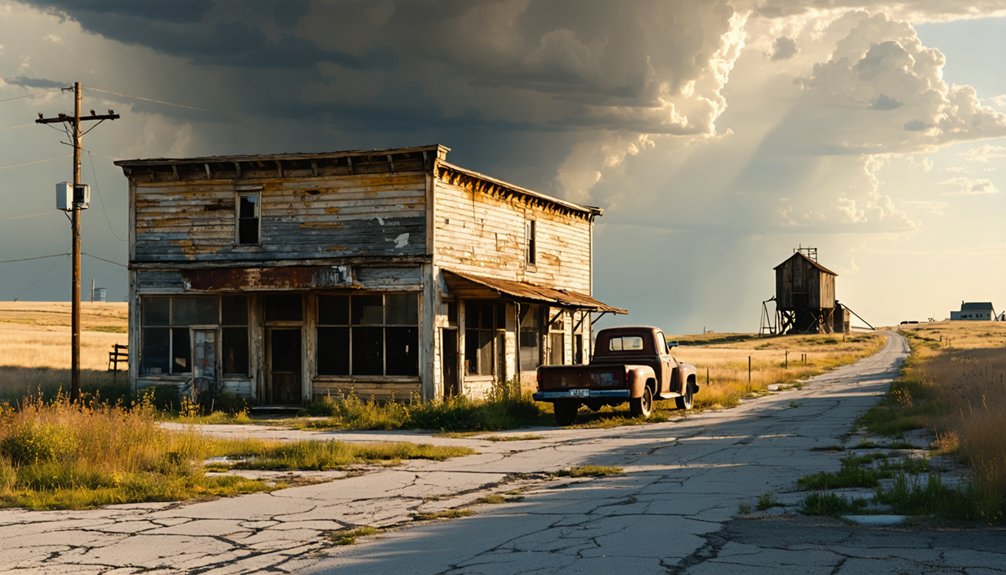
White Cloud doesn’t stand alone — scatter your attention a few miles in any direction and you’ll find ghost towns that fill in the larger story of northeast Kansas’s rise and quiet erasure.
Iowa Point, just down the road, was destroyed by Civil War fighting, leaving silence where a community once stood.
Padonia history runs through the same wartime current, making it essential for anyone tracing the region’s collapse.
Padonia carries the weight of wartime, a quiet ruin essential to understanding how northeast Kansas came undone.
Head toward Kennekuk and you’ll find Pony Express history woven into its identity — Kennekuk attractions connect you to a time when riders carried the nation’s voice across open land.
Together, these towns form a corridor of memory, each one a thread in the same unraveling story you’re following through Doniphan County.
What to Pack for a White Cloud Day Trip
Nothing about White Cloud announces itself loudly, so you’ll want to arrive prepared rather than scrambling. These day trip tips and packing essentials keep you moving freely through its storied streets:
- Comfortable walking shoes — The historic district’s 41.3 acres deserve unhurried exploration on foot.
- Camera or sketchbook — Sixty-seven contributing buildings offer endless frames worth capturing.
- Cash — The bi-annual flea market at Sparks Antiques runs on old-fashioned transactions.
- A printed map — Cell service on Missouri River bluffs isn’t guaranteed.
White Cloud rewards the self-sufficient traveler. Pack light, stay curious, and let the town’s quiet weight — steamboat echoes, Gatling’s ghost, a century of faded commerce — settle over you without interruption.
Frequently Asked Questions
Are There Any Guided Tours Available in White Cloud’s Historic District?
The knowledge doesn’t mention guided tours, but you can explore White Cloud’s historic district freely on your own, uncovering ghost stories and local legends among 67 contributing buildings that’ll awaken your adventurous, freedom-loving spirit.
Is There Cell Phone Service or Wi-Fi Available in White Cloud?
Like the steamboats that once vanished ’round the river’s bend, reliable cell coverage and internet access can fade here. You’ll want to embrace White Cloud’s glorious isolation — it’s freedom’s truest form.
Are Pets Allowed When Exploring White Cloud’s Outdoor Historic Areas?
The knowledge doesn’t specify pet-friendly policies, but you’re free to bring your furry companion along for outdoor adventures through White Cloud’s historic streets, where you’ll walk the same paths as 19th-century steamboat traders.
Are There Any Restaurants or Food Options Currently Open in White Cloud?
With a population of barely 115 souls, White Cloud’s dining options have faded like its steamboat glory days. You won’t find bustling local cuisine here, so pack your own provisions before exploring this hauntingly beautiful, freedom-filled historic district.
Is White Cloud’s Historic District Accessible for Visitors With Mobility Limitations?
The historic district’s accessibility features aren’t documented, but you’ll find transportation options helpful traversing its 41.3 acres of storied streets. You’d want to call ahead, as these time-worn bluffs where steamboats once docked deserve your careful exploration.
References
- https://www.legendsofamerica.com/ks-whitecloud/
- https://www.youtube.com/watch?v=0wTaBKVg3dk
- https://www.youtube.com/watch?v=A7guEY4xsug
- https://en.wikipedia.org/wiki/White_Cloud_Historic_District
- http://www.lovewellhistory.com/blog/a-brush-with-madness.html
- http://dpcountyks.com/city/white-cloud/
- https://legendsofkansas.com/kansas-ghost-town-list/
- https://rocketgrants.org/rocket-grants-projects/projects-2018-2019/white-cloud-mahaska-mural/