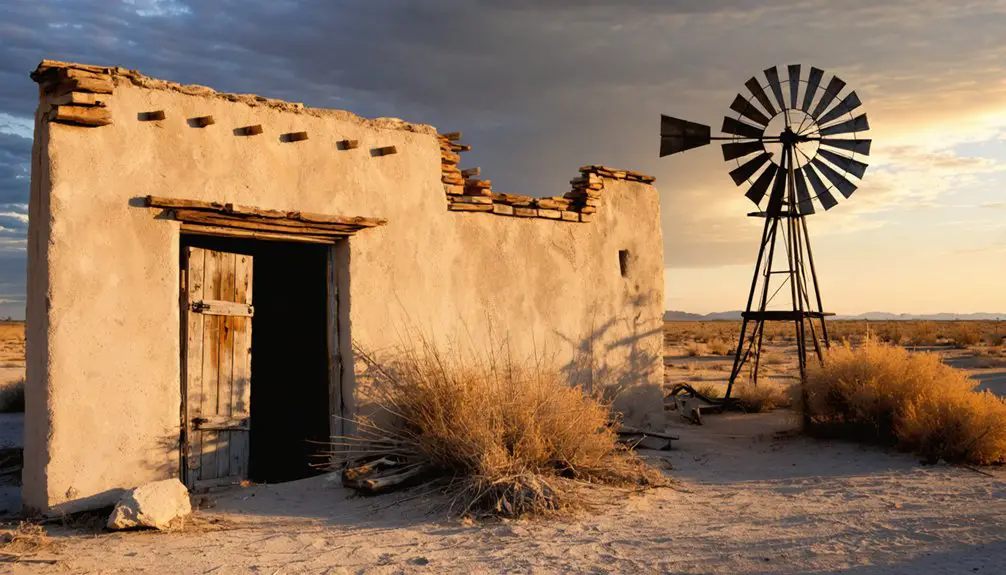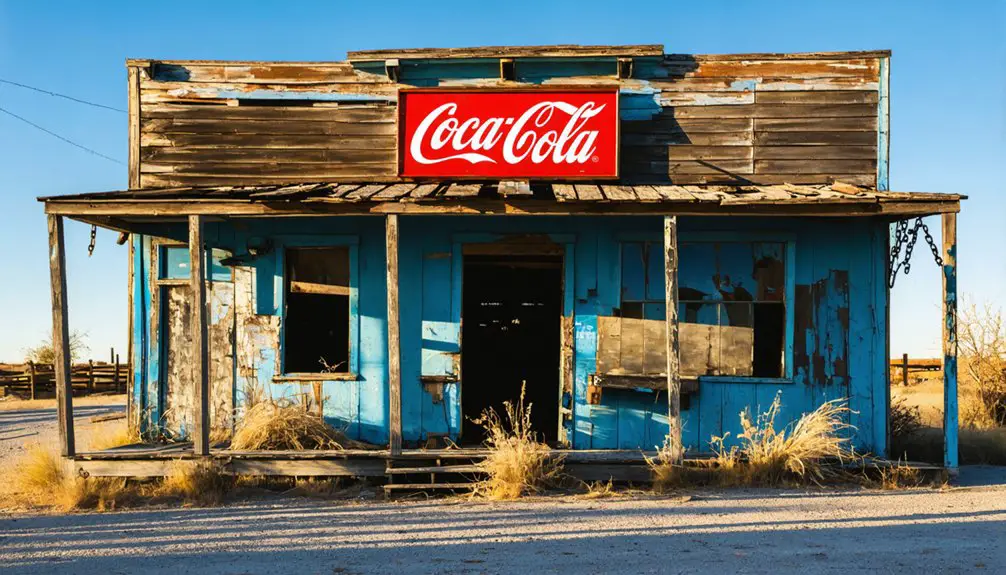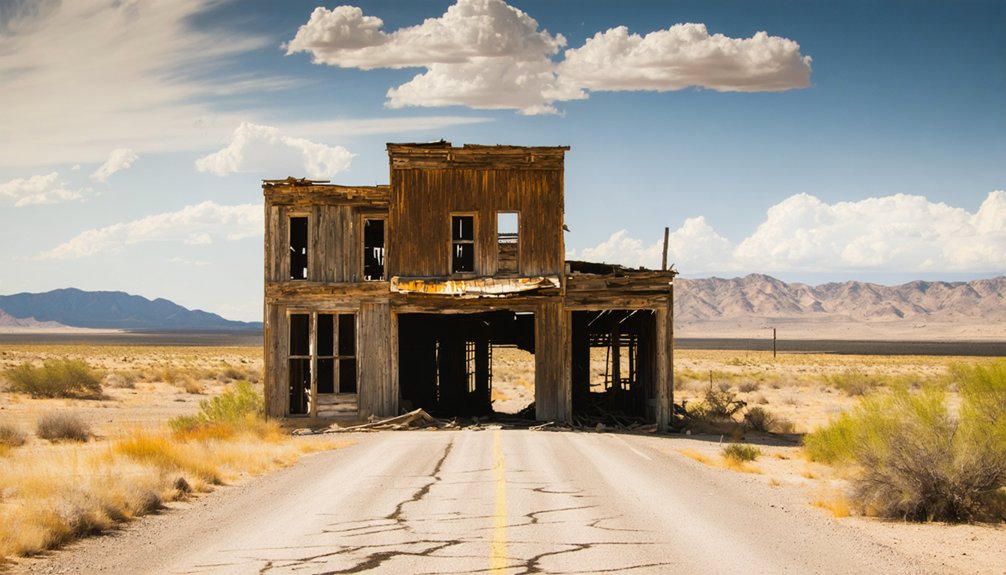
Planning a ghost town road trip to Lobo, Texas means heading about 12 miles south of Van Horn along U.S. Highway 90, where you’ll spot a vacant motel, a boarded-up gas station, and weathered storefronts baking under harsh desert light. Lobo’s been frozen in time since 1991, privately owned, and fenced off, so you’ll experience it best from the highway shoulder. There’s more to this forgotten town’s story than what the crumbling walls let on.
Key Takeaways
- Lobo, Texas sits along U.S. Highway 90, roughly 12 miles south of Van Horn and 130 miles southeast of El Paso.
- The ghost town is privately owned and fenced, so plan to view and photograph structures from the highway shoulder only.
- Abandoned buildings include a vacant motel, boarded-up gas station, weathered grocery store, and scattered houses reflecting West Texas history.
- No services exist near Lobo, so fill your gas tank and stock up on water and supplies in Van Horn beforehand.
- Pack water, sunscreen, sturdy shoes, a camera, and offline maps, as desert conditions and remote location demand careful preparation.
What Is Lobo, Texas and Why Does It Still Draw Visitors?
Tucked along U.S. Highway 90 in West Texas, Lobo is a ghost town that time quietly swallowed. It sits between the Van Horn and Wylie Mountains in Culberson County, roughly 12 miles south of Van Horn, baking under harsh desert sun.
Lobo clings to the West Texas desert, a forgotten ghost town swallowed by silence between ancient mountains.
What started as a Wild West watering stop in the 1850s grew into a small railroad town and cotton-farming community before fading into abandonment by 1991.
Yet visitors still find their way here. Desert legends cling to the crumbling motel, boarded-up gas station, and weathered storefronts visible from the highway.
The site is privately owned, so you won’t walk the streets freely, but the view alone rewards the detour. Lobo reminds you that the open road holds stories most people never slow down enough to notice.
How Lobo Went From Railroad Stop to Ghost Town
When you trace Lobo’s origins, you find a town that grew from pure necessity — the Southern Pacific Railroad established a stop here in 1882, anchoring a community that had already served travelers along the San Antonio–San Diego mail route. A post office opened in 1907, cotton farming took hold, and Lobo briefly supported a modest but functional population.
Yet by 1991, falling water tables, rising pumping costs, earthquake damage decades earlier, and a shuttered cotton gin had stripped the town down to nothing, leaving behind the quietly weathering structures you can glimpse from the highway today.
Railroad Origins and Growth
Before the Southern Pacific Railroad laid its tracks through this remote stretch of West Texas in 1882, Lobo’s existence hinged on something far more precious than commerce — water. The discovery of Van Horn Wells transformed this desert outpost into an essential watering stop along the San Antonio–San Diego mail route during the 1850s, cementing Lobo’s place among the region’s historical landmarks.
When the railroad arrived, it breathed new life into the settlement. A post office followed in 1907, signaling genuine growth.
Local legends speak of a scrappy community that carved out a life where few thought possible. You’d have found cotton farmers, railroad workers, and desert survivors all sharing this harsh, wind-scoured land — a freedom-seekers’ frontier that briefly flourished before nature and economics reclaimed it.
Decline and Abandonment
Two earthquakes — striking in 1929 and 1931 — cracked Lobo’s foundation both literally and figuratively, damaging the hotel and shaking the community’s confidence just as it had begun to find its footing.
Cotton farming briefly revived the town, pushing population toward 90 by the mid-1960s, but a falling water table made irrigation too costly, eventually shutting down the cotton gin.
Residents trickled away, and by 1991, Lobo was effectively abandoned. No haunted legends drove people out — just economics and desert reality.
When German buyers arrived in 2001, their preservation efforts breathed cautious new life into the weathered structures.
For you, that layered history makes Lobo far more compelling than a simple ruin — it’s a place that fought hard before finally going quiet.
How to Get to Lobo, Texas on Your Road Trip
Tucked along U.S. Highway 90, Lobo sits about 12 miles south of Van Horn and 24 miles west of Valentine in Culberson County’s stark Trans-Pecos landscape.
If you’re driving from El Paso, you’re looking at roughly 130 miles southeast — an easy stretch of open desert highway that practically begs you to keep the windows down.
You’ll spot the weathered structures from the road itself, which makes it ideal for photography opportunities without crossing onto private property.
The fenced boundary marks the town’s edge, so respect it.
Van Horn works well as your base, offering fuel, food, and lodging before you push south.
Lobo’s historical preservation story unfolds best when you slow down, pull over, and simply take it all in from the highway’s shoulder.
What’s Left to See at Lobo’s Abandoned Buildings?
What remains at Lobo reads like a freeze-frame of small-town West Texas life: a vacant motel, a boarded-up gas station, a weathered grocery store, and scattered houses slowly surrendering to desert wind and sun. A bunkhouse and former restaurant round out the historical artifacts still standing across the property.
You’ll view most of these structures from U.S. Highway 90, since the site is privately owned and fenced. Don’t let that discourage you — the roadside perspective alone delivers remarkable photography opportunities. The harsh Chihuahuan Desert light carves deep shadows across peeling paint and sagging rooflines, rewarding anyone with a camera.
Each building tells a quiet story about cotton farming, railroad logistics, and ultimate abandonment, making Lobo one of West Texas’s most visually striking ghost towns to pass through.
Who Owns Lobo, Texas and Can You Walk Around?
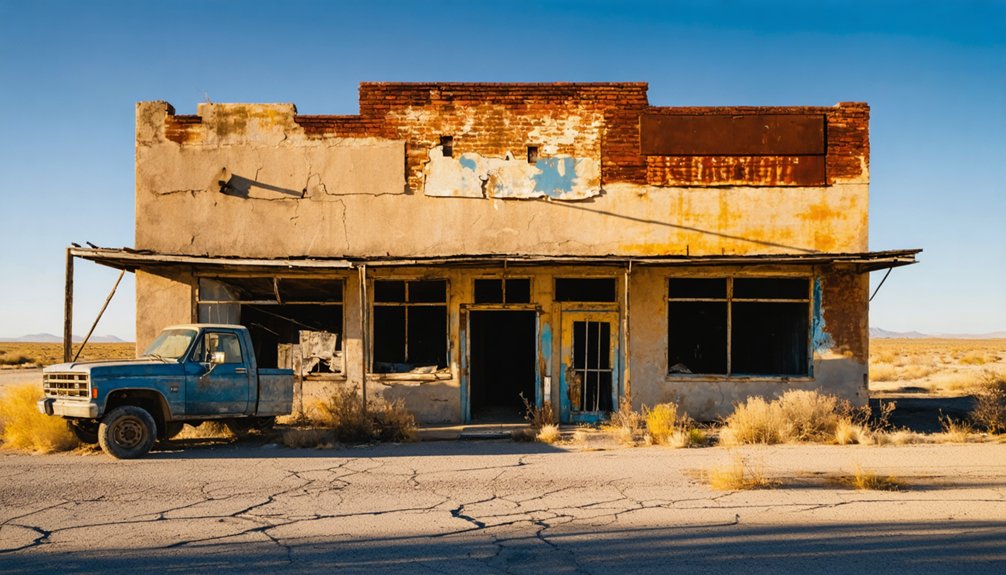
Lobo is privately owned, so you won’t be walking the grounds freely. A fenced boundary keeps visitors at a respectful distance, meaning you’ll experience most of the site from Highway 90.
In 2001, three German buyers purchased the town for restoration, using it for living, creative work, and occasional art and film festivals. Before that, it sat listed for $60,000 in 1988 after fire damage gutted its commercial life.
You can still absorb the atmosphere from the road, letting the weathered motel, boarded gas station, and silent storefronts stir your imagination.
Local legends and historical myths surrounding Lobo’s railroad days and desert hardships run deep here.
Treat it as a powerful roadside encounter rather than a walk-in destination, and it’ll leave a lasting impression.
What to Pack Before Driving Out to Lobo
Since Lobo sits deep in the Trans-Pecos desert with no services, shops, or shade, you’ll want to pack smart before leaving Van Horn. Carry more water than you think you’ll need — desert heat turns a quick roadside stop into an endurance test fast.
Pack more water than you think you’ll need — desert heat turns a quick stop into an endurance test fast.
Bring sunscreen, a wide-brimmed hat, and sturdy shoes for uneven ground near weathered structures. A camera helps you document what remains of Lobo’s historical artifacts, from the boarded-up gas station to the aging motel walls.
A notebook works well for jotting down local legends you’ve read before arriving, letting you cross-reference stories against what you actually see.
Cell service is unreliable, so download offline maps in advance. Fill your tank in Van Horn — there’s nothing waiting for you out on Highway 90.
Best Places to Stop Near Lobo, Texas
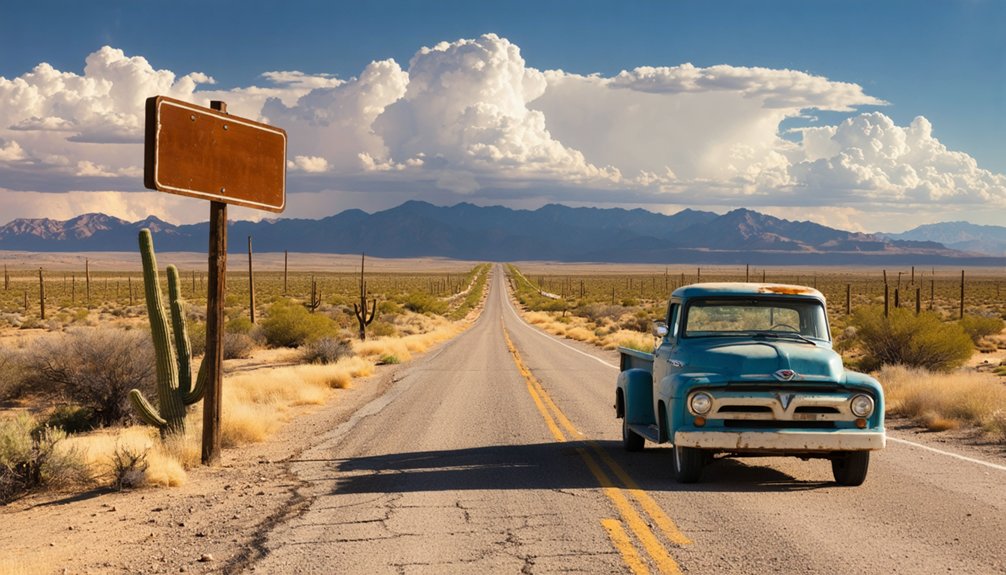
Once you’ve packed your gear and pulled out of Van Horn headed south on Highway 90, you’re already in striking distance of several stops worth building into your route. Van Horn itself offers fuel, food, and a genuine West Texas main street worth a slow walk.
Heading deeper into the Trans-Pecos corridor, you’ll encounter open stretches where desert flora crowds the roadside — creosote, ocotillo, and sotol bending under the dry wind. Keep your eyes open for local wildlife, particularly pronghorn and roadrunners cutting across the flats.
Valentine sits about 24 miles east of Lobo and adds a quirky postal landmark to your itinerary. These stops layer your drive with texture, turning a single ghost-town visit into a full Trans-Pecos road trip worth remembering.
Frequently Asked Questions
Has Lobo, Texas Ever Appeared in Any Movies or TV Shows?
The knowledge doesn’t confirm Lobo’s appearance in movies or TV shows, but its ghost town history and hauntingly cinematic ruins make it one of the most irresistible filming locations you’ll ever discover in West Texas.
What Is the Current Asking Price to Buy Lobo, Texas?
You’ll find Lobo, Texas listed at $100,000 — a proof to property value fluctuations in real estate trends. It’s your rare chance to own an entire ghost town and embrace true, untamed freedom.
Are There Any Ghost Stories or Legends Associated With Lobo?
Like a whisper lost in the desert wind, Lobo’s local legends remain largely undocumented. You won’t find officially confirmed haunted sites here, but the town’s eerie abandonment and weathering structures naturally spark your imagination.
What Language Do the Current German Owners Primarily Speak There?
The German owners primarily speak the German language in their owner communication, though you’d likely hear English too. They’ve claimed this wild, free West Texas desert as their own creative sanctuary, blending two worlds beautifully.
Has Lobo Ever Been Considered for Historic Preservation or Landmark Status?
You won’t find any confirmed landmark status for Lobo, but its historical significance as a railroad and mail-route stop makes it worthy of preservation efforts before West Texas winds erase its remaining weathered structures forever.
References
- https://en.wikipedia.org/wiki/Lobo
- https://www.nbcdfw.com/news/local/texas-news/this-west-texas-ghost-town-is-on-sale-for-100k-but-theres-a-catch/3273292/
- https://www.tshaonline.org/handbook/entries/lobo-tx
- https://nuttyhiker.com/the-texas-ghost-town-of-lobo/
- https://www.texasescapes.com/TOWNS/Lobo/Lobo_Texas.htm
- https://www.onlyinyourstate.com/experiences/texas/vacant-ghost-town-tx
- https://www.cbsnews.com/texas/news/lobo-texas-ghost-town-for-sale/
- https://www.texasmonthly.com/travel/want-to-buy-a-west-texas-ghost-town-nows-your-chance/
- https://aroundus.com/p/4973995-lobo