Victorian ghost towns unsettle you because they capture a frozen moment when human civilization abruptly surrendered to nature. You’ll find intimate scenes of daily life suspended in time – newspapers still on tables, personal belongings untouched for decades. The architectural decay triggers deep psychological responses, while climbing vines and moss transform familiar structures into alien landscapes. These abandoned spaces tell a darker story about how quickly your own world could fade into history.
Key Takeaways
- Sudden abandonment left eerie time capsules of daily Victorian life, with personal belongings frozen in their final moments of use.
- Gothic Revival architecture common in Victorian buildings naturally creates unsettling atmospheres through dark corridors and asymmetrical designs.
- Nature’s aggressive reclamation creates an uncanny fusion of human structures and wild growth, distorting familiar architectural forms.
- Economic collapse left entire communities empty, creating ghost towns that embody the psychological trauma of mass social displacement.
- Preserved domestic scenes in abandoned homes create unsettling contrasts between past vitality and present decay, triggering existential discomfort.
The Silent Echoes of a Bustling Past
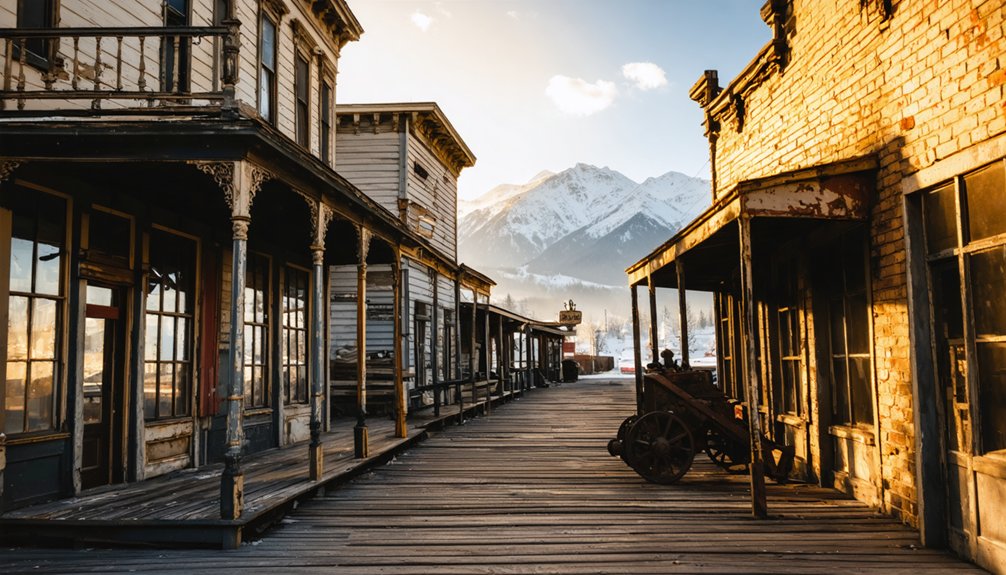
When you explore Victorian ghost towns today, you’ll find haunting reminders of once-thriving communities frozen in time. Memory remnants linger in every broken window and collapsing roof, revealing the rapid exodus that transformed bustling villages into desolate ruins.
The sudden decrease in foreign wheat prices dealt a devastating blow to these rural communities. You’ll notice the physical traces of community ghosts in abandoned public houses and schoolrooms, where sudden silence replaced the daily rhythms of social life.
These architectural time capsules tell a precise story of economic decline, as falling agricultural yields and industrial shifts forced workers to seek opportunities elsewhere. Similar to Oradour-sur-Glane in France, which stands as a preserved ruin after devastating historical events, these Victorian ghost towns maintain their haunting atmosphere.
The absence of local mechanics and laborers accelerated decay, leaving buildings vulnerable to dampness and structural failure. What you’re witnessing isn’t just empty buildings, but the tangible evidence of how changing transport routes and centralized industry rendered entire communities obsolete.
Nature’s Eerie Reclamation of Victorian Life
As Victorian ghost towns slip into abandonment, nature launches a methodical reclamation that transforms these sites into haunting displays of ecological succession.
Time surrenders Victorian ruins to nature’s patient siege, as wild flora steadily reclaims these abandoned realms of human history.
You’ll witness climbing vines and moss devouring brick walls, while moisture-loving ferns colonize damp interiors, creating jungle-like environments within once-pristine Victorian architecture.
Similar to how the Vallone dei Mulini created its own microclimate, these forgotten places develop unique atmospheric conditions perfect for nature’s takeover.
Nature’s reclamation intensifies as wildlife claims these haunted landscapes. Endangered species often find refuge in these untouched spaces, creating unexpected biodiversity hotspots.
Bats nest in rotting timbers, while rare insects thrive in the mosaic of crumbled masonry and dense vegetation.
The local climate orchestrates this transformation – humid regions accelerate decay through rapid plant growth, while coastal areas experience salt-driven deterioration and hardy maritime flora.
You’re observing an eerie coexistence where human absence enables biodiversity to flourish, turning these ghost towns into complex ecosystems where the past dissolves into wilderness.
Frozen Moments in Time: Abandoned Personal Treasures
Beyond nature’s reclamation lies an even more intimate dimension of Victorian ghost towns: the abandoned personal treasures that create haunting time capsules of interrupted lives.
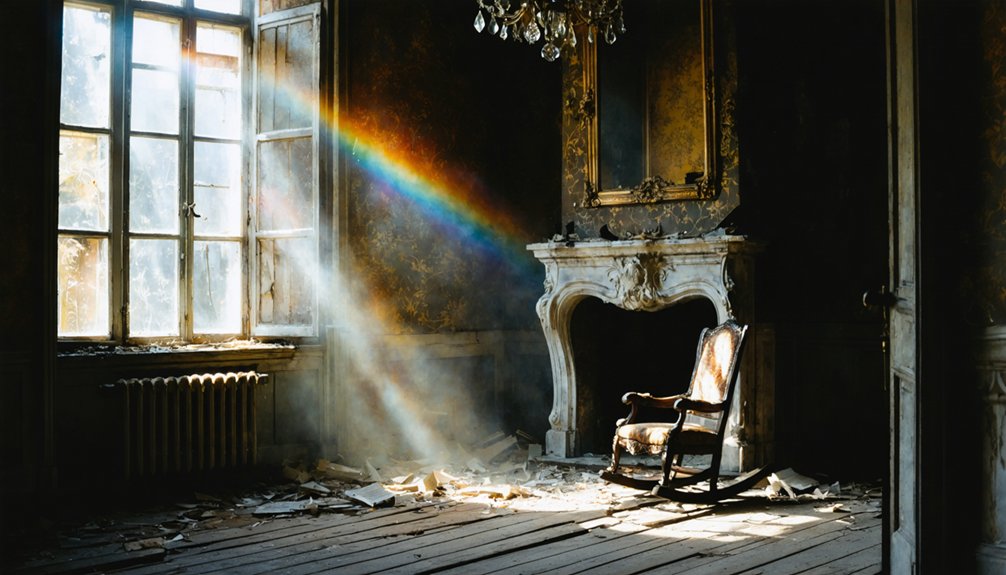
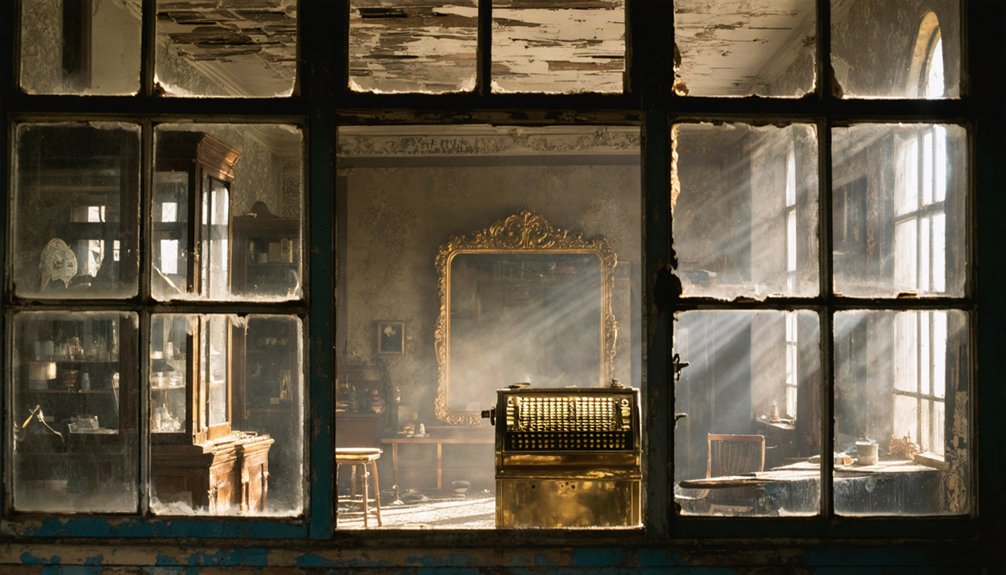
Inside these forgotten spaces, you’ll find frozen artifacts that tell stories of sudden departures – photo frames still mounted on walls, fur scarves draped over chairs, and children’s toys scattered as if playtime had just ended moments ago. In Johnsonville, the vast collection of period-specific items remained untouched until Schmitt’s death.
These intimate memories manifest through preserved domestic scenes: electricity still humming in some homes, dried blood stains marking violent ends, and antique furnishings arranged exactly as their owners left them.
The artifacts vary by town origin – from workers’ modest possessions in mill towns to elaborate heirlooms in Victorian estates. Old newspapers dated to May 17th, 1994 mark the final day of occupancy in some abandoned homes.
Each item serves as tangible evidence of lives suddenly suspended, creating an unsettling portrait of mortality frozen in time.
Architectural Decay and the Psychology of Fear
Through the lens of architectural psychology, Victorian-era ghost towns manifest fear responses through their distinct structural elements and patterns of decay.
You’ll notice how these structures exploit your brain’s psychological triggers through their asymmetrical facades and irregular layouts, creating uncertainty in your spatial perception. The buildings’ deteriorating conditions – from peeling paint to sagging roofs – deliver powerful sensory experiences that activate your fight-or-flight response.
When you encounter these abandoned spaces, the stark contrast between ornate Victorian design and decay creates temporal dissonance, forcing your mind to reconcile past grandeur with present ruin. The transition from sophisticated Second Empire style to dilapidated structures exemplifies this dramatic architectural decline. These haunting locations often feature medieval cathedral elements inspired by the Gothic Revival movement.
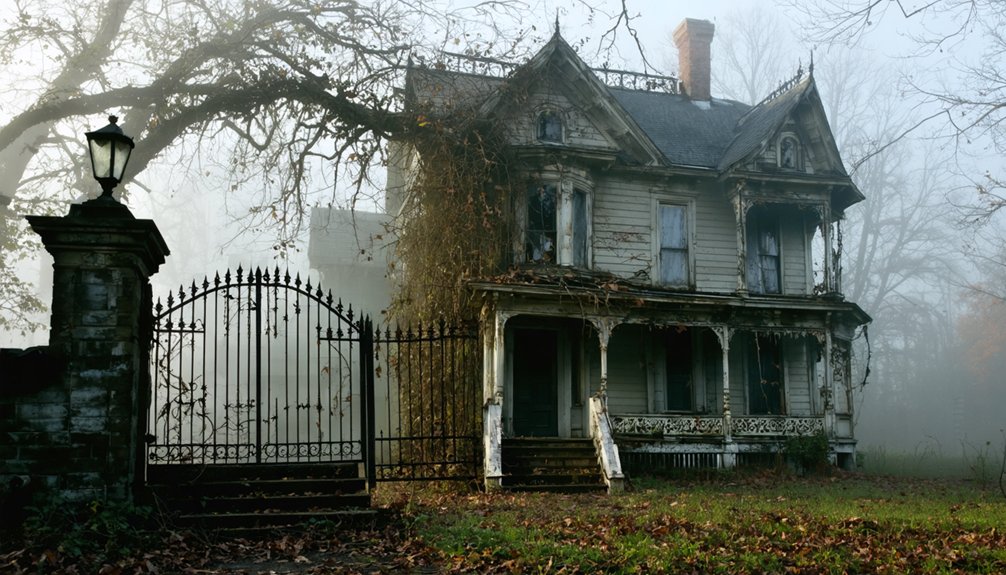
Gothic elements like turrets and cast-iron fences, now weathered by time, amplify the eerie atmosphere while hidden spaces and dark voids keep you perpetually on edge, anticipating unseen threats.
When Industry Dies: The Human Cost of Abandonment
While Victorian ghost towns stand as physical remnants of industrial decline, their true impact lies in the devastating human toll of economic collapse.
You’ll find that when major industries vanish, they trigger a cascade of economic dislocation that tears through communities. Manufacturing jobs, once representing 30% of Britain’s workforce, plummeted to just 7.7% by 2019, leaving countless families stranded in a post-industrial wasteland. The North of England suffered especially hard, with the West Midlands declining 13% in manufacturing employment since 1996.
Community fragmentation follows swiftly – local shops close, pubs shut down, and banks abandon town centers.
The psychological trauma runs deep, with unemployment’s “long shadow” haunting multiple generations. What you’re witnessing isn’t just infrastructure decay – it’s the systematic dismantling of social bonds, as working-age residents flee, leaving behind vulnerable populations in increasingly isolated and underserved communities.
Frequently Asked Questions
Are There Any Victorian Ghost Towns That Still Have Active Residents?
You’ll find active communities in places like Jerome, Arizona, and Pinos Altos, New Mexico, where modern settlers maintain Victorian-era buildings while running galleries, shops, and tourism-focused businesses in these historic towns.
These towns are prime examples of how Victorian architecture in America can be preserved and celebrated. As you stroll through the streets, you’re greeted by intricate facades and beautifully maintained gardens that transport you back in time. This combination of history and contemporary culture creates a unique atmosphere that attracts visitors eager to experience the charm of a bygone era.
What Legal Restrictions Apply to Visiting and Exploring Victorian Ghost Towns?
Keep your nose clean by obtaining legal permits first. You’ll need written permission to avoid trespassing laws, which can result in hefty fines or jail time when exploring Victorian ghost towns.
Have Any Victorian Ghost Towns Been Successfully Revitalized or Repopulated?
You’ll find successful restoration efforts in places like Virginia City, Montana, where community engagement transformed a declining mining town into a thriving tourist destination with preserved Victorian architecture and year-round heritage events.
Do Victorian Ghost Towns Face Different Preservation Challenges in Various Climates?
Like hungry wolves, climate impacts devour Victorian ghost towns differently: you’ll find cold regions battle frost damage, Mediterranean sites fight invasive plants, while humid areas struggle against rot and corrosion.
How Do Historians Date Abandoned Items Found in Victorian Ghost Towns?
You’ll uncover abandoned artifacts’ ages through multiple dating techniques, including radiocarbon dating for organics, dendrochronology for wood, typological analysis for style patterns, and documentary research for contextual verification.
References
- https://www.youtube.com/watch?v=68r9KYMdxBo
- https://en.wikipedia.org/wiki/Ghost_town
- https://tvtropes.org/pmwiki/pmwiki.php/Main/GhostTown
- https://www.youtube.com/watch?v=ONtJ-QTcMWo
- https://www.loveexploring.com/gallerylist/115433/abandoned-britain-ghost-towns-you-dont-know-about
- https://en.wikipedia.org/wiki/List_of_ghost_towns_by_country
- https://www.geotab.com/ghost-towns/
- https://tracesmagazine.com.au/victorias-ghost-towns/
- https://www.nationalarchives.gov.uk/education/resources/victorian-industrial-towns/
- https://www.healthequitynorth.co.uk/app/uploads/GHOST-TOWNS-REPORT-EMBARGOED.pdf