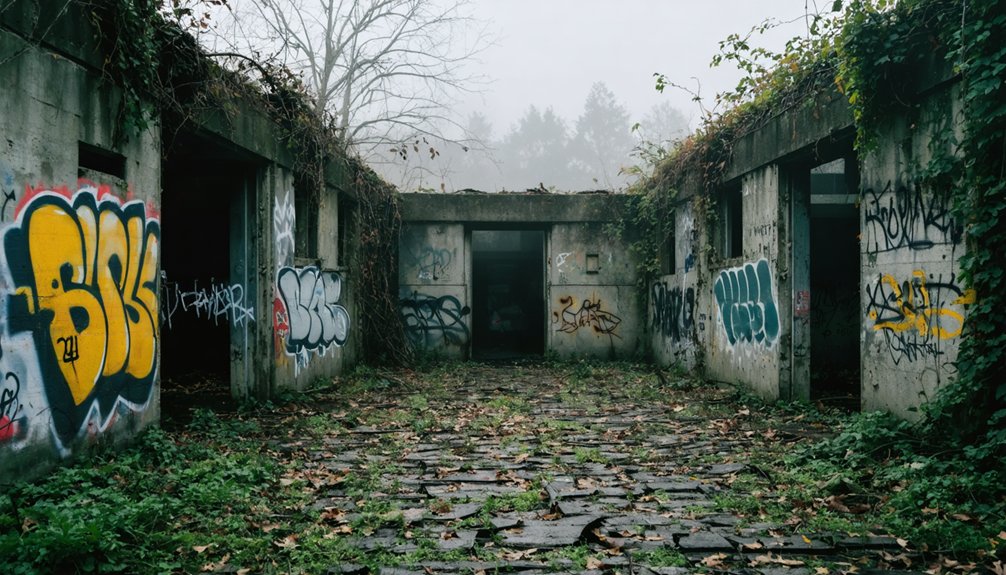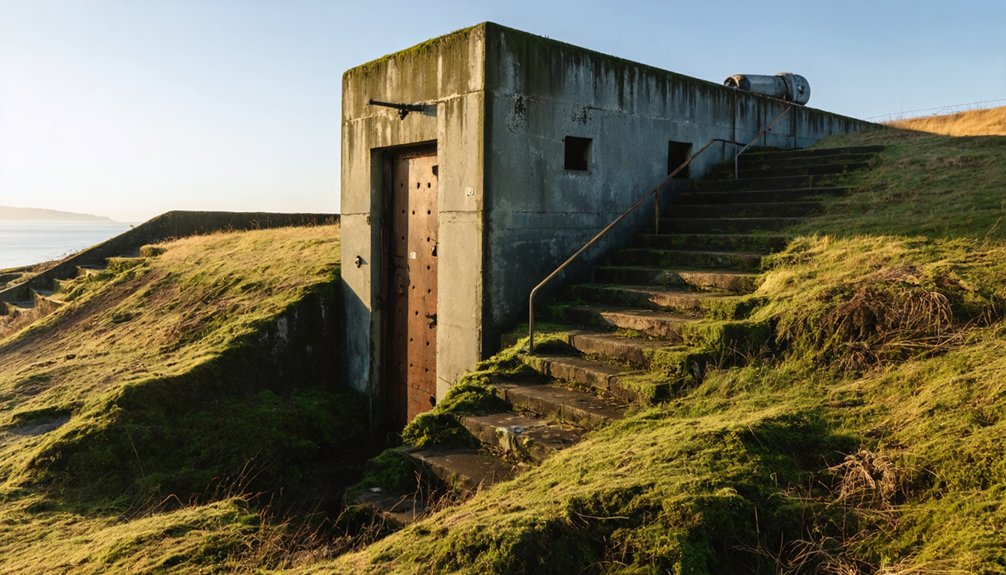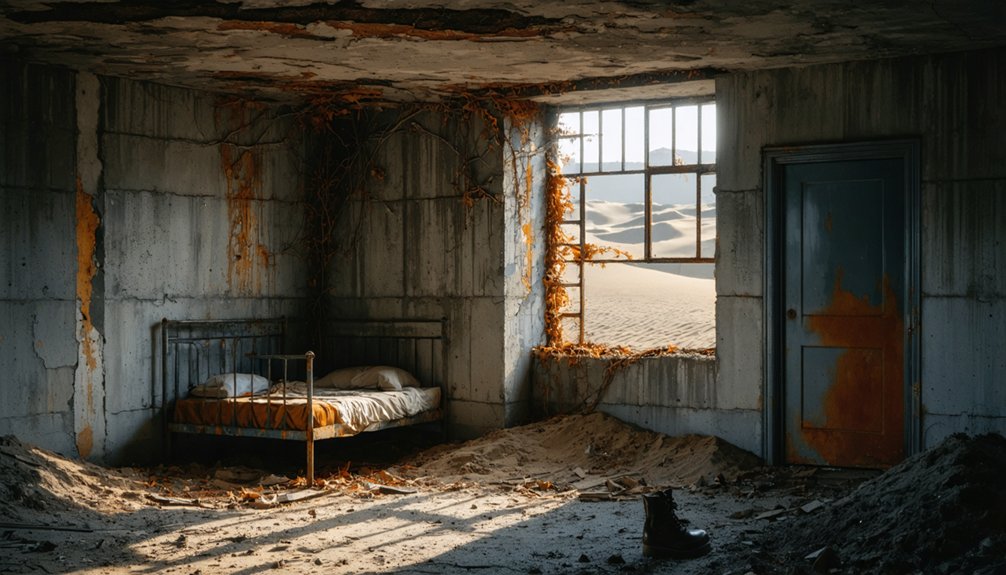
You’ll discover America’s military history preserved in time through authentic bunkers, coastal fortifications, and ghost town remnants spanning from the Revolutionary War to the Cold War. These sites showcase impressive engineering marvels like Fort Jefferson and underground nuclear bunkers while offering hands-on experiences with military technology and daily life artifacts. With nearly 10 million annual visitors generating $569 million in local sales, these locations hold countless untold stories waiting to be explored.
Key Takeaways
- Explore authentic military artifacts and engineering marvels preserved in bunkers, coastal fortifications, and underground complexes spanning multiple war eras.
- Experience immersive living history through interactive demonstrations, reenactments, and hands-on exploration of original military structures and equipment.
- Discover personal stories through preserved social spaces, graffiti, and artifacts that reveal the human side of military life.
- Support local economies while contributing to heritage preservation, as military ghost towns generate significant tourism revenue and employment.
- Learn about military technological evolution through preserved weapons, training facilities, and defense systems from Revolutionary War to Cold War periods.
The Hidden Time Capsules of American Military History
While many Americans drive past abandoned military installations without a second glance, these silent sentinels serve as invaluable time capsules of our nation’s defense history.
You’ll find authentic military artifacts preserved within crumbling bunkers, missile silos, and forgotten runways – each telling stories of America’s strategic might during the World Wars and Cold War era.
From the sophisticated radar complexes of Titan I Missile sites to the coastal defense systems of Fort Crockett, these locations chronicle the evolution of America’s military strength. Florida’s strategic positioning along major waterways made it a crucial defense location throughout multiple conflicts.
As you explore these abandoned bases, you’ll uncover historical narratives through underground command centers, Cold War-era deterrence installations, and remnants of military life. Fort Jefferson’s 16-acre masonry structure stands as the largest of its kind in the Americas, showcasing the impressive scale of 19th-century military engineering.
These sites reveal how your nation adapted to emerging threats, showcasing everything from traditional fortress designs to advanced missile defense systems that once stood ready to protect American freedom.
Spectacular Architectural Ruins and Engineering Marvels
You’ll find America’s military ghost towns punctuated by impressive coastal defense structures like Fort Jefferson, whose 16 million bricks make it the largest masonry fort in the Western Hemisphere.
Fort Jefferson has become a prime example of how heritage tourism transforms historical sites into popular visitor destinations today.
Underground bunkers and fortified observation posts, such as those at Fort Stark, reveal the engineering prowess needed to defend America’s shores through multiple wars.
These sites showcase remarkable military construction achievements, from Camp Hale’s specialized alpine training facilities to the strategic decoy airfields of the Elko tract that were designed to mislead enemy forces.
The 1896 Engineer Aviation Battalion constructed dummy airfields in 1943 as clever deceptions to protect vital military installations from aerial attacks.
Massive Coastal Defense Fortifications
Sentinels of America’s shoreline, the massive coastal defense fortifications stand as remarkable monuments to military engineering evolution spanning over a century.
You’ll discover an impressive progression from the Third System’s sturdy brick and stone structures to the Endicott era’s reinforced concrete marvels. These coastal fortifications showcase innovative military architecture, from Fort Sumter’s masonry excellence to advanced disappearing gun platforms that revolutionized coastal defense.
You can explore vast underground networks of tunnels and ammunition magazines while witnessing the integration of electric searchlights and radar systems. The Civil War era demonstrated the vulnerability of traditional masonry against modern artillery. The Endicott Program established new defenses across 27 major harbors with advanced rifled guns.
These strategic strongholds, protecting essential harbors from New York to San Francisco, represent America’s commitment to coastal security.
Today, you’ll find these engineering masterpieces preserved as National Monuments, offering a fascinating glimpse into our nation’s military ingenuity.
Preserved Cold War Bunkers
Deep beneath America’s landscape, a remarkable network of Cold War bunkers stands as evidence to extraordinary engineering and architectural innovation.
You’ll discover massive underground complexes spanning thousands of square feet, protected by 5-foot-thick blast doors and reinforced concrete walls designed to withstand nuclear attacks.
These preserved monuments of Cold War architecture feature specialized zones including command centers, decontamination areas, and living quarters equipped with advanced life-support systems. The Arizona missile silo contains original survival supplies still untouched after decades of abandonment.
Sites like the Greenbrier Bunker seamlessly blend secrecy with sophistication, while facilities such as Mount Weather and Raven Rock showcase multi-level engineering marvels. Mount Weather’s extensive infrastructure includes 500,000 gallons of water storage for long-term sustainment.
Though many remain restricted, bunker preservation efforts have maintained these sites’ intricate systems – from air filtration to communication networks – offering glimpses into America’s strategic resilience during an era of nuclear tension.
Historic Military Engineering Feats
While Cold War bunkers represent more recent military engineering, America’s landscape holds an even richer heritage of military construction achievements dating back to the Revolutionary War.
You’ll discover remarkable military infrastructure at sites like the Erie Canal, where engineers pioneered underwater cement techniques and complex lock systems. The engineering legacy continues at the Hiram M. Chittenden Locks in Seattle, still operational since 1917, and the massive Bonneville Dam project that revolutionized hydroelectric power. The historic canal required 83 lock systems to manage water levels for ships navigating between the Atlantic and Great Lakes.
At Petersburg, Virginia, you can explore remnants of extensive Civil War defensive lines and underground tunnel networks that transformed battlefield tactics. These engineering marvels were constructed by Army Corps of Engineers who established their expertise during the Revolutionary War period.
From the iconic Golden Gate Bridge to the Washington Monument, military engineers have left their mark on America’s most impressive structures, demonstrating their vital role in shaping the nation’s architectural heritage.
Walking Through the Daily Life of Military Communities
Stepping into a military ghost town reveals the intricate fabric of daily life within these once-bustling communities.
You’ll find the preserved barracks, mess halls, and recreational buildings that showcase how service members structured their daily routines. Officer quarters stand apart from enlisted housing, reflecting the strict hierarchy that governed these settlements.
Military life etched its hierarchy into every brick and building, from the humblest barracks to the distinguished officers’ homes.
You can trace community cohesion through the remains of chapels, schools, and social clubs where families gathered and bonds formed. The abandoned kitchens and dining halls tell stories of shared meals, while graffiti and personal artifacts offer glimpses into off-duty moments.
Supply depots, maintenance shops, and transportation networks demonstrate how these self-contained communities operated. Each building, from medical facilities to canteens, represents a piece of the complex social fabric that kept these military communities functioning day after day.
Preserved Military Technology and Innovation
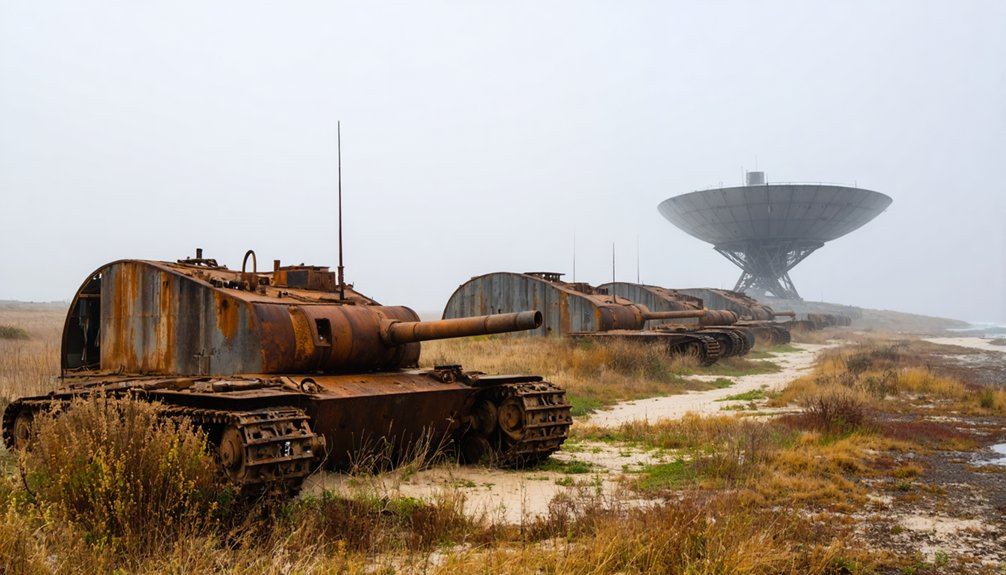
Military ghost towns serve as outdoor museums of Cold War-era technological innovation, preserving everything from missile silos to nuclear research facilities.
You’ll discover intact Titan I missile complexes with their 14-foot thick walls and underground silos, showcasing early intercontinental ballistic missile technology. These sites offer unparalleled insights into military innovations that shaped America’s defense strategy.
At locations like the Hanford Site, you’ll find pioneering remote-controlled systems for handling radioactive materials, while places like Playas, New Mexico now support cutting-edge military technology testing.
The preserved infrastructure lets you explore how engineering advances met strategic needs, from radar installations to automated defense systems.
You’re witnessing not just abandoned buildings, but the technological foundation that revolutionized military capabilities during the Cold War era.
Photography and Exploration Opportunities
Villa
Educational Impact and Historical Understanding
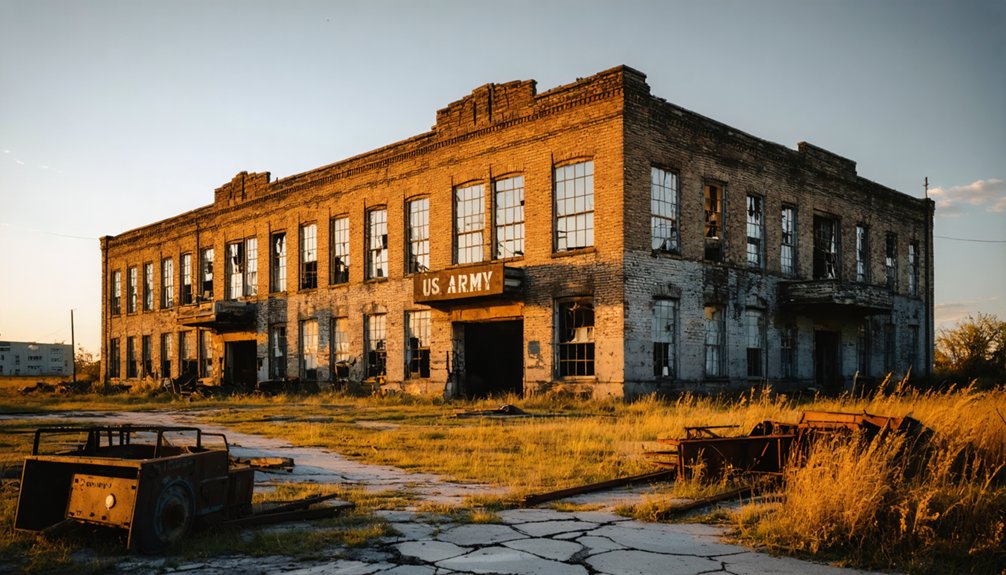
You’ll gain invaluable hands-on experience at military ghost towns through interactive displays that showcase the evolution of weapons, fortifications, and battlefield tactics.
The preserved sites let you examine authentic military technology from different eras, from Civil War cannons to World War II communication equipment.
Living history demonstrations and recreated military encampments bring the past to life, allowing you to understand the daily challenges and strategic decisions faced by soldiers throughout American history.
Hands-On Learning Experiences
When visiting military ghost towns across America, you’ll discover unparalleled hands-on learning opportunities that bring history to life.
Through hands-on workshops and immersive reenactments, you can experience authentic military practices and survival skills in the exact locations where soldiers once trained.
You’ll walk through original barracks, armories, and training grounds, engaging directly with the structures that shaped military life.
These tangible connections offer far more than textbook knowledge – you’ll observe strategic layouts firsthand and understand daily living conditions through multi-sensory experiences.
Interpretive signs and preserved artifacts help you piece together the historical context as you move through the sites.
Military Technology Through Time
While exploring military ghost towns, the evolution of military technology becomes strikingly apparent through preserved artifacts and installations that showcase America’s defense innovation journey.
You’ll witness firsthand the remarkable military evolution from basic armories to sophisticated warfare systems, spanning centuries of technological advancements.
At these historic sites, you’ll discover how America’s military capabilities transformed through:
- Springfield Armory’s revolutionary manufacturing methods that standardized weapon production
- World War-era innovations in aircraft, tanks, and naval vessels
- Cold War developments in radar systems and early computing technology
- Digital age integration of satellite communications and advanced command systems
These abandoned installations serve as time capsules, revealing how scientific research, industrial innovation, and wartime necessity shaped America’s military might – from mechanized warfare to the digital battlefield technologies we see today.
Living History in Action
Through the preservation of authentic military communities, ghost town sites serve as powerful living classrooms that bridge past and present.
You’ll gain tangible experiences exploring intact barracks, schools, and recreational facilities that reveal daily military life in remarkable detail. The preserved urban layouts and infrastructure offer direct insight into how these communities functioned.
As you walk through these abandoned sites, community narratives unfold through interpretive displays and guided tours. Original military records and personal artifacts deepen your understanding of service members’ lives beyond combat roles.
You’ll discover how these bases supported complex operations while maintaining thriving communities. These open-air museums don’t just preserve history – they let you step into it, offering unique perspectives on American military heritage through immersive, hands-on learning experiences.
Supporting Local Heritage Tourism
As military ghost towns and historic battlefields continue drawing millions of visitors annually, their impact on local economies has become increasingly significant.
Your visit directly supports community engagement and local economic growth, with battlefield tourism generating substantial revenue and creating thousands of jobs across the country.
Supporting local heritage through battlefield tourism creates vital economic opportunities while preserving America’s military history for future generations.
Consider these compelling economic benefits:
- Historic sites attract nearly 9.7 million visitors annually, generating $569 million in local sales.
- Out-of-town battlefield visitors stay longer and spend twice as much as average tourists.
- Heritage tourism creates thousands of local jobs, with one site network supporting 6,800 positions.
- Battlefield tourism contributes millions in state and local tax revenue.
When you explore these historic sites, you’re not just witnessing America’s military past – you’re actively participating in the preservation and economic importance of these unique communities.
Connecting Past and Present Defense Stories
Whether you’re exploring a decommissioned missile silo or walking through abandoned barracks, military ghost towns bridge essential connections between America’s defense history and modern military strategies.
These sites reveal how defense priorities evolved from coastal fortifications to nuclear deterrence, letting you trace technological advancements and strategic shifts that shaped our national security.
Through personal narratives and community remembrance, you’ll discover how these locations impacted local communities and military families.
Veterans’ stories come alive as you examine original structures, from field hospitals to command centers.
You’ll understand how each site adapted to emerging threats and changing warfare tactics.
These preserved spaces serve as powerful reminders of military innovation and sacrifice, helping you grasp how past defense decisions continue to influence today’s military thinking and preparedness.
Frequently Asked Questions
Are Military Ghost Towns Safe to Visit With Young Children?
You shouldn’t visit military ghost towns with young children due to serious safety hazards. Instead, choose family-friendly ghost town activities with established safety measures and guided tours for child safety.
Exploring haunted locations in Nevada can also be thrilling for older children who are curious about history and the supernatural. Make sure to research the best spots that offer engaging narratives and well-supervised experiences. This way, everyone can enjoy the excitement while staying safe.
What Survival Gear Should Visitors Bring to Remote Military Sites?
Pack survival kits with essential tools: first aid supplies, navigation gear, water filtration, emergency shelter, flashlights, multi-tool knife, rope, fire starters, and reliable communication devices for your remote exploration.
Can Visitors Collect Artifacts or Souvenirs From Military Ghost Towns?
You can’t legally collect artifacts from military ghost towns – it violates preservation laws and carries strict penalties. Instead, you’re encouraged to photograph sites and purchase authorized reproductions from visitor centers.
Which Seasons Offer the Best Weather Conditions for Exploring These Sites?
You’ll find the best conditions during spring exploration and fall photography months when temperatures are mild. Visit from March to May or September to November for comfortable hiking and clear visibility.
Do Any Military Ghost Towns Still Have Active Unexploded Ordnance?
With over 3,700 former military sites cleaned, many still contain dangerous unexploded ordnance. You’ll need to follow strict military site regulations and prioritize safety when exploring these restricted locations.
References
- https://www.geotab.com/ghost-towns/
- https://www.loveexploring.com/gallerylist/233478/americas-eeriest-abandoned-military-sites
- https://www.mentalfloss.com/geography/american-ghost-towns-can-still-walk-through
- https://www.youtube.com/watch?v=3d4bUMUUWxY
- https://www.christywanders.com/2024/08/top-ghost-towns-for-history-buffs.html
- https://www.youtube.com/watch?v=Dso_vPKcsuE
- https://www.wearethemighty.com/mighty-history/9-military-ghost-bases-youve-probably-never-heard-of/
- https://abandonedwonders.com/tag/us-military/
- https://www.nps.gov/subjects/abandonedplaces/visit.htm
- https://www.youtube.com/watch?v=lpufNDdM_mY