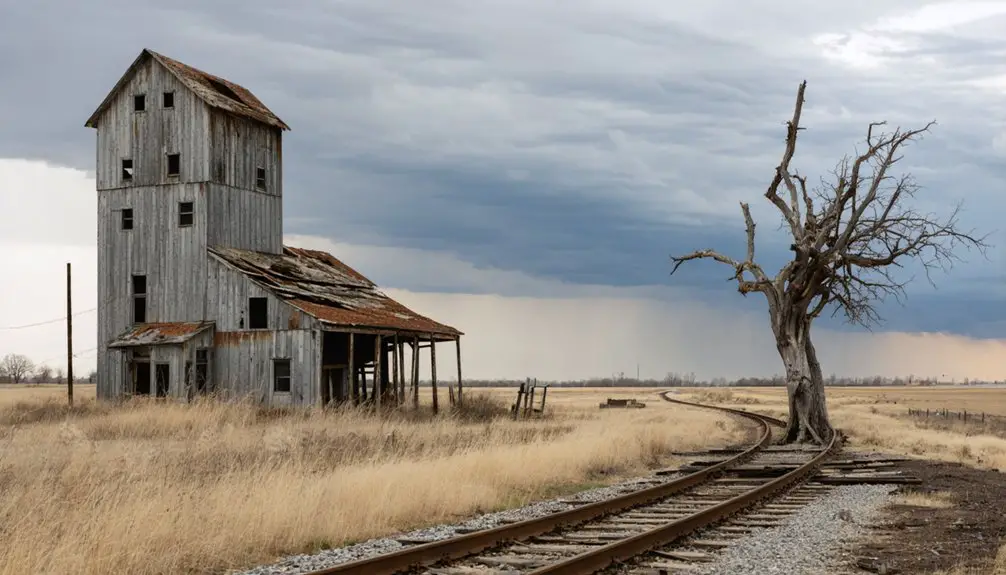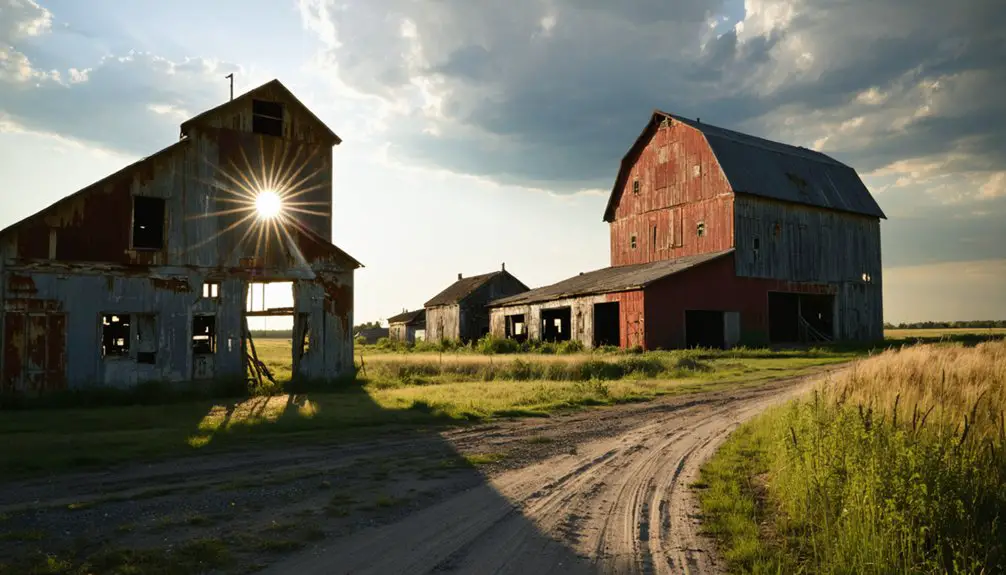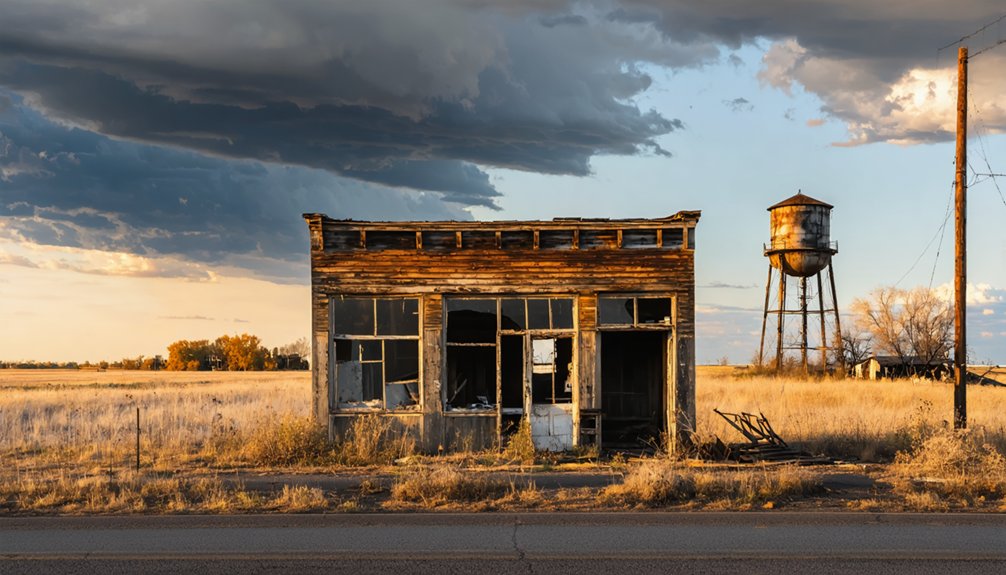
Planning a ghost town road trip to Cisco, Minnesota means heading to Polk County’s NW Section 11 in Badger Township, where US Highway 59 runs right alongside the forgotten site. You won’t find road signs marking it, so track your mileage between Erskine and Brooks. What you’ll discover is a hauntingly beautiful stretch of reclaimed prairie, railroad remnants, and crumbling foundations slowly swallowed by nature. Keep scrolling to uncover everything you need to explore Cisco like a pro.
Key Takeaways
- Cisco sits along US Highway 59 in Polk County, Minnesota, roughly four miles north of Erskine and four miles south of Brooks.
- No road signs mark the site, so track your mileage carefully while driving along US Highway 59 to locate it.
- Walk the old railroad grade to spot rusted hardware, foundation outlines, depressions, and overgrown earthwork ridges from Cisco’s past.
- Visit between May and September for blooming flora, active wildlife, and ideal photography conditions along the open prairie landscape.
- Pack sturdy boots, water, a camera, binoculars, and offline maps, as cell coverage in the area is limited.
What Is Cisco, Minnesota’s Ghost Town History?
Once a bustling railroad village, Cisco, Minnesota now stands as a quiet ghost town tucked into the northwest corner of Polk County’s Badger Township. Positioned in the NW 1/4 of Section 11 along the Soo Line Railroad, Cisco thrived as a 19th-century trade stop before fading into abandonment.
You won’t find permanent residents, active businesses, or historical landmarks marking its former life — just open land and lingering echoes of the past. Local legends tied to railroad-era settlement make this forgotten village worth investigating.
It sits roughly four miles north of Erskine and four miles south of Brooks, making it easily reachable along US Highway 59. If you’re drawn to places history left behind, Cisco delivers a raw, unfiltered glimpse into Minnesota’s frontier past.
What Remains at the Cisco Townsite Today
When you arrive at the Cisco townsite, you’ll find remnants of its 19th-century railroad past scattered across the landscape. Historical infrastructure traces still mark the ground near the old Soo Line Railroad corridor, giving you a tangible connection to the village’s former life.
You can explore the site freely, though you’ll need to bring your own supplies since no visitor services exist on-site.
Visible Remnants Today
Although nature has largely reclaimed Cisco’s former townsite, you’ll still find scattered traces of the settlement if you know where to look. Local legends hint at foundations buried beneath overgrown fields, while historic landmarks like the Soo Line Railroad corridor still anchor the site’s identity.
Explore freely and watch for:
- Crumbling foundation outlines hidden beneath tall prairie grass
- Weathered fence posts marking long-forgotten property boundaries
- Overgrown depressions where structures once stood
- Rusted metal fragments scattered along the old railroad right-of-way
- Mature trees planted deliberately, now towering above the flat landscape
You won’t need a guided tour — just sharp eyes and a sense of adventure. US Highway 59 keeps the site easily accessible, letting you come and go entirely on your own terms.
Infrastructure Still Standing
Beyond those scattered fragments lies something more substantial — actual infrastructure that has managed to hold its form against decades of prairie wind and neglect. You’ll notice remnants of the old Soo Line Railroad corridor cutting through the landscape, its graded path still readable if you know what you’re looking for.
US Highway 59 runs alongside, giving you direct access without bushwhacking through overgrowth.
Local legends suggest foundations remain buried just beneath the soil surface, waiting for someone curious enough to look closer. Unfortunately, no formal preservation efforts protect these structures, meaning every season strips away a little more.
You’re fundamentally racing time here. Walk the railroad grade, scan the tree lines, and document what you find — because what stands today may not stand tomorrow.
How Cisco Went From Railroad Stop to Ghost Town
Once a modest but lively railroad stop along the Soo Line, Cisco thrived as a small village where goods moved, settlers passed through, and commerce briefly took root in the late 19th century.
A quiet railroad stop where goods moved, settlers passed through, and commerce briefly flickered to life.
When rail traffic declined, the town couldn’t survive. No preservation efforts ever materialized, and local legends are all that remain.
Picture what you’d find if you visited today:
- Empty land stretching toward a flat Minnesota horizon
- Faint outlines where buildings once clustered near the tracks
- Highway 59 cutting silently past forgotten foundations
- Wind moving through tall grass where families once gathered
- A landscape that doesn’t ask permission to reclaim itself
Cisco didn’t fade dramatically — it simply emptied. That quiet disappearance is exactly what makes it worth exploring on your own terms.
How to Get to Cisco From Erskine and Brooks
Cisco sits almost perfectly between two small Minnesota towns, making it easy to approach from either direction along US Highway 59. If you’re starting from Erskine, head four miles north and you’ll reach the former village site quickly.
Coming from Brooks, drive four miles south along the same highway. The route is straightforward, leaving you free to scan the roadside for local wildlife that roams this open Minnesota terrain.
Keep seasonal weather in mind before you go — winter conditions can make rural highway travel unpredictable, while spring and fall offer cleaner skies and easier driving.
You won’t find road signs marking Cisco’s exact location, so track your mileage carefully. The Soo Line Railroad corridor running parallel to the highway confirms you’re heading in the right direction.
What to Watch for When Walking the Cisco Townsite
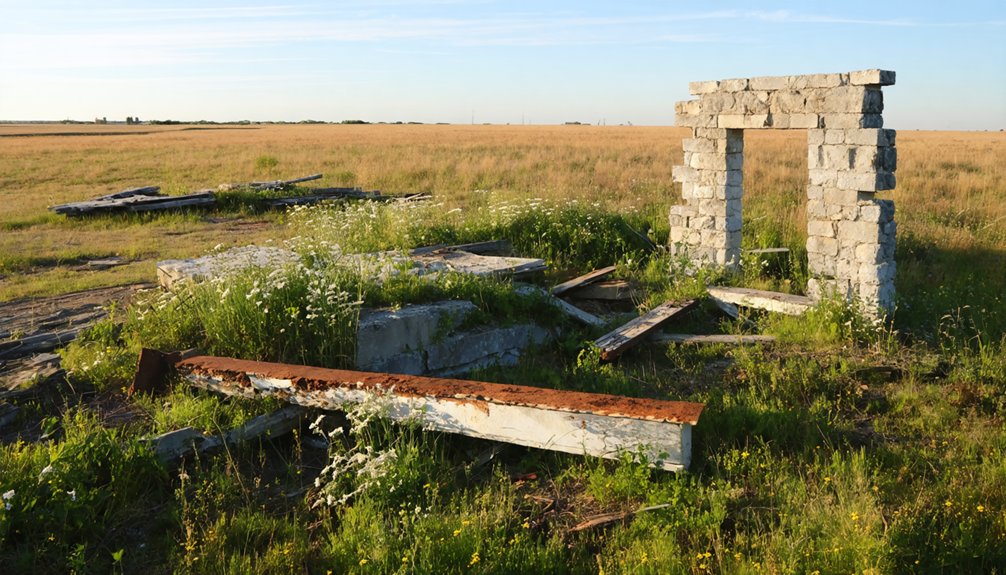
As you walk the Cisco townsite, keep your eyes open for the remnants of the Soo Line Railroad, where old rail beds and rusted hardware still hint at the village’s bustling past.
Scan the overgrown terrain for sunken or scattered foundation stones that once anchored homes and businesses.
Nature’s taken over much of the site, so watch how trees, brush, and grass have quietly swallowed what settlers built generations ago.
Historic Railroad Remnants
Where the Soo Line Railroad once hummed with activity, you’ll still find subtle traces of Cisco’s industrial past embedded in the landscape. Local legends hint at a once-thriving stop where goods and travelers moved freely. Though no formal preservation efforts exist, the land quietly holds its history.
Keep your eyes open for:
- Overgrown rail bed depressions cutting through the tall grass
- Scattered gravel ballast marking where tracks once ran
- Rusted metal fragments half-buried beneath decades of soil
- Faint earthwork ridges outlining former loading or staging areas
- Weathered wooden remnants decaying along the old right-of-way
Walk slowly and let the terrain tell its story. Every subtle dip and artifact connects you directly to Cisco’s raw, unfiltered past.
Abandoned Building Foundations
Beyond the rail corridor, the former townsite of Cisco hides another layer of history beneath your feet. As you walk the grounds, you’ll notice subtle depressions and stone outlines marking where buildings once stood. These remnants of historic architecture tell a quiet story of a community that thrived, then faded.
Urban decay has reclaimed most surfaces here, with vegetation creeping over foundation edges and frost cycles slowly shifting century-old stones. Watch your step carefully — uneven ground conceals corners and cellar edges that aren’t immediately visible.
Bring a camera and walk slowly. Each foundation represents a former home, shop, or outbuilding that shaped daily life along this railroad corridor. You’re fundamentally reading the town’s original blueprint, written directly into the earth itself.
Nature Reclaiming Infrastructure
Walking among those silent foundations, you’ll start noticing something equally compelling — nature hasn’t waited for permission to reclaim what was left behind. Plant regrowth has crept through every crack, and local wildlife has moved in without asking. This land answers to no one now.
Watch for these signs of nature’s quiet takeover:
- Grass and wildflowers splitting through crumbled concrete slabs
- Young birch and aspen saplings rooting directly inside former building footprints
- Deer trails cutting across what were once wagon paths and streets
- Moss carpeting old railroad-grade gravel beds along the Soo Line corridor
- Bird nests tucked into deteriorating wooden post remnants
Every step reveals a landscape actively erasing human boundaries. You’re not just visiting a ghost town — you’re watching a living ecosystem finish the job.
Best Time of Year to Visit Cisco, Minnesota

Although Cisco sits abandoned year-round, late spring through early fall gives you the best conditions for exploring this forgotten corner of Polk County.
From May through September, the local flora bursts into full color, transforming overgrown lots into striking natural displays worth photographing.
The longer daylight hours give you more time to roam freely along Highway 59 and trace the old Soo Line corridor.
Summer draws active wildlife habitat to the area, so you’ll spot birds, deer, and small mammals moving through the reclaimed landscape.
Avoid winter visits — brutal Minnesota cold, deep snow, and limited visibility make exploration genuinely dangerous.
Early fall offers a sweet spot: cooler temperatures, stunning foliage, and fewer insects.
Pack water, wear sturdy boots, and arrive ready to discover history on your own terms.
What to Pack for a Cisco Ghost Town Day Trip
Packing smart makes the difference between a rewarding exploration and a miserable retreat back to Erskine. Cisco’s open landscape rewards prepared explorers, especially if you’re squeezing in wildlife spotting along Highway 59 or grabbing local dining in Brooks afterward.
Throw these essentials into your bag before heading out:
- Sturdy boots for maneuvering uneven, overgrown terrain around the former village site
- Water bottle and snacks since zero services exist between Brooks and Erskine
- Binoculars to maximize wildlife spotting across Polk County’s flat, open corridors
- Camera or charged smartphone to document crumbling infrastructure remnants worth preserving digitally
- Printed maps or offline GPS because cell coverage gets unreliable in Badger Township
You’re chasing raw history here, not comfort, so pack lean and pack purposefully.
How to Photograph Cisco’s Flat Prairie Remnants
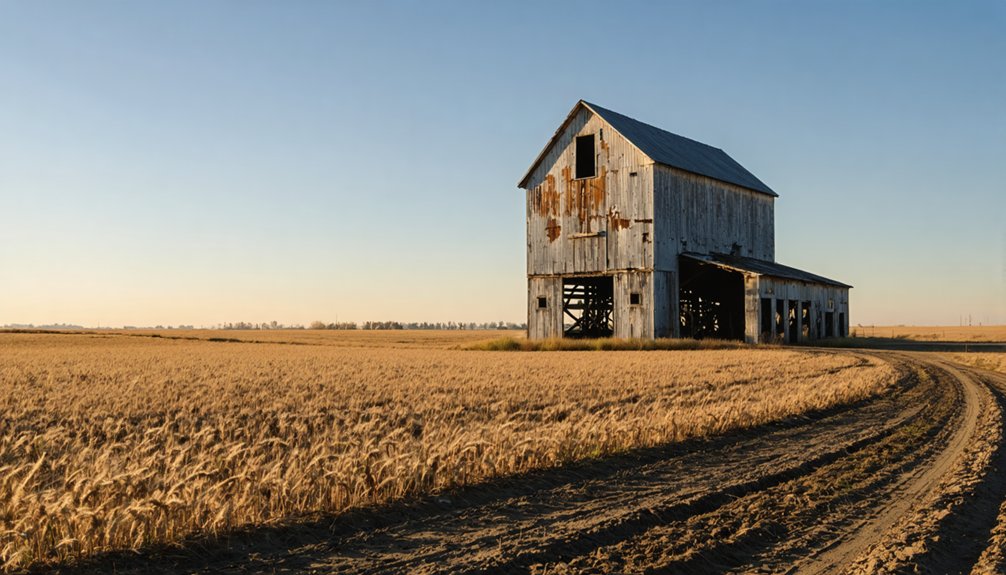
Cisco’s flat prairie setting strips away every distraction, so your camera becomes a tool for capturing raw, honest emptiness. Shoot during golden hour when low-angle light rakes across the land, exposing texture in every weathered surface.
In Cisco’s open prairie, your camera captures nothing but pure, unfiltered emptiness bathed in golden light.
You’ll find urban decay hiding in subtle details — rusted fence posts, crumbling foundations, fractured soil lines where structures once stood. Get low, frame the horizon wide, and let the vast sky dominate your composition.
Document everything intentionally. Cultural preservation depends on visual records that honest photographers create. Use a polarizing filter to cut prairie haze and deepen that enormous Minnesota sky.
Don’t overlook tire ruts or overgrown railroad grades — they tell Cisco’s story without words. Your photographs become the archive that keeps this forgotten place alive for curious, freedom-seeking travelers after you.
Erskine, Brooks, and Other Polk County Stops Worth Adding
While Cisco anchors your ghost town adventure, the surrounding Polk County corridor rewards explorers who push a few miles in either direction. Erskine sits four miles south, and Brooks waits four miles north, both carrying local legends and quiet energy worth absorbing.
Add these stops to your route:
- Erskine’s main street, where working storefronts contrast sharply with Cisco’s silence
- Brooks’ grain elevators, rising like rusted monuments against the flat sky
- US Highway 59, threading communities together like a forgotten lifeline
- Soo Line Railroad remnants, echoing the trade routes that built this region
- Polk County’s open prairie stretches, where preservation efforts feel personal and the horizon never ends
Pack snacks, fuel up, and let the corridor tell its story on your terms.
Frequently Asked Questions
Is There a Fee to Access the Cisco Ghost Town Site?
You don’t need to pay any fee to explore Cisco’s ghost town site! It’s freely accessible, though there aren’t any visitor facilities or historical preservation efforts in place, so you’ll enjoy pure, unfiltered adventure!
Are Pets Allowed When Visiting the Cisco Townsite?
Over 80% of ghost towns have no formal rules! Pet policies and animal restrictions aren’t documented for Cisco’s townsite, so you’re free to bring your furry companion as you explore this hauntingly abandoned landscape.
Is the Cisco Site on Public or Private Property?
The knowledge doesn’t confirm whether it’s public or private property, so you’ll want to verify before exploring. There’s no historical preservation or visitor amenities here — just open, unguarded land awaiting your adventurous spirit!
Are There Any Guided Ghost Town Tours Available Near Cisco?
Like a lone wolf, you’ll explore Cisco solo — no guided tours exist here. You’ll discover historical landmarks and photography opportunities on your own terms, forging your own path through this hauntingly beautiful ghost town.
Can You Camp Overnight Near the Cisco Ghost Town Site?
You’ll find no official campground amenities at Cisco’s ghost town site, but you can explore nearby areas for overnight adventures. Always take safety precautions, pack essentials, and embrace the freedom of sleeping beneath Minnesota’s vast, star-filled skies!
References
- https://en.wikipedia-on-ipfs.org/wiki/List_of_ghost_towns_in_Minnesota
- http://wikimapia.org/13653077/Cisco-Minnesota-Ghost-Town
- https://www.atlasobscura.com/places/home-of-the-brave
- https://www.ultravioletphotography.com/content/index.php?/topic/2131-ghost-town-of-cisco/
- https://www.shutterstock.com/image-photo/cisco-ghost-town-785256523
- https://placesjournal.org/article/cisco-trash-map/
- https://en.wikipedia.org/wiki/List_of_ghost_towns_in_Minnesota
- https://www.youtube.com/watch?v=UmQkApSAwmc
- https://www.reddit.com/r/SaltLakeCity/comments/1t1can2/cisco_ghost_town/
- https://www.upr.org/arts-and-culture/2019-02-26/the-resurrection-of-a-utah-ghost-town-and-the-woman-who-made-it-happen