To plan your Eagle Springs ghost town road trip, start on U.S. Highway 36 in eastern Doniphan County, near Troy and Iowa Point. Head toward Sparks—the old Highland Station—then drive two miles to Lookout Mountain and the springs. You’ll trace paths walked by Ioway medicine men over 250 years ago and retrace the faded dreams of a once-fashionable health resort. The full story of what happened here, and what remains, runs deeper than you’d expect.
Key Takeaways
- Start on U.S. Highway 36 in eastern Doniphan County, using Troy and Sparks as key navigation reference points.
- From Sparks, drive two miles toward Lookout Mountain to reach the Eagle Springs site along Missouri River bluffs.
- Expect scattered ruins and natural landscapes rather than standing structures, as little remains of the original resort buildings.
- Combine the trip with nearby ghost towns like Iowa Point, Leona, and Severance for a fuller regional experience.
- Plan for slow, unhurried exploration focused on rural scenery, Native heritage, and the region’s layered historical significance.
What Is Eagle Springs, Kansas?
Once a thriving health resort nestled against the rocky ledges of Lookout Mountain in Doniphan County, Eagle Springs, Kansas, is today a ghost town — a place where thousands once came to drink mineral waters and seek cures for both real and imaginary ailments, but where little now remains beyond scattered ruins and the quiet pull of history.
You’re stepping into layers older than the resort itself. The spring legends trace back more than 250 years, when medicine men recognized these waters long before white settlers arrived in 1857. These were Native sites first — an Ioway village once stood here — and that deeper history gives Eagle Springs a weight no promotional brochure ever captured.
What drew people here wasn’t just the water. It was the promise of something timeless.
Who Knew These Springs Before White Settlers Arrived?
Before white settlers ever mapped these springs in 1857, Native peoples had already woven them into centuries of memory. An Ioway village once stood at this very site, long before Kansas Territory existed on any map.
Before maps existed, Native peoples already called this place sacred — centuries before settlers ever arrived.
Native legends tied these waters to something profound — healing traditions passed down through generations of medicine men who traveled from distant tribes specifically to drink from these springs. They recognized curative power here more than 250 years ago.
The site even carried whispers of perpetual youth, a reputation that transcended any single nation or era.
When you stand near Lookout Mountain today, you’re standing where Indigenous healers once stood. That layered history — ancient, sacred, largely forgotten — gives Eagle Springs a weight no resort brochure ever fully captured.
How a Kansas Farmer Turned a Remote Spring Into a Health Destination
In 1883, Prior Plank looked at a remote spring near Lookout Mountain and saw something most farmers wouldn’t — a business. He hired chemists to test the mineral water, leaned into the local legends of Native healing traditions, and started building.
A large hotel rose from the landscape. A bathhouse followed, along with two cottages and an artificial lake stocked with fish. He marketed Eagle Springs to city dwellers chasing cures — real and imagined — promising restorative baths and drinking treatments that matched the romance of the setting.
Thousands came through the 1880s and 1890s, arriving by train to Highland Station, then bouncing two miles by wagon to reach the resort. Plank had turned wilderness into a fashionable destination, if only for a while.
Why Did Eagle Springs Ghost Town Fail?
Despite the crowds and the promise, Eagle Springs had a fatal flaw baked into its foundation: Prior Plank never had enough capital to sustain what he’d built. The hotel, bathhouse, cottages, and artificial lake all demanded ongoing investment he couldn’t provide.
Eagle Springs was doomed from the start — Prior Plank built big dreams on a foundation too shallow to hold them.
When the money ran dry, the dream collapsed with it.
Eagle Springs closed in 1937, and attempts to revive it never gained traction. Even a 1969 effort to restore the site went nowhere.
Today, local legends keep the story alive where the buildings cannot. Modern tourism draws curious travelers through Doniphan County not for standing structures, but for the ghost of what once was.
You’re chasing history here, and sometimes that’s exactly enough to make the drive worthwhile.
What Still Exists at the Eagle Springs Site Today?
So what’s actually left when you make the drive out to Eagle Springs today? Honestly, not much stands intact — but the land still speaks.
Scattered remnants and local lore are your companions here:
- Minor ruins and springs that once drew thousands seeking cures
- Wildlife sightings along the Missouri River bluffs, rewarding patient explorers
- Scenic overlooks near Lookout Mountain, unchanged since medicine men walked this ground 250 years ago
You won’t find a restored hotel or a functioning bathhouse. What you’ll find instead is raw, quiet Kansas countryside carrying the memory of something that almost became extraordinary.
As of 2011, Eagle Springs Incorporated held portions of the old land — but restoration never came. Come for the history; stay for the freedom the open landscape delivers.
How to Get to Eagle Springs in Doniphan County
To start planning your route to Eagle Springs, anchor yourself to U.S. Highway 36 in the extreme eastern reaches of Doniphan County, then navigate north toward the stretch of land that once lay between Troy and Iowa Point.
The nearest reference point you’ll recognize is Sparks, Kansas — the old Highland Station stop on the Burlington & Missouri River Railroad, where health-seekers once stepped off the train hoping the waters would cure whatever ailed them.
From there, you’ll follow roughly the same final approach those hopeful visitors did: a two-mile stretch toward the base of Lookout Mountain, where the springs once bubbled out of rocky ledges near the Missouri River bluffs.
Starting Your Route Planning
Where exactly do you start when you’re chasing a ghost town that barely left a trace? Eagle Springs sits in Doniphan County’s far eastern edge, steeped in cultural significance and wrapped in local legends stretching back centuries. Your route anchors around U.S. Highway 36, threading north toward Lookout Mountain’s rocky base.
Before you leave, lock in these essentials:
- Landmark reference point: Position Troy and Iowa Point as your corridor markers along Highway 36
- Former rail access: The old Burlington & Missouri River Railroad once served Highland Station, now modern Sparks, Kansas
- Final stretch: Expect a rural two-mile approach from Sparks toward the spring site itself
You’re not just driving a road — you’re retracing a path thousands traveled during the 1880s, hunting healing waters and open horizon.
Nearest Towns And Highways
Once you’ve set your compass toward Doniphan County’s far eastern edge, U.S. Highway 36 becomes your guide. Follow it toward Troy, then navigate north between Troy and Iowa Point, where the land opens into quiet Missouri River bluffs.
The old Burlington & Missouri River Railroad once dropped visitors at Highland Station — today’s Sparks, Kansas — for a final two-mile wagon ride to the springs.
That same ground held Native history long before any railroad arrived, its mineral healing waters known to medicine men centuries before white settlers ever recorded them in 1857.
Today, no trains stop and no wagons roll, but the rural roads still carry you through that same unhurried landscape.
Freedom-seekers and history hunters alike will find the drive itself quietly rewarding.
Final Approach To Site
From Sparks, Kansas — the old Highland Station stop on the Burlington & Missouri River Railroad — you’ll cover roughly two miles by road to reach the Eagle Springs site.
You’ll be retracing the same final stretch that arriving visitors once bumped across by wagon. That short ride carries real weight when you consider what drew thousands here during the 1880s and 1890s.
Pack these reminders before you go:
- Local legends tie mineral healing traditions to Native medicine men active more than 250 years ago
- The springs emerge from rocky ledges near Lookout Mountain’s base, close to the Missouri River bluff
- No standing structures remain, so bring your imagination alongside your map
You’re chasing history here, not architecture — and that’s exactly what makes this stretch of road worth driving.
Other Ghost Towns to Visit Near Eagle Springs
Doniphan County holds more forgotten chapters than Eagle Springs alone, and if you’re already making the drive through this corner of Kansas, you’d be doing yourself a disservice by stopping at just one ghost town.
The county’s rural backroads connect several abandoned settlements, each carrying its own cultural significance and echoes of Native traditions that shaped this land long before white settlers arrived. Iowa Point, once a thriving Missouri River town with real commercial ambitions, now sits quietly faded along the bluffs.
Leona and Severance offer similarly haunting glimpses into boom-and-bust cycles that defined northeastern Kansas. Pack a paper map, leave your schedule loose, and let the landscape tell you where to turn.
These towns reward the curious traveler willing to look closely.
How to Plan Your Eagle Springs and Doniphan County Ghost Town Itinerary
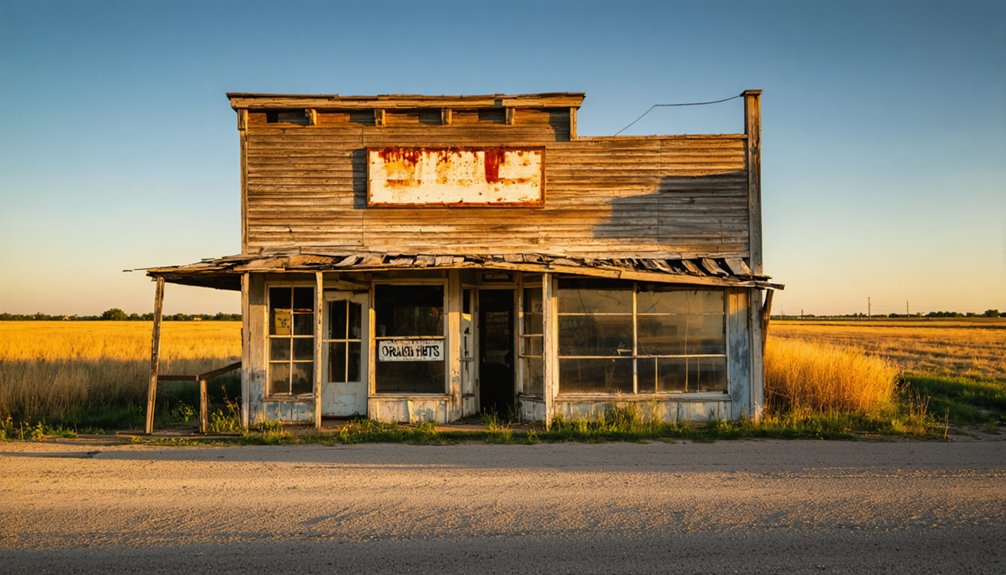
Start your route along U.S. Highway 36, using Sparks, Kansas — the old Highland Station stop on the Burlington & Missouri River Railroad — as your anchor point for reaching Eagle Springs.
From there, you can fan out across Doniphan County, threading together nearby ghost towns into a single, unhurried drive through land that once hummed with railroad travelers and health-seekers.
Keep your map loose, because the real reward here isn’t a destination but a landscape layered with vanished ambitions.
Mapping Your Route
Planning your Eagle Springs itinerary means anchoring yourself to U.S. Highway 36 in Doniphan County, Kansas. From there, you’ll navigate northeast toward the old resort grounds, where Native tribes once sought healing spring water centuries before any settler arrived.
Use these landmarks to orient your route:
- Troy serves as your western reference point before heading toward Iowa Point.
- Sparks, Kansas (formerly Highland Station) marks the historic rail drop-off, just two miles from the site.
- Lookout Mountain signals your arrival near the rocky ledges where the springs once flowed.
Keep your map loose and your expectations open. You’re chasing remnants, rural scenery, and ghost-town atmosphere, not standing buildings. The freedom here is in the open road and the stories the landscape still carries.
Nearby Ghost Town Stops
Why stop at Eagle Springs when Doniphan County holds an entire constellation of forgotten places? String together a route that moves between vanished towns, each carrying its own local legends and quiet grief.
You’ll find communities that once thrived along the Missouri River bluffs, then slowly emptied as railroads shifted and ambitions faded. Iowa Point, once a serious rival to St. Joseph, sits just south along the river and deserves your time.
Highland anchors the western edge of your loop with its own layered history. Let the mineral healing mythology of Eagle Springs set the tone early, then let each subsequent stop deepen it.
You’re not just visiting ruins — you’re tracing the arc of a region that believed fiercely in its own future.
Frequently Asked Questions
Is Eagle Springs on Private Land or Open to the Public?
Eagle Springs sits on private land, so you’ll need to secure access permissions before you wander where thousands once sought healing waters. Respect the boundaries, but let history fuel your free spirit’s curiosity.
What Is the Best Time of Year to Visit Eagle Springs?
Spring and fall offer you the finest seasonal weather for exploring Eagle Springs — mild days let you roam freely, and lighter visitor crowds mean you’ll almost feel those 1880s resort-goers wandering beside you.
Are There Any Guided Ghost Town Tours Available in Doniphan County?
Guided tours aren’t formally documented, but you’ll uncover haunted stories and historical significance by exploring Doniphan County’s forgotten roads yourself. Chart your own course through Eagle Springs’ ghostly past — true freedom waits beyond any organized tour.
Is the Eagle Springs Site Safe to Explore on Foot?
You can explore Eagle Springs on foot, but watch for wildlife encounters along those rugged, forgotten paths. The site’s historical preservation is minimal, so you’ll roam free through raw, nostalgic wilderness where ancient healing waters once flowed.
Can Visitors Still Drink or Collect Water From the Mineral Springs?
You’ll find no guaranteed access for mineral spring water collection today. Though thousands once drank these storied waters chasing cures and youth, the springs now whisper only echoes of freedom lost to time and abandonment.
References
- https://legendsofkansas.com/eagle-springs-kansas/
- https://www.youtube.com/watch?v=A7guEY4xsug
- https://legendsofkansas.com/doniphan-county-extinct-towns/
- https://thewanderingpigeon.com/2015/10/03/day-of-kansas-ghost-towns/
- https://www.angelfire.com/ks/cordelia/eaglesprings/index.html
- https://www.goodreads.com/book/show/11436918-ghost-towns-of-kansas
- https://aforestofwords.blog/2023/06/06/history-mysteries-at-the-museum-sun-springs-sycamore-springs-eagle-springs/
- https://legendsofkansas.com/every-place-kansas-e/
- https://vi.wikipedia.org/wiki/Danh_sách_phố_ma_tại_Kansas