To plan your ghost town road trip to Millsdale, Illinois, take Interstate 55 southwest from Chicago, exit near Channahon, and follow Route 6 and Millsdale Road through open farmland. You’ll find crumbling foundations, scattered brickwork, and active railroad tracks that echo a forgotten era. Park along gravel shoulders, bring sturdy boots, and visit in spring or fall for ideal conditions. There’s far more to this haunted landscape than first meets the eye.
Key Takeaways
- Millsdale is located in Will County, Illinois, accessible via Illinois Route 6, with Interstate 55 serving as the main travel artery from Chicago.
- Visit during spring or fall for mild weather, or winter to photograph ruins against frost for dramatic visibility.
- Bring sturdy boots, layered clothing, water, offline maps, and a camera to document crumbling foundations and railroad remnants.
- No designated parking exists; pull onto gravel shoulders carefully, avoid soft ground, and respect surrounding private land ownership.
- Combine Millsdale with nearby ghost towns like Elwood, Symerton, and Braidwood to maximize discoveries on a full-day road trip.
What Is Millsdale and Why Does This Ghost Town Still Attract Visitors?
Tucked away in Channahon Township, Will County, Illinois, Millsdale is an abandoned village that’s faded into little more than crumbling bricks and scattered foundations. Once a modest railroad stop serving livestock traders and freight haulers, this ghost town southwest of Joliet now sits quietly beneath flat Illinois skies. You won’t find crowds or tourist traps here — just raw history waiting to be discovered.
Visitors drawn to historical preservation find Millsdale compelling precisely because it resists easy romanticization. The Santa Fe Railway once connected this tiny settlement to Chicago’s bustling markets, and local legends keep that story alive.
With a peak population of just 25, Millsdale never dominated maps, but its quiet disappearance makes it a fascinating destination for anyone craving authentic, off-the-beaten-path exploration.
The Railroad, Brick Factory, and Federal Buyout That Erased Millsdale
Three forces shaped and ultimately erased Millsdale: a railroad, a brick factory, and the federal government. The Santa Fe Railway once stopped here, moving sheep and cattle toward Chicago markets. That connection gave Millsdale economic purpose.
A brick factory built in 1884 added local industry, and a post office, general store, and rural school supported community memory for decades.
Then the federal government purchased the land in the late 1930s for the Joliet Army Ammunition Plant. Houses and the school were razed. The depot shut down.
Historical preservation wasn’t a priority — erasure was. What you’ll find today are crumbling bricks and foundations, quiet reminders of lives once lived here. The railroad tracks still run nearby, but Millsdale itself exists only in records and ruins.
What’s Actually Left to See at Millsdale Today?
Knowing what erased Millsdale helps set expectations for what you’ll actually find when you get there — which isn’t much. Urban decay has done its quiet work, and historic preservation never arrived in time to save anything meaningful. Still, the site draws those who appreciate what silence communicates.
Urban decay did its quiet work. Historic preservation never showed up. Now only silence remains — and it communicates plenty.
Here’s what you might encounter:
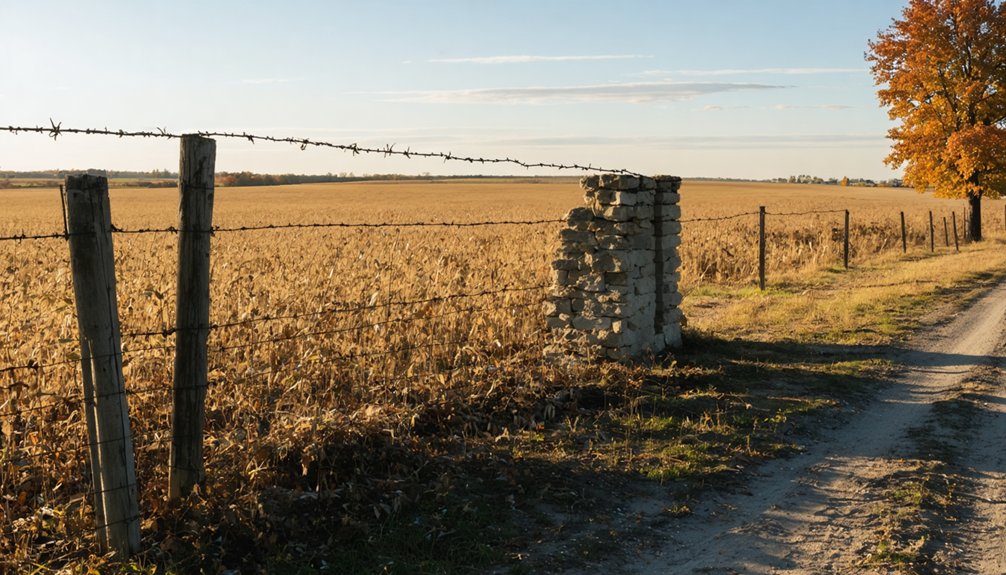
- Crumbling bricks scattered across flat ground — the only physical proof a town existed
- Railroad tracks still cutting through the landscape, very much alive and in use
- Open land once occupied by homes, a school, and a general store
- A stillness that feels heavier once you know people actually lived here
You won’t find markers or tours. You’ll find raw, unfiltered history underfoot.
How to Get to Millsdale, Illinois by Car
To reach Millsdale, you’ll want to plug coordinates 41.4350°N, 88.1642°W into your GPS and plan your approach through Channahon Township, southwest of Joliet off Illinois Route 6.
Once you’re close, local roads through the flat northeastern Illinois terrain will guide you toward the site, though you should expect minimal signage given the area’s government and industrial ownership history.
Parking is informal at best, so you’ll likely pull off along a roadside shoulder and proceed on foot to scout whatever crumbling foundations and bricks remain.
Starting Your Route Planning
Whether you’re driving from Chicago, Joliet, or anywhere across the Midwest, reaching Millsdale means steering to a quiet stretch of Channahon Township in Will County, Illinois — roughly southwest of Joliet near coordinates 41.4350°N, 88.1642°W.
Before you hit the road, map out your approach with purpose. This site rewards those serious about historical preservation and chasing local legends others overlook.
Pack your curiosity and plan around these emotional waypoints:
- A ghost town frozen in quiet, slow decline
- Railroad tracks still humming where livestock once rolled toward Chicago
- Crumbling bricks carrying the weight of forgotten lives
- Open flatland that makes you feel genuinely free
Set your GPS, leave the crowds behind, and drive toward a place that history nearly erased completely.
Key Roads To Take
Driving to Millsdale puts you on some of northeastern Illinois’s most straightforward rural roads, with Interstate 55 serving as your primary artery if you’re coming from Chicago or the surrounding suburbs. Exit near Channahon and head southwest, picking up local county roads that cut through flat farmland toward the site’s coordinates at 41.4350°N, 88.1642°W.
Route 6 and Millsdale Road connect you directly to the area without complicated navigation. You’ll pass working railroad tracks still active near the original Santa Fe line, a quiet nod to historic preservation along your route.
The open landscape gives you room to breathe and reflect on local legends tied to this forgotten settlement. Keep a detailed map handy since GPS coverage can be inconsistent on these rural stretches.
Parking Near The Site
Once you’ve followed those county roads to the site, finding a reliable parking spot takes a bit of planning since Millsdale’s ghost town status means there’s no designated lot waiting for you. Parking options are limited, and visitor facilities simply don’t exist here — that’s part of the raw, unfiltered freedom this place offers.
Keep these tips in mind before you pull over:
- Pull completely off the road onto firm gravel shoulders to avoid blocking traffic
- Respect posted signs — some land is government-owned or tied to Stepan Chemical Company
- Avoid soft ground near drainage ditches, especially after rain
- Keep your visit brief since roadside parking draws attention in quiet rural areas
Park smart, stay aware, and let the silence of this forgotten place speak for itself.
Other Illinois Ghost Towns Worth Combining With a Millsdale Trip
If you’re already making the drive to Millsdale, you might as well turn it into a full Illinois ghost town road trip. Several abandoned settlements lie within a reasonable distance, letting you string together stops without backtracking too much.
Planning your route around clusters of ghost towns keeps your mileage low and your discoveries high.
Nearby Ghost Towns Worth Visiting
Millsdale pairs well with other ghost towns scattered across northeastern Illinois, making it easy to build a full day of abandoned-history exploration.
Historical preservation efforts vary across these sites, but each carries local legends worth chasing down.
Consider adding these stops to your route:
- Elwood, Illinois – a quiet community forever changed by military land acquisition, echoing Millsdale’s own story
- Symerton – a once-thriving railroad village now frozen in time, with crumbling structures still standing
- Brisbin – a forgotten farming settlement where the land speaks louder than any remaining structure
- Braidwood – a former coal town carrying deep working-class history beneath its weathered surface
Each destination rewards your curiosity differently.
You’ll leave with photographs, questions, and a sharper understanding of how entire communities simply vanish.
Planning Multi-Stop Illinois Routes
Planning a multi-stop ghost town route through northeastern Illinois is easier than you’d expect, since Millsdale sits within reasonable driving distance of several other abandoned or near-abandoned communities. You can anchor your itinerary around Will and Grundy counties, where scattered settlements once thrived along old rail corridors.
Before visiting any site, check visitor guidelines carefully, as some locations cross private or government-controlled land. Trespassing can end your trip fast.
Bring a camera, sturdy boots, and patience. Historical artifacts occasionally surface at these sites, but removing anything is both illegal and disrespectful. Document what you find photographically instead.
Mapping your stops in advance lets you cover more ground efficiently, turning a single Millsdale visit into a full day of worthwhile exploration across Illinois’s quietly fascinating ghost town landscape.
When Is the Best Time to Visit Millsdale?
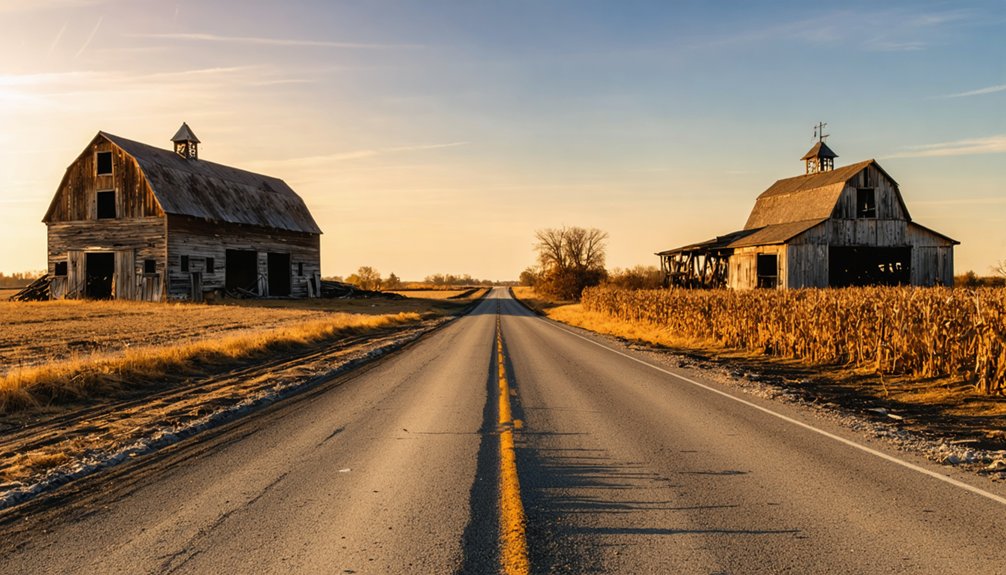
Timing your visit to Millsdale makes a real difference, especially since the site sits on flat, open Illinois terrain with little shade or shelter. Seasonal weather shapes your entire experience here, so plan smart with these visitor tips:
Timing your visit to Millsdale matters — flat, open terrain offers no shade, and seasons shape everything.
- Spring and fall offer mild temperatures, soft light, and fewer crowds — perfect for photography and quiet reflection.
- Summer heat bakes the open land fast, making early morning your only real window.
- Winter visits strip the landscape bare, revealing foundations and crumbling bricks more clearly against the frost.
- Avoid heavy rain seasons — muddy, flat terrain with no paved access turns exploration into a frustrating slog.
You’re chasing history on your own terms, so choose the season that lets you move freely and stay as long as you want.
What to Pack Before Visiting Millsdale
Packing right separates a productive visit from a wasted trip, especially at a site like Millsdale where there’s no infrastructure, no services, and no one nearby to help if something goes wrong. Bring water, sturdy boots, and a fully charged phone with offline maps loaded.
A camera captures the crumbling bricks and flat terrain better than any phone snapshot. Carry a printed history summary covering local legends tied to Oscar Mills and the Santa Fe Railway era, so you’re not guessing what you’re looking at.
Wear layers, since northeastern Illinois weather shifts fast. Respect any preservation efforts by staying off restricted land connected to Stepan Chemical Company or former government-owned sections.
Pack light, move smart, and you’ll leave with real documentation of a quietly vanished place.
What to Photograph at Millsdale and How to Make the Most of It
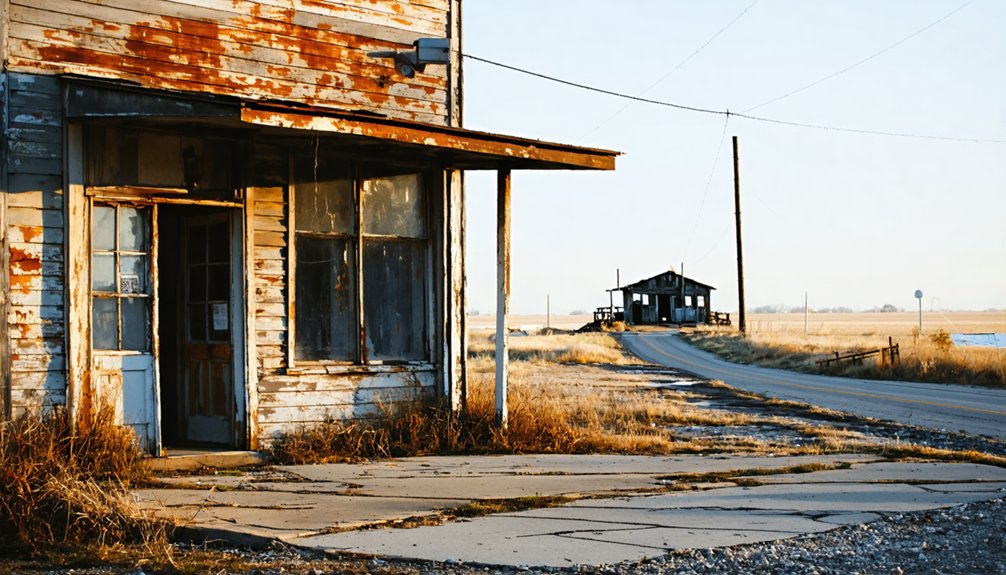
Once your gear’s loaded and you’re standing at the edge of what’s left of Millsdale, the question shifts from what to bring to what’s actually worth pointing your lens at.
The historical artifacts here are sparse but powerful — crumbling bricks, forgotten foundations, and active railroad tracks that once carried livestock toward Chicago markets.
Use these photography tips to capture the emotion:
- Shoot the bricks close-up — texture tells the story of the 1884 factory
- Frame the railroad tracks leading into flat horizon — stillness meets purpose
- Capture overgrowth swallowing foundations — nature reclaiming human ambition
- Photograph in golden hour — soft light transforms decay into something haunting
You’re not just documenting ruins. You’re preserving what little remains of a community that quietly disappeared.
Frequently Asked Questions
Was Millsdale Ever Considered for Official Historical Landmark Designation?
There’s no confirmed record of Millsdale receiving official historical landmark designation. You won’t find formal historical preservation recognition, yet its cultural significance as a vanished Illinois ghost town makes it a compelling stop worth exploring independently.
Did Oscar Mills Have Any Family Members Who Remained in the Area?
You won’t find confirmed records of Oscar Mills’ family history or local descendants in available sources, but exploring Millsdale’s rich past might uncover fascinating personal connections if you dig into regional genealogical archives yourself.
Are Metal Detecting or Artifact Collecting Activities Permitted at Millsdale?
You might think it’s fair game, but metal detecting regulations and artifact collection rules restrict activities here. Since government and private entities own the land, you’d need explicit permission before exploring Millsdale’s grounds for historical remnants.
Has Millsdale Ever Appeared in Any Films, Documentaries, or Television Programs?
You won’t find Millsdale featured in films, documentaries, or television programs. Despite its compelling ghost town legends and abandoned structures, it’s remained largely undiscovered by media, making your visit feel like a genuinely exclusive, freedom-filled exploration.
Is Camping or Overnight Stays Allowed Near the Millsdale Site?
You won’t find camping regulations or overnight stay policies permitting stays near Millsdale — the government-owned land and Stepan Chemical Company’s presence restrict access, so you’ll need to plan your visit as a quick daytime stop.
References
- https://en.wikipedia.org/wiki/Millsdale
- https://kids.kiddle.co/Millsdale
- https://roamze.com/ghost-towns/millsdale-ghost-town-il
- https://www.ghosttowns.com/states/il/millsdale.html
- https://drloihjournal.blogspot.com/p/lost-towns-of-illinois-series.html
- https://www.wikiwand.com/en/articles/Millsdale
- http://www.maps.eshikshya.org/kiwix/content/wikipedia_en_all_maxi_2023-05/A/Millsdale
- https://drloihjournal.blogspot.com/2022/05/lost-towns-of-illinois-millsdale-illinois.html
- https://en.wikipedia.org/wiki/List_of_ghost_towns_in_Illinois
- https://mapcarta.com/22150342