Planning a ghost town road trip to Buxton, Iowa means stepping into one of America’s most remarkable lost communities. Once home to nearly 10,000 residents, this Monroe County coal town achieved true racial integration during the Jim Crow era before collapsing by 1927. Today, you’ll find only scattered foundations reclaimed by Iowa’s rural landscape. Start your journey in Albia, pack sturdy shoes, and prepare to uncover a story far deeper than you’d expect.
Key Takeaways
- Buxton, Iowa, is located east of Lovilia in Monroe County, accessible by starting your trip from Albia.
- Only two buildings and scattered foundations remain, so explore on foot to discover the ghost town’s remnants.
- Visit between late spring and early fall for the best visibility of overgrown foundations and artifacts.
- Bring water, snacks, sturdy shoes, and a camera to make the most of your exploration.
- Pair your visit with nearby attractions like Albia’s courthouse square and Lake Rathbun for a fuller experience.
What Was Buxton, Iowa?
Once a thriving coal mining town in rural Monroe County, Buxton, Iowa, was founded in 1895 by the Chicago and Northwestern Railway to fuel its operations. At its peak, nearly 10,000 residents called it home, making it a remarkable example of urban development on the Iowa frontier.
What sets Buxton apart is its extraordinary cultural heritage. During the Jim Crow era, Black and white miners earned equal pay, joined the same unions, and sent their children to the same schools.
African American professionals, businesses, hotels, and theaters flourished here. You’d have witnessed a community that defied the racial norms of its time.
How Buxton Became One of America’s Most Integrated Towns
When you explore Buxton’s history, you’ll quickly discover that its roots as a railroad coal town accidentally created one of America’s most progressive communities.
The Chicago and Northwestern Railway needed miners fast, so they recruited both Black and white workers, paid them equally, and placed them in the same unions.
You’ll find it remarkable that while Jim Crow laws strangled opportunities for African Americans across the country, Buxton’s children attended integrated schools and families shared the same neighborhoods without restriction.
Railroad Town Origins
Though it started as nothing more than a railroad company’s practical solution to an energy problem, Buxton would grow into one of America’s most remarkably integrated communities. When the Chicago and Northwestern Railway founded the town around 1895, they needed coal to fuel their operations, so they built an entire community east of Lovilia in Monroe County, Iowa.
You’d trace Buxton’s roots back even further to Muchakinock, an earlier company town that eventually gave way to this new settlement. The Consolidation Coal Company developed the infrastructure, laying the groundwork for what would become historic architecture, thriving institutions, and local legends that still echo today.
What began as pure industrial necessity quietly transformed into something far more significant — a living experiment in equality that the rest of America wasn’t ready to attempt.
Equal Pay, Equal Rights
What made Buxton truly remarkable wasn’t just its industrial origins — it was what happened inside those company-built neighborhoods. Black and white miners earned equal pay, joined the same unions, and fought for the same labor rights. That wasn’t happening anywhere else in Jim Crow America.
You’d have found African American doctors, lawyers, and business owners thriving alongside their white neighbors. Children attended the same schools. Families shared the same streets. Community cohesion wasn’t just a concept here — it was daily life.
Buxton proved that integration wasn’t idealistic fantasy; it was practical reality when economic structures supported it. Walking these grounds today, you’re standing where thousands of people built something genuinely radical — a town where equality wasn’t debated, it was simply lived.
During the Jim Crow era, segregation wasn’t just law in much of America — it was architecture, policy, and enforced daily humiliation. Buxton’s urban development defied all of it.
Here, you would’ve found:
- Black and white children sharing the same classrooms — unthinkable elsewhere in 1900s America
- Neighbors of every race living side by side — no redlined districts, no restricted deeds
- A cultural heritage built on mutual dignity — community institutions serving everyone equally
- Freedom modeled through daily life — not protested for, but simply lived
When you visit what remains of Buxton today, you’re standing where ordinary people built something extraordinary. They didn’t wait for permission to treat each other as human beings. They just did.
Why Did Buxton Collapse After World War I?
Once you understand Buxton’s remarkable rise, its swift collapse hits even harder.
After World War I, mechanization and the railroad’s shift to diesel fuel gutted coal demand, leaving the mines with shrinking purpose and dwindling output.
By 1919, the population had crashed from nearly 10,000 to just 400.
And when the last mine closed in 1927, Buxton vanished almost overnight.
Mechanization Reduced Coal Demand
After World War I ended, the forces that had kept Buxton thriving began working against it. Mechanization gutted the coal industry, devastating the economic impact on workers who’d built something extraordinary here.
Consider what disappeared almost overnight:
- Thousands of jobs vanished as machines replaced the miners who’d earned equal wages regardless of race.
- Labor movements lost their power as there were simply no positions left to fight for.
- Black-owned businesses shuttered when customers had no income to spend.
- An entire community’s freedom — doctors, lawyers, theaters, and the YMCA — crumbled without economic foundation.
Diesel engines replaced coal-powered locomotives, and demand collapsed. The mines that had defied Jim Crow-era America simply ran out of purpose, then ran out entirely.
Mines Eventually Ran Dry
Mechanization dealt the first blow, but the mines themselves sealed Buxton’s fate. After World War I, coal mining operations revealed an uncomfortable truth — the deposits were running out. No amount of worker dedication or strong town infrastructure could overcome geology.
You’d have watched an entire world quietly disappear. By 1919, the population had already crashed from 10,000 to just 400 residents. Families packed their belongings and scattered across the country, chasing whatever opportunities remained.
The last mine closed in 1927, making Buxton officially a ghost town. What had once been a thriving, racially integrated community — complete with theaters, hotels, and professional businesses — simply vanished.
Nature reclaimed the land, leaving only two buildings and scattered foundations where thousands had once built remarkable lives.
Population Rapidly Declined
The speed of Buxton’s collapse still staggers historians. A thriving community celebrating cultural diversity simply vanished within years. The economic impact proved devastating and swift.
By 1919, population had plummeted from nearly 10,000 residents to just 400 people. When the last mine closed in 1927, Buxton officially died.
Consider what disappeared almost overnight:
- Thousands of African American families lost stable, equal-paying jobs simultaneously
- Black-owned businesses, hotels, and theaters shuttered without warning
- Integrated schools and neighborhoods that defied Jim Crow simply ceased existing
- An entire professional class — doctors, lawyers, entrepreneurs — scattered across the country
You won’t find many places that rose and fell so dramatically. Buxton’s rapid decline represents one of America’s most heartbreaking losses of hard-won freedom.
What’s Left to See at Buxton Ghost Town Today?
Once a thriving town of nearly 10,000 residents, Buxton has left behind only fragments of its remarkable past. Today, you’ll find just two standing buildings and scattered old foundations reclaimed by Iowa’s rural landscape. It’s a humbling sight, but don’t let the sparse remains discourage you.
Art preservation efforts and local legends have kept Buxton’s extraordinary story alive far beyond its physical boundaries.
An archaeological dig conducted in the 1980s through Iowa State University unearthed thousands of artifacts, ensuring history wasn’t completely swallowed by time. Many books and articles document this unique community’s legacy.
If you visit during summer, you might even cross paths with descendants of former residents gathering for their annual reunion gala — a living symbol of Buxton’s enduring spirit.
How to Get to Buxton’s Ghost Town Site
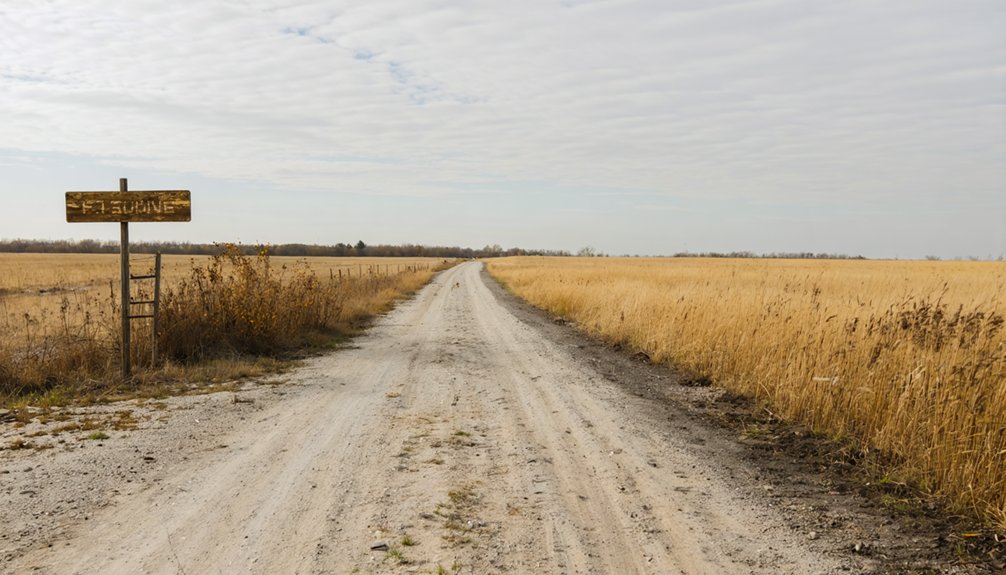
Getting to Buxton’s ghost town site is straightforward once you know where you’re headed. It’s located east of Lovilia in Monroe County, Iowa — a peaceful rural stretch perfect for outdoor activities and open-road exploration.
- Start in Albia, Monroe County’s seat, where you’ll find local cuisine worth savoring before heading into the countryside.
- Head east toward Lovilia along County Road H23, breathing in landscapes unchanged for over a century.
- Watch for unmarked turnoffs — Buxton’s absence from modern maps mirrors its erasure from history.
- Walk the remaining foundations where 10,000 souls once built something extraordinary together.
You’re not just driving to a location — you’re navigating toward a place where equality briefly triumphed against impossible odds.
Best Time to Visit Buxton, Iowa
Timing your visit to Buxton makes a genuine difference in what you’ll experience at this remote Monroe County site. Late spring through early fall offers the most rewarding exploration, when overgrown foundations become visible and the surrounding Iowa countryside transforms into stunning scenic viewpoints worth photographing.
Summer brings the added bonus of the annual reunion gala, where former residents and historians gather, sharing stories that breathe life into the ghost town’s remarkable past. You’ll also find local cuisine options in nearby Albia and Lovilia more accessible during warmer months.
Avoid visiting after heavy rainfall, as the rural terrain turns muddy and difficult to navigate. Winter months obscure remaining artifacts beneath snow, limiting what you’ll actually discover during your exploration of this extraordinary site.
What to Bring to Buxton Ghost Town

Preparing for your Buxton visit means packing smart for a remote, rural site with no amenities nearby. This ground once supported a thriving community of cultural heritage and resilience — honor it by arriving ready.
Buxton rewards the prepared visitor — pack smart, arrive ready, and honor the resilient community this sacred ground once held.
- Water and snacks — No stores exist nearby, so bring enough fuel for hours of exploration.
- Sturdy walking shoes — You’ll navigate uneven terrain where thousands once walked freely together.
- A journal or camera — Document the community resilience embedded in every remaining foundation stone.
- Research materials or a guidebook — Understanding Buxton’s remarkable integrated history deepens every step you take across this sacred ground.
The more prepared you are, the longer you can stay — absorbing the powerful silence of a place that quietly changed everything.
Monroe County Stops That Pair Well With Buxton
While you’re already making the drive out to rural Monroe County, it makes sense to round out your trip with a few nearby stops that add context and contrast to the Buxton experience.
Lovilia, the small town just west of where Buxton once stood, offers a glimpse into the region’s surviving rural character.
Albia, the county seat, holds strong preservation efforts through its historic courthouse square, local museums, and cultural heritage displays that trace Monroe County’s coal-era roots. You’ll find exhibits connecting directly to the mining communities that shaped this landscape.
Lake Rathbun, just a short drive away, gives you open water, trails, and camping if you want to extend the trip beyond history into genuine outdoor freedom.
Each stop earns its place on the itinerary.
The Annual Buxton Reunion You Can Actually Attend
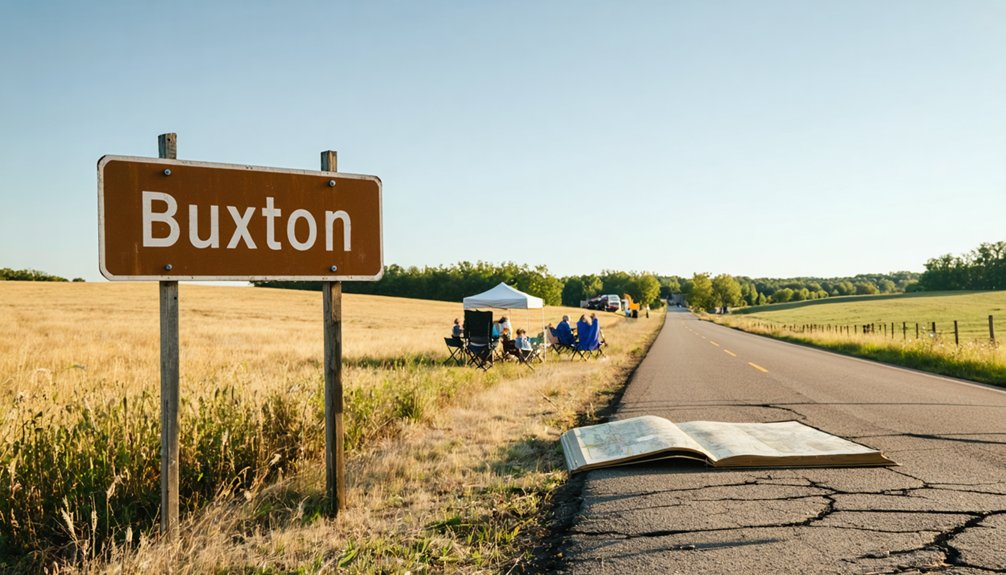
Beyond the courthouse squares and lake trails, there’s a living piece of Buxton history you can actually step into. Former residents and descendants gather each summer for an annual reunion gala, keeping community celebrations alive decades after the last mine closed.
Here’s what makes attending worth your detour:
- You’ll hear firsthand stories passed down through generations of families who actually lived there
- You’ll witness historical preservation happening in real time, not just behind museum glass
- You’ll connect with descendants of miners who built something remarkable against the odds
- You’ll leave carrying something real — a sense that Buxton’s spirit outlasted every building
This reunion isn’t a reenactment. It’s living memory, and you’re welcome to be part of it.
Frequently Asked Questions
Are There Guided Tours Specifically Focused on Buxton’s African American History?
No dedicated guided tours exist, but you’ll discover Buxton’s rich African American history through cultural festivals and historical reenactments at annual reunion galas, where former residents actively celebrate their groundbreaking, integrated community’s remarkable, freedom-defining legacy.
Can Visitors Legally Collect Artifacts or Souvenirs From the Buxton Site?
With thousands of artifacts uncovered in the 1980s dig, you shouldn’t take anything. Souvenir regulations prohibit artifact collection at Buxton — respect this historically rich site, preserving its remarkable legacy for future freedom-seeking explorers who’ll cherish its story.
Where Are the Thousands of Artifacts From the 1980S Archaeological Dig Displayed?
Iowa State University holds the artifact display from Buxton’s 1980s dig. You’ll find these remarkable museum exhibits showcasing thousands of recovered pieces that bring this extraordinary, racially integrated ghost town’s vibrant, freedom-filled history powerfully back to life.
Did Any Former Buxton Residents Document Their Experiences in Memoirs or Interviews?
You’ll find that many Buxton oral histories and former resident memoirs capture this remarkable community’s spirit. Researchers actively collected personal testimonies, preserving vivid accounts of integrated living, equal wages, and thriving Black-owned businesses that you won’t find documented elsewhere.
Are There Any Preservation Efforts or Organizations Working to Protect the Buxton Site?
You’ll find preservation initiatives are sparse, but community activism keeps Buxton’s spirit alive. Iowa State University’s archaeological efforts and annual reunions passionately protect this remarkable legacy of racial equality, ensuring you never forget freedom’s forgotten hometown.
References
- https://en.wikipedia.org/wiki/Buxton_Historic_Townsite
- https://reformedjournal.com/2019/07/05/ghost-town-legacy/
- https://www.youtube.com/watch?v=YjhtuMnEq10
- https://history.iowa.gov/history/education/educator-resources/primary-source-sets/buxton-lost-utopia
- https://pubs.lib.uiowa.edu/annals-of-iowa/article/10852/galley/119423/view/
- https://www.facebook.com/whoisyourredcardinal/posts/buxton-a-former-coal-boom-town-in-monroe-county-iowa-was-established-in-1900-by-/1056041353194361/
- https://www.youtube.com/watch?v=qQ_v3StjtVs
- https://pubs.lib.uiowa.edu/poroi/article/id/3412/