Planning a ghost town road trip to Mills Prairie puts you two miles southeast of West Salem in Edwards County, Illinois. You’ll find a flat, open prairie landscape sitting at 427 feet elevation, where a thriving settlement once stood before disappearing into history. Established around 1829 by Adam Hedrick, this vanished community had real civic roots, including a post office and township leadership. Stick around, and you’ll uncover everything that made Mills Prairie worth the drive.
Key Takeaways
- Mills Prairie is located two miles southeast of West Salem, Illinois, making West Salem a convenient base for your road trip.
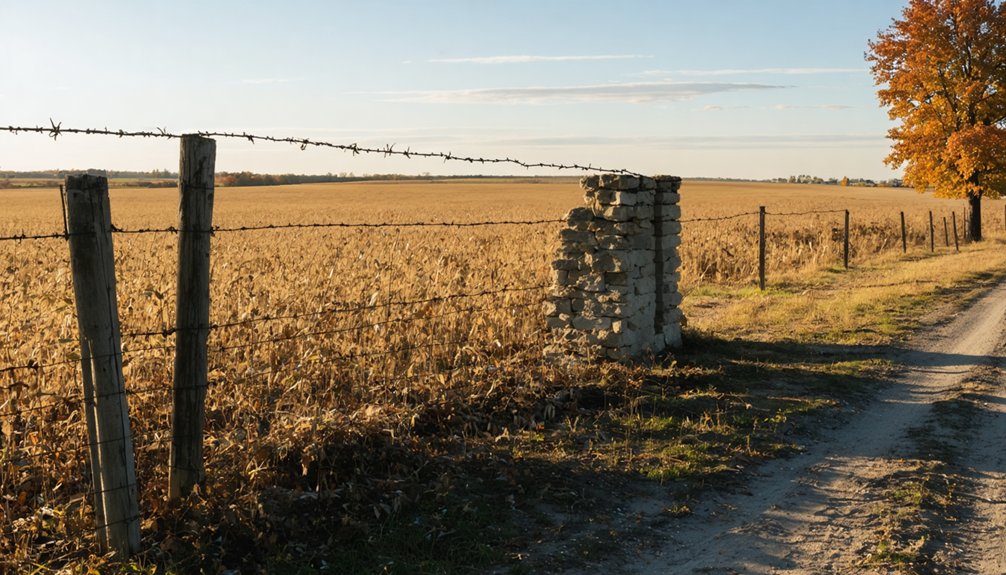
- The site features flat, open prairie terrain with no standing structures, so visitors interpret the landscape using historical context.
- Pair Mills Prairie with nearby ghost towns like Buck Prairie and Long Prairie for a comprehensive Edwards County exploration.
- Adam Hedrick founded Mills Prairie around 1829, giving the site rich frontier history worth researching before your visit.
- Regional roads provide easy access to Mills Prairie, making it ideal for a self-guided ghost town loop itinerary.
Mills Prairie: Edwards County’s Vanished Prairie Settlement
Once a thriving prairie settlement in eastern Edwards County, Mills Prairie has long since faded from the map, leaving behind little more than a historical footprint near the small town of West Salem, Illinois. Sitting roughly two miles southeast of West Salem at an elevation of 427 feet, this former community once represented fertile land, early civic life, and independent frontier spirit.
Its cultural significance stretches back to 1829, when Adam Hedrick arrived with his family, establishing roots that helped shape the area’s identity. Hedrick served as both township treasurer and postmaster, signaling a community with real structure and purpose.
Though preservation efforts haven’t produced standing ruins to visit, the site still draws history-minded travelers enthusiastic to connect with Illinois’s vanished prairie past on their own terms.
Where Mills Prairie Sits in Edwards County
When you’re mapping out your route, you’ll find Mills Prairie tucked into the eastern part of Edwards County, Illinois. The site sits about two miles southeast of West Salem, giving you a clear landmark to navigate toward.
That proximity to West Salem makes Mills Prairie an easy addition to any regional road trip through Illinois ghost town country.
Eastern Edwards County Location
Tucked into the eastern reaches of Edwards County, Illinois, Mills Prairie once occupied fertile land shared with neighboring Buck Prairie and Long Prairie—a region early settlers recognized as a center of considerable wealth. You’ll find the site roughly two miles southeast of West Salem, sitting at an elevation of 427 feet.
Unlike communities that survived urban development pressures and adapted along major transportation routes, Mills Prairie gradually faded, leaving no active populated place behind. That quiet disappearance is exactly what makes it worth tracking down.
The eastern county setting gave early residents access to productive prairie soil, supporting agriculture and local trade. When you’re mapping your ghost town itinerary, this geographic anchor helps you place Mills Prairie within a broader landscape of vanished Illinois communities worth exploring.
Two Miles From West Salem
Knowing Mills Prairie sits in the eastern stretch of Edwards County is one thing—knowing exactly where to stand when you get there is another.
Head about two miles southeast of West Salem, and you’ve reached the approximate site of this vanished settlement. No famous explorers charted this ground for glory—just determined families who carved out farms on fertile prairie soil.
Today, urban legends won’t guide you here; careful map research will. West Salem serves as your practical anchor point, giving you a reliable starting reference before you head southeast.
The surrounding landscape still carries the quiet character of early Illinois prairie country. Use West Salem’s roads to orient yourself, and you’ll place yourself directly within the historical footprint of Mills Prairie.
The History of Mills Prairie as an Edwards County Ghost Town
When you trace Mills Prairie’s roots, you land on 1829, when Adam Hedrick arrived with his family and planted himself as one of the settlement’s most prominent early citizens.
He wasn’t just a farmer — he mastered multiple mechanic trades, served as township treasurer, and ran the local post office, giving Mills Prairie a genuine civic identity.
That combination of fertile prairie land and organized community life made this corner of Edwards County a recognized settlement, not just a cluster of homesteads.
Early Edwards County Settlement
Before Edwards County became the quiet rural landscape it’s today, Mills Prairie thrived as a recognized settlement in Illinois’s eastern prairie region. You’ll find the area’s roots stretch back to 1829, when Adam Hedrick arrived with his family and planted the seeds of a real community.
Hedrick wasn’t just a farmer. He mastered multiple mechanic trades, served as township treasurer, and ran the local post office, giving Mills Prairie the civic backbone that separated it from a simple homestead.
Local legends credit the fertile prairie soil for drawing ambitious settlers seeking independence and wealth.
Though no historical architecture marks the site today, that absence tells its own story. Mills Prairie once stood as proof that determined people could build something lasting from open land.
Mills Prairie’s Civic History
What made Mills Prairie more than a cluster of homesteads was its civic structure. Adam Hedrick, who arrived in 1829, served as both postmaster and township treasurer, giving the settlement real administrative weight. A functioning post office meant residents had formal connections beyond their immediate neighbors, linking them to broader regional networks.
When you visit the area today, you won’t find local cuisine or scenic viewpoints tied to a surviving town square. Mills Prairie left no standing structures behind.
What you carry with you instead is the knowledge that free people once built something organized and lasting on fertile Edwards County prairie. That civic foundation is what separates Mills Prairie from a simple campsite and makes it worth including on your ghost town itinerary.
How Adam Hedrick Built Mills Prairie’s Early Community in 1829
Among the earliest settlers to shape Mills Prairie‘s identity, Adam Hedrick arrived in 1829 with his family and quickly became one of the community’s most influential figures. His community legacy stretched across multiple roles that kept Mills Prairie functioning as a real, self-sufficient settlement.
Hedrick’s contributions included:
- Mechanic trades – He mastered multiple crafts, supporting local infrastructure needs
- Township treasurer – He managed community finances, keeping civic life organized
- Postmaster – He ran the Mills Prairie post office, connecting residents to the wider world
- Prominent leadership – His presence attracted further settlement and stability
When you visit the area today, you’re walking through land shaped by that early determination. Though no historical artifacts remain visible, Hedrick’s impact on Edwards County’s pioneer story is undeniable.
What Survives at the Mills Prairie Site Today
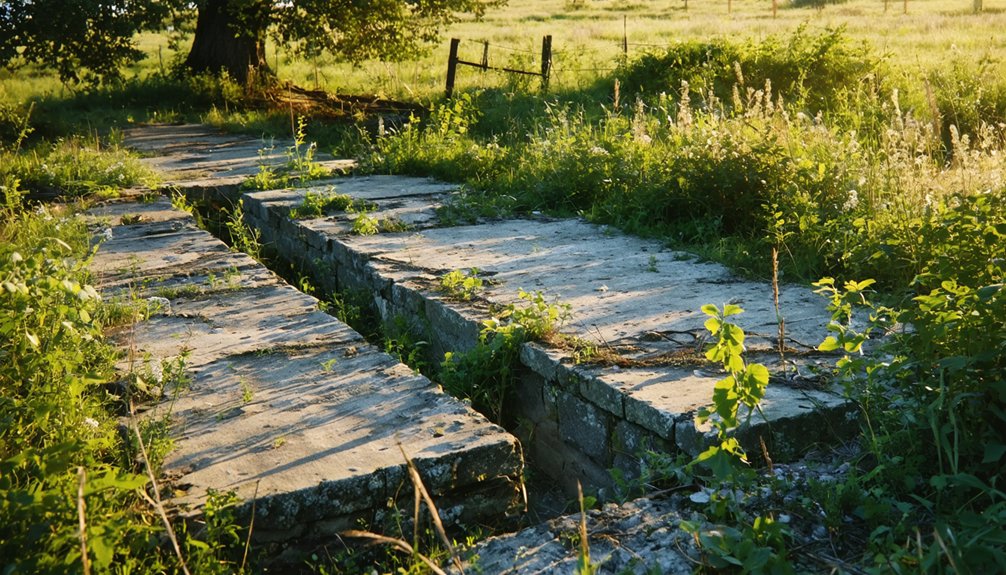
Hedrick’s legacy is compelling, but it raises a natural question once you start planning your visit: what’s actually left at Mills Prairie today? Honestly, modern remnants are scarce. No standing structures or preserved buildings mark the site, and the sources don’t document significant archaeological findings that you can walk up and examine.
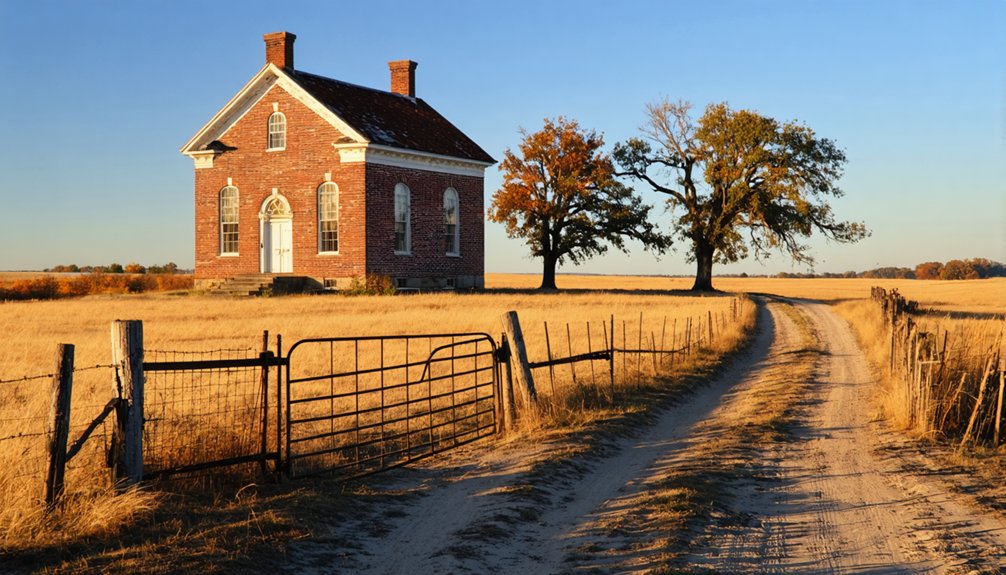
What you’ll find instead is open prairie landscape roughly two miles southeast of West Salem, carrying little visible evidence of the community that once organized itself around a post office and township offices. That absence is part of the ghost town experience — you’re reading the land rather than touring ruins.
Bring a map, note the elevation at 427 feet, and let the flat Edwards County terrain tell the story that the vanished settlement left behind.
Adding Mills Prairie to Your Illinois Ghost Town Road Trip
Once you’ve absorbed the quiet emptiness of Mills Prairie, it fits naturally into a broader Edwards County ghost town loop. Pair it with nearby cultural landmarks and modern attractions to build a full day of exploration.
Consider anchoring your route around these stops:
- West Salem – just 2 miles northwest, offering food, fuel, and local history
- Buck Prairie and Long Prairie – neighboring vanished settlements sharing the same fertile corridor
- Edwards County historical markers – scattered cultural landmarks connecting early settler stories
- Local farm routes – modern attractions rooted in the same agricultural land early pioneers worked
You’re tracing a landscape shaped by people who built communities from scratch. Mills Prairie isn’t just a dot on a map—it’s a gateway into Illinois’s forgotten frontier history.
Edwards County Ghost Towns Worth Visiting on the Same Trip
Edwards County hides more than one forgotten settlement, so if you’re already making the drive to Mills Prairie, you’d be doing yourself a disservice to stop there. The county’s eastern prairie region sheltered several communities that rose and faded alongside Mills Prairie, each one a thread in the same story of early Illinois settlement.
Exploring these sites together turns a single stop into a genuine cultural preservation experience, connecting you to the broader arc of 19th-century frontier life. Look for historic landmarks and local historical markers around West Salem that point toward surrounding ghost town locations.
Combining these stops lets you move through the landscape on your own terms, building a fuller picture of what Edwards County once was and what only traces of it remain.
Frequently Asked Questions
Is There a Fee to Visit the Mills Prairie Ghost Town Site?
No fee’s required to visit! You’re free to explore this open prairie site, photograph historical artifacts, and soak in the past. For photography tips, visit during golden hour to capture the landscape’s haunting beauty perfectly.
What Is the Best Time of Year to Visit Mills Prairie?
Spring and fall offer you the best visits, blending mild weather with stunning scenery. You’ll capture amazing photography opportunities while soaking in historical significance, as cooler temps make exploring Edwards County’s vanished prairie settlement truly unforgettable and freeing.
Are There Nearby Hotels or Campgrounds Close to West Salem?
You’ll find hotels and campgrounds near West Salem to rest between historical landmarks and local dining adventures. Book your stay early, explore freely, and let the open road guide your Mills Prairie ghost town journey!
Is the Mills Prairie Site Accessible by Paved Roads Year-Round?
Like a fading trail through tall grass, road conditions aren’t confirmed year-round. You’ll want to contact Edwards County locally before visiting for historic preservation efforts and wildlife observation opportunities near the Mills Prairie site.
GPS accuracy won’t guarantee you’ll pinpoint Mills Prairie’s exact ghost town site. Navigation reliability gets you close to West Salem, but you’ll need local knowledge and historical research to truly uncover this vanished Illinois settlement.
References
- https://kids.kiddle.co/Mills_Prairie
- https://en.wikipedia.org/wiki/List_of_ghost_towns_in_Illinois
- https://drloihjournal.blogspot.com/2022/09/lost-towns-of-illinois-mills-prairie-illinois.html
- https://kids.kiddle.co/List_of_ghost_towns_in_Illinois
- http://genealogytrails.com/ill/jefferson/ghostowns.html
- https://www.ghosttowns.com/states/il/millsdale.html
- https://www.youtube.com/watch?v=SK0284ZVaRQ
- http://cantontornado36.blogspot.com/2017/04/ghost-towns-of-fulton-county-illinois.html