To plan your ghost town road trip to Stillwater, Nevada, head east from Fallon on U.S. Route 50, then turn north onto Stillwater Road. You’ll pass through wetlands before reaching open rangeland where a county seat once thrived. Stock up on supplies in Fallon — there’s nothing waiting for you out there. Spring and fall offer the best conditions for exploring this quietly vanished world. Keep going, and Stillwater’s full story unfolds.
Key Takeaways
- Stillwater, Nevada, sits roughly 10 miles east of Fallon; access it via U.S. Route 50 north onto Stillwater Road.
- No services exist in Stillwater, so stock up on water, food, and supplies in Fallon beforehand.
- Spring offers mild temperatures and wildlife activity, while fall provides ideal photography lighting and cooler conditions.
- Nearby ghost towns like Fort Churchill and Berlin-Ichthyosaur State Park complement Stillwater for a fuller historical road trip.
- Bring offline GPS, paper maps, sturdy footwear, and ample water, as the remote terrain has no cell service.
How to Get to Stillwater, Nevada?
Tucked into the Carson Sink region of Churchill County, Stillwater sits roughly 10 miles east of Fallon along Stillwater Road — a straightforward drive that drops you into the same marshy, wide-open valley where Pony Express riders once pushed through on the Central Overland route.
From Fallon, head east on U.S. Route 50, then cut north onto Stillwater Road. It’s an easy half-hour detour that rewards you immediately.
Head east on U.S. Route 50 from Fallon, cut north onto Stillwater Road, and the wetlands unfold immediately.
Stop in Fallon first for local cuisine, since Stillwater offers no services.
Once you’re rolling through the wetlands, slow down — wildlife sightings along the Stillwater National Wildlife Refuge corridor are common, with waterfowl cutting across the sky just as they did when Northern Paiute people worked these marshes long before settlers arrived.
What’s Left to See at Stillwater Ghost Town?
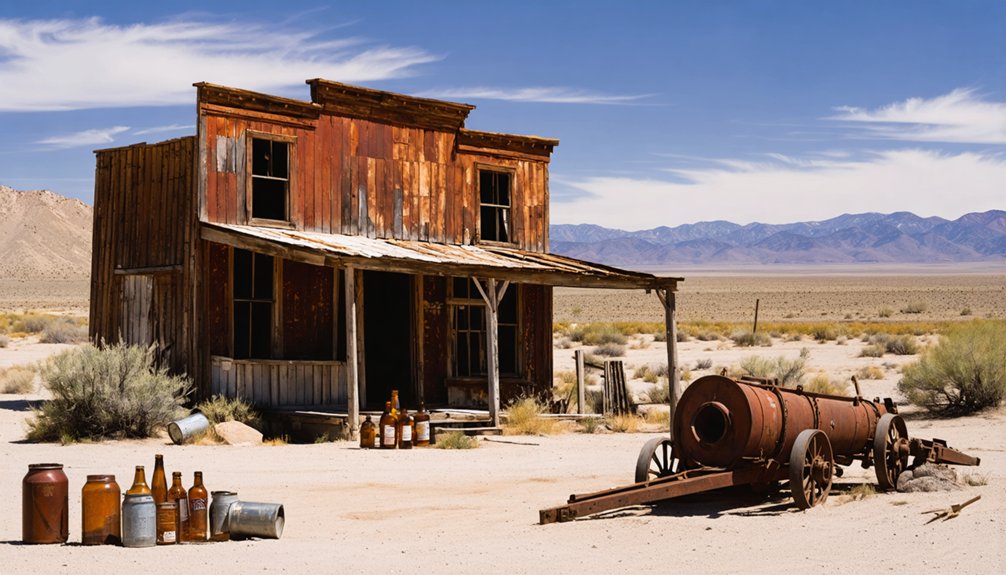
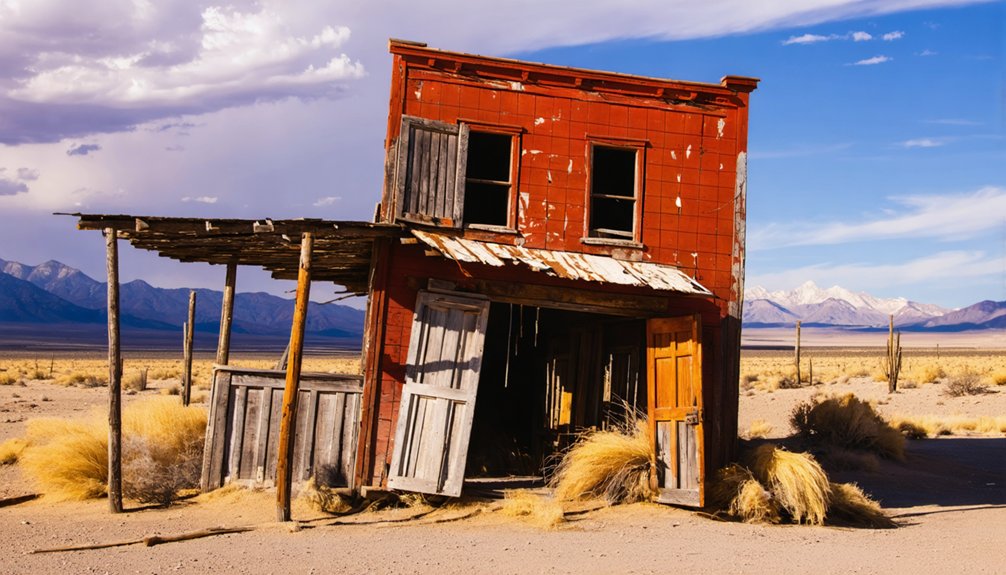
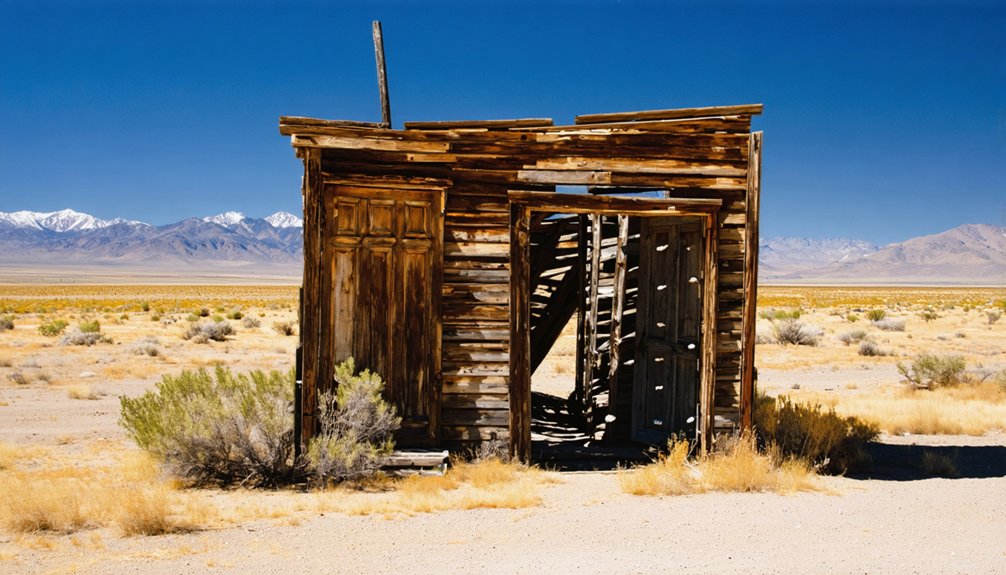
Once you’ve pulled off Stillwater Road and stepped out of the car, the silence hits first — then the flatness, the big Nevada sky, and the slow realization that almost nothing remains of what was once Churchill County’s seat of government.
The hotels fell in 1946, the original store in 1963, and the LeBeau Health Resort vanished by 2002. You’re fundamentally standing in open rangeland now, surrounded by alfalfa operations and marsh.
Local legends about frontier saloons and Pony Express riders linger longer than the buildings ever did. Preservation efforts haven’t been strong here — nature and neglect claimed most of it.
What you do get is raw, unfiltered landscape, the kind that rewards travelers who don’t need a museum to feel history beneath their boots.
The History Behind Stillwater’s Rise and Fall
Stillwater’s story moves fast — from a Pony Express stop in 1862 to Churchill County’s seat of government by 1868, all within a single restless decade of frontier ambition. You can trace that arc through the businesses that once lined its streets: saloons, hotels, a blacksmith, a courthouse, and irrigation ditches that fed one of Nevada’s earliest farming operations.
But when the county seat shifted to Fallon in the early 1900s, Stillwater lost its reason to exist, and the slow unraveling began.
From Settlement To Boom
Before the town had a name, the land already had a pulse. The Northern Paiute knew this valley intimately, reading its marshes, fish, and waterfowl long before settlers arrived.
County Seat To Ghost Town
By December 1868, Stillwater had claimed something most frontier towns only dreamed of: the Churchill County seat. With roughly 150 residents, you’d have found a courthouse anchoring a lively strip of saloons, hotels, restaurants, and a blacksmith shop.
Local legends painted it as a place where frontier ambition ran deep and irrigated fields fed nearby mining camps.
Then Fallon took the county seat around 1902, and Stillwater’s pulse flatlined. Government functions vanished, businesses followed, and the population guttered to around thirty souls.
Hotels fell in 1946, the original store disappeared in 1963, and the LeBeau Health Resort was gone by 2001.
Today, scattered historical artifacts are nearly all that remain — quiet proof that a thriving county capital can dissolve into open Nevada desert faster than you’d expect.
Best Time of Year to Visit Stillwater?
Spring’s mild temperatures make it the most comfortable season for wandering Stillwater’s sparse remnants, letting you explore the old Carson Sink landscape without battling the brutal Nevada summer sun.
If you visit in July or August, you’re trading comfort for endurance—triple-digit heat turns a ghost town stroll into a survival exercise.
Come fall, though, and you’ll find golden light that transforms the high desert into a photographer’s dream, casting long shadows across the same scrubland that once surrounded a frontier county seat.
Spring Offers Mild Weather
When you’re planning a ghost town road trip to Stillwater, Nevada, spring is the season that rewards you most. Mild weather settles over Churchill County before summer’s desert heat secures, and spring blooms push through the valley floor where settlers once carved irrigation ditches by hand.
You’ll move freely across the landscape without fighting brutal temperatures or icy roads. Consider what spring opens up for you:
- Comfortable exploration of the Carson Sink’s marshy terrain without extreme heat
- Wildlife activity across the Stillwater National Wildlife Refuge, active and vivid
- Clear visibility across ranchlands that echo the town’s 1860s agricultural roots
Spring puts you in the right conditions to feel Stillwater’s ghost town silence without nature working against you.
Summer Heat Warnings
Summer arrives in Churchill County without mercy, and if you’re road-tripping to Stillwater in July or August, you’ll feel every degree of it. Temperatures regularly push past 100°F across the Carson Sink, turning the marshlands into a shimmering, punishing landscape.
Climate considerations matter here. Carry more water than you think you’ll need, start driving at dawn, and reach the ghost town before midday heat peaks.
Local wildlife — herons, migratory birds, and marsh creatures sheltering within the Stillwater National Wildlife Refuge — retreats during peak afternoon hours, so early arrivals catch far more activity.
The pioneers who settled this valley in 1863 built irrigation ditches under this same brutal sun. You can handle a day trip — just respect the desert on its own terms.
Fall For Photography
Escape the scorched summer months, and fall hands you Stillwater at its most photogenic. Cooler temperatures make long explorations manageable, and the Carson Sink’s marshlands glow amber and rust beneath wide Nevada skies.
Historical anecdotes sharpen your shots — imagine framing the remnants of a once-thriving 1860s county seat against October light.
Pack these photography tips for your visit:
- Shoot at golden hour — low autumn sun deepens shadows across the sparse, weathered landscape
- Use the wildlife refuge water — the 1949 Stillwater National Wildlife Refuge mirrors sky and migrating birds beautifully
- Capture absence deliberately — the demolished hotel sites and vanished storefronts tell ghost town stories through empty space
Fall rewards the patient, freedom-seeking traveler with honest, unhurried access to Stillwater’s layered history.
Ghost Towns Near Stillwater Worth Visiting
Once you’ve walked Stillwater’s quiet grounds, the surrounding Nevada desert opens up into a broader ghost town circuit worth exploring. Churchill County and its neighboring regions hold scattered historical landmarks that reward the curious traveler willing to push further down empty roads.
Fort Churchill State Historic Park sits close enough for a half-day detour, offering crumbling adobe ruins and local wildlife along the Carson River corridor.
Berlin-Ichthyosaur State Park combines a genuine ghost town with fossil history unlike anything else in the region.
Each stop adds a layer to the story Stillwater started telling you. Nevada’s ghost town trail isn’t a single destination — it’s a living map of collapse, ambition, and survival.
Follow it honestly, and you’ll leave with more questions than you arrived with.
What to Pack for a Stillwater Ghost Town Trip?
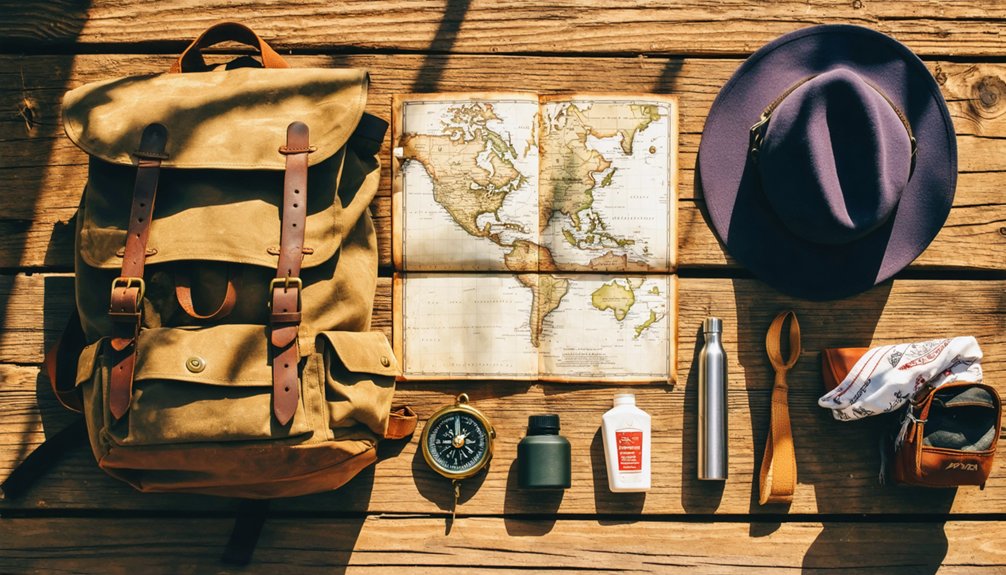
Packing for Stillwater means preparing for a landscape that hasn’t softened since the 1860s — dry, exposed, and indifferent to poor planning. The Carson Sink doesn’t reward carelessness, and neither does ghost town exploration. Your packing essentials and safety gear determine whether this trip feels like freedom or a mistake.
Bring what the original settlers wished they’d had:
- Water and sun protection — the Nevada desert dehydrates fast, and shade is scarce across the wetlands and open range
- Sturdy footwear — uneven terrain around deteriorating foundations demands ankle support
- Navigation tools — cell service thins out here; a paper map or offline GPS keeps you oriented where the county seat once stood
Pack light, pack smart, and respect the distance.
Frequently Asked Questions
Was Stillwater Ever a Pony Express Stop Along Its Route?
Yes, Stillwater served as a Pony Express stop! When you’re mapping route planning tips for ghost town attractions, you’ll love knowing riders once thundered through this very ground, carrying mail across Nevada’s wild frontier.
Which Native American People Originally Lived in the Stillwater Area?
Like roots beneath ancient soil, the Northern Paiute called Stillwater home long before settlers arrived. You’re treading ground rich with their Native traditions and Cultural heritage, a living legacy that predates every ghost town story you’ll uncover.
When Did Stillwater Officially Open Its First Post Office?
Stillwater opened its first post office in 1865! As you chase ghost town exploration, this historical landmark marks a pivotal moment in frontier growth — you’re tracing the footsteps of pioneers who carved freedom from Nevada’s wild, open landscape.
What Waterway Gave Stillwater, Nevada Its Distinctive Town Name?
The Stillwater Slough — an almost mythically deep, sluggish waterway — gave this ghost town history its unforgettable name. As you cruise scenic Nevada routes, you’ll feel that slow, powerful current still echoing through every abandoned corner you discover.
When Was the Stillwater National Wildlife Refuge Officially Established?
In 1949, you’ll find wildlife conservation took root when the Stillwater National Wildlife Refuge was officially established. It’s transformed the historic landscape into one of Nevada’s most adventurous birdwatching hotspots, where freedom truly soars.
References
- https://en.wikipedia.org/wiki/Stillwater
- https://www.nvexpeditions.com/churchill/stillwater.php
- https://www.destination4x4.com/stillwater-nevada-churchill-county-ghost-town/
- https://www.ghosttowns.com/states/nv/stillwater.html
- https://kids.kiddle.co/Stillwater
- https://www.facebook.com/nevadaghosttowns/posts/stillwater-nevada-churchill-county-in-1903-once-a-bustling-stage-stop-and-county/889718903195437/
- https://de.wikipedia.org/wiki/Stillwater_(Nevada)