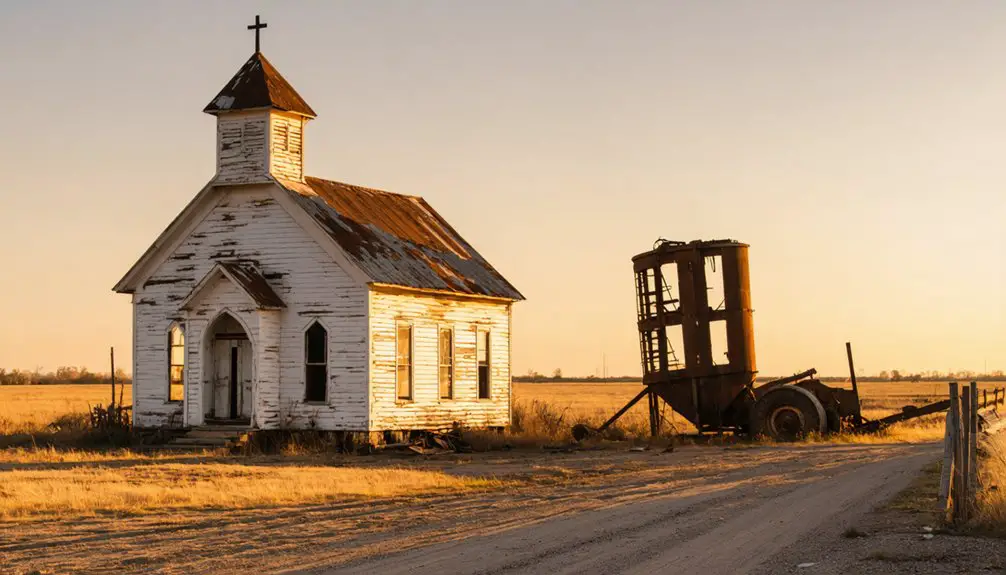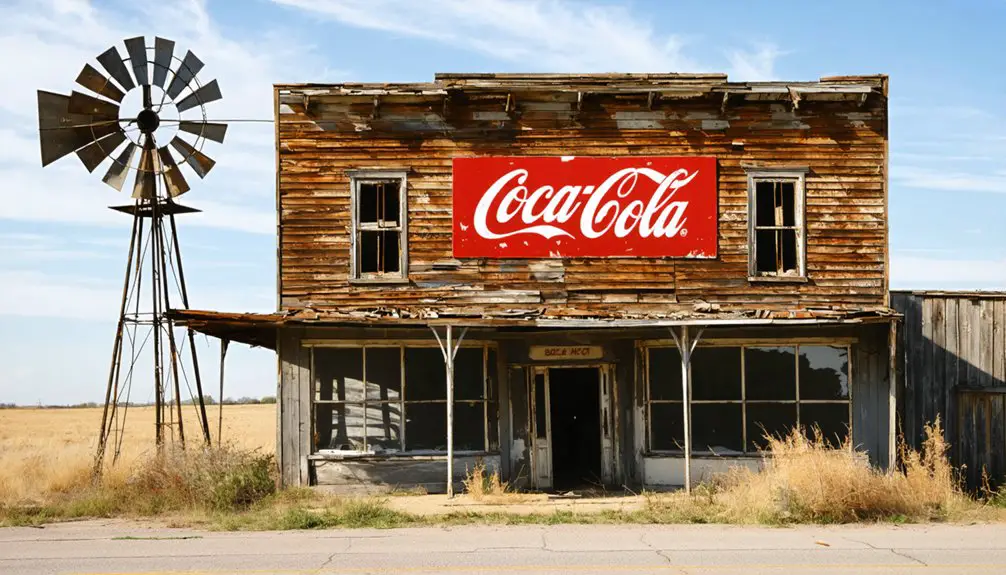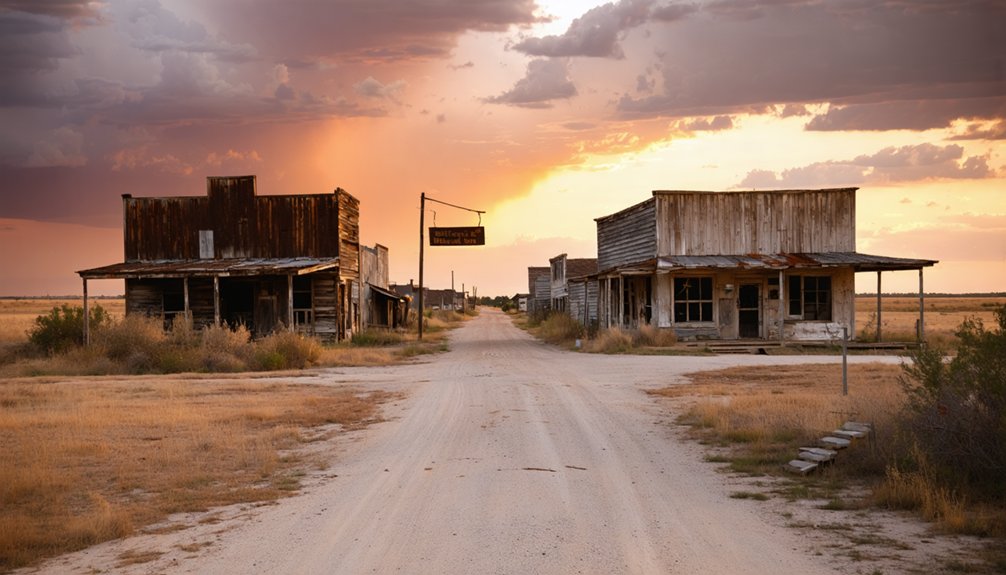
Scratchout doesn’t appear in official Oklahoma records, so it’s likely a colloquial name rather than a verified historic site. That said, you can still build an incredible ghost town road trip around Oklahoma’s genuinely haunted landscapes. Start in Picher, work southeast toward Adamson, then push west through Texola — each stop offering eerie remnants of forgotten communities. Pack sturdy boots, an N95 mask, and offline GPS. There’s far more to uncover about planning this unforgettable journey.
Key Takeaways
- “Scratchout” lacks verified records in official sources, so confirm its existence through the Oklahoma Historical Society before planning your trip.
- Look for remnants like weathered cemeteries, foundation outlines, cellar depressions, and abandoned roads to confirm a ghost town’s historical existence.
- Pack essentials including sturdy boots, offline GPS, water, a first aid kit, and an N95 respirator for contaminated sites.
- Visit during late fall or winter when thinning vegetation reveals structures and cooler temperatures make exploration safer and more comfortable.
- Check recent rainfall reports before traveling, as muddy roads and rapidly shifting Oklahoma weather can make routes impassable or dangerous.
Is Scratchout, Oklahoma a Real Ghost Town?
Although the name “Scratchout” conjures up images of a weathered Oklahoma settlement frozen in time, it doesn’t appear in any verified historical record. You won’t find it in the Oklahoma Historical Society’s encyclopedia, Wikipedia’s ghost town lists, or any census data.
It’s likely a victim of historical inaccuracies or simply one of those colloquial names locals used that never made it into official documentation.
That doesn’t mean your road trip dreams have to die here. Oklahoma’s real ghost towns offer everything you’re chasing — abandonment, history, and raw freedom to explore. Places like Picher, Texola, and Skedee deliver genuine ghost town experiences backed by documented histories.
Don’t let an unverified name steer your journey off course before it even begins.
What Actually Remains at Unverified Oklahoma Ghost Towns
When a ghost town’s name can’t be confirmed, what’s actually out there waiting for you becomes a fair question. Unverified sites often still hold genuine remnants worth exploring. Local folklore frequently preserves details that official historical preservation records miss entirely.
Just because a ghost town’s name is lost doesn’t mean the town itself is.
Here’s what you’ll typically find at these forgotten places:
- Weathered cemeteries — headstones outlast everything else and confirm a community once existed
- Foundation outlines — concrete slabs and cellar depressions mark where homes and businesses stood
- Abandoned road traces — old routes appear on satellite maps even when signage vanishes
- Oral history fragments — nearby residents carry stories no database captures
You don’t need a verified name to find something real. You just need curiosity, good maps, and willingness to look beyond official records.
Which Oklahoma Ghost Towns Are Worth the Drive?
Since not every crumbling structure justifies a full tank of gas, knowing which Oklahoma ghost towns actually deliver on atmosphere, history, and accessibility makes all the difference. You’ll find the most rewarding stops where historical myths collide with tangible ruins and local folklore still echoes through abandoned buildings.
Picher tops the list — its contaminated landscape and evacuated streets create an eerie, unforgettable experience.
Texola rewards western Oklahoma wanderers with authentic railroad-era decay.
Skedee’s abandoned high school triggers genuine curiosity about the community that once filled its hallways.
Adamson offers something rarer: a partially submerged town swallowed by Lake Eufaula.
Each destination balances accessibility with genuine discovery. You’re not chasing myths — you’re walking through documented history that most people never bother to find.
How to Build a Ghost Town Road Trip Across Oklahoma
Once you’ve settled on your ghost town destinations, map your route to minimize backtracking — start in northeastern Oklahoma at Picher, work southeast toward Adamson, then sweep westward through Redden and Texola before looping back.
You’ll want to pack essentials like sturdy boots, offline GPS maps, and plenty of water since many of these sites sit along unpaved roads with zero services nearby.
A fully charged phone, a first aid kit, and a camera round out your kit for exploring these forgotten communities safely and thoroughly.
Planning Your Route Strategically
Planning a ghost town road trip across Oklahoma means thinking geographically before you hit the road. Strategic routing saves fuel, time, and keeps your adventure flowing naturally from one abandoned site to the next.
Start by anchoring your route around historical accuracy — verify each town’s location using reliable maps and documented sources before committing.
Here’s a smart sequencing approach:
- Begin in northeastern Oklahoma at Picher to absorb its industrial ghost town history.
- Drift southeast toward Adamson’s lake-submerged remnants.
- Push west through Redden and Texola along historic highway corridors.
- Chase local legends by asking residents near each stop about undocumented sites.
Layering verified history with local storytelling transforms your drive into something genuinely unforgettable. Oklahoma rewards the curious traveler who plans with purpose.
Essential Gear And Supplies
Before you chase Oklahoma’s forgotten history, pack smart — your gear can make or break the experience. Sturdy boots handle unpaved gravel roads and crumbling foundations without complaint. Bring a portable GPS unit loaded with offline maps, since remote sites like Picher or Texola rarely offer cell coverage.
Carry a notebook to document details supporting historical accuracy — dates, inscriptions, structural observations — because your eyes catch what cameras sometimes miss. A flashlight and extra batteries let you explore safely after shadows fall.
Don’t overlook water, snacks, and a basic first aid kit for isolated stretches between towns. Locals often share local legends that no guidebook captures, so stay approachable and curious. Your freedom to explore deepens when preparation removes every preventable obstacle from your path.
What to Pack for Oklahoma’s Contaminated and Remote Sites
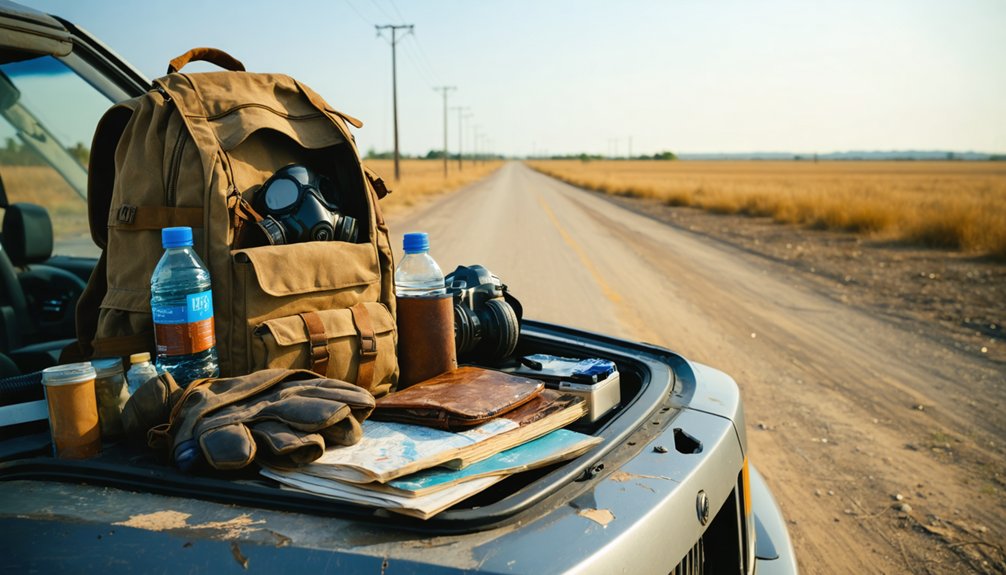
Before you hit the road toward Scratchout and other contaminated sites like Picher, pack N95 masks, nitrile gloves, and sturdy boots to protect yourself from toxic soil and debris.
You’ll also want offline GPS maps, a fully charged satellite communicator, and a paper backup route since cell service vanishes fast in Oklahoma’s remote corridors.
Round out your kit with a first aid kit, extra water, and emergency flares, because help can be hours away when something goes wrong on unpaved backcountry roads.
Protective Gear Essentials
Packing the right protective gear can make the difference between a memorable adventure and a serious health risk, especially when you’re exploring contaminated sites like Picher.
While historical verification confirms Picher’s toxic legacy, local colloquialisms like “chat piles” describe the lead-contaminated mounds scattered throughout the area. Don’t underestimate what proper preparation means for your freedom to explore safely.
- N95 respirator mask – blocks airborne heavy metal particles from disturbed soil
- Nitrile gloves – prevents skin contact with contaminated surfaces
- Sturdy closed-toe boots – protects feet on unstable, chemically compromised terrain
- Protective eyewear – shields eyes from dust and debris during windy conditions
Pack these essentials before hitting the road, and you’ll explore confidently without compromising your health.
Once you’ve got your protective gear sorted, staying found and connected becomes your next priority — and Oklahoma’s remote ghost town terrain makes both harder than you’d expect.
Many sites near Scratchout lack signage, cell service, and maintained roads, so don’t rely solely on your phone’s GPS. Download offline maps before you leave, and carry a dedicated GPS device as backup.
A paper map adds historical accuracy to your journey — you’ll spot old route names and defunct county roads that digital tools erase.
Pack a handheld radio or satellite communicator for genuine emergencies. Share your itinerary with someone reliable before heading out.
These navigation tools aren’t optional luxuries; they’re the difference between an adventure and a crisis in Oklahoma’s unforgiving backcountry.
Emergency Safety Supplies
Exploring Oklahoma’s ghost towns means stepping into environments that can turn dangerous fast, so your emergency kit needs to match the risks you’ll actually face. Sites tied to historical preservation efforts and steeped in local legends often sit far from reliable help.
Pack smart with these four essentials:
- N95 respirator masks — contaminated soil at mining sites releases toxic dust
- First aid kit with tourniquets — remote locations mean delayed emergency response
- Water filtration system — never trust standing water near abandoned industrial sites
- Emergency mylar blankets — temperature drops fast once the sun sets on open plains
You’re not just a tourist here — you’re an explorer taking real responsibility for your own safety in genuinely unforgiving terrain.
When to Visit Oklahoma Ghost Towns for the Best Access
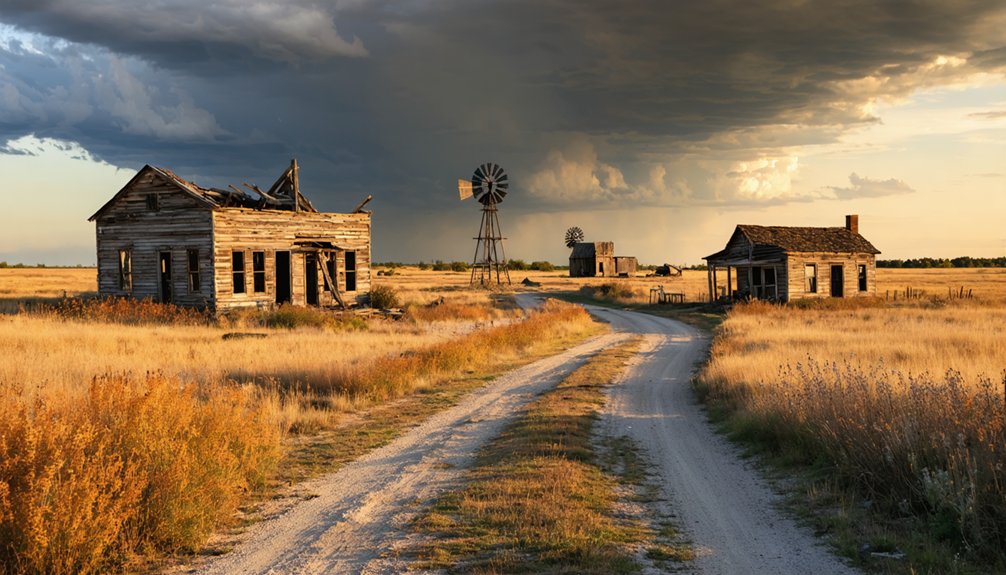
Timing your visit to Oklahoma’s ghost towns can make the difference between an accessible adventure and a frustrating dead end. For historical accuracy and the clearest views of abandoned structures, visit during late fall or winter when vegetation thins and exposes foundations, walls, and remnants that summer foliage conceals.
Seasonal considerations matter considerably here. Spring brings beautiful landscapes but also muddy, impassable back roads that’ll strand your vehicle miles from civilization.
Summer heat in western Oklahoma routinely exceeds 100°F, making extended exploration genuinely dangerous.
Fall offers your best combination of cooler temperatures, drier roads, and reduced brush.
Check recent rainfall before heading out. Even well-documented routes become treacherous after heavy storms.
Oklahoma’s weather shifts quickly, so you’ll want flexibility built into your itinerary.
Frequently Asked Questions
Are There Guided Ghost Town Tours Available in Oklahoma?
Dusty roads and crumbling walls await you! You’ll find guided ghost town tours across Oklahoma, blending historical preservation with thrilling tourist attractions. Explore Picher’s abandoned streets or Texola’s forgotten rails—you’re free to uncover Oklahoma’s haunting, forgotten past!
Can You Legally Explore Abandoned Buildings in Oklahoma Ghost Towns?
You’ll need to respect trespassing laws before entering abandoned buildings — always secure permission from property owners first. Take essential safety precautions, as unstable structures pose real dangers. Freedom-loving explorers thrive when they’re both adventurous and legally responsible!
Are Oklahoma Ghost Towns Suitable for Children or Families?
Oklahoma has 100+ ghost towns, making it a treasure trove for families! You’ll discover historical preservation sites offering family-friendly activities like cemetery walks and ruin exploration, letting kids experience living history firsthand while sparking curiosity about Oklahoma’s fascinating past.
Do Any Oklahoma Ghost Towns Charge Admission or Require Permits?
Most Oklahoma ghost towns don’t charge admission, giving you freedom to explore! However, you’ll want to check local permits for ghost town photography or historic preservation sites, as some privately-owned ruins require permission before you enter.
Are There Nearby Campgrounds or Lodging Options Near Oklahoma Ghost Towns?
You’ll find camping options and lodging choices near most Oklahoma ghost towns! State parks, RV spots, and cozy motels dot the surrounding areas, giving you the freedom to explore abandoned history on your own adventurous terms.
References
- https://www.travelok.com/articles/oklahomaghosttowns
- https://en.wikipedia.org/wiki/Picher
- https://www.okhistory.org/publications/enc/entry?entry=GH002
- https://en.wikipedia.org/wiki/List_of_ghost_towns_in_Oklahoma
- http://sites.rootsweb.com/~oktttp/ghost_towns/ghost_towns.htm
- https://www.wikiwand.com/en/articles/List_of_ghost_towns_in_Oklahoma