Planning a ghost town road trip to Scossa, Nevada means heading deep into Pershing County’s backcountry, about 12 miles east of Rabbithole Springs along unpaved SSR 86. You’ll need a high-clearance vehicle, extra water, fuel, and offline navigation since cell service doesn’t exist out here. The site sits at 5,289 feet and preserves genuine mining-era relics from the 1930s gold rush that built this town. Stick around, and you’ll uncover everything you need to make this trip unforgettable.
Key Takeaways
- Scossa is located in Pershing County, Nevada, roughly 12 miles east of Rabbithole Springs along unpaved, rugged SSR 86.
- A high-clearance vehicle is essential, as the route features loose gravel, rutted dirt, seasonal washouts, and zero road services.
- Visit during April–May or September–October to avoid extreme summer heat exceeding 100°F and potential winter road closures.
- Pack water, extra fuel, a paper map, first-aid kit, and sturdy boots, as cell service is nonexistent along the route.
- Nearby ghost towns like Rhyolite and Placeritos can extend your trip, enriching your understanding of Nevada’s boom-and-bust mining history.
What Makes Scossa, Nevada Worth the Drive?
Though Scossa won’t dazzle you with crowds or polished tourist attractions, that’s precisely what makes it worth the drive. Sitting at 5,289 feet in Pershing County, this remote ghost town offers something rare: unfiltered solitude and authentic history on your own terms.
You’ll explore a site where gold discovery in 1930 sparked real boom-and-bust drama, with remnants of that story still visible today. Scenic viewpoints across the Black Rock Desert region reward the journey, stretching endlessly in every direction.
Wildlife encounters are common in this untamed landscape, adding unexpected life to an otherwise quiet, abandoned place.
Scossa isn’t packaged or curated. It’s raw Nevada — open land, preserved ruins, and freedom to experience history without barriers, ropes, or admission fees.
The Gold Discovery That Put Scossa on the Map
When you look into Scossa’s origins, you’ll find the town owes its existence to two brothers — James and Charles Scossa — who struck gold in 1930 in the northwest spur of the Antelope mountain range.
They staked their initial claim as the North Star Mine, setting off a rush of activity that would transform this remote Nevada desert into a working mining settlement.
The North Star Mine was later consolidated into the Dawes Gold Mine, Inc., cementing the foundation of what would become Scossa’s short but productive boom era.
Brothers Strike Gold
In 1930, brothers James and Charles Scossa made a gold discovery that would forever put their name on the Nevada map. Surrounded by rugged desert scenery, they staked their claim in the northwest spur of the Antelope Mountains, launching a rich chapter in mining history.
Here’s what you need to know about their strike:
- They named their original claim the North Star Mine
- The mine was later consolidated into Dawes Gold Mine, Inc.
- Their discovery sparked significant regional growth and settlement
A second major find followed in 1934 with the Hawkeye Mine. By 1939, most accessible gold and silver had been extracted.
Their bold gamble transformed an empty desert landscape into a bustling town bearing their name.
North Star Mine Origins
The North Star Mine didn’t just mark a lucky find — it became the foundation everything else in Scossa was built on. When James and Charles Scossa staked their claim in the northwest spur of the Antelope Mountains in 1930, they triggered a chain reaction that shaped the district’s entire mining history.
That original claim didn’t stay small for long. Investors and operators consolidated it into Dawes Gold Mine, Inc., expanding operations and drawing workers into what would become a functioning desert town.
You can trace Scossa’s ghost town preservation story directly back to this single strike. Without the North Star Mine, there’s no town, no boom, and nothing left standing today for adventurous travelers like you to seek out across Pershing County‘s remote terrain.
Dawes Gold Mine Consolidation
Once the North Star Mine proved its worth, consolidation into Dawes Gold Mine, Inc. transformed a modest family claim into a full-scale industrial operation capable of drawing serious capital and labor to this remote Pershing County desert.
Mining history shifted dramatically when the Scossa brothers’ discovery attracted corporate backing:
- James and Charles Scossa’s original claim became the foundation
- Corporate restructuring enabled large-scale extraction equipment
- Serious investment replaced small-scale family operations
- Workers flooded the region, building Scossa’s infrastructure
- Preservation efforts today protect what little remains of this era
You’re visiting ground where ambition met geology head-on. The consolidation didn’t just change ownership — it created an entire community.
Understanding this transition helps you appreciate why that lone standing building and scattered debris carry such remarkable historical weight.
What Still Stands at the Scossa Town Site Today?
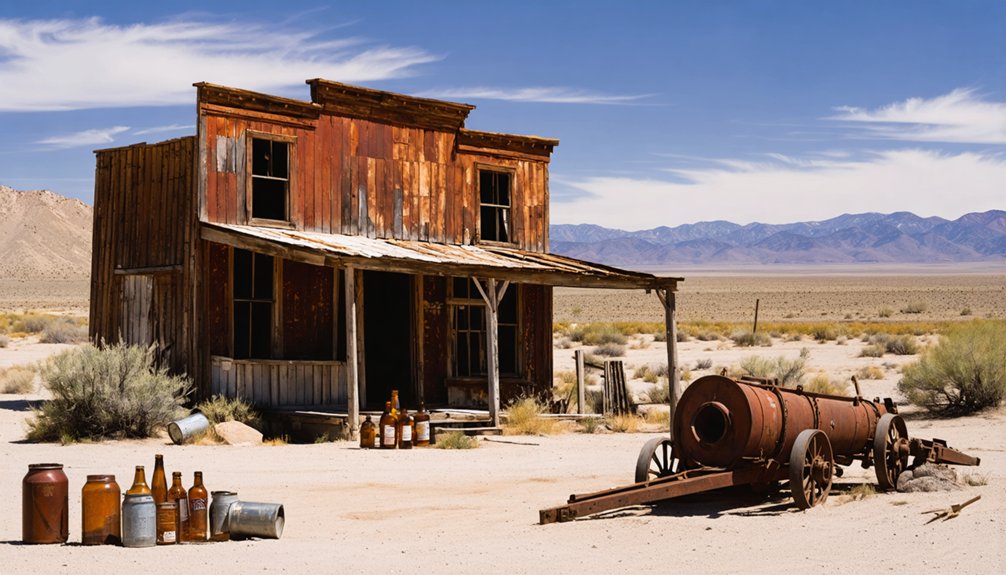
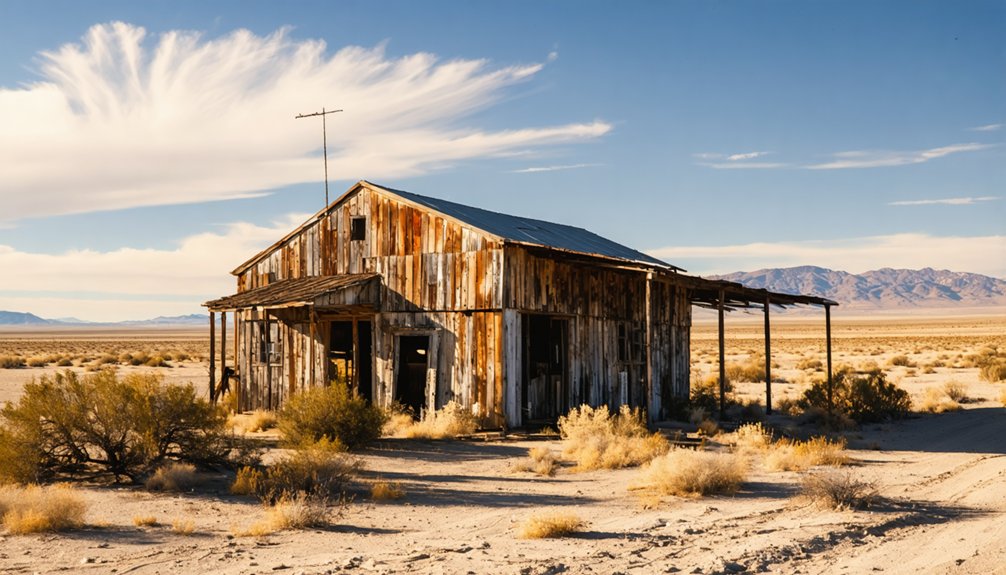
When you arrive at Scossa today, you’ll find one building still standing amid the silence, a quiet inscription to the town’s brief but busy past.
Scattered around the site, a large metal tank and other building materials remain as debris, giving you tangible proof that a real community once thrived here.
Nevada’s dry desert air works in your favor as a visitor, slowing decay and preserving these remnants far better than a wetter climate ever could.
The Last Standing Building
Although Scossa once buzzed with mining activity and supported an entire community, today you’ll find almost nothing left standing at the town site. One solitary building survives, serving as a quiet historical landmark amid the vast desert silence.
As you explore freely, you’ll also spot these scattered remnants:
- A large metal tank rising from the scrubland
- Scattered building materials and structural debris
- Foundations hinting at former structures
- Discarded equipment from decades of mining
- Wildlife habitat reclaiming the surrounding terrain
Nevada’s dry desert air has helped preserve what little remains, giving you a raw, unfiltered glimpse into Scossa’s past.
There’s no rope line or visitor center here — just open land, honest ruins, and the freedom to piece together history on your own terms.
Debris And Remnants Remain
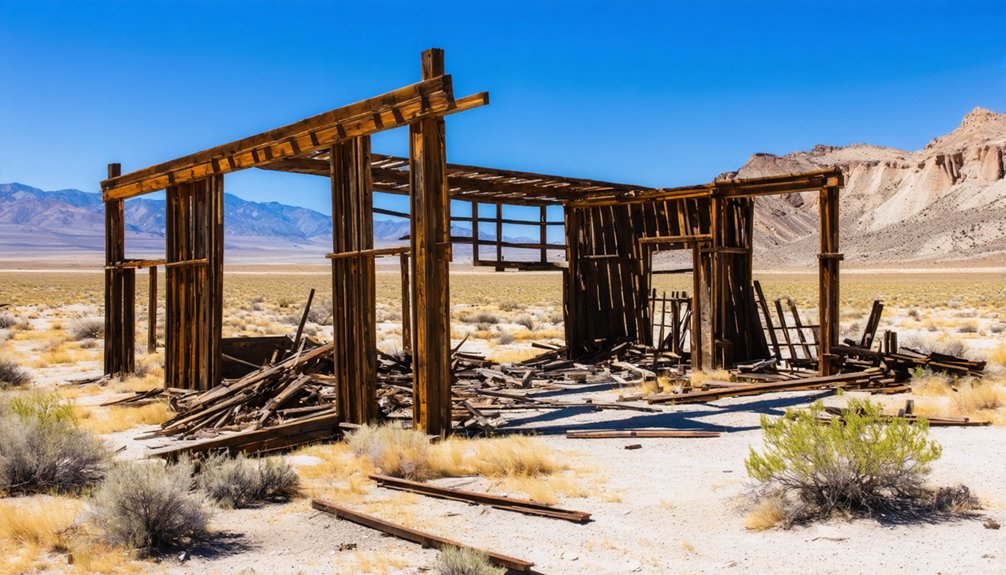
Scossa doesn’t offer much to the eye at first glance, but what remains scattered across the site tells a surprisingly tangible story. Beyond the lone standing building, you’ll find a large metal tank rising from the desert floor, fragments of mining equipment, and various building materials left behind when operations ceased.
These remnants aren’t random—they reflect the town layout that once supported workers servicing the Dawes and Hawkeye mines. Walk the area carefully, and you’ll begin reading the land like a map.
Foundation outlines suggest where structures once stood, and debris clusters hint at former activity zones. Nevada’s dry desert air has slowed decay considerably, meaning what you encounter today remains remarkably preserved for a site abandoned since the mid-twentieth century.
Desert Preservation At Work
Nevada’s dry desert air acts as a natural preservative, and at Scossa, that effect is clearly visible in what’s survived decades of abandonment. Nature’s own preservation techniques have kept several historical artifacts surprisingly intact.
When you visit, you’ll likely encounter:
- The last remaining standing building at the town site
- A large metal tank still holding its shape against the elements
- Scattered building materials frozen in time across the landscape
- Structural remnants hinting at the town’s former layout
- Additional debris revealing daily life during Scossa’s mining era
You don’t need a museum to connect with history here. The desert itself does the work, locking moisture out and keeping what’s left standing.
Explore freely, but respect what remains — these pieces won’t last forever without care.
How to Find Scossa in Pershing County?
Finding Scossa requires exploring deep into Pershing County’s remote terrain, but it’s well worth the effort for ghost town enthusiasts. Head east from Rabbithole Springs along SSR 86 for approximately 12 miles, and you’ll reach this forgotten settlement sitting at 5,289 feet elevation.
The coordinates 40°44′24″N 118°35′48″W will lock in your exact destination if you’re orienting digitally. Expect unpaved, rugged conditions typical of Nevada’s backcountry roads, so bring a capable vehicle and pack everything you need — there are zero services here.
Once you arrive, you’ll discover historical artifacts scattered across the site, offering genuine glimpses into early 20th-century mining techniques used at the Dawes and Hawkeye mines. One standing building and a large metal tank mark the townsite’s boundaries.
What the Drive on SSR 86 Actually Looks Like?
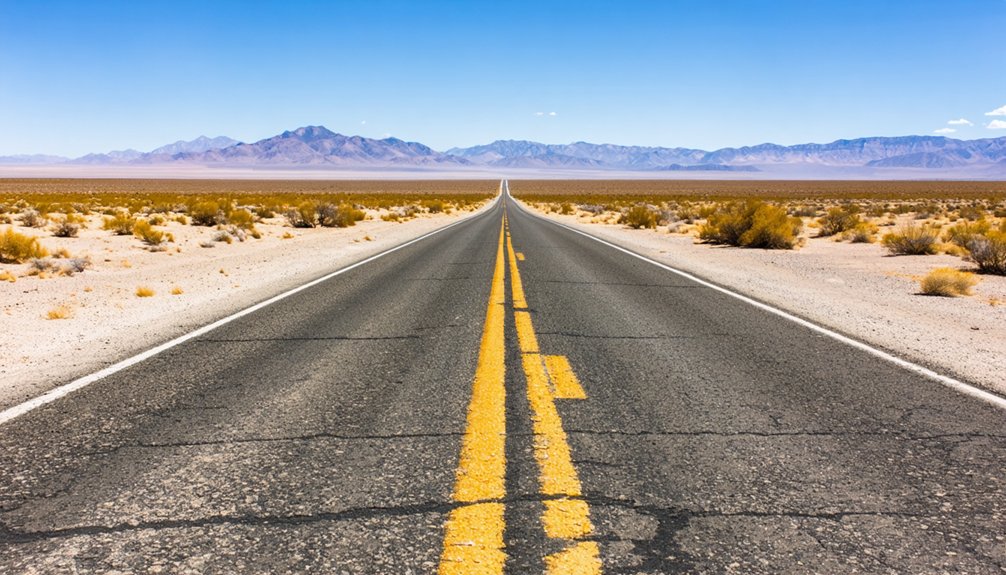
Once you turn onto SSR 86 heading east from Rabbithole Springs, you’ll quickly realize this isn’t a Sunday cruise — it’s a raw, unpaved stretch of Nevada backcountry that demands your full attention.
The 12-mile drive delivers solitude, open skies, and unfiltered desert terrain.
Expect conditions like:
- Loose gravel and rutted dirt that rewards high-clearance vehicles
- Sweeping views of the Black Rock Desert region with zero traffic
- Sudden washouts that can shift road conditions seasonally
- Complete absence of signage, cell service, or guardrails
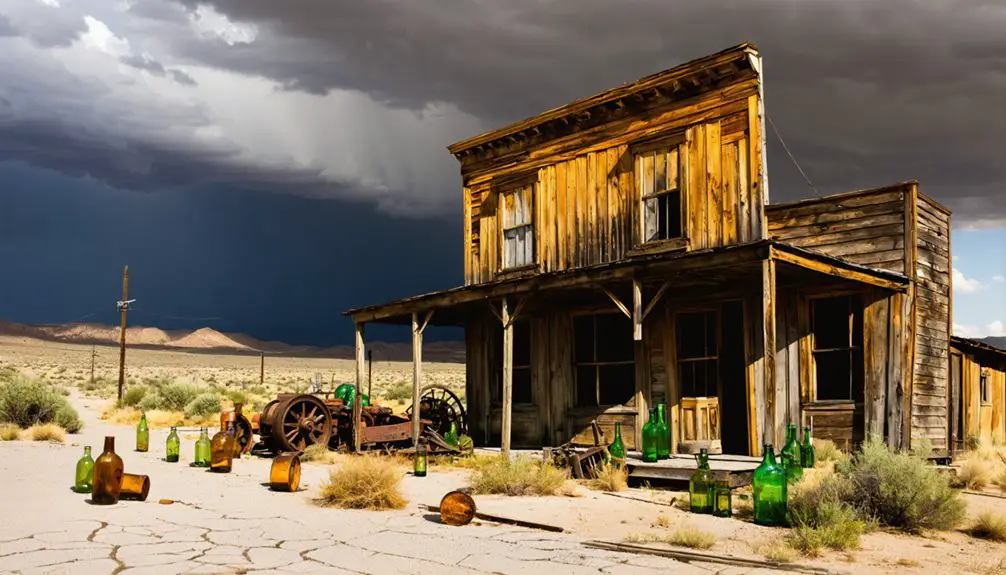
- Scattered mining relics and historical artifacts visible near the roadside
You’re driving through land that once buzzed with gold rush energy. Every mile feels earned.
That isolation isn’t a drawback — it’s exactly the kind of freedom this road trip promises.
What to Bring Before You Drive Out to Scossa?
That drive on SSR 86 makes one thing crystal clear — Scossa doesn’t meet you halfway. You’re heading into remote Pershing County with zero services, so pack smart before you leave.
Bring more water than you think you need — desert heat drains you fast. Stock extra fuel, since the nearest pump sits well outside your route. A high-clearance vehicle handles the unpaved terrain far better than a standard car.
Carry a paper map or downloaded offline GPS; cell service disappears quickly out here. Pack snacks, a first-aid kit, and sturdy boots for walking the site.
Watch for local wildlife crossing open desert — rattlesnakes and jackrabbits don’t yield to visitors.
Bring a camera too. Historic landmarks like Scossa’s lone standing building deserve documentation, not just a glance.
Best Time of Year to Visit Scossa, Nevada?
Timing your visit to Scossa makes a real difference when you’re heading into the Nevada desert. The site’s cultural significance deserves respect, and choosing the right season minimizes your environmental impact on this fragile landscape.
Best months to visit:
- Spring (April–May): Mild temperatures, wildflowers blooming, ideal driving conditions
- Fall (September–October): Cooler air, clear skies, excellent photography lighting
- Summer (June–August): Extreme heat exceeds 100°F; bring extra water if you go
- Winter (November–February): Snow can block unpaved roads; check conditions beforehand
- Early morning arrivals: Beat desert heat regardless of season and catch golden-hour light
You’ve got open road and freedom out there, but smart timing keeps your adventure safe and the site undisturbed for future explorers.
Nearby Ghost Towns Worth Adding to Your Route
Since Scossa sits in one of Nevada’s most ghost-town-dense regions, you’d be leaving discoveries on the table by treating it as a standalone stop. Nevada holds over 600 ghost towns across 60 million acres of public land, meaning your route through Pershing County can easily expand into a multi-site adventure.
Rhyolite, Nevada’s most famous ghost town, once housed over 5,000 residents and still showcases striking historic artifacts and crumbling structures worth photographing. Founded in 1905, its mining history rivals anything you’ll find in the region.
Placeritos sits near Scossa itself, making it a natural add-on requiring minimal detour. Each site tells a distinct chapter of Nevada’s boom-and-bust mining history, giving you a richer, more complete picture of the desert’s forgotten communities.
Frequently Asked Questions
Who Were the Brothers That Originally Discovered Gold at Scossa?
You’ll love these historic mining legends — James and Charles Scossa, brothers whose old west stories began in 1930 when they discovered gold in the Antelope mountain range, forever marking Nevada’s ghost town history.
What Was the Original Name of the Mine Discovered in 1930?
You’ll find that the North Star Mine is woven into Scossa’s mining history and ghost town legends — it’s the original claim the Scossa brothers staked when they struck gold in 1930.
How Does Scossa Compare in Fame to Rhyolite Ghost Town?
Unlike Rhyolite’s haunted legends and bustling photographic opportunities that draw thousands yearly, Scossa’s obscurity is your hidden advantage — you’ll explore its raw, forgotten remnants without crowds, experiencing authentic desert freedom most ghost town seekers never find.
What Minerals Besides Gold Were Mined at Scossa’s Operations?
You’ll find that Scossa’s mining history reflects fascinating mineral diversity — beyond gold, miners also extracted silver and titanium from these remote Nevada operations, keeping smaller ventures alive until 1955 before the district finally fell silent forever.
How Many Ghost Towns Does Nevada Have Compared to Other States?
You’ll find Nevada’s 600+ ghost towns surpass every other U.S. state, making them unmatched tourist attractions. Their historical preservation thrives in the dry desert climate, giving you endless freedom to explore America’s most remarkable abandoned landscapes.
References
- https://en.wikipedia.org/wiki/Scossa
- https://kids.kiddle.co/Scossa
- https://travelnevada.com/ghost-town/
- https://www.youtube.com/watch?v=kg18CwWeMnc
- https://news3lv.com/news/local/the-stories-and-secrets-behind-a-popular-nevada-ghost-town
- https://travelnevada.com/nevada-magazine/odyssey-of-a-ghost-town-explorer-part-1/
- https://wiki.blackrockdesert.org/wiki/Scossa
- https://www.youtube.com/watch?v=uq2IhG9dSlg
- https://en.wikipedia.org/wiki/List_of_ghost_towns_in_Nevada