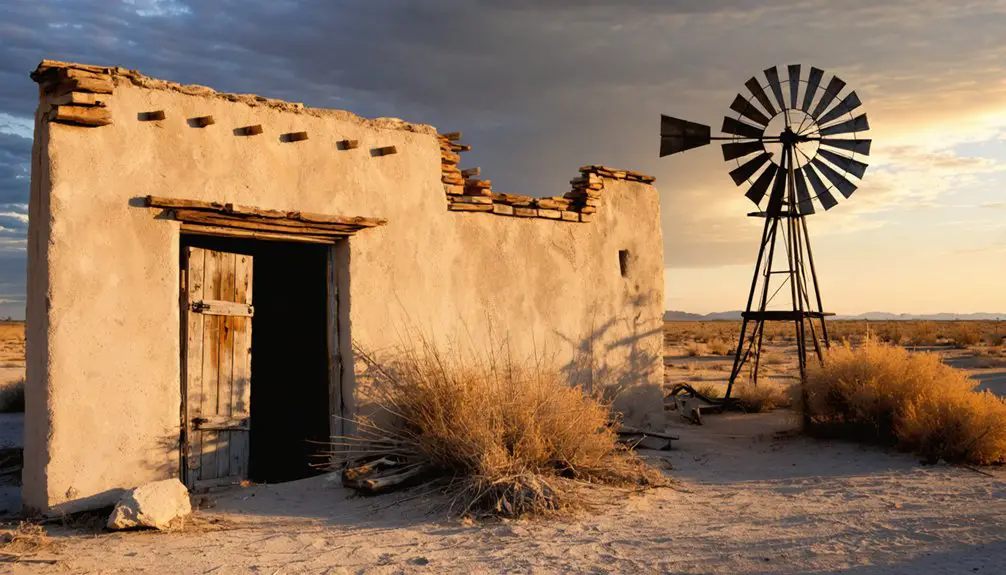
Planning a ghost town road trip to Sunshine Hill, Texas, means heading 33 miles west of Wichita Falls to a windswept, 1,208-foot rise in Wichita County. You’ll find a crumbling 1889 schoolhouse, sweeping rural views, and echoes of a 1920s oil boom that briefly brought this forgotten town back to life. Spring and fall offer the best conditions for exploring and photographing the ruins. Stick around, and you’ll uncover everything you need to make this unforgettable road trip your own.
Key Takeaways
- Sunshine Hill is located 33 miles west of Wichita Falls and 5 miles outside Electra, sitting 1,208 feet above sea level.
- Visit during spring or fall for mild weather, wildflowers, and better lighting; avoid summer due to extreme heat.
- Pack water, sunscreen, sturdy footwear, extra fuel, and a first aid kit, as no amenities exist along the route.
- The crumbling 1889 schoolhouse is the main attraction, offering dramatic photography of weathered walls, broken windows, and exposed beams.
- Nearby ghost towns like Tee Pee City, Stiles, and Back City make excellent additional stops for a fuller road trip.
What Is Sunshine Hill, Texas?
Perched 1,208 feet above sea level in Wichita County, Sunshine Hill is a forgotten Texas ghost town sitting just 5 miles outside Electra and roughly 33 miles west of Wichita Falls.
Sunshine Hill rises 1,208 feet above Wichita County, a forgotten ghost town just 5 miles from Electra.
The town traces its roots back to 1889, when a school anchored the sparse settlement. When oil was discovered in the 1920s, businesses briefly arrived, breathing temporary life into the area. That momentum didn’t last.
By the 1980s, major structures had vanished, leaving behind a crumbling schoolhouse as the sole remnant of historical artifacts once tied to daily life here. Local legends have faded alongside the buildings, and the general public has largely forgotten this elevated patch of Texas.
If you crave off-the-beaten-path exploration, Sunshine Hill delivers raw, unfiltered history.
Sunshine Hill’s History as a Forgotten Texas Ghost Town
Though little remains to mark its existence, Sunshine Hill’s story stretches back to 1889, when a school first took root on that high Wichita County hill. That modest schoolhouse defined the town for decades, standing as one of the area’s few true historical landmarks.
Then the 1920s oil boom arrived, briefly breathing life into Sunshine Hill with new businesses and hopeful settlers. But the boom didn’t last, and the town slowly surrendered to time.
By the 1980s, no major structures remained. Today, you’ll find only a crumbling schoolhouse haunting the landscape, inspiring urban legends among those curious enough to seek it out.
Most people have forgotten Sunshine Hill entirely, which makes your decision to visit all the more rewarding and historically meaningful.
What Remains at Sunshine Hill Today
When you arrive at Sunshine Hill today, you’ll find little more than a crumbling schoolhouse standing as the sole witness to the town’s brief existence. The structural decay has claimed nearly everything else, leaving behind an eerie silence that speaks louder than any remaining building could.
You’ll notice the barren rural landscape stretching in every direction, making it easy to understand why this once-active community faded so completely from memory.
Crumbling Schoolhouse Remnants
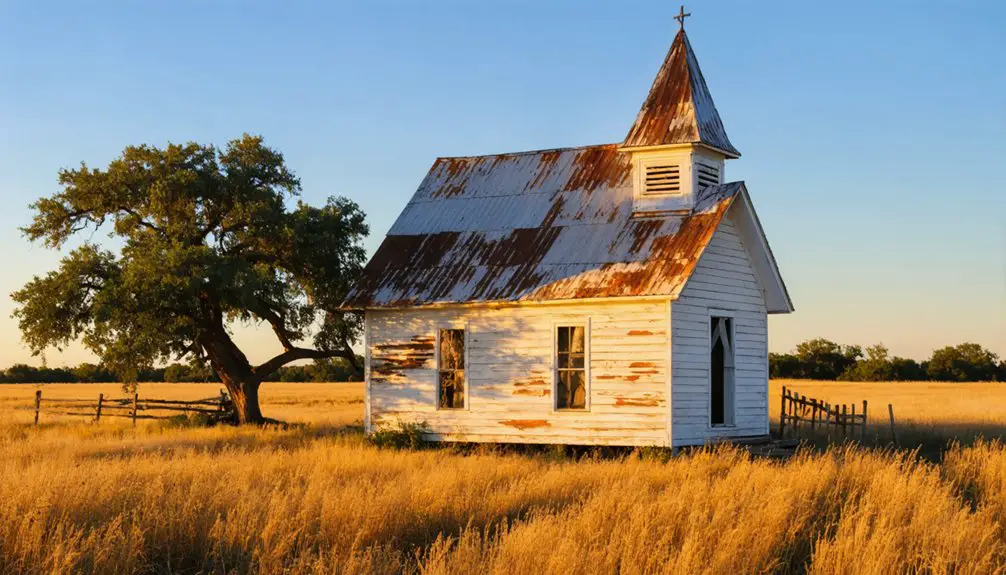
Standing at the top of Sunshine Hill, you’ll find that the crumbling schoolhouse is virtually all that’s left of what was once a small but functioning community. This piece of historical architecture tells a quiet but powerful story — a 19th-century settlement that briefly surged with oil money before fading into silence.
The walls lean, the roof sags, and nature has steadily reclaimed what people abandoned after the 1980s. Local legends suggest the school once served as the heartbeat of the community, educating children during the oil boom years of the 1920s.
Walking through the remnants, you can almost feel that era pressing against you. Bring your camera, because every cracked beam and weathered wall captures decades of forgotten Texas history worth preserving through your lens.
Forgotten Structural Decay
Beyond the schoolhouse walls, the rest of Sunshine Hill tells an even starker story of abandonment. By the 1980s, no major structures remained standing, leaving only scattered remnants that hint at what once existed here.
You’ll find yourself walking terrain where businesses briefly thrived after the 1920s oil boom, then quietly vanished when profits dried up.
The site carries genuine cultural significance as a reminder of how swiftly prosperity can dissolve into dust. Some visitors whisper urban legends about the hill’s past residents, adding a mysterious layer to your exploration.
Standing at 1,208 feet above sea level, you’re surveying land that time has fundamentally erased.
Sunshine Hill doesn’t offer restoration or preservation — it offers raw, unfiltered truth about impermanence, which makes visiting it profoundly worth your time.
Barren Rural Landscape
What greets you at Sunshine Hill today is fundamentally open air and silence. The crumbling schoolhouse stands as the lone historical artifact anchoring this forgotten landscape, surrounded by flat terrain stretching endlessly toward the horizon.
You’ll notice how the high hill, rising 1,208 feet above sea level, commands the surrounding countryside despite sheltering almost nothing of human civilization anymore.
Rural preservation here means accepting what nature reclaims. Wind moves through dry grass where businesses once briefly operated following the 1920s oil boom. No crowds, no commercial noise, no modern infrastructure interrupts your experience.
You’re standing inside genuine abandonment, which carries its own raw freedom. Bring a camera, document the decay honestly, and recognize that Sunshine Hill’s barren reality is precisely what makes visiting it so strikingly worthwhile.
Best Time of Year to Visit Sunshine Hill
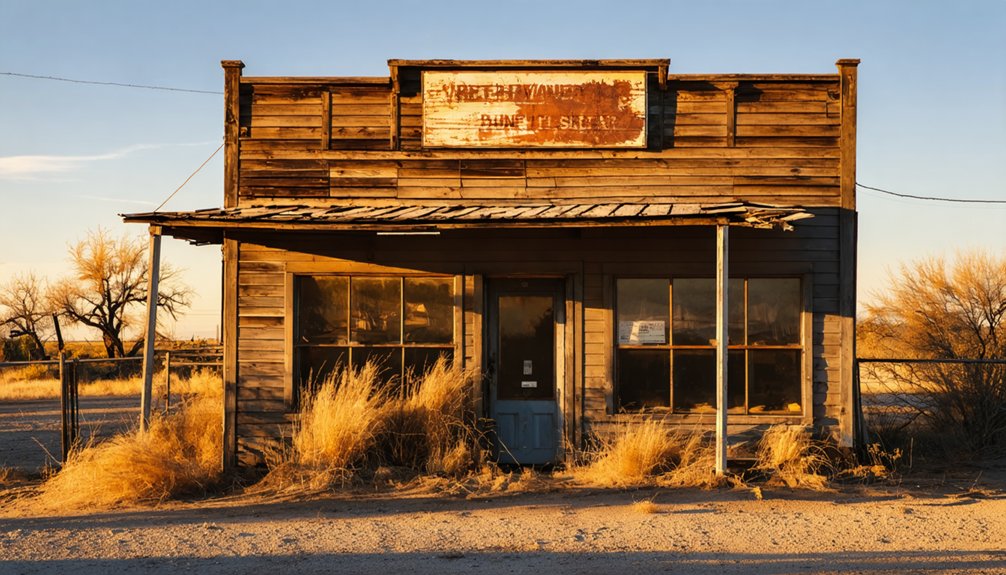
Although Sunshine Hill welcomes visitors year-round, spring and fall offer the most rewarding conditions for exploring this forgotten corner of Wichita County. Seasonal weather stays mild during these months, giving you comfortable temperatures for hiking the hill’s 1,208-foot elevation and photographing the crumbling schoolhouse without battling extreme heat or bitter cold.
Spring brings wildflowers across the surrounding flatlands, and local wildlife becomes noticeably active, adding unexpected life to an otherwise silent landscape. Fall delivers crisp air and softer light that photographers genuinely appreciate.
Avoid summer if possible. Texas heat turns the exposed terrain brutal, and there’s zero shade or shelter at this ghost town. Winter visits are manageable but unpredictable.
Your best bet remains April through May or September through October for an open, unrushed experience.
How to Get There From Wichita Falls
Getting to Sunshine Hill from Wichita Falls is straightforward: head west for approximately 33 miles into Wichita County. Navigate through the small town of Electra, and continue another 5 miles past its limits until the prominent hill comes into view.
You’ll travel open rural routes where the flat landscape stretches endlessly around you, offering genuine freedom from city congestion.
Keep your eyes open during the drive — local flora like native grasses and scrubby mesquite line the roadways, breaking the horizon with subtle color.
Wildlife spotting opportunities emerge frequently along these quiet rural roads, so slow down occasionally and scan the surrounding fields.
You’ll need a reliable vehicle for the final stretch. No commercial stops exist once you leave Electra, so fuel up and pack supplies before departing.
What to Pack Before Driving Out to Sunshine Hill
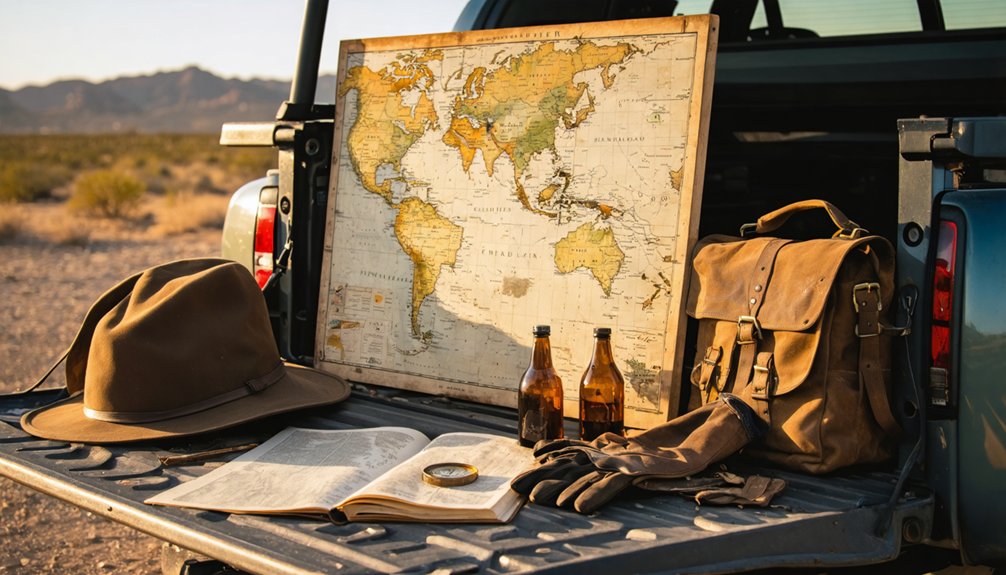
Packing smart makes the difference between a rewarding ghost town visit and a frustrating one. You’re heading into rural Wichita County where no amenities exist, so prepare before leaving Wichita Falls. Bring plenty of water, sunscreen, and sturdy boots for walking uneven terrain around the crumbling schoolhouse.
Pack a camera to document the 1,208-foot hill and surrounding flat landscape. Since you’ll pass through Electra, grab a meal featuring local cuisine before pushing the final five miles out.
Binoculars serve double duty, helping you spot architectural details on deteriorating structures while enabling wildlife observation across the open countryside. Carry a paper map as a backup since rural signal coverage is unreliable.
A charged phone, first aid kit, and extra fuel round out your essential gear.
What to Photograph Once You Arrive
Once you arrive at Sunshine Hill, you’ll want to point your camera directly at the crumbling schoolhouse, the site’s most striking historical remnant and a haunting symbol of the town’s slow fade into obscurity.
Frame your shots carefully to capture the decay’s texture — broken walls, weathered wood, and the quiet collapse of what once served a community.
Then pull back for wide-angle shots of the surrounding rural landscape, where flat terrain stretches endlessly around the hill’s 1,208-foot elevation, reinforcing just how isolated and forgotten this place truly is.
The Crumbling Schoolhouse
Although little remains of Sunshine Hill’s past, the crumbling schoolhouse standing at the site is worth every mile of the drive. This structure carries deep schoolhouse history, dating back to 1889, and its structural collapse tells the story of a town that time simply forgot.
Bring your camera and capture:
- The weathered walls still standing despite decades of neglect
- Broken windows framing the open Texas sky
- Collapsed roof sections revealing raw interior decay
- Overgrown vegetation reclaiming the foundation edges
- The contrast between the ruined structure and the vast flat landscape surrounding it
You’re standing inside a living photograph of abandonment. Every cracked beam and fallen wall speaks louder than any historical marker ever could. Don’t rush this moment.
Surrounding Rural Landscape
Step beyond the schoolhouse, and the surrounding landscape opens up like a wide, unhurried exhale. You’ll find rolling terrain stretching toward the horizon, broken only by scattered local flora — drought-tough grasses, scrubby mesquite, and wildflowers that push through cracked soil without apology.
This land doesn’t perform for anyone, and that’s exactly what makes it worth photographing.
Bring a zoom lens for wildlife observation, because the quiet here draws creatures out. Hawks circle the 1,208-foot hill, and white-tailed deer move through the brush at dusk.
Frame your shots low to capture the vastness pressing down on the earth. Let the emptiness do the talking. Out here, freedom isn’t a concept — it’s the actual view standing right in front of you.
Is Sunshine Hill Worth the Drive?
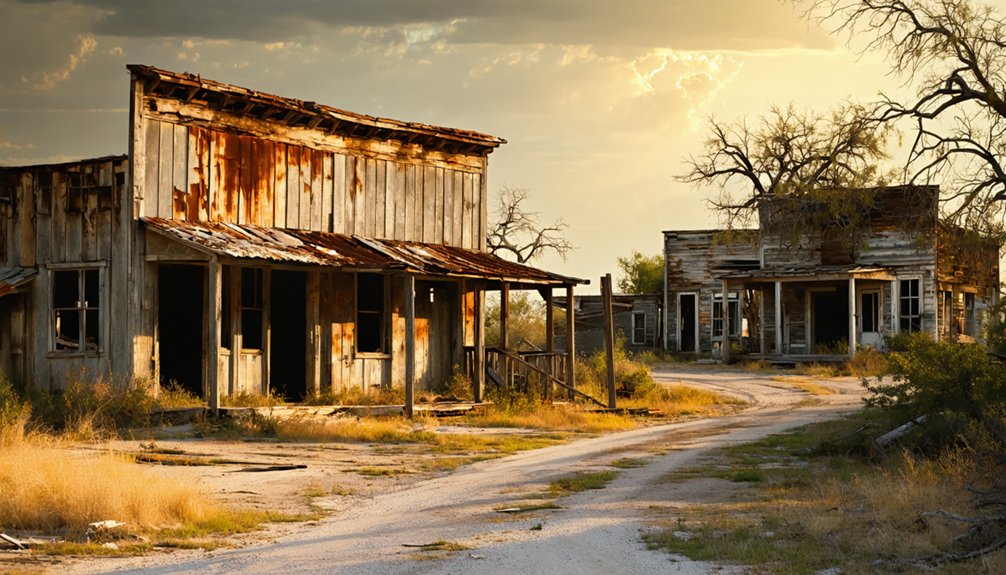
Whether you’re a seasoned ghost town explorer or a curious traveler, Sunshine Hill delivers a quietly haunting experience that’s hard to replicate closer to home. Urban legends whisper through the crumbling schoolhouse walls, and wildlife sightings add unexpected life to this forgotten landscape.
Here’s why it earns the drive:
- Stand atop a 1,208-foot hill with sweeping rural views
- Photograph a genuine crumbling schoolhouse frozen in time
- Experience true Texas solitude, miles from crowds
- Chase urban legends tied to the oil boom era
- Spot wildlife sightings unique to Wichita County’s open terrain
Just 33 miles west of Wichita Falls, Sunshine Hill won’t consume your entire day. You’ll leave with photographs, stories, and a deeper appreciation for Texas’s forgotten corners.
Nearby Ghost Towns to Pair With Your Sunshine Hill Trip
Once you’ve explored Sunshine Hill’s crumbling schoolhouse and windswept silence, several nearby ghost towns make natural additions to your route. Head toward Motley County to reach Tee Pee City, a 1870s trading post rich with local legends and scattered historical artifacts that reward curious explorers.
If abandoned courthouses fascinate you, Stiles, Texas delivers haunting ruins worth photographing and documenting. For oil history enthusiasts, Back City stands as a remarkable stop — this former boomtown erupted with a 1927 gusher producing 6,000 barrels daily before fading into cracked foundations and silence.
Each location adds a distinct chapter to your road trip narrative, letting you piece together the Texas Panhandle‘s forgotten past through tangible remnants that no museum could fully replicate.
Frequently Asked Questions
Is There a Fee to Access Sunshine Hill or Surrounding Rural Roads?
You won’t encounter any access fee when visiting Sunshine Hill. Road access is completely free, letting you roam rural Wichita County roads freely, embracing the open, untamed spirit of Texas ghost town exploration without financial barriers.
Are There Any Guided Ghost Town Tours Available in Wichita County?
No formal guided tours exist, but you’ll uncover ghost town legends and abandoned landmarks freely on your own terms. Explore Wichita County’s forgotten roads independently, letting curiosity drive every discovery you make out there.
Can Visitors Legally Enter the Crumbling Schoolhouse Structure at Sunshine Hill?
You shouldn’t enter the crumbling schoolhouse, as ghost town safety and historical preservation laws restrict access. Respect the structure’s fragile state, document it from outside, and you’ll still capture its haunting, forgotten beauty responsibly.
Is Sunshine Hill Located on Private Property Requiring Landowner Permission?
Like a locked gate on a forgotten frontier, the knowledge base doesn’t confirm whether Sunshine Hill sits on private property. You’ll want to research landowner permission before visiting to guarantee you’re exploring freely and legally.
Are There Any Local Historical Societies Preserving Records About Sunshine Hill?
You won’t find dedicated historical preservation efforts specifically for Sunshine Hill, but you can explore local archives through the Wichita County historical society, where they’re likely preserving forgotten records about this vanished Texas community.
References
- https://1063thebuzz.com/are-you-aware-of-the-ghost-town-right-here-in-wichita-county/
- https://www.ghosttowns.com/states/tx/tx.html
- https://www.hppr.org/hppr-people-communities/2015-06-23/website-provides-a-fascinating-look-at-the-ghost-towns-of-west-texas
- https://www.texasstandard.org/ghost-towns/