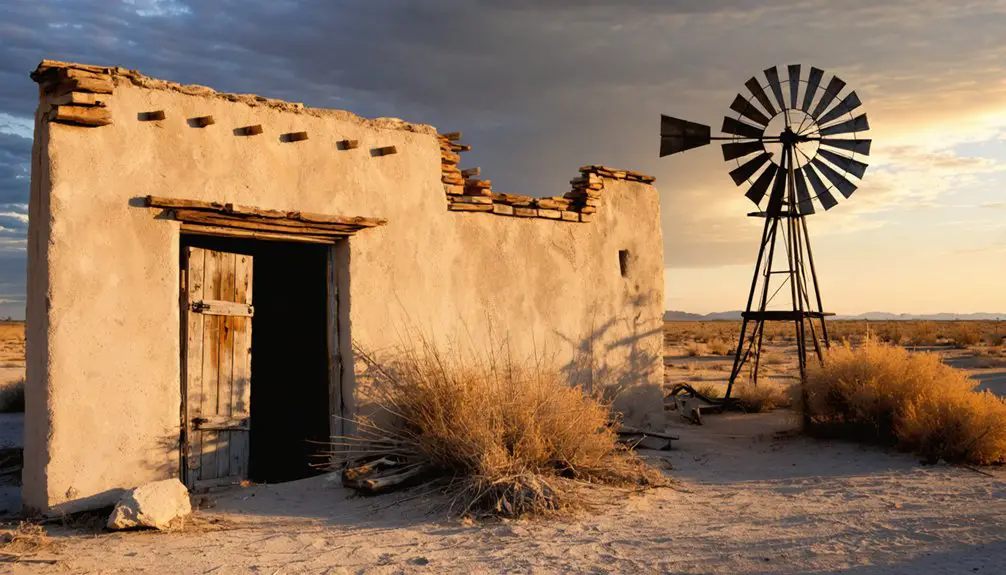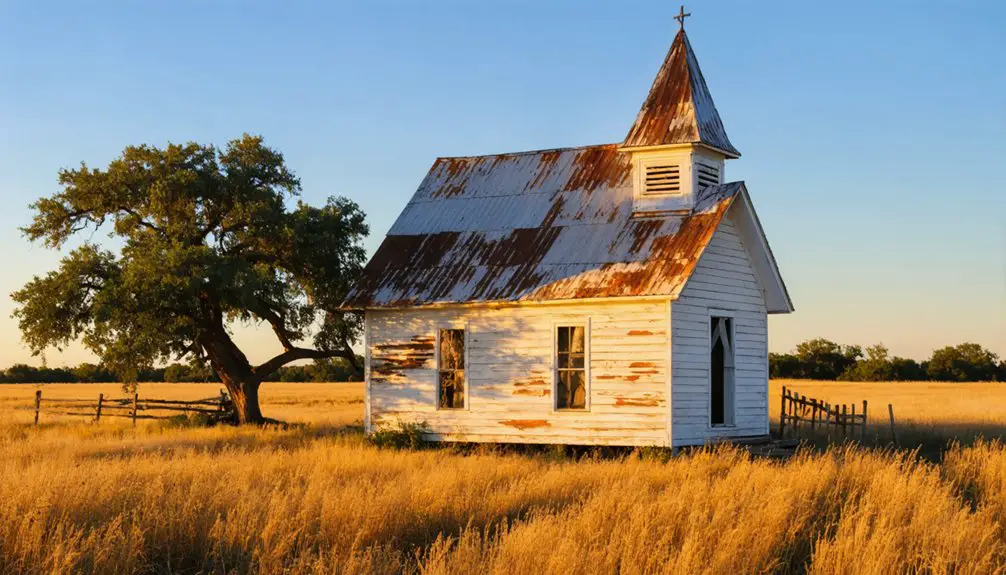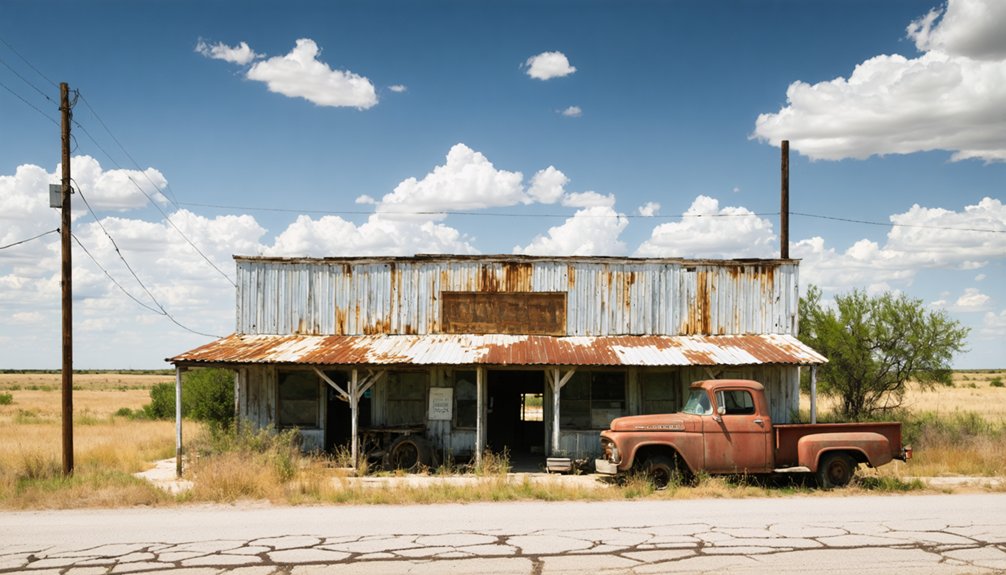
To plan your ghost town road trip to Decker, Texas, start in Sweetwater, stock up on supplies, and download offline maps before you head out. You’ll navigate unmarked county roads eight miles northwest of Blackwell to reach a settlement that thrived briefly after 1892 and vanished by 1947. A weathered cemetery is all that remains. Everything you need to make this trip unforgettable — routes, road conditions, and what to bring — is ahead.
Key Takeaways
- Start your trip in Sweetwater, the county seat, to gather supplies, local knowledge, and historical records before heading to Decker.
- Decker is eight miles northwest of Blackwell, accessible via county roads and Decker Lane, with no highway signs marking the way.
- Download offline maps and 1980 Nolan County records beforehand, as there’s no cell signal or services available at the site.
- The cemetery is the only remaining landmark; use it as your primary anchor for navigating and exploring the townsite.
- Check recent rainfall before visiting, as unpaved caliche roads become dangerously slick and potentially impassable after wet weather.
What Is Decker, Texas and Why Visit This Ghost Town?
Though little remains of Decker, Texas today, this vanished settlement in south central Nolan County tells a compelling story of 19th-century frontier ambition and quiet decline. Founded in 1892 and named after postmaster A.F. Decker, the town briefly thrived before its post office relocated to Maryneal in 1917, effectively erasing it from the map.
You won’t find crowds or tourist traps here. Instead, you’ll discover raw, unfiltered history etched into the landscape. The Decker Lane cemetery stands as one of the few historic landmarks still marking the site, quietly anchoring local legends of a once-active community.
For those craving authentic exploration beyond curated experiences, Decker rewards your curiosity with solitude, historical depth, and the rare freedom of standing somewhere most people will never bother to find.
Where Is Decker Located in Nolan County?
Nestled in south central Nolan County, Decker sits eight miles northwest of Blackwell, placing it deep within rural West Texas terrain that hasn’t changed much since the settlement’s 1892 founding. You won’t find highway signs guiding you here — instead, you’ll navigate county roads and Decker Lane, using historical maps as your compass.
Sweetwater, the county seat, serves as your practical launching point, giving you fuel, supplies, and local legends about vanished communities like Decker.
From there, you’re heading into open land where preservation efforts remain minimal, leaving the landscape raw and honest.
The Decker Lane cemetery stands as your primary geographic anchor — a quiet marker confirming you’ve arrived where a real community once breathed, traded, and ultimately disappeared into West Texas silence.
What You’ll Actually Find at Decker’s Cemetery and Site
When you reach Decker’s site, the Decker Lane cemetery stands as the most tangible remnant of what was once a functioning 1890s settlement.
You’ll find minimal physical evidence of the town itself, since by 1947 nearly all visible traces had vanished from the landscape.
Rural roads and unpaved terrain define your access route, so you’ll want to confirm conditions before you head out.
Cemetery Landmark Remains
While little remains of Decker’s original settlement, the Decker Lane cemetery stands as the most tangible connection to the community that once existed here. You’re stepping onto ground that absorbed the lives of late 19th-century settlers who carved meaning from raw Texas earth.
Don’t expect polished historical markers or curated displays — Decker rewards independent explorers who appreciate raw authenticity. Local legends surrounding the settlement’s rapid decline add atmospheric weight to every weathered gravestone you’ll encounter.
The cemetery appeared on Nolan County maps as recently as 1980, confirming its enduring presence long after the post office shuttered in 1917.
Bring a camera and your curiosity. This quiet, unguarded site delivers something manufactured tourist destinations never can — unfiltered contact with Texas history exactly as time left it.
Minimal Site Evidence
Expect raw silence and open land when you arrive at the Decker site — nature has reclaimed nearly everything the settlers built. By 1947, physical evidence had nearly vanished, leaving only the surrounding terrain to hint at the community’s historical significance. You won’t find standing structures, foundations, or marked boundaries where families once gathered and commerce briefly flourished.
Preservation challenges here are stark and honest. No organization maintains the original townsite, and rural weathering has erased what time didn’t claim first. What you’ll encounter is unfiltered Texas landscape — dry earth, open sky, and the quiet weight of absence.
That absence itself tells the story. Bring your historical county maps, keep your expectations grounded, and let the land speak for what records alone can’t fully capture.
Rural Access Conditions
Getting to what little remains of Decker means steering Nolan County’s rural road network on your own terms. No highway signs guide you here — you’ll rely on offline maps or 1980 county records to track down Decker Lane and its adjacent cemetery.
Weather conditions dramatically shape your experience; West Texas storms can render unpaved routes impassable within hours, so check forecasts before departure. Pack water, fuel, and a spare tire because nothing commercial exists at this site.
Once there, local flora — scrubby mesquite, drought-hardened grasses — frames the cemetery’s weathered stones, nature quietly reclaiming what settlers once built. You’re fundamentally reading history through landscape rather than structures.
Contact Nolan County beforehand to confirm access, since portions of surrounding land remain privately owned.
Nearby Ghost Towns and Historic Stops to Add to Your Route
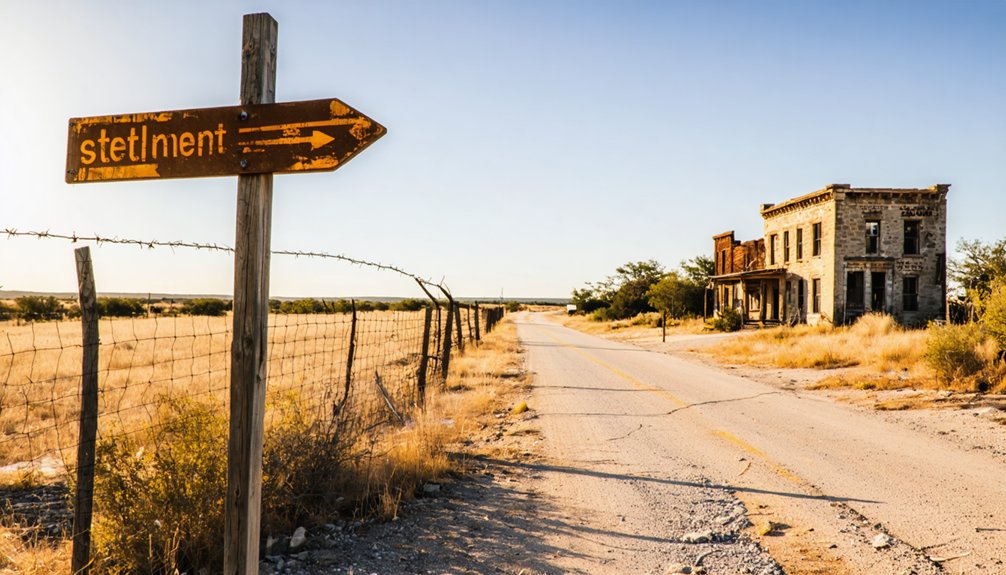
Decker doesn’t stand alone in Nolan County’s graveyard of forgotten towns, so you’ll want to extend your route and soak in the broader story of this region’s rise and fall. Eight miles southeast, Blackwell echoes Decker‘s quiet extinction, offering another waypoint where ambition once carved itself into Texas soil.
Both towns share deep historical significance as casualties of railroad economics and shifting postal routes. Swing through Maryneal, where Decker’s own post office relocated in 1917, severing the town’s last institutional lifeline.
Sweetwater, the county seat, holds records and context that frame everything you’ll witness on this drive. While preservation efforts remain limited across these rural sites, the Decker Lane cemetery and scattered historical markers let you piece together a raw, unfiltered portrait of frontier Texas.
How to Get to Decker Lane on Rural Nolan County Roads
If you’re starting your journey from Sweetwater, Nolan County’s seat, head northwest toward the rural heart of the county where pavement eventually gives way to packed caliche and dirt.
You’ll want to pull up an offline map or a historical county map from 1980 before you leave, since Decker Lane—your key landmark anchoring the old 1892 settlement—won’t appear on most standard navigation apps.
Go slowly on the unpaved stretches, watch for unmarked intersections, and remember that you’re retracing the same isolated corridors that once connected a forgotten postal community to the wider world.
Starting From Sweetwater
Sweetwater, the county seat of Nolan County, is your logical launching point for the roughly eight-mile drive northwest toward the vanished settlement of Decker. Load offline maps before you leave, because cell coverage thins fast once you push beyond town limits.
You’re tracing routes that once connected ambitious settlers to a functioning postal community, and that historical preservation instinct sharpens every mile you cover. Local legends suggest the land holds quiet stories beneath its scrub and caliche.
Head northwest on rural roads toward Decker Lane, watching for the cemetery markers that remain as your clearest navigational anchor. No signage announces Decker’s ghost — you’ll recognize the site through research, instinct, and a county map dated 1980.
This drive rewards the self-reliant traveler who finds freedom in discovering what history quietly buried.
Navigating Unpaved Rural Roads
Once you’ve left Sweetwater’s pavement behind, you’re steering through the same isolated terrain that once connected settlers to Decker’s brief, ambitious community life. Decker Lane cuts through raw Nolan County landscape, demanding respect and preparation.
Watch for these guiding essentials:
- Check road conditions before departing — recent rainfall turns unpaved caliche roads dangerously slick
- Scan for historical signage marking Decker Lane near the cemetery, your primary directional anchor
- Note local flora — mesquite clusters and native grasses signal unchanged land since Decker’s 1892 founding
- Drive slowly over eroded ruts; no services exist if your vehicle suffers damage
Your offline county map becomes your lifeline here. The freedom of reaching somewhere genuinely forgotten carries its own reward — but only if you arrive prepared.
Road Conditions on the Drive Out to Decker

Before you set out for Decker, know that the rural roads leading to this vanished Nolan County settlement don’t coddle travelers. You’re heading into terrain that’s swallowed a whole town since 1917, and the land doesn’t apologize for it.
Unpaved stretches around Decker Lane demand a capable vehicle, steady nerve, and a full tank.
Check road conditions before departure — seasonal rains turn caliche paths into axle-deep mud. Drought bakes them into washboard misery. Neither cares about your schedule.
The historical significance of what little remains here depends on visitors who respect the journey. Preservation efforts mean nothing if you arrive unprepared and damage fragile cemetery grounds getting unstuck.
Travel during daylight, carry water, and download offline maps. Decker earned its silence — approach it on its terms.
What to Pack Before You Drive Out to Decker
Decker doesn’t offer a single convenience store, gas station, or cell signal to bail you out — so pack like the town already failed once and learned nothing from it. You’re heading into raw Nolan County terrain where the only landmark is a cemetery off Decker Lane.
Throw these essentials into your vehicle before you leave:
- Offline maps and 1980 county records to navigate without signal
- Water and food since no services exist within miles
- Camera and notebook for documenting historical artifacts and local legends
- Daylight hours and a full tank because unpaved rural roads punish the unprepared
Decker vanished by 1947. The land doesn’t care about your timeline, your comfort, or your excuses. Prepare accordingly and drive free.
How to Explore Decker Safely and Respectfully
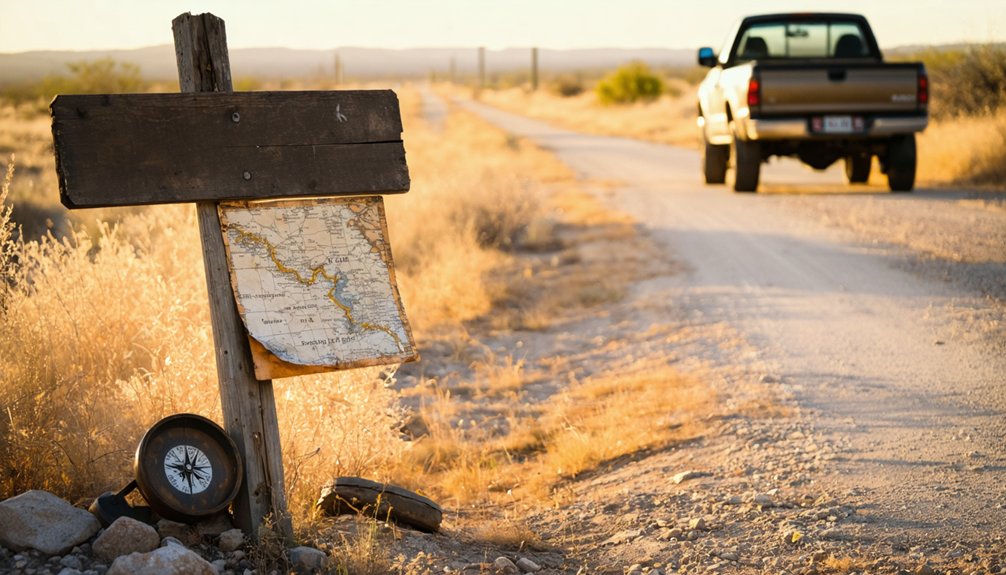
Arriving prepared is only half the job — how you move through Decker matters just as much. You’re stepping into a landscape shaped by 1890s settlers, and that history deserves real respect.
Arriving prepared is only half the job — how you move through Decker matters just as much.
Stay on Decker Lane, and don’t wander onto private land without permission — freedom means knowing your boundaries.
At the cemetery, tread carefully. These graves mark actual lives from Nolan County’s agricultural past, not props for your feed. Support local history by documenting what you see rather than disturbing it. Photograph, don’t touch. Note details that contribute to preservation efforts already fragile in ghost towns like this.
Leave nothing behind. Take nothing away. You’re a visitor passing through someone else’s story — move through Decker like it still matters, because to history, it absolutely does.
Frequently Asked Questions
Who Was A.F. Decker and Why Was the Town Named After Him?
Imagine stumbling upon ghost town history etched in a name: A.F. Decker served as Sweetwater’s postmaster, and local legends say the town honored him when Sarah Jones opened its first post office in 1892.
When Exactly Did Decker’s Post Office Close and Where Did It Relocate?
Decker’s post office closed in 1917, relocating to Maryneal — leaving behind historical landmarks steeped in local legends. You’ll find freedom chasing these vanished echoes across Nolan County’s open, untamed roads.
Who Served as Decker’s Very First Postmistress When It Opened?
Sarah A. Jones served as Decker’s very first postmistress, and she’s one of the local legends you’ll feel connected to when you’re exploring historical landmarks from 1892’s forgotten frontier. She helped build something real.
What Year Was Decker, Texas Originally Established as a Settlement?
You’ll find that Decker, one of Texas’s most intriguing historic ghost towns, was established in 1892. As you chase Texas landmarks, you’re tracing a bold settlement’s adventurous roots in south central Nolan County’s free, untamed frontier.
Are There Any Access Restrictions or Private Land Concerns Near Decker?
Before boldly blazing through Decker’s forgotten fields, you’ll want to contact Nolan County authorities about land ownership issues and historical preservation concerns—private property could restrict your access, so plan your adventure wisely and respect the boundaries you’ll encounter.
References
- https://www.tshaonline.org/handbook/entries/decker-tx-nolan-county
- https://www.tshaonline.org/handbook/entries/decker-prairie-tx
- https://hank.sanmarcostx.gov/SMHC/DOCUMENTS/Extinct Cities.pdf
- https://www.ghostsandgetaways.com/blog-1/27-fascinating-ghost-towns-in-texas