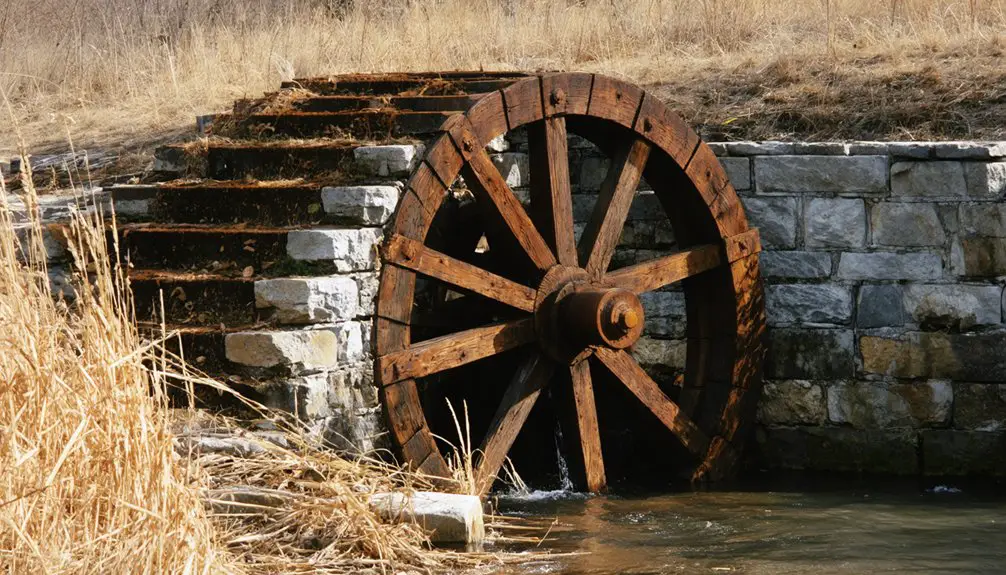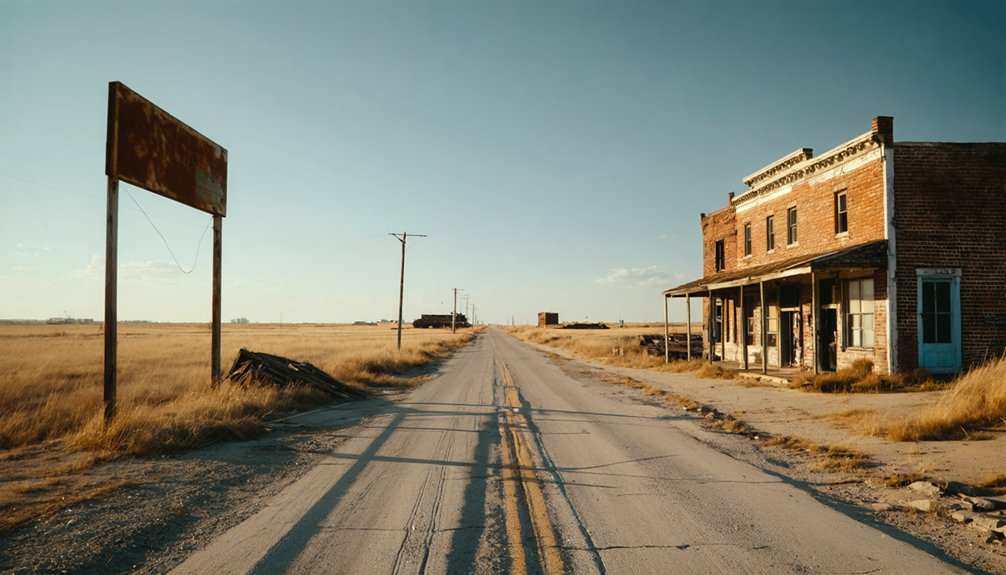
Planning a ghost town road trip to Vega, Kansas means heading deep into Cherokee County’s open prairie, where a once-thriving coal mining settlement now lies silent beneath native grasses. You won’t find highway signs or marked trails guiding your way, so historical records and local societies become your best navigation tools. Bring sturdy boots, plenty of water, and your camera. There’s far more to this forgotten town’s story than its crumbling foundations first reveal.
Key Takeaways
- Vega, Kansas, sits in Cherokee County with no highway signs, so research historical records and contact local historical societies for reliable directions.
- Pack sturdy boots, water, a first aid kit, sunscreen, insect repellent, and offline GPS maps before heading to this remote prairie site.
- Expect scattered brick walls and stone foundations partially covered by prairie grasses, as no standing structures remain at Vega today.
- Bring wide-angle and macro lenses with extra batteries to capture Vega’s atmospheric decay and thriving native wildlife undisturbed on former mining grounds.
- Extend your road trip by visiting nearby Kansas ghost towns like Saffordville, Valley Brook, Viola, Ulysses, and Michigan Valley for a fuller experience.
What Made Vega, Kansas a Ghost Town?
Once a thriving mining settlement in Cherokee County, Vega, Kansas rode the classic boom-and-bust wave that swallowed countless frontier towns across the American Midwest. Coal’s discovery in 1869 by Heim Nelson sparked rapid growth, with lead and zinc deposits drawing miners, merchants, and railroad workers into a tight-knit community.
Vega, Kansas burned bright and collapsed fast — a frontier dream built on coal, lead, and borrowed time.
At its peak, over 30 mines operated at depths reaching 75 feet, fueling schools, stores, and post offices that gave Vega real staying power.
But the historical mining impact had a hard expiration date. Once the minerals depleted, the economic foundation crumbled fast. Town abandonment reasons compounded quickly — lost railroad access sealed Vega’s fate entirely.
After 76 operational years, the prairie reclaimed what ambition had built, leaving only scattered brick walls and stone foundations behind.
What’s Left to See at the Vega, Kansas Ghost Town?
What remains at Vega today won’t satisfy anyone chasing standing structures or intact storefronts — nature’s won that battle completely. You’ll find scattered brick walls and stone foundations half-swallowed by prairie grasses and native shrubs, offering honest glimpses into a community that once supported over 30 active mines.
Don’t underestimate what’s here, though. Historical preservation enthusiasts will appreciate photographing these raw fragments against the open Kansas sky, where decay tells a more powerful story than any museum exhibit could. The contrast between industrial ambition and quiet grassland hits differently when you’re standing inside it.
Wildlife observation adds another layer — this reclaimed landscape attracts native species thriving undisturbed across former mining ground. Bring a camera, embrace the solitude, and let Vega’s silence do the talking.
How to Find Vega in Cherokee County, Kansas
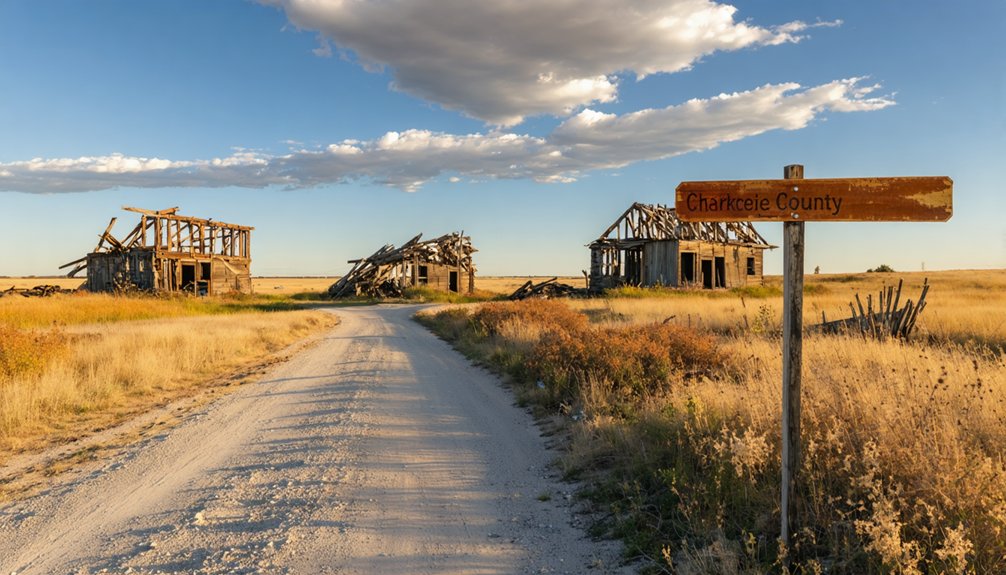
Finding Vega requires some detective work since no highway markers or road signs announce its presence across Cherokee County’s rolling terrain. You’ll need to research local historical records and county maps before hitting the road, as the site sits unmarked among open prairie grasslands.
No highway markers announce Vega’s presence — only detective work and old county maps lead the way.
Cherokee County’s southeastern Kansas landscape holds deep mining history, where over 30 mines once operated before railroad decline severed the town’s economic lifeline.
Approach the search with curiosity — scattered brick walls and stone foundations reward those willing to explore beyond paved conveniences.
Connect with local historical societies before your trip, as residents familiar with the region often provide the most reliable directions.
Once you arrive, trust the surrounding prairie grasses to confirm you’ve reached what remains of this once-thriving frontier settlement.
What Should You Pack for a Remote Ghost Town Visit?
Packing smart separates a rewarding ghost town experience from a frustrating one, so once you’ve tracked down Vega’s location through historical records and local contacts, shift your focus to what you’ll carry into that remote Cherokee County prairie.
Travel safety demands sturdy boots for uneven terrain, a first aid kit, plenty of water, and a charged phone since cell coverage can be unreliable. Sunscreen and insect repellent protect you across open grassland stretches.
For photography gear, bring a wide-angle lens to capture scattered brick walls against sweeping prairie skies, plus a macro lens for close-up foundation details. Extra batteries matter because remote locations offer no charging options.
A paper map or downloaded offline GPS route guarantees you don’t lose your way once pavement disappears.
Which Kansas Ghost Towns Are Worth Adding to Your Route?
Once you’ve built your route around Vega, adding other Kansas ghost towns transforms a single stop into a genuinely rich historical expedition. Cherokee County’s historical mining legacy connects naturally to broader regional exploration, so consider pushing your route toward sites like Ulysses, which shares Vega’s boom-and-bust story.
If flooding interests you, Saffordville shows how water, not economics, erased entire communities overnight. For something closer to prairie reclamation, Valley Brook and Bonita quietly surrendered to rural exodus, leaving landscapes strikingly similar to Vega’s windswept remains.
Near-ghost towns like Viola and Michigan Valley still breathe faintly, offering contrast between active decline and total abandonment. Each stop deepens your understanding of frontier survival, failure, and the relentless way Kansas grasslands eventually reclaim everything humans leave behind.
Frequently Asked Questions
Is There an Admission Fee to Visit the Vega Ghost Town Site?
Over 6,000 Kansas ghost towns exist, and you’ll find no admission fee or tourist regulations restricting your visit to Vega. Historical preservation here means nature’s reclaimed it freely — just explore the scattered brick walls and stone foundations yourself.
Are Pets Allowed When Visiting the Vega, Kansas Ghost Town Area?
No official pet policies or animal restrictions are documented for Vega’s open prairie site. You’re free to bring your furry companion while exploring scattered foundations, but always keep them leashed for their safety.
What Is the Best Season or Time of Year to Visit Vega?
Spring and fall offer you the best seasonal weather for exploring Vega’s haunting prairie ruins. You’ll maximize your photography opportunities with softer light, comfortable temperatures, and stunning contrasts between stone foundations and vibrant native grasses.
Is the Vega Ghost Town Site on Public or Private Property?
Like an unmarked treasure, Vega’s ownership details aren’t clearly documented. You’ll want to verify land access before exploring, as historical preservation of such sites often involves private property boundaries with no visitor amenities guaranteed.
Are There Guided Tours Available at the Vega Ghost Town Location?
You won’t find guided tours or visitor amenities at Vega’s ghost town site. It’s a raw, unmarked prairie landscape where you’ll explore historical preservation efforts independently, discovering scattered brick walls and stone foundations on your own terms.
References
- https://www.youtube.com/watch?v=dy7nLwjHkbY
- https://en.wikipedia.org/wiki/Vera