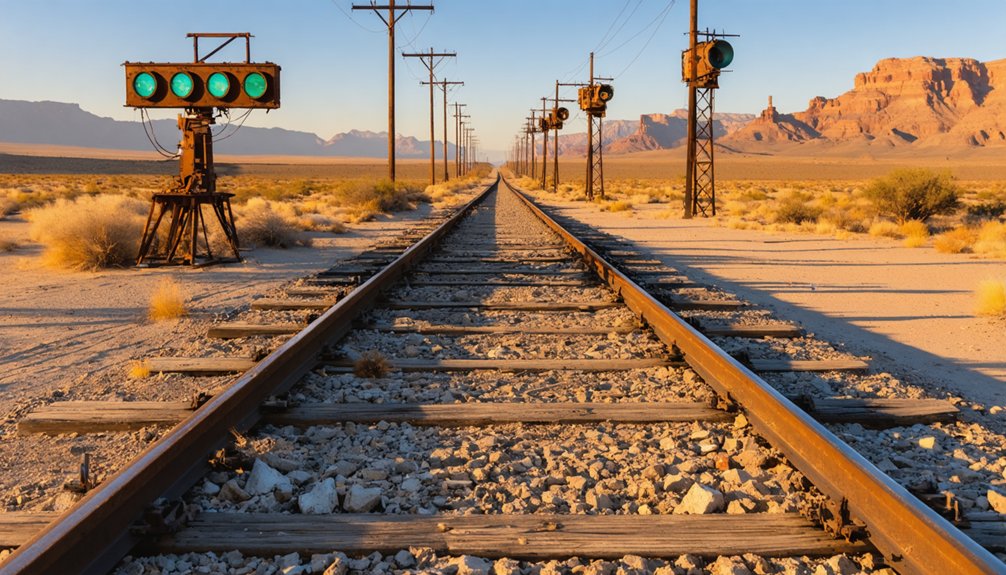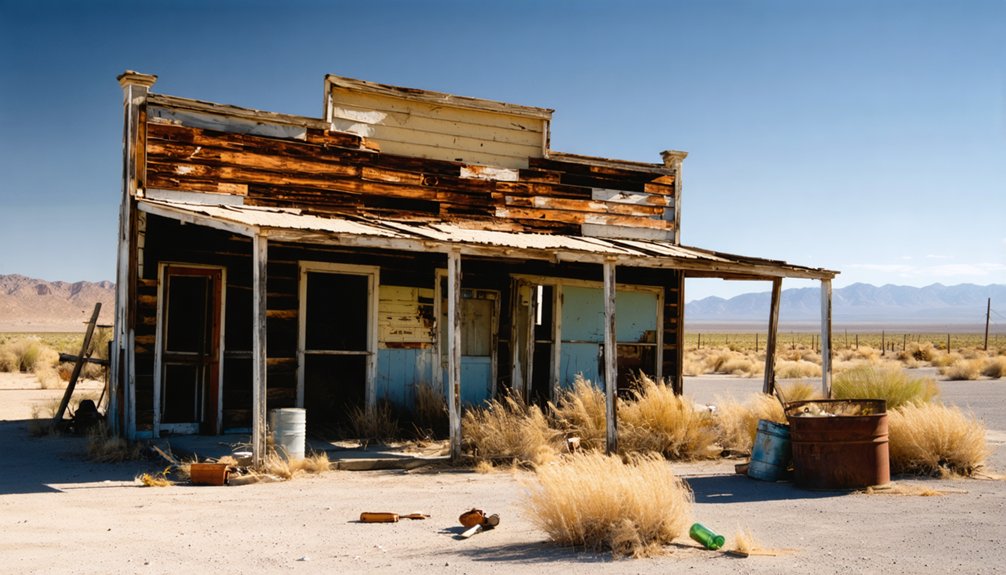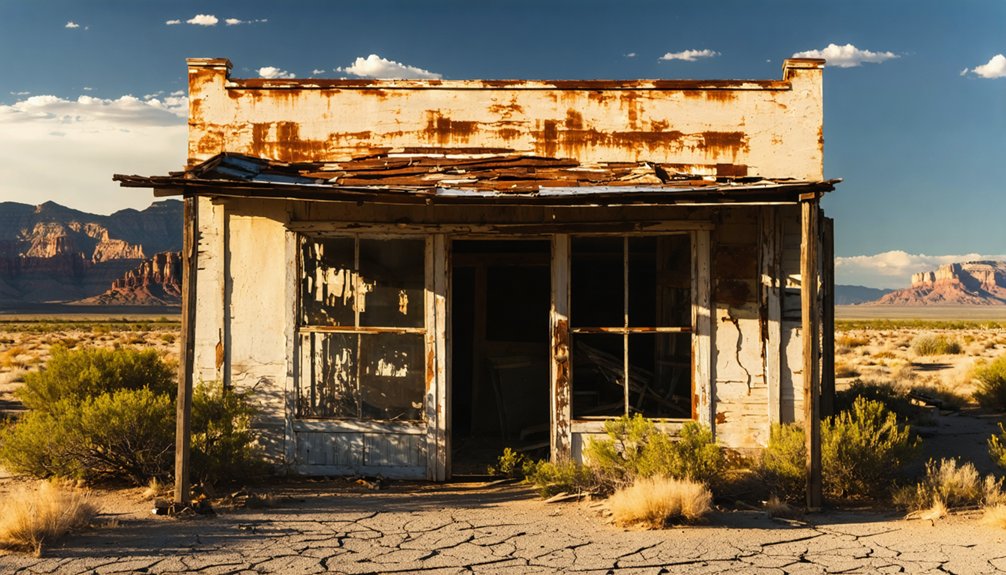
Planning a ghost town road trip to Tiger, Arizona means heading 4 miles west of Mammoth in Pinal County to explore what was once a booming 1,800-person mining community. Established in 1881, Tiger thrived on gold, lead, and zinc until flooding and falling prices killed it by the mid-1950s. Today, scattered rubble and a fenced mine shaft are all that remain. There’s much more to uncover about this fascinating, nearly forgotten desert relic.
Key Takeaways
- Tiger, Arizona, located 4 miles west of Mammoth in Pinal County, is accessible by 2WD vehicles and sits at 3,081 feet elevation.
- Visit between October and April to avoid extreme heat, as summer temperatures regularly exceed 100°F in this remote desert location.
- Pack essential supplies including over 2 liters of water, sturdy boots, sun protection, and a paper map, as no services exist nearby.
- Watch for rattlesnakes and Gila monsters while exploring scattered rubble and foundations, the only remaining evidence of Tiger’s 1,800-person peak population.
- Combine your Tiger visit with nearby Mammoth, Arizona, to experience a fuller picture of the region’s rich mining history.
What Was Tiger, Arizona?
Once a thriving mining community nestled in Pinal County’s rugged desert terrain, Tiger, Arizona packed a remarkable rise-and-fall story into just a few decades. You’re looking at a place born from gold fever, first established as Schultz around 1881 after Frank Schultz discovered gold near the Mammoth Mine.
The town’s mining history shifted dramatically after World War I, when new operations prompted a name change to Tiger. At its peak in the early 1950s, 1,800 residents called this desert outpost home.
The Tiger Mine produced impressive historical artifacts, including prized matlockite and wulfenite specimens that collectors still seek today.
But by 1954, flooded mines, crashing lead and zinc prices, and deteriorating ore quality sealed Tiger’s fate. The post office closed, and the desert quietly reclaimed everything.
Tiger’s Mining Boom and Sudden Collapse
Tiger’s story really begins underground, where gold fever transformed a quiet desert landscape into a bustling industrial operation.
At its peak, Tiger’s mining history supported nearly 1,800 residents — a remarkable achievement for a remote Arizona outpost.
Then everything unraveled fast. Population decline hit hard when four brutal forces converged:
- Mines flooded beyond recovery
- Lead and zinc prices collapsed
- Ore quality deteriorated sharply
- Magma Copper Co. took over in 1953, sealing the town’s fate
What’s Actually Left at the Tiger, Arizona Site Today
When you arrive at the Tiger townsite today, don’t expect much — because there’s almost nothing left. The desert has quietly reclaimed what miners once built, leaving only scattered rubble, loose rock foundations, and stubborn desert vegetation. No historical artifacts survived the San Manuel copper company’s decision to raze every standing structure.
You’ll spot the filled-in shaft of the old Mammoth mine, but that’s fundamentally your landmark.
BHP Billiton now owns the site and continues active preservation efforts focused on environmental reclamation rather than historical restoration.
The coordinates 32.70778°N, 110.68222°W will get you there, sitting at roughly 3,081 feet elevation.
It’s accessible by 2WD, so reaching it’s straightforward.
What you do with the silence and scattered stones is entirely up to you.
How to Get to Tiger, Arizona Ghost Town
Getting to Tiger is straightforward, and that’s part of the appeal — the road won’t challenge you, but the destination will. Located 4 miles west of Mammoth, Arizona, this ghost town sits at 3,081 feet in Pinal County, waiting quietly for those who seek its mining history.
The road to Tiger won’t challenge you — but the ghost town waiting at the end certainly will.
Follow these steps to reach the site:
- Head to Mammoth, Arizona using standard 2WD vehicle routes.
- Navigate west from Mammoth approximately 4 miles toward coordinates 32.70778°N, 110.68222°W.
- Watch for loose rock foundations and scattered rubble marking the townsite.
- Explore carefully — historical artifacts are scarce but the landscape tells Tiger’s story.
BHP Billiton currently owns the land, so respect all posted boundaries while you walk through what remains of this remarkable desert community.
Best Time to Visit Tiger, Arizona
You’ll want to plan your visit to Tiger between October and April, when the Sonoran Desert cools to comfortable temperatures ideal for exploring rocky ruins and open terrain.
Summer months bring intense heat that can push past 100°F, making the 3,081-foot elevation site genuinely dangerous for unprepared visitors.
Pack plenty of water regardless of season, since you’re heading into an isolated desert site with no services, shade structures, or modern amenities.
Ideal Visiting Seasons
Since Tiger, Arizona sits at an elevation of 3,081 feet in the Sonoran Desert, the best time to visit falls between October and April, when temperatures stay mild and comfortable for exploring the rugged terrain. You’ll want to plan around these ideal conditions:
- Fall (October–November): Cooler air makes hiking to mining remnants manageable.
- Winter (December–February): Clear skies offer sharp visibility across the desert landscape.
- Early Spring (March–April): Wildflowers bloom around historical artifacts and scattered rubble.
- Avoid Summer: Intense heat above 100°F makes exploration dangerous and draining.
You’re free to roam this abandoned site year-round, but smart timing means you’ll spend more energy discovering the ghost town’s story and less time battling brutal desert conditions.
Weather And Comfort Tips
Packing smart for Tiger makes all the difference between a rewarding ghost town adventure and a miserable scramble through the Sonoran Desert. Wear sturdy, closed-toe boots since scattered rubble and loose rock foundations surround the site where you’ll examine mining relics and historical artifacts.
Bring at least two liters of water per person, as desert heat drains you faster than you’d expect. Layers work well during winter visits when morning temperatures drop sharply at Tiger’s 3,081-foot elevation.
A wide-brim hat and UV-protective clothing shield you during spring and fall explorations. Pack sunscreen, a basic first aid kit, and snacks for sustained energy.
Since nothing remains except foundations and desert vegetation, you’ll want full comfort and focus to truly appreciate what once stood here.
What to Bring for the Tiger Site Visit
Before heading out to Tiger, make sure you’ve got the essentials covered. The site sits at 3,081 feet in Arizona’s rugged desert, so preparation makes the difference between a great adventure and a miserable one.
Pack these four must-haves:
- Water – Bring more than you think you’ll need; desert heat is unforgiving.
- Sturdy boots – Loose rock foundations and scattered rubble demand solid ankle support.
- Camera – Historical artifacts like mine shaft remnants deserve documentation.
- Wildlife encounter gear – A snakebite kit and awareness of desert wildlife keeps you safe while exploring.
You’re visiting a place where BHP Billiton‘s reclamation efforts are actively reshaping the land, so respect the site and leave everything exactly as you find it.
Nearby Ghost Towns Worth Combining With Tiger
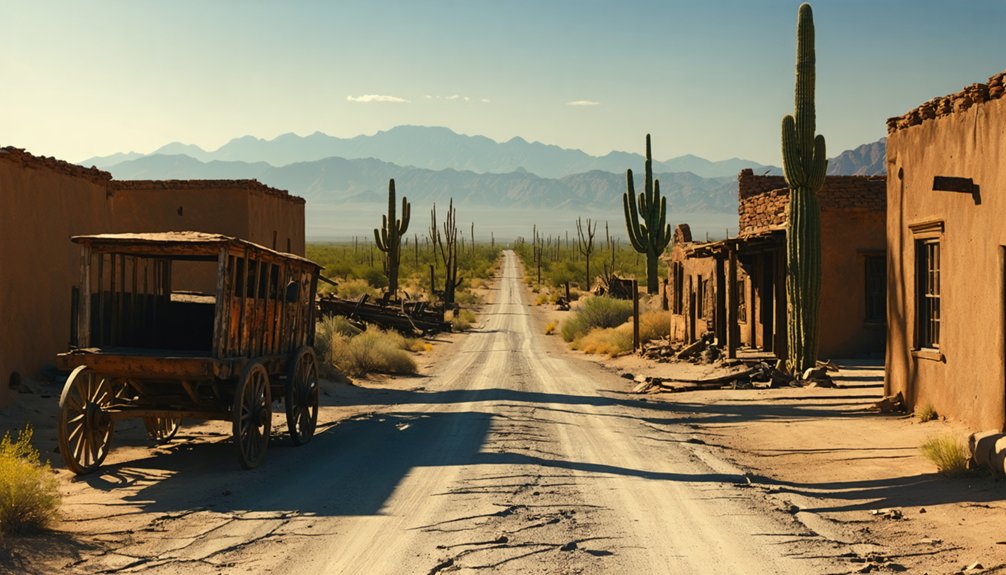
Once you’ve got your gear sorted and you’re ready to hit the road, Tiger doesn’t have to be your only stop — Arizona’s desert is dotted with ghost towns that pair perfectly with a visit to the site.
Mammoth, just four miles east, anchors Tiger’s mining history as the former milling hub connected by aerial tramway. Explore its remnants before pushing further into Pinal County.
Oracle, a short drive north, carries its own ghost town legends tied to silver rushes and frontier-era ambition.
Further south, the San Manuel area offers layered industrial mining history worth walking through.
String these stops together across a single day or weekend, and you’ll experience Arizona’s abandoned past in a way no museum could replicate.
Is Tiger, Arizona Safe to Visit?
When you visit Tiger, you’ll find little more than scattered rubble, loose rock foundations, and desert vegetation reclaiming the site, so watch your footing carefully on unstable ground.
You should stay alert for abandoned mine hazards, as filled-in shafts and deteriorating excavations can hide dangerous voids beneath the surface.
Bring plenty of water, wear sturdy boots, and let someone know your plans before heading out, since the remote desert location offers no services or cell coverage.
Current Site Conditions
Though little remains of Tiger today, the site is generally safe to visit if you know what to expect. BHP Billiton owns the land and actively reclaims it, so conditions shift over time. Here’s what you’ll find on the ground:
- Loose rock foundations and scattered rubble mark where buildings once stood
- The filled-in Mammoth mine shaft is visible but fenced off
- Desert vegetation continues reclaiming the landscape naturally
- Wildlife encounters are common, so watch for rattlesnakes and Gila monsters
For photography tips, arrive in the early morning when golden light hits the rubble and surrounding desert. You’ll capture dramatic contrasts between ruins and untouched wilderness.
Wear sturdy boots, bring water, and respect any posted boundaries. The freedom to explore comes with personal responsibility here.
Because the site sits on active reclamation land owned by BHP Billiton, conditions at Tiger shift unpredictably from season to season. You’ll encounter loose rock foundations, unstable rubble, and desert vegetation reclaiming every corner of the townsite. Watch your footing carefully — what looks solid often isn’t.
Don’t expect marked trails or safety barriers. This is raw, unmanaged terrain where freedom comes with personal responsibility. Local legends suggest historical artifacts still surface after heavy monsoon rains, but disturbing anything on reclamation land carries legal consequences.
Wear sturdy boots, carry water, and tell someone your plans before heading out. The desert heat intensifies the risk considerably during summer months. Respect the land’s instability, stay alert, and you’ll experience Tiger’s haunting silence safely.
Essential Safety Precautions
Visiting Tiger safely goes beyond watching your footing on unstable rubble — it demands preparation before you ever leave your driveway. The remote Pinal County desert offers no services, no cell towers, and no rescue teams nearby.
Pack smart and stay sharp:
- Bring extra water — desert heat hits hard at 3,081 feet elevation
- Leave historical artifacts untouched — federal law protects ghost town remnants
- Wear closed-toe boots for steering through loose rock foundations and desert vegetation
- Stay alert during wildlife observation — rattlesnakes and scorpions inhabit the scrubland
Tell someone your exact destination coordinates (32.70778°N, 110.68222°W) before departing. Carry a paper map since digital guidance fails in dead zones.
Tiger rewards prepared explorers — but punishes careless ones swiftly.
How to Make the Most of a Tiger and Mammoth Day Trip
If you’re planning a day trip to Tiger, pairing it with a stop in nearby Mammoth makes for a well-rounded adventure. Just four miles east, Mammoth served as Tiger’s milling site and still carries echoes of the region’s rich mining history.
Walk the area where the aerial tramway once connected the two towns, transporting ore between operations. At Tiger’s site, scan the ground for scattered rubble and loose rock foundations — these historical artifacts tell the story of a community that peaked at 1,800 residents before disappearing entirely by 1954.
Bring water, wear sturdy shoes, and arrive early to beat the desert heat. The drive requires only a 2WD vehicle, making this forgotten corner of Pinal County surprisingly accessible for curious explorers.
Frequently Asked Questions
Can You Legally Collect Rocks or Minerals at the Tiger Townsite?
You can’t freely pursue mineral collection at Tiger’s townsite. BHP Billiton owns the site and enforces strict rock regulations, so you’ll want to check with them before pocketing any wulfenite or matlockite specimens you discover there.
Are Pets Allowed at the BHP Billiton Reclamation Site?
The knowledge base doesn’t cover a million pet-related policies for BHP Billiton’s reclamation site. You’ll want to contact them directly about pet safety and reclamation policies before you bring your furry adventure companion along.
Was Tiger, Arizona Ever Featured in Films or Television Productions?
The available records don’t confirm Tiger, Arizona’s appearance in films or TV productions. You’ll find its historical mining legacy and ghost town preservation story compelling enough—nature’s reclaimed the site, leaving only rubble and desert silence behind.
Did Tiger Have a School During Its Peak Population Years?
The knowledge doesn’t confirm a school, but with Tiger’s historical population peaking at 1,800 sun-baked residents in the early 1950s, you’d expect a school establishment thrived among those dusty, bustling streets.
Are There Any Annual Events or Tours Organized at Tiger?
You won’t find organized annual events or tours at Tiger’s historical ghost town site. You’re free to explore its mining history attractions independently, but scattered rubble and desert reclamation are all that await your adventurous self-guided visit.
References
- https://www.facebook.com/groups/9326270210/posts/10163215835270211/
- https://www.linkedin.com/posts/paul-marsh-9b824860_tiger-is-a-ghost-town-in-pinal-county-az-activity-7242523373925269504-5Y8v
- https://tucson.com/news/local/tiger-mines-once-thrived-near-todays-mammoth/article_8ec866a7-622f-55c1-b8ae-2ad8c0c38918.html
- https://www.ghosttowns.com/states/az/tiger.html
- https://www.ghosttowns.com/states/az/tigerp.html
- https://kids.kiddle.co/Tiger
- https://silvertigermetals.com/files/El_Tigre_Articles_in_Mundo_Minero_-_english.pdf