Planning a ghost town road trip to Austin, Oregon puts you right in the heart of eastern Oregon’s gold rush history. You’ll explore collapsed foundations, mysterious rock piles left by Chinese miners, and weathered relics from the 1860s Greenhorn claims. Start from Canyon City or Sumpter, bring a paper map since GPS fails out here, and fuel up before heading into remote backroads. There’s even more to discover when you know exactly what to expect.
Key Takeaways
- Austin, Oregon is a remote gold rush ghost town founded in the 1860s, featuring collapsed foundations, rock piles, and scattered mining relics.
- Start your route from Canyon City or Sumpter, the closest access points, and drive through unpaved backroads to reach Austin’s ruins.
- GPS signals fail in this remote region, so carry a paper map and confirm road conditions before departing.
- Extend your road trip by visiting nearby ghost towns like Granite, Sumpter, and Shaniko for a multi-day Oregon history experience.
- Pack water, snacks, a first-aid kit, and a flashlight, and fuel up fully before leaving civilization for eastern Oregon’s backroads.
What Makes Austin, Oregon Worth the Drive?
Austin, Oregon isn’t your typical roadside attraction — it’s a raw, unfiltered window into the gold rush era that shaped eastern Oregon’s identity. Founded in the 1860s, this ghost town once buzzed with miners chasing gold through the Greenhorn claims.
Forget tourist traps — Austin, Oregon is living gold rush history, raw and unfiltered.
Today, collapsed foundations and scattered artifacts tell stories that local legends have kept alive for generations.
You’ll find no crowds, no admission fees, and no guardrails between you and genuine history. Preservation efforts have guaranteed that relics like the Greenhorn Jail survived, now housed at the Canyon City Museum.
Exploring Austin means wandering freely through time, reading the landscape like an open book. If you crave unscripted adventure rooted in real American history, Austin absolutely merits the drive.
How to Reach Austin’s Ghost Town Ruins
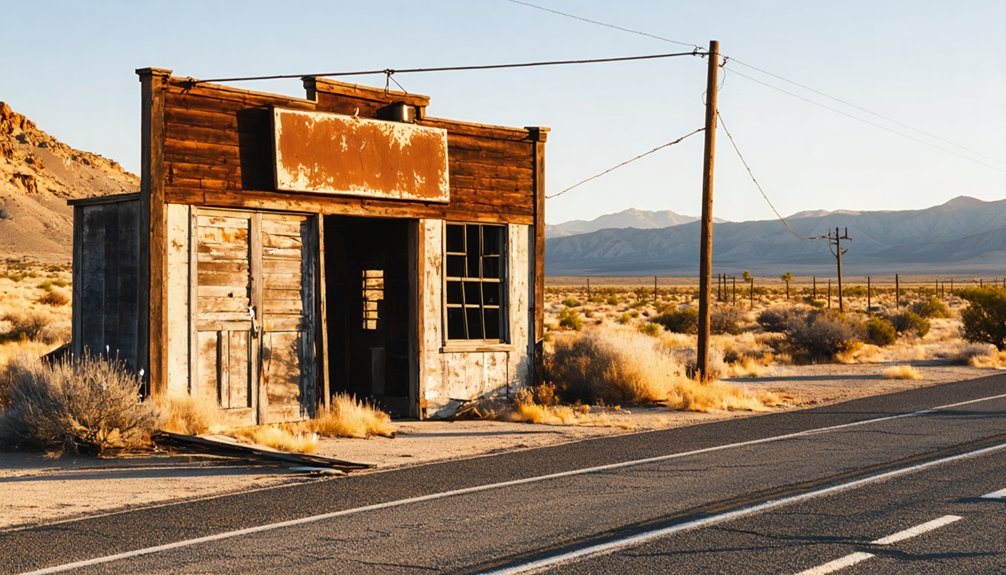
Reaching Austin’s ghost town ruins means embracing eastern Oregon’s rugged, remote character from the start. You’ll steer unpaved backroads where mining history shaped every canyon and ridge. GPS often fails here, so carry a paper map and fuel up before leaving Canyon City or Sumpter, your closest access points.
As you drive, the geological features — volcanic rock formations and eroded creek beds — tell the story better than any museum could.
Before heading out, remember these essentials:
- Confirm road conditions — unpaved routes become impassable after rain or snow.
- Start from Canyon City — it’s the most direct and practical entry point.
- Travel during daylight — fading light makes steering remote terrain genuinely dangerous.
Austin rewards the prepared, freedom-seeking traveler willing to earn the experience.
Ruins, Rock Piles, and Relics Still Standing in Austin
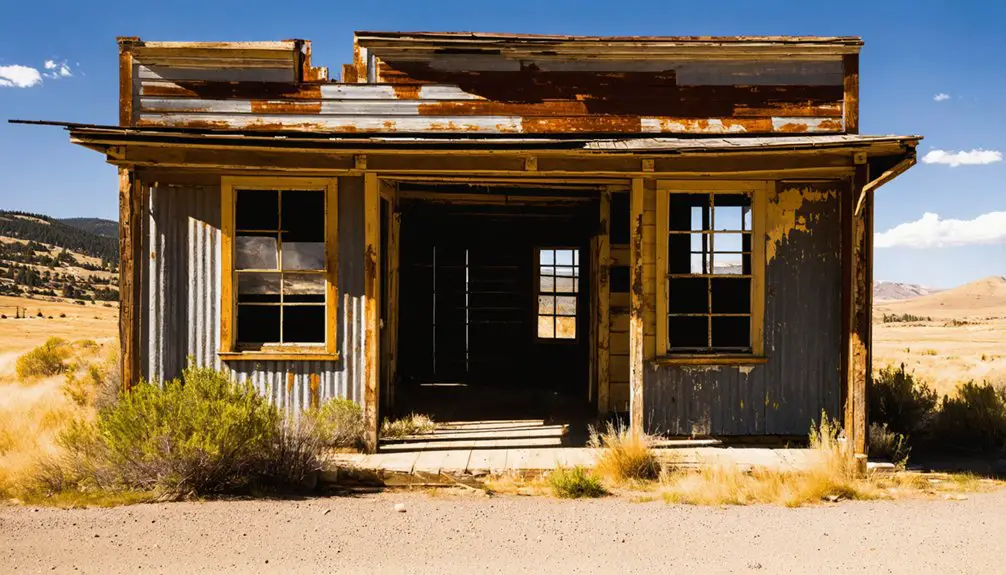
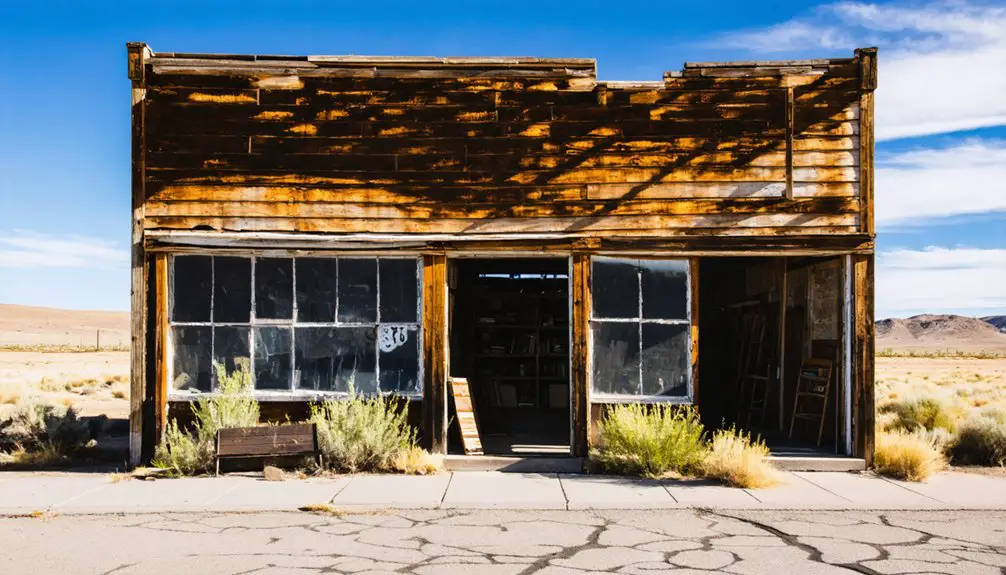
Once you step into Austin’s ghost town limits, collapsed foundations and weathered mining structures from the 1860s emerge from the sagebrush like scattered bones. You’ll notice rock piles left behind by Chinese miners, silent testaments to the relentless labor that shaped this region’s mining history.
Collapsed foundations and scattered bones of history rise from the sagebrush, where Chinese miners once shaped the earth.
These formations mirror similar diggings found near Granite, connecting Austin to a broader story of eastern Oregon’s gold rush era.
The Greenhorn Jail, once central to Austin’s rough-and-tumble legal order, now lives at the Canyon City Museum for artifact preservation purposes. What remains on-site are crumbling walls, scattered debris, and rusted remnants demanding careful exploration.
Walk slowly, observe closely, and resist touching unstable structures. Every fragment you encounter represents a chapter of frontier life that refuses to completely disappear.
Ghost Towns Near Austin Worth Adding to Your Route
While Austin rewards exploration on its own, the surrounding region packs enough ghost town history to justify a multi-day route. You’ll find abandoned buildings and mining artifacts scattered across nearby towns that deepen the story of eastern Oregon’s boom-and-bust past.
- Granite – Oregon’s most authentic ghost town sits northwest of Austin, offering well-preserved abandoned buildings and raw mining artifacts from the 1860s era.
- Sumpter – Follow Highway 410 to explore the iconic Sumpter Dredge #1, a massive relic that reshaped the landscape during gold fever’s peak.
- Shaniko and Antelope – These high-desert ghost towns along Old John Day Highway deliver a completely different atmosphere, blending ranching history with quiet, windswept ruins.
String these stops together and you’ve built a genuinely rewarding Oregon road trip.
Backroad Safety Essentials for Eastern Oregon Ghost Towns
Exploring eastern Oregon’s backroads to reach Austin and its neighboring ghost towns demands serious preparation before you leave pavement behind. Pack water, snacks, a first-aid kit, and flashlights — remote stretches offer zero convenience stores and no rescue nearby.
Fuel up completely before departing Canyon City or Sumpter, since gas stations vanish quickly once you hit unpaved terrain.
Weather preparedness is non-negotiable here. Eastern Oregon’s desert climate swings hard between scorching summers and snow-blocked winter roads, so check conditions before departure. Carry layers regardless of season.
Wildlife encounters are equally real — deer, rattlesnakes, and other animals cross these backroads unpredictably, especially at dusk. Drive cautiously and stay alert.
Finally, ditch the GPS reliance and carry a paper map, because digital signals disappear fast in this region.
Frequently Asked Questions
What Is the Best Season to Visit Austin, Oregon Ghost Town?
Like a painting come alive, fall’s your best bet! You’ll find stunning seasonal foliage along Elkhorn Scenic Byway, with cooler weather conditions making exploration comfortable. Avoid summer’s scorching heat and winter’s snow-blocked unpaved roads.
Can GPS Navigation Be Relied Upon When Traveling to Austin, Oregon?
You can’t rely on GPS accuracy when traveling to Austin, Oregon. Navigation reliability drops in eastern Oregon’s remote desert areas, so you’ll want to carry a physical map to confidently explore your freedom-fueled ghost town adventure.
Did Austin, Oregon’s Population Ever Support Thriving Local Businesses?
Once bustling with golden promise, yes! Austin’s historical population actively fueled local business support, filling storefronts with miners’ wages and laughter. Today, you’ll only find echoing ruins where that vibrant community once thrived.
Is the Oregon State Archives Ghost Town Exhibit Currently Open to Visitors?
We don’t have confirmed details on whether the Oregon State Archives ghost town exhibit’s visitor facilities are currently open. It ran from Fall 2019 to Spring 2020, so you’d want to verify its historical preservation status directly!
Which Major Highways Provide the Starting Point for Reaching Austin?
As two roads converge like old trails meeting, you’ll find Highway 97 and Highway 30 are your starting highway routes. These scenic drives carry you through eastern Oregon’s wide-open landscapes, leading you straight toward Austin’s forgotten ruins.
References
- https://thatoregonlife.com/2016/04/road-trip-ghost-towns-eastern-oregon/
- https://www.facebook.com/groups/ForgottenOregon/posts/2351527148448543/
- https://traveloregon.com/things-to-do/culture-history/ghost-towns/
- https://lostoregon.org/2019/09/20/rust-rot-ruin-stories-of-oregon-ghost-towns/
- https://www.youtube.com/watch?v=cDGeAreMBnc
- https://www.youtube.com/watch?v=GaS3xjrQ-_I
- https://thatoregonlife.com/2025/09/elkhorn-scenic-byway-ghost-town-fall-road-trip/