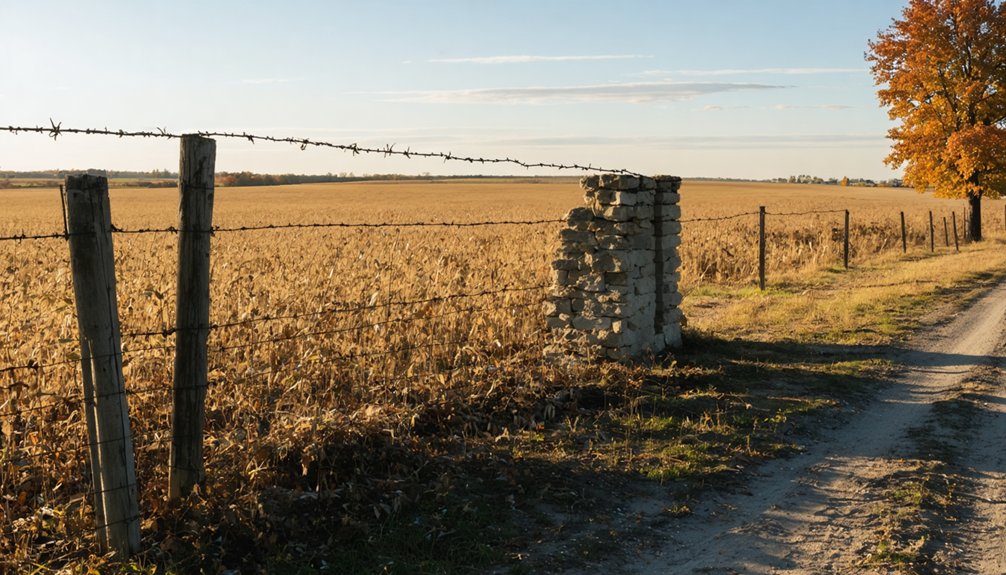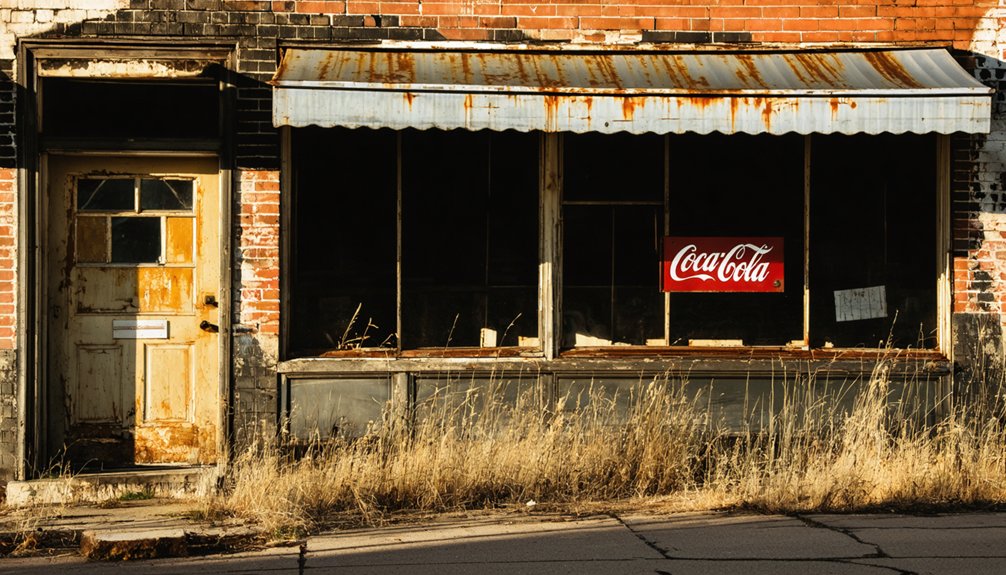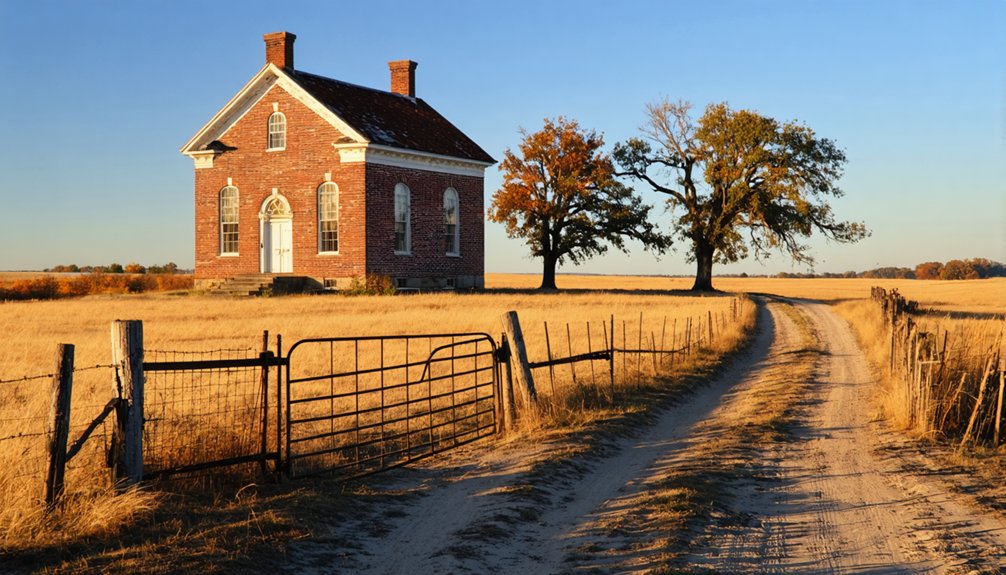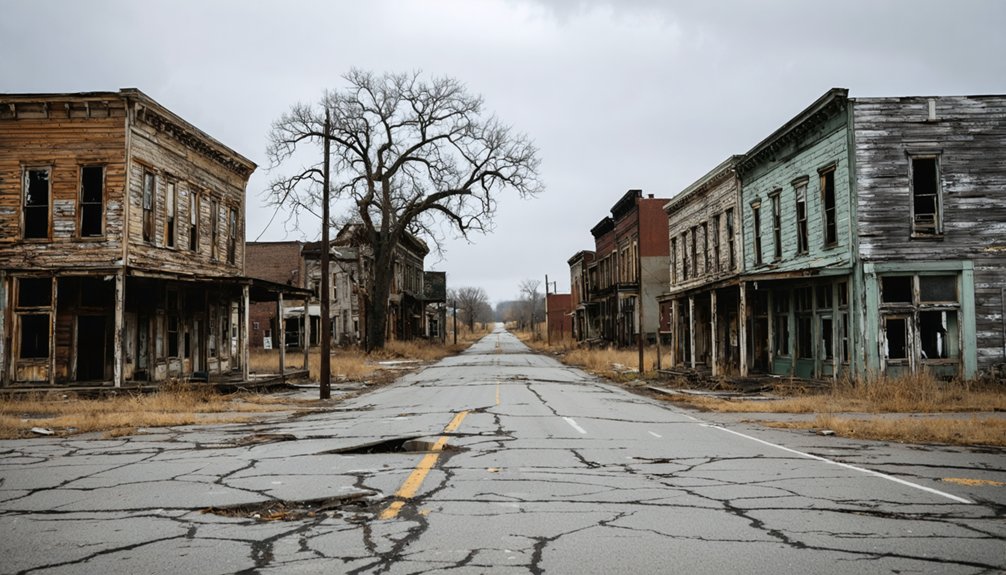
Planning a ghost town road trip to Bethel, Illinois puts you on a journey through Clay County’s forgotten railroad past. Founded in 1854, Bethel thrived as a transportation hub before declining railroad traffic, a devastating 1925 tornado, and the Great Depression turned it into ruins. Today, you’ll find a weathered Gothic church, crumbling foundations, and rusted railroad remnants on privately owned land. Secure permission before you visit, pack your camera, and there’s plenty more you’ll want to know before you go.
Key Takeaways
- Bethel, Illinois, located in Clay County, is a ghost town founded in 1854 along the Terre Haute and Alton railroad line.
- Visit during spring or fall for ideal weather, manageable vegetation, and dramatic lighting conditions perfect for photography and exploration.
- Reach Bethel via GPS to Clay County, Songer Township, approaching from Flora, Illinois, then heading south toward Greendale.
- Land surrounding Bethel is privately owned; always obtain permission before visiting to avoid trespassing charges and legal consequences.
- Bring sturdy boots, a camera, water, insect repellent, and a flashlight for exploring the Gothic church and surrounding foundations.
What Is Bethel, Illinois and Who Actually Goes There?
Tucked away in Clay County, Illinois, Bethel is a ghost town that once thrived as a railroad hub before time, disaster, and economic decline erased nearly every trace of it.
Founded in 1854 along the Terre Haute and Alton railroad line, it served travelers and farmers until abandonment left it frozen in decay.
Today, you’ll find scattered historical artifacts, weathered foundations, and a solitary church showcasing Gothic architectural styles typical of mid-19th century Illinois construction.
How Did Bethel Go From Railroad Town to Ghost Town?
When you dig into Bethel’s origins, you’ll find that Joel U. Starkey established the town in 1854 along the Terre Haute and Alton railroad line, positioning it as a crucial agricultural and transportation hub.
As railroad traffic declined in the late 19th century, though, the town’s economic foundation crumbled beneath it.
The Tri-State Tornado of 1925 and the Great Depression delivered the final blows, scattering residents to larger cities and leaving behind only foundations, railroad remnants, and a solitary church.
Railroad Roots And Founding
Back in 1854, Joel U. Starkey founded Bethel along the Terre Haute and Alton railroad line, transforming raw Illinois farmland into a thriving transportation hub. You can almost picture it — a bustling depot, commercial buildings rising from the flat terrain, and farmers converging to ship their harvests outward.
Bethel connected travelers moving between Terre Haute and Alton, making it genuinely essential to southeastern Illinois commerce.
The railroad didn’t just move goods; it built community memories that still echo across the empty foundations you’ll walk through today. Every weathered brick represents someone’s livelihood, someone’s dream.
Historical preservation efforts remind us that Bethel wasn’t simply a stop on a map — it was a living, breathing settlement where ordinary people carved out extraordinary lives on the Illinois frontier.
Decline And Abandonment Factors
Though Bethel once thrived as a vital railroad hub, the late 19th century brought a harsh economic reality — railroad traffic declined sharply, stripping the town of its core purpose. Without steady rail commerce, businesses collapsed and residents scattered to larger cities.
Then nature struck. The devastating Tri-State Tornado of 1925 shredded what remained of Bethel’s historical architecture, leaving fractured foundations and hollow walls.
The Great Depression sealed the town’s fate entirely, pushing out the last holdouts.
Agricultural shifts eliminated the need for small transportation stops like Bethel, making revival impossible.
Today, preservation efforts work to document the remaining church and structural fragments before time erases them completely. When you visit, you’re walking through layers of economic collapse, natural disaster, and quiet human surrender.
Is It Legal to Explore the Bethel Ghost Town Site?
Before you pack your bags and head out to Bethel, you’ll want to know whether exploring the site is actually permissible. The land surrounding the ghost town is privately owned, so you’ll need permission before stepping foot on the property. Trespassing carries real legal consequences, so don’t assume that abandonment makes access open to everyone.
Historical preservation laws also apply here. Removing artifacts, disturbing foundations, or damaging the remaining church structure violates both state and federal regulations. Legal restrictions exist specifically to protect sites like Bethel from vandalism and unauthorized excavation.
Your best approach is contacting Clay County authorities or local historians before visiting. Respecting boundaries doesn’t diminish the experience — it actually ensures the site remains accessible for future explorers who share your curiosity.
What’s Left to See at Bethel Ghost Town Today?
Once you’ve sorted out the legalities and secured permission to visit, you’ll find that Bethel still offers a surprising amount to take in. The site’s urban decay tells a vivid story without a single word.
The abandoned Gothic church remains the crown jewel of the site, its weathered walls and deteriorating roof framework still commanding attention. Surrounding the church, you’ll spot weathered bricks from former commercial buildings and scattered stone foundations marking where homes once stood.
Railroad artifacts and rusted track remnants near the church grounds connect you directly to Betel’s 1854 origins.
Historical preservation efforts have documented much of what survives, giving your visit real context. Walk the grounds carefully, and you’ll piece together a surprisingly complete picture of this vanished Illinois community.
How Do You Get to Bethel, Illinois by Car?
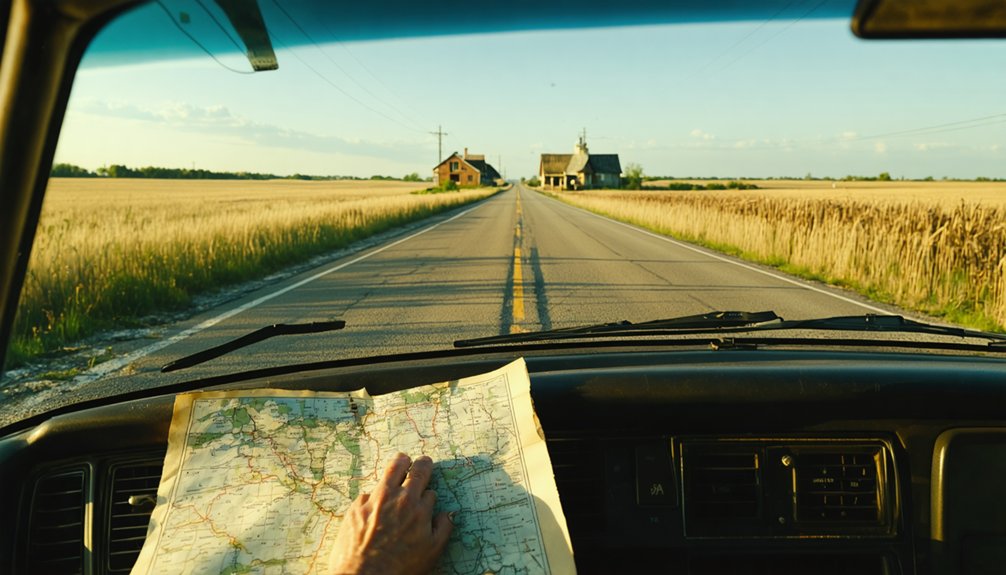
Reaching Bethel, Illinois starts with setting your GPS for Clay County in the southeastern part of the state, where the former settlement sits within Songer Township along a railroad line just north of Greendale. Access roads connecting nearby towns like Greendale and Preston make the drive straightforward.
Follow these steps for a smooth journey:
- Head toward Flora, Illinois, Clay County’s seat, as your primary landmark.
- Navigate south toward Greendale using local county roads.
- Look for access roads heading north toward the Songer Township railroad corridor.
- Drive slowly once near the site for wildlife observation and historical preservation awareness.
You’ll appreciate the flat agricultural terrain that frames your approach, giving you time to mentally prepare for exploring what remains of this forgotten community.
What’s the Best Time of Year to Visit Bethel, Illinois?
You’ll find that spring and fall offer the most comfortable conditions for exploring Bethel’s weathered grounds, with mild temperatures and reduced vegetation making structural remnants easier to spot.
Summer brings oppressive humidity and dense overgrowth that can obscure foundations and artifacts, while winter‘s frozen terrain limits safe navigation around the site.
If you’re chasing the full ghost town atmosphere, October draws the heaviest traffic from paranormal investigators, so visit on a weekday to experience the haunting stillness of the abandoned church undisturbed.
Ideal Seasonal Visiting Windows
While Bethel’s crumbling foundations and weathered church walls hold their eerie charm year-round, late spring and early fall offer the most rewarding visits. You’ll find comfortable temperatures, manageable terrain, and ideal lighting for photographing historical architecture and uncovering local legends.
- Late Spring (April–May): Wildflowers frame the ruins beautifully, and mild temperatures make extended exploration comfortable.
- Early Fall (September–October): Crisp air enhances the haunting atmosphere, perfect for documenting structural remnants before winter.
- Summer (June–August): Longer daylight hours maximize exploration time, though heat and thick vegetation can obscure foundation details.
- Winter (December–February): Bare trees reveal hidden ruins, but frozen ground and harsh conditions limit accessibility profoundly.
Choose your window wisely, and Bethel rewards you with an unforgettable, unrestricted journey through forgotten Illinois history.
Weather Conditions By Season
Southeastern Illinois delivers distinctly different experiences at Bethel depending on the season you choose, so knowing what weather to expect shapes how well your visit goes.
Spring brings mild temperatures and fresh greenery, making historical preservation photography especially rewarding.
Summer heat can be brutal, pushing humidity above comfortable levels, though long daylight hours give you maximum exploration time.
Fall offers the most inviting conditions — cooler air, golden light, and fewer crowds allow you to absorb community stories embedded in every crumbling foundation and weathered brick.
Winter strips the landscape bare, revealing structural details hidden during warmer months, but frozen ground and bitter cold demand serious preparation.
Pack accordingly for your chosen season, and you’ll experience Bethel’s haunting atmosphere on your own terms.
Peak Ghost Town Exploration Times
When does Bethel, Illinois reveal its most compelling character? Timing your visit strategically transforms an ordinary road trip into an unforgettable journey through historical architecture and local legends.
- Spring (March–May): Mild temperatures make exploring foundations and ruins comfortable before vegetation overtakes pathways.
- Early Summer (June): Long daylight hours give you maximum time photographing the abandoned church’s Gothic details.
- Fall (September–October): Crisp air and golden light create dramatic shadows across weathered brick, amplifying local legends beautifully.
- Halloween Season (Late October): Paranormal investigators flood the site, creating an electrifying atmosphere where history feels genuinely alive.
Avoid peak summer heat, which makes extended outdoor exploration exhausting.
Whatever season you choose, arrive early, move freely through the grounds, and let Bethel’s haunting silence tell its story.
What Should You Bring to Bethel Ghost Town?
Exploring Bethel’s weathered grounds means stepping into a landscape of scattered foundations, rusted artifacts, and a crumbling Gothic church — so you’ll want to pack smart before heading out.
Sturdy boots protect your feet from weathered bricks and rusting railroad remnants scattered across uneven terrain. Bring a camera to document historical artifacts before preservation challenges erase them entirely — structural decay moves fast here.
Pack water, sunscreen, and insect repellent since there’s no shade or shelter beyond the abandoned church walls. A detailed map helps you navigate Songer Township’s rural access roads confidently.
Carry a flashlight if you’re exploring darker interior spaces near the church foundations. Respecting the site means taking only photographs, leaving every fragment exactly where you find it.
How Do You Photograph and Record a Ghost Town Visit?
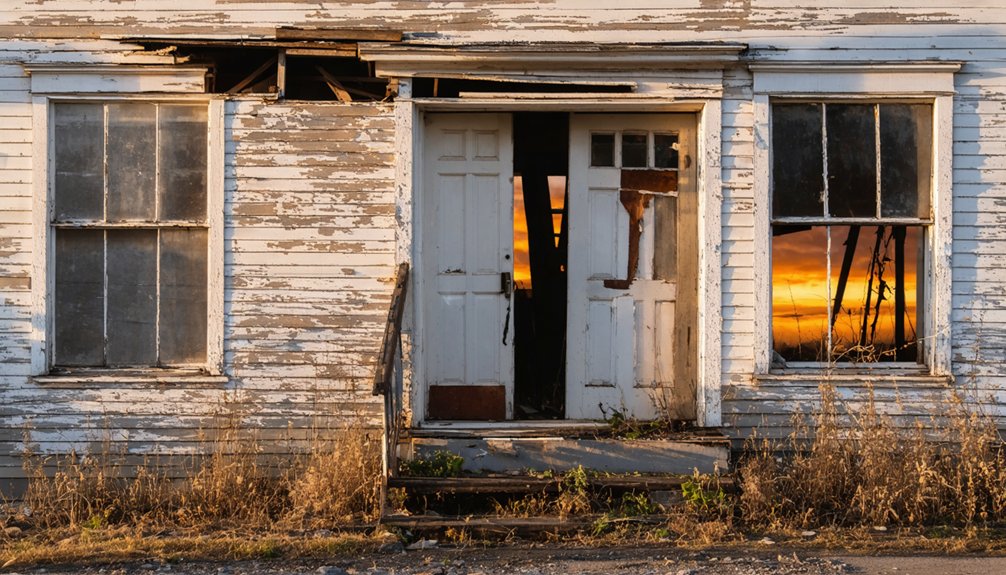
Capturing Bethel’s haunting remnants on camera requires more than pointing and shooting — you’ll want to think deliberately about light, composition, and documentation technique. Golden hour light transforms weathered bricks and Gothic church walls into striking historical preservation records worth keeping.
Follow these photography techniques for meaningful documentation:
- Shoot RAW format to capture maximum detail in crumbling foundations and rusted railroad artifacts.
- Use wide-angle lenses to contextualize structures within the surrounding flat agricultural landscape.
- Document systematically — photograph full structures before moving to close-up details like brickwork patterns.
- Record ambient audio alongside video walkthroughs to capture environmental sounds enhancing your documentation.
Label every image with GPS coordinates and timestamps. Your records could genuinely support preservation efforts before these remnants disappear completely.
What Other Ghost Towns Are Near Bethel, Illinois?
Bethel isn’t the only ghost town Clay County has to offer — once you’ve documented its Gothic church and rusted railroad remnants, you’ll find that southeastern Illinois holds a surprising number of similarly abandoned settlements worth adding to your road trip itinerary.
Nearby Greendale sits just south of Bethel, offering its own urban decay and forgotten railroad infrastructure.
Preston, another former community in the region, rewards curious travelers with scattered foundations and overgrown lots that speak volumes about agricultural decline.
Each site represents a unique chapter in historic preservation efforts, giving you tangible connections to Illinois’s railroad-era past.
Pack your camera, map these communities together, and you’ll transform a single ghost town stop into a full-day exploration of southeastern Illinois’s beautifully haunting abandoned landscape.
Frequently Asked Questions
Are Guided Tours of Bethel Ghost Town Available for Visitors?
You’ll find no formal guided tours at Bethel’s crumbling, fog-kissed ruins. Visitor amenities are minimal, but historical preservation efforts document the site. You’re free to explore independently, uncovering weathered secrets on your own terms.
Has Bethel Ghost Town Ever Appeared in Television or Film Productions?
No confirmed television or film productions have featured Bethel, but you’ll discover its local legends and historic preservation efforts captivate storytellers everywhere. Its hauntingly abandoned church and scattered ruins genuinely inspire creative minds seeking authentic, freedom-filled exploration.
Are Camping or Overnight Stays Permitted Near the Bethel Site?
Like a wild frontier calling your name, camping regulations don’t officially permit overnight accommodations at Bethel’s ghost town site. You’ll want to explore nearby campgrounds instead, where you can rest freely before revisiting the haunting ruins.
What Paranormal Evidence Has Been Documented at Bethel Ghost Town?
You’ll find that paranormal investigations at Bethel haven’t yielded formally documented evidence, but historical hauntings are reported by ghost hunters who’ve explored the abandoned church, claiming unexplained sounds, shadowy figures, and eerie atmospheric disturbances among the weathered ruins.
Does Any Organization Officially Manage or Maintain the Bethel Site?
No official organization currently handles historic preservation or site ownership at Bethel. You’ll find the grounds largely untouched, letting you explore freely while local historians work to document its remaining remnants before they’re lost forever.
References
- https://en.wikipedia.org/wiki/List_of_ghost_towns_in_Illinois
- https://drloihjournal.blogspot.com/2022/09/lost-towns-of-illinois-bethel-illinois.html
- https://ruralmissouri.org/welcome-to-bethel/
- https://www.pcahistory.org/churches/bethelearly.html
- https://en.wikipedia.org/wiki/Category:Ghost_towns_in_Illinois
- https://genealogytrails.com/ill/pike/churchbethel.html
- http://www.geocities.ws/colescountyghosts/
- https://www.bethelgrapevine.com/articles/haunted-by-stony-hills-past
- https://www.shelby.mogenweb.org/SCH 7-31-1935 Sec C.pdf
- https://drloihjournal.blogspot.com/p/lost-towns-of-illinois-series.html