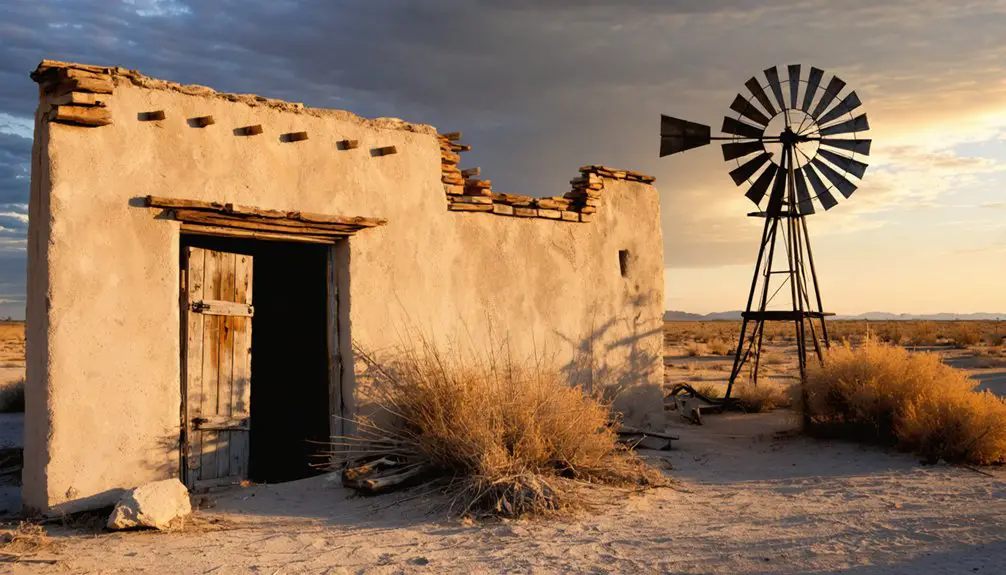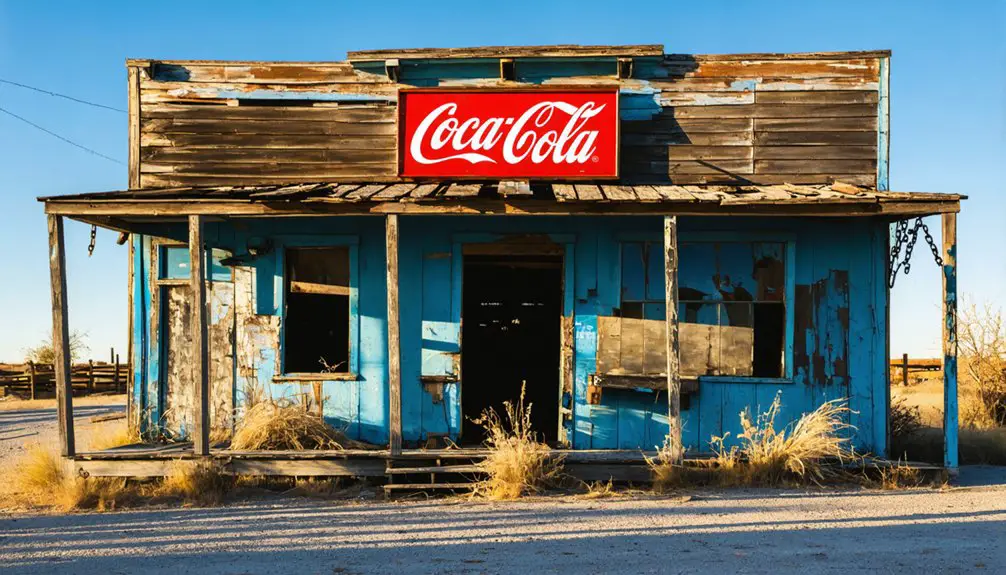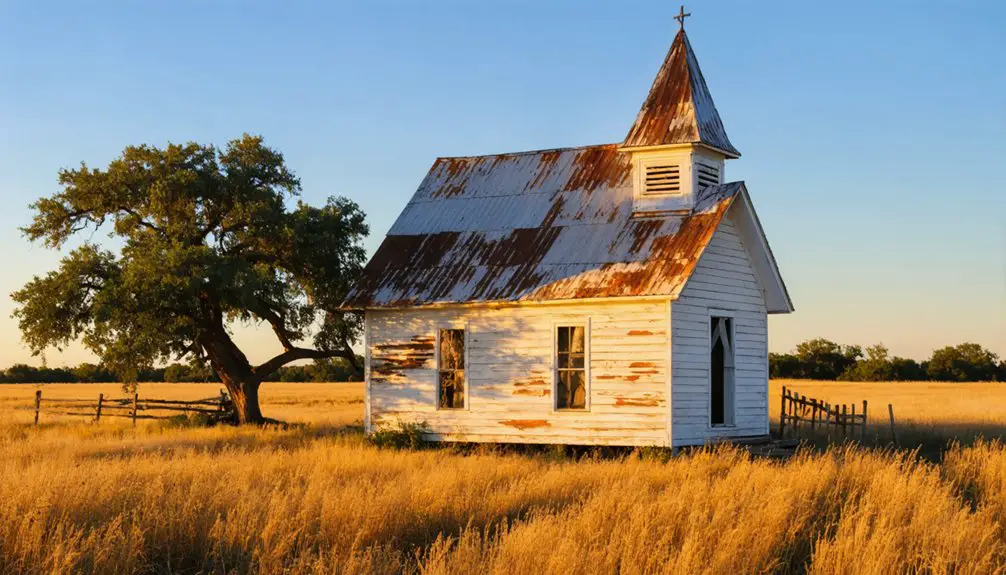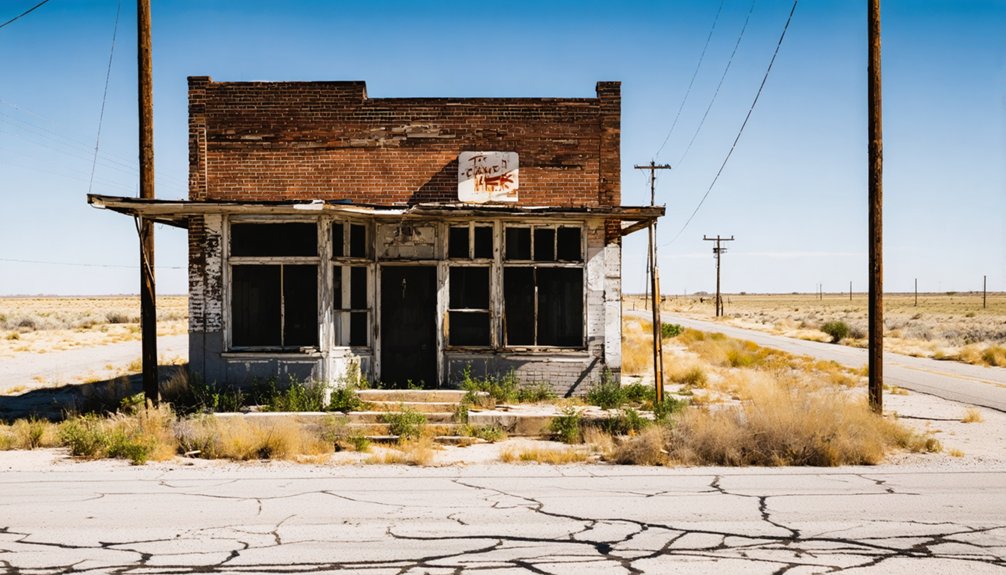
Planning a ghost town road trip to Comyn, Texas starts in De Leon, where you’ll head east on FM 1496 for about five miles into Comanche County. You won’t find any signage or visitor centers, so it’s a true off-the-beaten-path experience. You’ll spot old steel tanks, scattered homes, and remnants of a community shaped by railroads and oil pipelines. Pair it with nearby stops like Priddy and Gustine for a fuller picture of what’s still out there waiting.
Key Takeaways
- Comyn, Texas, sits along FM 1496, about five miles east of De Leon, making it an easy detour from central Texas highways.
- The town has no signage or visitor center, so come prepared with directions and a spirit of independent exploration.
- Visible steel tanks from an old tank farm and scattered homes reflect Comyn’s layered industrial and residential history.
- Nearby ghost towns like Priddy and Gustine can be combined with Comyn for a fuller Comanche County road trip loop.
- Each stop along the route adds roughly 30–60 minutes, allowing flexible, leisurely scheduling for photography and historical sightseeing.
Where Is Comyn, Texas, and How Do You Get There?
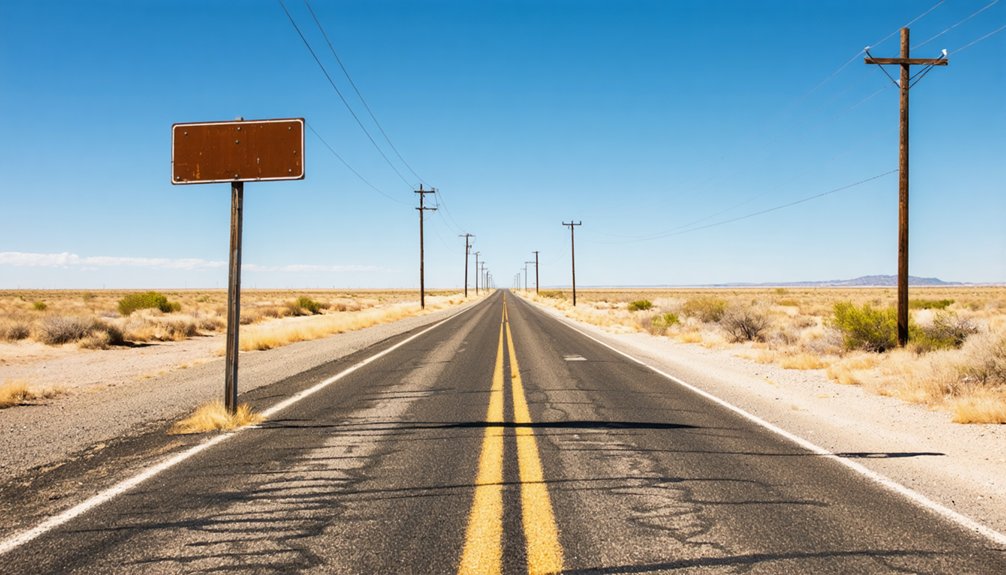
Tucked into eastern Comanche County, Comyn sits along Farm Road 1496 about five miles east of De Leon — making it an easy add-on if you’re already cruising through central Texas. From De Leon, you simply head east on FM 1496, and Comyn appears before long without fanfare or signage demanding your attention.
That low-key arrival suits the place perfectly. You won’t find a visitor center or manicured historic architecture lining a main street. Instead, you’ll encounter scattered homes, remnant tank farms, and a quiet rural landscape carrying local legends about railroad crews, oil booms, and pipeline workers who once filled a tent city here.
It’s a drive-by history experience — raw, honest, and worth the short detour if you value the road less traveled.
What You Can Still See in Comyn: Tanks, Cemetery, and Peanut Operation
When you roll into Comyn, the landscape tells the story before any historical marker can. You’ll spot the old tank farm immediately — large steel tanks that once held pipeline oil now sitting quiet against the flat Texas sky. Some stand empty, silent monuments to a boom that ran its course. Others have been repurposed for peanut storage, a quiet act of community revitalization that keeps the land working.
Drive toward the Golden Peanut Company operation, still active and worth a look. Then find the cemetery, where historical preservation continues through the graves of settlers who built this place from scratch in 1875.
Homes still dot the area too. Comyn isn’t fully abandoned — it’s transformed, trading oil tanks for peanut bins and pipeline workers for rural quiet.
From Theney to Comyn: A Brief History Before You Go
Before you make the drive out on FM 1496, it helps to know the town wasn’t always called Comyn. Settlers established the community around 1875 and named it Theney, after a local trader who ran a trading post in the area.
Everything changed in 1881 when the Texas Central Railroad pushed through, built a depot, and renamed the town after M. T. Comyn, the construction foreman who oversaw the work.
Settlement And Early Naming
Though the name on the map today reads Comyn, this small Comanche County community started life in 1875 under a different identity entirely—Theney, named for a local trader who ran a post in the early settlement days.
Historians credit either W. F. Matheney or W. M. Catheney with inspiring that original name, and local legends still tie the identity of the town to that modest trading post.
Everything shifted in 1881 when the Texas Central Railroad pushed through and opened a depot here.
Railroad officials renamed the stop Comyn, honoring construction foreman M. T. Comyn.
Interestingly, the local school kept the Theney name long after community events and daily life had moved on under the new identity—a small but telling detail worth remembering as you explore.
Railroad Transforms The Community
The arrival of the Texas Central Railroad in 1881 flipped Comyn’s fortunes almost overnight. The railroad renamed the settlement, honoring construction foreman M. T. Comyn, and suddenly you’re looking at a genuine boomtown replacing a modest trading post.
Community events drew settlers, businesses multiplied, and local cuisine options expanded alongside new commerce.
Here’s what the railroad era dropped into Comyn’s lap:
- A functioning depot that made Comyn a legitimate regional rail stop
- Thriving businesses including a lumberyard, blacksmith shop, cotton gin, and stores
- A Woodmen of the World lodge anchoring community life socially
You can almost picture the energy when you drive FM 1496 today. That railroad momentum built the foundation you’re still reading about now.
How the Railroad and Oil Boom Shaped Comyn
When the Texas Central Railroad laid tracks through Comyn in 1881, the new depot instantly transformed the community into a regional hub for commerce and shipping.
You can picture the town buzzing with a lumberyard, blacksmith shop, cotton gin, and a Woodmen of the World lodge — all thriving because the railroad made trade practical.
Then came oil, and the Humble Pipe Line Company’s 1918 connection to Webster briefly turned Comyn into a tent-city boomtown before the industry’s decline slowly drained the life from the community.
Railroad Depot Sparked Growth
Before the Texas Central Railroad laid its tracks through town in 1881, Comyn was just a small trading post settlement called Theney. The railroad changed everything, renaming the community after construction foreman M. T. Comyn and opening a depot that drew commerce from across the region.
Local legends say the school kept the Theney name long after everyone else moved on.
The depot sparked rapid growth you can still trace today through preservation efforts and historical records:
- A post office opened in 1909, anchoring daily community life.
- A cotton gin, lumberyard, and blacksmith shop established Comyn as a regional hub.
- A Woodmen of the World lodge gave residents a social gathering place beyond commerce.
That railroad arrival transformed a quiet trading stop into a thriving small town almost overnight.
Oil Pipeline Brought Prosperity
Comyn’s railroad boom was just the opening act. In 1918, the Humble Pipe Line Company pushed a pipeline through town, connecting Comyn to Webster and igniting a second wave of prosperity. Workers flooded in, and a tent city sprouted almost overnight. You can almost hear the local legends about roughnecks trading stories around makeshift camps where historic architecture once stood.
By 1924–1926, Humble expanded the trunk line further, cementing Comyn’s role as a serious pipeline hub tied to West Texas oil production. Businesses multiplied — stores, a cotton gin, a lumberyard — all feeding off pipeline dollars. That freedom to build fast and profit hard defined the era.
Then West Texas production slowed, and Comyn’s second boom quietly faded with it.
How to Route Comyn Into a Comanche County Ghost Town Drive
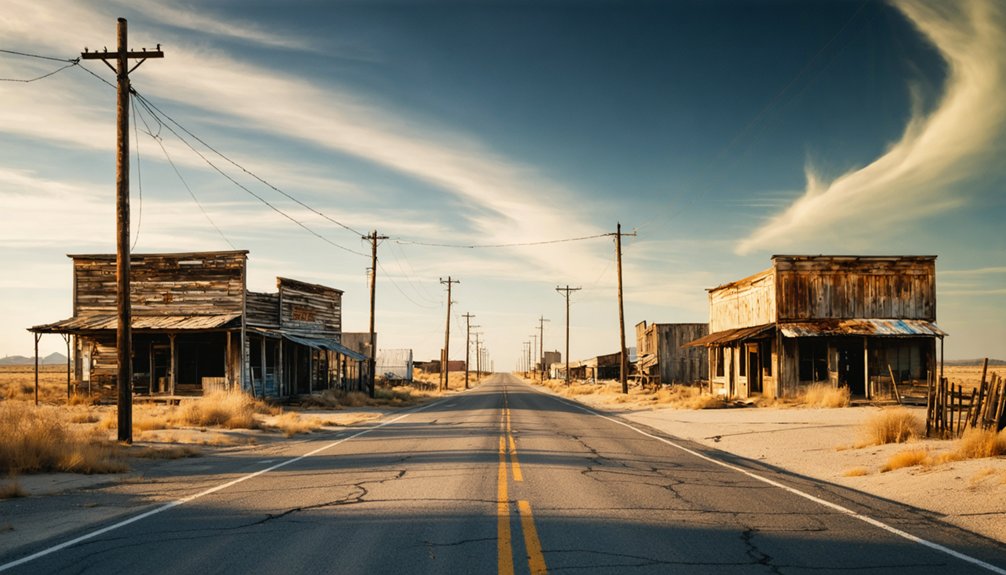
Since Comyn sits on FM 1496 just five miles east of De Leon, it slots naturally into a Comanche County loop without adding much mileage to your drive. You’re free to build a flexible route that connects real history, local legends, and historical preservation efforts across the county.
Try this simple three-stop framework:
- Start in De Leon – fuel up and check local historical preservation resources at the courthouse before heading east on FM 1496.
- Roll through Comyn – scan the tank farm landscape, the cemetery, and the Golden Peanut operation for a living snapshot of boom-and-bust history.
- Push deeper into Comanche County – local legends around nearby communities reward drivers who leave the main highway and explore paved county roads.
When to Visit Comyn and What You’ll Find
You won’t find a visitor center or guided tour. What you’ll find instead is an honest Texas landscape that rewards curiosity, patience, and a willingness to read the land on its own terms.
Other Ghost Towns Near Comyn Worth Adding to Your Route
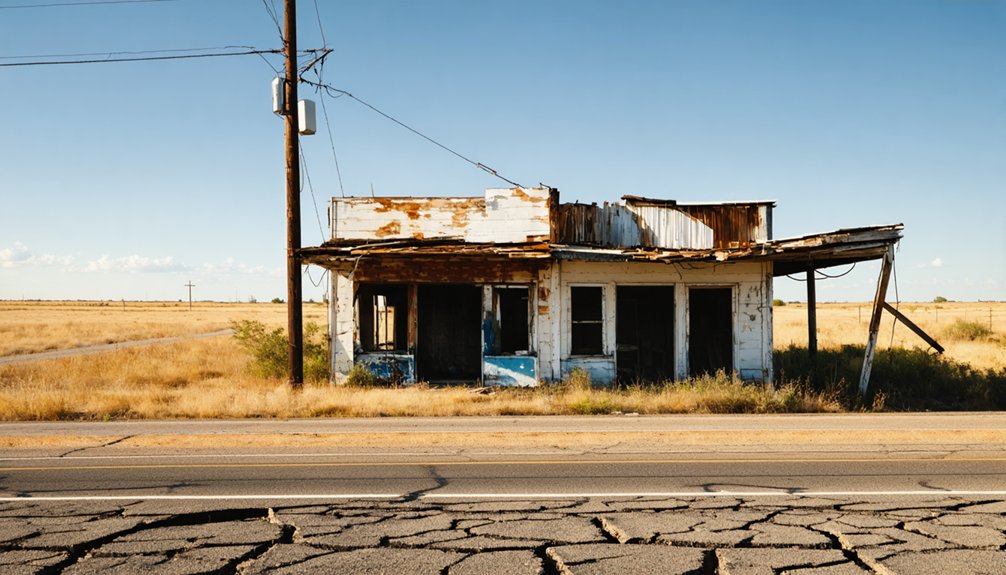
Once you’ve explored Comyn, the surrounding stretch of central Texas opens up a wider ghost town circuit worth building into your route. Comanche County and its neighbors reward travelers who chase ghost town architecture and local legends off the main highways.
- Proctor, Texas – A flooded town beneath Proctor Lake, best viewed from the dam during low water levels.
- Gustine, Texas – A quiet community with weathered storefronts that echo early 20th-century commerce and local legends tied to ranching culture.
- Priddy, Texas – A Mills County settlement featuring remnant ghost town architecture and a small-town atmosphere that feels genuinely frozen in time.
Each stop adds roughly 30–60 minutes to your drive, keeping your route flexible and your freedom intact.
Frequently Asked Questions
Is Comyn, Texas, Officially Classified as a Ghost Town?
Comyn doesn’t hold an official ghost town classification, but you’ll find it listed among Texas ghost towns for its historical significance. It’s a declined community with minimal preservation efforts, yet it’s still partially inhabited today.
Can Visitors Legally Enter or Explore Private Property in Comyn?
You can’t enter private property in Comyn without permission — trespassing laws apply here just like anywhere else. Stick to public roads, respect boundaries, and you’ll enjoy the town’s history without legal trouble.
Are There Any Local Guides or Tours Available in Comyn?
Hark — no formal tours or guides exist in Comyn. You’ll explore its historical ruins and local legends solo, traversing FM 1496 freely on your own terms, embracing the raw, unscripted adventure this quiet ghost town offers.
Does Comyn Have Any Annual Events or Community Gatherings?
You won’t find annual events in Comyn, but you’re free to explore its historical landmarks at your own pace and uncover fascinating community stories that reveal its remarkable journey from railroad boomtown to quiet peanut-farming settlement.
Is There Cell Service or GPS Reliability Along FM 1496 Near Comyn?
Like venturing off the grid, cell service can be spotty and gps reliability unpredictable along FM 1496 near Comyn. You’ll want to download offline maps before hitting the road — embrace that raw freedom!
References
- https://www.tshaonline.org/handbook/entries/comyn-tx
- https://www.ghosttowns.com/states/tx/comyn.html
- https://en.wikipedia.org/wiki/List_of_ghost_towns_in_Texas
- https://www.texasescapes.com/CentralTexasTownsNorth/Comyn-Texas.htm
- https://en.wikipedia.org/wiki/Comyn
- https://www.facebook.com/groups/1784294158550093/posts/4219781098334708/
- https://www.ghosttowns.com/states/tx/tx.html
- https://blogs.baylor.edu/texascollection/category/texas-cities-and-counties/ghost-towns/
- https://texashistory.unt.edu/ark:/67531/metapth61101/m1/168/
- https://texascooppower.com/old-haunts/