Planning a ghost town road trip to Conover, Iowa means visiting the site where a cow pasture transformed into a booming frontier town of nearly 1,500 residents—all within two years of a railroad announcement in 1864. You won’t find preserved buildings or guided trails, just a gravel road, a town sign, and open cropland where over 200 structures once stood. It’s also where Cargill’s story began. Keep exploring to uncover the full remarkable history hiding in that quiet Iowa field.
Key Takeaways
- Conover, Iowa, is a ghost town with no preserved buildings, only open cropland where nearly 200 structures once stood by 1866.
- Look for a town sign, gravel road, and navigational markers to locate the site, as no formal trails or museums exist.
- The site marks where William Wallace Cargill purchased his first grain warehouse in 1865, launching a global agricultural empire.
- Nearby Calmar, Fort Atkinson, and Fort Atkinson State Preserve offer amenities and historical attractions to round out your road trip.
- The Prairie Farmer Recreational Trail follows the old rail corridor, providing a scenic alternative route to approach the Conover site.
The Boom Town That Rose From a Cow Pasture in 1864
Before the railroad came through, Conover was nothing more than a cow pasture. Then, in September 1864, railroad news hit the region, and within two weeks, settlers platted an entire village from farmland. That’s how fast opportunity moved on the frontier.
Before the railroad, it was a cow pasture. Two weeks later, it was a village.
By August 1865, the McGregor Western Railroad had arrived, and Conover had exploded into a full-blown boom town. You’re talking over 200 buildings, 32 saloons, three hotels, a dozen stores, and a population pushing 1,500 by 1866.
The town even earned official incorporation on October 17, 1866.
But railroad loss proved fatal. Economic decline followed quickly once railroad facilities shifted to nearby Calmar. By 1870, most lots had returned to cropland. What took two weeks to build unraveled within a few years.
Why Conover, Iowa Collapsed Almost as Fast as It Grew
When you look at Conover’s timeline, the collapse hits just as hard as the boom did. A devastating fire in 1869 wiped out much of what settlers had built in just a few short years.
The town never recovered its footing. Worse yet, Calmar claimed the railroad facilities that had made Conover matter in the first place, pulling the economic lifeline right out from under it.
The Devastating 1869 Fire
Though Conover’s rise felt almost miraculous, its collapse came just as swiftly. The 1869 fire tore through town, erasing much of the historical architecture that had defined Conover’s brief but remarkable boom. Buildings that had gone up in weeks burned down in hours, and the railroad facilities soon shifted to nearby Calmar, pulling economic life right out from under the town.
Local legends suggest the fire accelerated what economic forces had already set in motion. Without the railroad’s business, merchants packed up, saloons shuttered, and families moved on.
You’d find no heroic rebuilding effort here — Conover simply didn’t recover. What the flames didn’t claim, the surrounding cropland eventually swallowed. By 1870, most lots had already returned to farmland, leaving almost no trace of the town that once housed over 1,200 people.
Calmar Stole The Railroad
Fire didn’t finish Conover alone — the railroad did. Once Calmar absorbed the McGregor Western Railroad’s facilities, Conover lost its entire reason to exist. Businesses folded, residents packed up, and streets that once buzzed with 1,200 people went eerily silent.
You’ll find almost no historical artifacts left on-site today — local legends carry more weight than physical evidence here. What the railroad built in months, its departure dismantled just as fast.
The railroad’s shift to Calmar triggered a chain reaction:
- Warehouses and grain operations relocated almost immediately
- Saloons and hotels lost their customer base overnight
- Property values collapsed, returning lots to cropland by 1870
Calmar didn’t just grow — it consumed Conover’s future and left nothing behind.
Where Cargill Opened Its First Grain Operation
When you visit Conover, you’re standing on the ground where William Wallace Cargill launched what would become one of the world’s largest privately held companies.
In 1865, he bought a grain flat house at the end of the railroad line, using it as a warehouse to move grain before country elevators became standard.
That single, modest operation in a now-vanished Iowa boom town set the entire Cargill empire in motion.
Cargill’s Humble Grain Beginning
Among Conover’s most remarkable historical footnotes is its direct connection to one of the world’s largest private companies. In 1865, William Wallace Cargill purchased a grain flat house at the end of the railroad line here — a modest structure rooted in local legends of frontier ambition rather than historical architecture or grand design.
That single transaction launched what became the Cargill agricultural empire. Consider what Conover quietly witnessed:
- Cargill’s first grain flat house functioned as a frontier warehouse before country elevators existed
- The operation capitalized directly on westward railroad expansion reaching Conover through Calmar
This humble beginning grew into one of the world’s most powerful privately held companies.
You’re standing where billion-dollar history started from nothing but raw prairie opportunity.
The Flat House Operation
Before country grain elevators dotted the Iowa prairie, flat houses served as the frontier’s version of a warehouse — and it’s here in Conover where William Wallace Cargill set up his first one in 1865.
You’re standing at the birthplace of one of the world’s largest privately held companies, though nothing remains of that original historical architecture today.
Cargill purchased the flat house at the end of the railroad line, using it to store and move grain westward as settlement expanded.
Local legends tie this modest structure to a fortune built from scratch on the Iowa frontier.
It’s a powerful reminder that America’s biggest enterprises often started in places that no longer exist — raw, temporary, and completely unaware of what they were starting.
From Conover To Empire
What started in that modest flat house didn’t stay modest for long. William Wallace Cargill’s Conover operation quietly launched what became one of the world’s largest privately held companies. You’re standing at the origin point of an agricultural empire that reshaped prairie settlement, urban development, and global food systems.
Consider what grew from that single grain purchase in 1865:
- Cargill expanded far beyond Iowa, eventually operating across dozens of countries
- The ecological impact of industrial grain trading transformed how American farmland was used
- One flat house purchase evolved into a multi-billion-dollar enterprise
That’s the power of this ghost town stop. Conover didn’t survive, but its legacy did. You’re not just visiting a forgotten field — you’re walking the birthplace of modern American agriculture.
What Remains at the Conover, Iowa Town Site Today
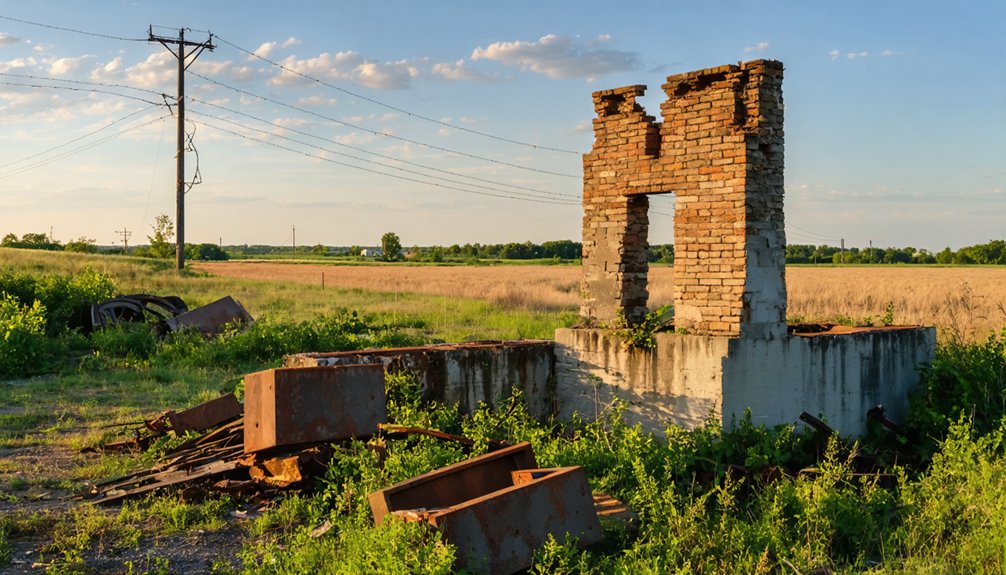
Though Conover once bustled with over 200 buildings and a population nearing 1,500, you’ll find little trace of that frenzy today. Cropland has reclaimed nearly everything, leaving the landscape quiet and deceptively ordinary. You won’t stumble across preserved historical landmarks or guided tours here — Conover rewards those who arrive with curiosity and context rather than convenience.
A roadside town sign marks the site, offering a modest anchor for the local legends surrounding William Wallace Cargill’s first grain operation and the railroad boom that briefly made this patch of Iowa roar with commerce.
Nearby Calmar serves as your practical base, and the Prairie Farmer Recreational Trail traces the old railroad corridor. Come prepared, keep your eyes open, and let the open land tell its story.
How to Reach the Conover Site From Calmar
Calmar sits just a short drive from the Conover site, making it your natural launching point for this ghost town detour. Head east from Calmar along the old railroad corridor, and you’ll quickly reach the former town boundaries where historical landmarks once lined busy streets.
Start in Calmar, head east along the old railroad corridor, and Conover’s forgotten streets await just beyond.
Keep these practical tips in mind:
- Follow local road signs toward the former McGregor Western Railroad route for the clearest path
- Ask locals in Calmar about local legends tied to Conover’s boom-and-bust story
- Use the Fort Atkinson USGS quadrangle as a navigational reference to pinpoint the exact site
The Prairie Farmer Recreational Trail also runs nearby, giving you an additional trail-based approach. You’re fundamentally retracing a route that once carried grain, ambition, and the earliest roots of Cargill’s empire.
A Gravel Road, a Sign, and a Field: What You Will Find
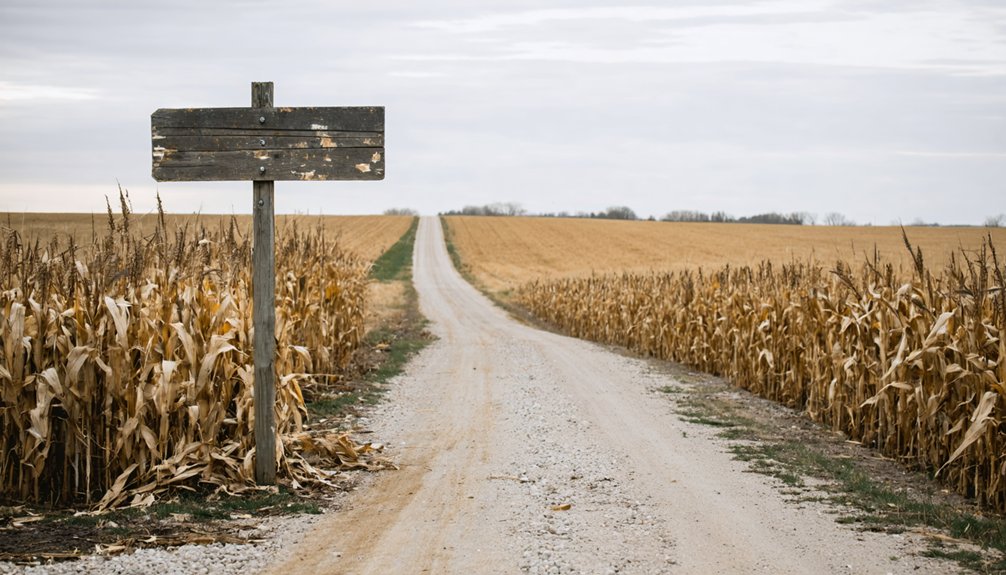
Arriving at the Conover site, you’ll find the landscape has reclaimed nearly everything the boom years built. Cropland stretches where 200 buildings once crowded together, and the silence feels almost defiant given how loudly this place once roared.
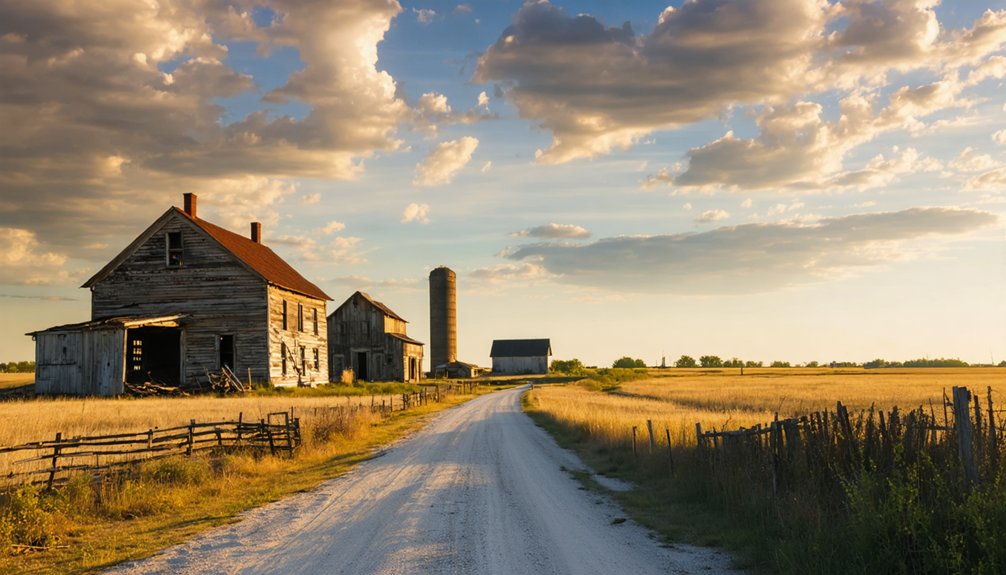
A town sign and a gravel road are your primary landmarks, modest markers pointing toward significant railroad history. No preserved storefronts, no museum, no guided trail welcomes you here.
What you get instead is raw, open space and the mental exercise of imagining 1,500 people, 32 saloons, and a grain warehouse that launched Cargill. This ghost town rewards visitors who travel with curiosity rather than comfort.
Stand in that field, look toward Calmar, and let the emptiness tell the story that no monument bothered to preserve.
Fort Atkinson and Calmar: Best Stops Near the Conover Site
Once you’ve absorbed the quiet of the Conover site, the surrounding area gives you more tangible history to work with. Calmar sits just nearby, offering practical amenities and serving as your natural base.
Conover fades into silence — but Calmar waits nearby, ready to ground you with food, fuel, and context.
Fort Atkinson, a short drive away, delivers genuine historical architecture — a restored frontier military post tied to local legends of early Iowa settlement.
Make the most of your stop with these nearby highlights:
- Fort Atkinson State Preserve: Walk restored buildings from the 1840s frontier era
- Calmar: Fuel up, grab food, and explore the railroad heritage that absorbed Conover’s identity
- Prairie Farmer Recreational Trail: Follow the old rail corridor that once made Conover boom
Together, these stops transform a single ghost town visit into a fuller story of northeastern Iowa‘s past.
Frequently Asked Questions
What ZIP Code Covers the Former Conover, Iowa Town Site?
You’ll find that Calmar’s ZIP code now covers the former Conover town site, where historic landmarks once thrived and local legends of railroad booms and Cargill’s origins still fuel your adventurous, freedom-seeking spirit today.
Which USGS Topographic Quadrangle Shows the Conover Ghost Town Location?
Want to uncover hidden historical landmarks? You’ll find Conover’s ghost town location on the Fort Atkinson USGS topographic quadrangle — it’s your go-to map for exploring these fascinating tourist attractions on your freedom-fueled road trip!
When Did the Conover Post Office Permanently Close Its Operations?
You’ll find that the Conover Post Office permanently closed its operations in 1916, giving this enchanting Iowa travel tips gem over five decades of service — a fascinating chapter in Historical ghost towns that fueled westward freedom and frontier spirit.
How Many Saloons Operated in Conover During Its Peak Boom Period?
Can you imagine the wild energy? During Conover’s peak boom, you’d have found over 32 saloons fueling local legends, complementing the historic architecture of a town that embodied freedom-seeking frontier spirit at its boldest.
When Was Conover Officially Incorporated as a Town in Iowa?
You’ll find that Conover was officially incorporated on October 17, 1866, marking a pivotal moment in ghost town history and Iowa settlement patterns — a thriving community you wouldn’t believe would vanish so dramatically within just a few years.
References
- https://en.wikipedia.org/wiki/Conover
- https://www.instagram.com/p/DE02-xHq96v/
- https://en.wikipedia.org/wiki/List_of_ghost_towns_in_Iowa
- https://raregoldnuggets.com/?p=3950
- https://everafterinthewoods.com/these-deserted-ghost-towns-in-iowa-still-tell-the-story-of-the-heartland/
- https://streets.mn/2015/12/29/minnesota-needs-more-ghost-towns/
- https://www.youtube.com/watch?v=VJ0_1fZQCRw